

The Ultimate Guide to Worcestershire Sauce Substitutes: 10 Best Alternatives for Every Dish
Worcestershire sauce is a true culinary chameleon, known for its incredible ability to enhance and deepen the flavors of a vast array of dishes. From robust marinades and savory gravies to zesty dressings and hearty stews, its unique blend of sweet, sour, tangy, and umami notes makes it an irreplaceable kitchen staple for many home cooks and professional chefs alike. But what happens when you reach for that familiar bottle, only to find it empty? The good news is that running out of Worcestershire sauce doesn’t mean your recipe is doomed. In fact, it’s an exciting opportunity to explore new ingredients and expand your flavor palate!
This comprehensive guide dives deep into the world of Worcestershire sauce alternatives, presenting the 10 best substitutes that can flawlessly fill its shoes. Whether you’re seeking a quick pantry fix, a specific dietary alternative (like vegan or gluten-free options), or simply want to experiment with new flavor profiles, this article has you covered. Get ready to transform your cooking with these ingenious swaps and never let a missing ingredient stand between you and a delicious meal!

Table of Contents
- Apple Cider Vinegar
- Balsamic Vinegar
- Coconut Aminos
- Fish Sauce
- Liquid Aminos
- Miso Paste
- Soy Sauce
- Tamari
- Tamarind Paste
- Vegetable Broth with Spices
- Understanding Worcestershire Sauce: Its Unique Flavor
- Tips for Successful Substituting
- FAQs
- More Culinary Inspiration
Apple Cider Vinegar

Apple cider vinegar (ACV) is a fantastic pantry staple with a distinct tart and slightly fruity flavor that can effectively mimic the tangy acidity found in Worcestershire sauce. While it lacks the deeper savory notes, its bright acidity is crucial for balancing flavors in many dishes. To create a more rounded substitute, combine one tablespoon of apple cider vinegar with a pinch of sugar (about ¼ teaspoon) and a tiny dash of salt. You might also consider adding a drop or two of soy sauce or liquid aminos to introduce some umami depth if desired. This blend works exceptionally well in barbecue sauces, meat marinades, salad dressings, and even as a secret ingredient in homemade ketchup. Start with half the amount of ACV you would use for Worcestershire and adjust to taste, as its acidity can be quite potent.
Balsamic Vinegar
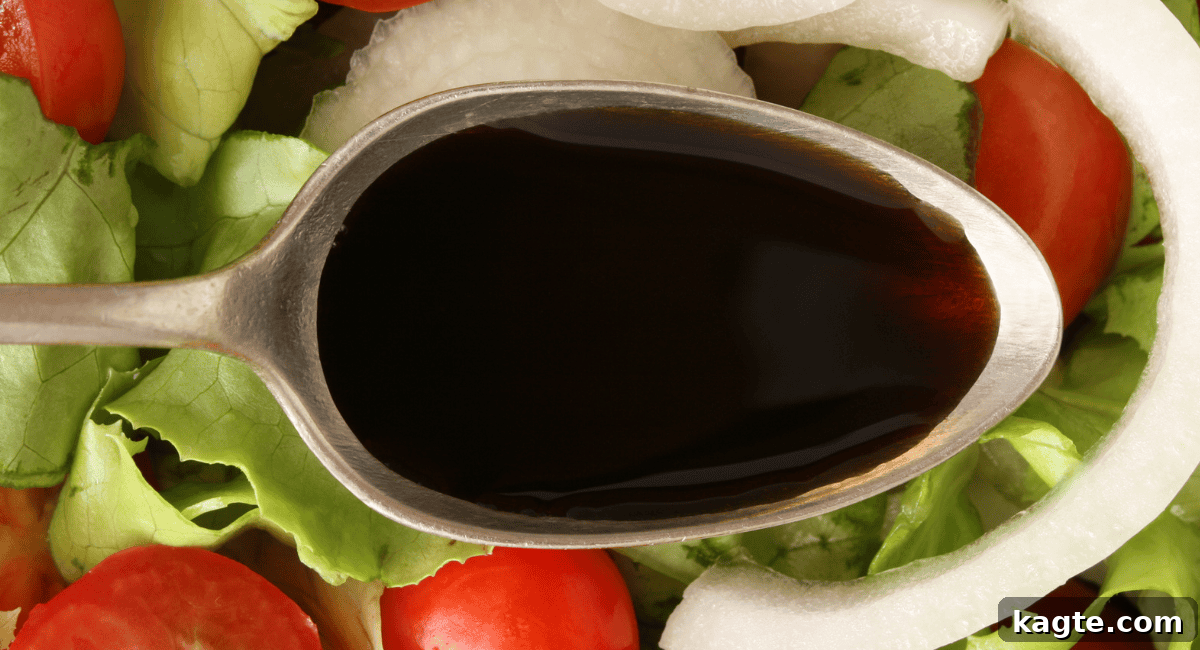
Balsamic vinegar is renowned for its complex flavor profile, boasting a delightful balance of sweetness and tanginess, along with a rich, almost syrupy consistency, especially in aged varieties. This makes it an excellent stand-in for Worcestershire sauce, particularly when you need to add depth and a touch of dark fruit notes to your cooking. Its inherent sweetness helps to counteract the tartness, providing a more direct substitution without needing much adjustment. Use balsamic vinegar in marinades for grilled meats, whisk it into salad dressings, or add a splash to pan sauces for a sophisticated finish. It also works wonders in braised dishes and caramelized onions, where its sweetness can truly shine. As with most substitutions, begin with a slightly smaller quantity than the recipe calls for Worcestershire and gradually add more until you achieve the desired flavor balance.
Coconut Aminos

For those seeking a soy-free, gluten-free, and often vegan alternative, coconut aminos are a revelation. Derived from the fermented sap of coconut blossoms, this condiment offers a savory, slightly sweet, and mildly umami flavor profile that closely resembles a lighter soy sauce or tamari, with a hint of natural sweetness. While it doesn’t have the same fermented tang as Worcestershire sauce, its overall savory depth makes it a fantastic substitute. Coconut aminos are particularly well-suited for Asian-inspired dishes, stir-fries, dressings, and marinades where you want to introduce a touch of sweetness without using refined sugars. It’s also an excellent choice for dipping sauces. Because it’s generally less salty than soy sauce, you might need to use a bit more or adjust the salt content in your recipe accordingly. Start with a 1:1 ratio and add more if needed to achieve the desired intensity.
Fish Sauce

Fish sauce is a potent flavor enhancer, revered for its intense umami richness. Made from fermented anchovies or other fish, it delivers a profound savory depth that can closely mimic the meaty, funky notes found in Worcestershire sauce. However, it’s essential to use fish sauce sparingly due to its very strong aroma and flavor. While it might not be suitable for vegetarians, vegans, or those with fish allergies, for everyone else, it’s a powerful tool to add complexity. Just a few drops can dramatically transform a dish, providing that elusive “je ne sais quoi.” It’s best used in small quantities in savory applications like stews, chili, marinades for beef or pork, and even a Bloody Mary. If a recipe calls for one tablespoon of Worcestershire, start with just half a teaspoon of fish sauce and a squeeze of lemon juice or a dash of vinegar to introduce some tanginess. Always taste and adjust.
Liquid Aminos

Liquid aminos are a versatile, gluten-free, and often non-GMO alternative derived from soybeans, making them a popular choice for health-conscious cooks. They offer a savory, slightly sweet flavor profile that is remarkably similar to soy sauce, but often less salty and with a subtle, earthy undertone. This makes liquid aminos an excellent substitute for Worcestershire sauce, especially when you need to add a hearty umami boost without the gluten or excessive sodium. They work beautifully in a 1:1 ratio for most recipes, providing a comparable depth of flavor in marinades, stir-fries, salad dressings, and as a seasoning for soups and stews. Liquid aminos are also a great option for dipping sauces or adding a savory element to vegetarian and vegan dishes. Because their flavor is milder than traditional soy sauce, you might find yourself using a little more to achieve the desired intensity, but it’s always best to start with equal amounts and adjust to your palate.
Miso Paste

Miso paste, a traditional Japanese seasoning made from fermented soybeans (and sometimes rice or barley), is a powerhouse of umami flavor. Its deep, complex, and savory notes, along with a hint of sweetness and sometimes a subtle funk, make it a fantastic and unique substitute for Worcestershire sauce. Different types of miso (white, yellow, red) offer varying degrees of intensity and saltiness. White miso is milder and sweeter, while red miso is more robust and salty, making it closer in depth to Worcestershire. To use miso paste as a substitute, it’s crucial to dilute it first. Mix a small amount (start with ½ teaspoon for every tablespoon of Worcestershire) with a little warm water or broth to create a sauce-like consistency. This diluted miso can then be incorporated into marinades, glazes for roasted vegetables, dressings, and even rich sauces for meat dishes. It’s also an excellent addition to soups and stews, providing incredible depth and a hint of fermentation. Always taste as you go, as miso paste can be quite salty.
Soy Sauce

Soy sauce, a ubiquitous ingredient in countless kitchens worldwide, is one of the most readily available and effective substitutes for Worcestershire sauce. Its primary contributions are a rich, salty, and intensely umami flavor that can mimic the savory depth Worcestershire provides. While it typically lacks the distinct tanginess and underlying sweetness of Worcestershire, these elements can be easily introduced. To make soy sauce a more accurate substitute, combine one tablespoon of soy sauce with half a teaspoon of apple cider vinegar (or red wine vinegar) and a tiny pinch of brown sugar. A dash of hot sauce can also add a subtle spicy complexity. This versatile blend works perfectly in marinades for chicken, beef, or tofu, stir-fries, gravies, and as a seasoning for grilled vegetables. It’s an excellent base for almost any savory dish where Worcestershire sauce is called for. Always choose a good quality soy sauce for the best flavor, and adjust the salt content of your recipe accordingly, as soy sauce can be quite salty.
Tamari

Tamari is a Japanese soy sauce variant that stands out for being naturally gluten-free, making it an ideal substitute for individuals with gluten sensitivities or celiac disease. It’s often made with little to no wheat, unlike traditional soy sauce. In terms of flavor, tamari generally offers a richer, darker, and slightly less salty taste than standard soy sauce, with a more pronounced umami depth. This robust and savory profile makes it an excellent stand-in for Worcestershire sauce, especially when you need to impart that deep, savory punch to your dishes. Just like soy sauce, tamari can be used in a 1:1 ratio for most recipes. To enhance its similarity to Worcestershire, consider adding a small amount of vinegar (such as rice vinegar or apple cider vinegar) for tanginess and a touch of sweetness (like maple syrup or brown sugar). Tamari performs beautifully in both Asian and Western cuisines, from marinades and stir-fries to soups and glazes, ensuring that a gluten-free diet doesn’t mean sacrificing flavor.
Tamarind Paste

Tamarind paste, extracted from the pulp of the tangy tamarind fruit, is a secret weapon in many international cuisines, offering a distinctive sweet-sour flavor that has hints of fruitiness and a deep, complex tang. This unique profile makes it a surprisingly effective and often overlooked substitute for Worcestershire sauce, especially because Worcestershire itself contains tamarind! Its tangy and subtly sweet notes provide a fantastic base, requiring only a few additional ingredients to create a very close match. To use tamarind paste, mix one tablespoon with a teaspoon of soy sauce (or liquid aminos for gluten-free), a pinch of sugar, and a dash of vinegar (like apple cider vinegar or white vinegar) to achieve a more complete Worcestershire-like flavor. This blend is excellent in curries, chutneys, marinades for poultry or fish, and in various sauces and dips where you want to add an exotic twist. Start with half the amount of tamarind paste mixture compared to the called-for Worcestershire sauce, as its flavor can be quite intense, and build from there to suit your taste preferences.
Vegetable Broth with Spices

When you’re truly in a pinch or prefer a homemade, all-natural, and customizable option, crafting your own Worcestershire-like sauce from vegetable broth and a blend of spices is an excellent approach. This method allows you to control the exact flavor profile and ensures it’s suitable for various dietary needs, including vegan and gluten-free. To create this flavorful alternative, combine one cup of rich vegetable broth with a tablespoon of apple cider vinegar (for tang), a teaspoon of soy sauce or tamari (for umami and saltiness), a pinch of garlic powder, onion powder, dry mustard, a tiny dash of ground cloves, and a good grind of black pepper. For a touch of sweetness and depth, add a half teaspoon of brown sugar or molasses. Simmer this mixture gently for 5-10 minutes, allowing the flavors to meld and intensify. You can then strain it for a smooth liquid or use it as is for a more textured sauce. This homemade concoction works wonderfully in soups, stews, gravies, and anywhere you need a rich, savory, and complex liquid seasoning. It provides a hearty depth that will elevate your recipes without missing the original.
Understanding Worcestershire Sauce: Its Unique Flavor
To truly appreciate the art of substitution, it’s helpful to understand what makes Worcestershire sauce so special. This dark, fermented condiment boasts a complex flavor profile that’s a harmonious blend of five key tastes: umami (savory), sweet, sour, salty, and a hint of bitterness. Its primary ingredients typically include vinegar, molasses, sugar, salt, onions, garlic, tamarind paste, anchovies, and a secret blend of spices. The fermentation process is what gives it its characteristic depth and tang. When choosing a substitute, the goal isn’t necessarily to replicate every single note perfectly, but to capture the most essential elements relevant to your dish. For a meaty umami boost, you’ll look for ingredients like fish sauce or miso. For tang, vinegars are key. And for sweetness, molasses or sugar can be added. Understanding these components empowers you to mix and match or select the most appropriate single substitute.
Tips for Successful Substituting
Substituting ingredients can sometimes feel like a culinary gamble, but with a few simple tips, you can ensure success and confidence in the kitchen:
- Start Small: Always begin with a smaller amount of the substitute than what the recipe calls for with Worcestershire sauce. You can always add more, but you can’t easily remove it.
- Taste and Adjust: This is the golden rule of cooking. Continuously taste your dish as you add the substitute and adjust the quantity, as well as other seasonings like salt, sugar, or acid, to achieve the desired balance.
- Consider the Core Flavor: Think about what function Worcestershire sauce serves in your specific recipe. Is it primarily for umami? For tang? For sweetness? Choose a substitute that primarily delivers that core flavor.
- Layer Flavors: For a truly comprehensive substitute, especially if you’re aiming for that multi-faceted Worcestershire taste, don’t hesitate to combine ingredients. For example, soy sauce for umami, vinegar for tang, and a touch of sugar for sweetness.
- Dietary Needs First: If you’re substituting due to dietary restrictions (vegan, gluten-free, fish allergy), ensure your chosen alternative truly meets those requirements.
FAQs About Worcestershire Substitutes
Worcestershire sauce is a fermented condiment with a complex flavor profile. Its base is typically vinegar, which is then flavored with a variety of ingredients including molasses, sugar, salt, onions, garlic, tamarind paste, and anchovies. These ingredients undergo a fermentation process, often for an extended period, which contributes to its deep umami, tangy, sweet, and savory characteristics, along with a unique blend of secret spices.
Worcestershire sauce is primarily used as a powerful flavor enhancer. It adds incredible depth, a rich umami punch, and a layer of complexity to dishes. Its unique balance of sweet, sour, savory, and tangy notes can round out flavors, cut through richness, tenderize meats in marinades, and provide a mysterious “secret ingredient” quality that makes food more satisfying and well-balanced. It’s especially effective in savory applications like stews, soups, gravies, meat dishes, and cocktails like the Bloody Mary.
Absolutely! Since traditional Worcestershire sauce contains anchovies, it’s not vegan. Excellent vegan alternatives include coconut aminos, liquid aminos, tamari (ensure it’s certified vegan as some brands might have trace animal products from manufacturing), soy sauce (also check for vegan certification if strict), miso paste, and the homemade vegetable broth with spices blend. For added tang, you can always mix in a touch of apple cider vinegar or balsamic vinegar.
While ketchup offers sweetness and tang, it generally lacks the complex umami and savory depth of Worcestershire sauce. It’s not an ideal direct substitute. However, if you’re in a real pinch and need a touch of sweetness and acidity, you could combine a small amount of ketchup with a dash of soy sauce or liquid aminos and a tiny bit of vinegar to try and approximate the flavor. It wouldn’t be a perfect match, but it might offer a similar “zing” in some contexts.
More Culinary Inspiration
Discovering new ingredients and learning about versatile substitutes opens up a world of culinary possibilities. If you’ve enjoyed exploring alternatives for Worcestershire sauce, you might find these other cooking resources equally helpful and inspiring. Expand your pantry knowledge and enhance your cooking skills with more smart swaps and delicious recipe ideas.
Explore More Cooking Resources
Cooking Resources
The Best Substitutes for Rice Vinegar
Appetizers
Ways To Eat Spinach Dip (Hot or Cold)
Dessert
Ice Cream Sundae Toppings Bar (BEST Ideas)
Cooking Resources
Best 5 Substitutes for Parmesan Cheese (Pasta, Etc.)
Follow me on Pinterest, Facebook & Instagram.
Shop my Amazon Storefront!
Sign up for my weekly newsletter for more delicious recipes and kitchen tips!