
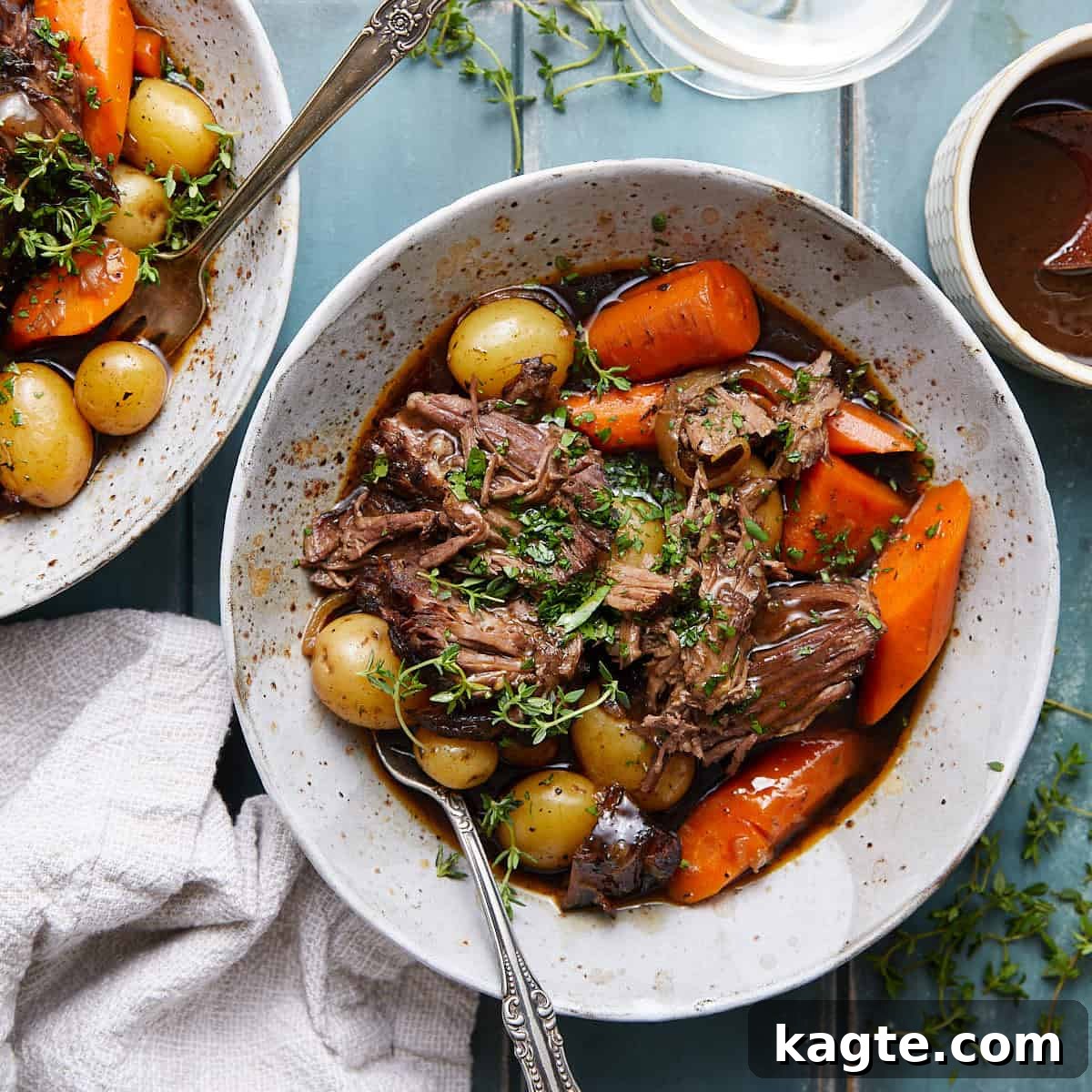
Welcome to the heart of comfort food! This simple yet incredibly flavorful Old Fashioned Pot Roast Recipe Without Wine is designed for your slow cooker, promising a melt-in-your-mouth tenderness that truly embodies classic Sunday dinner fare. It’s a dish that will undoubtedly earn its spot as a cherished family favorite, bringing warmth and satisfaction to your table with minimal fuss.
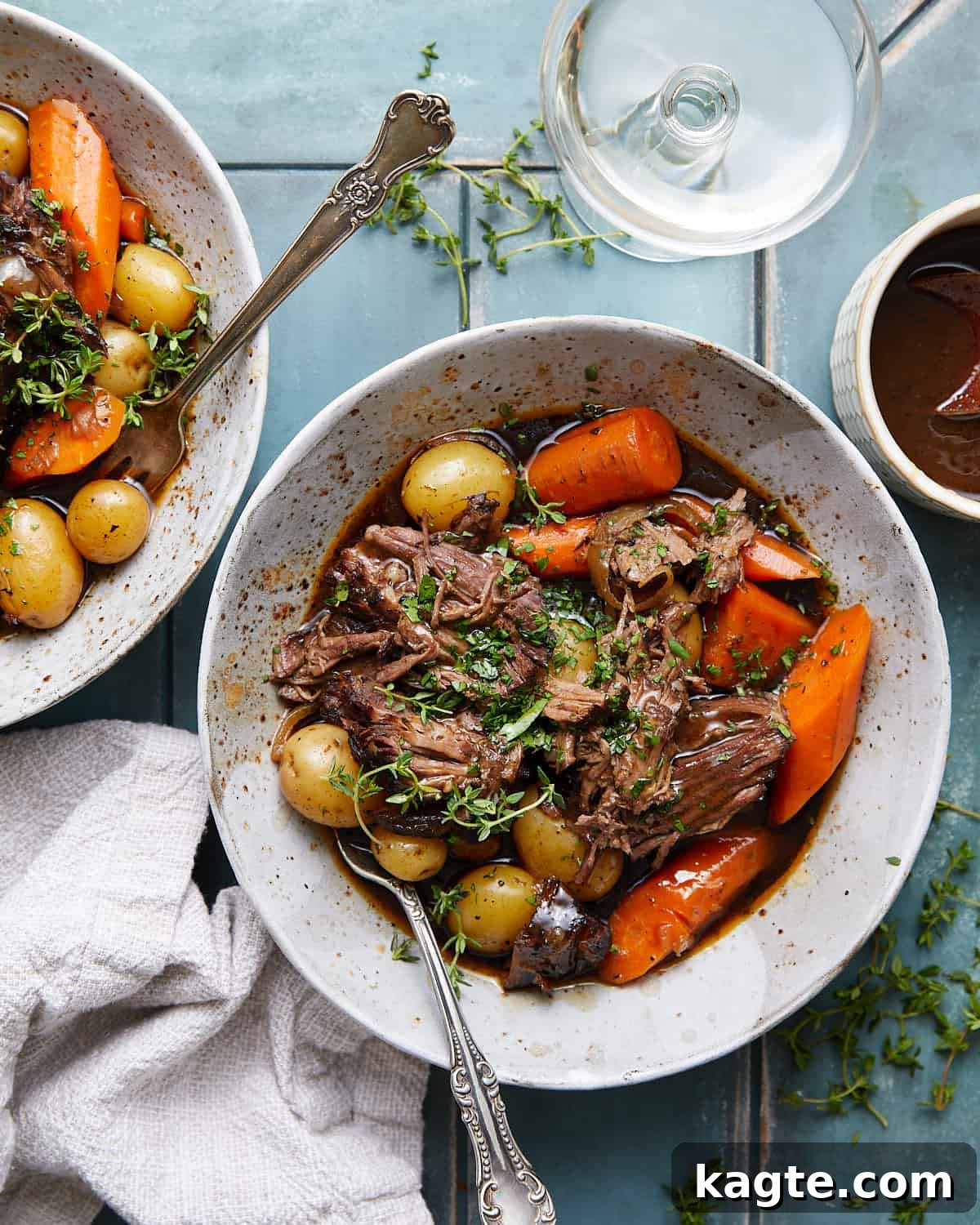
Many home cooks often ask for alternatives to wine in their favorite recipes, especially for hearty dishes like my Old Fashioned Beef Stew on the Stovetop, Dutch Oven Beef Stew, Southern Pot Roast, and Red Wine Short Ribs. This frequently asked question inspired me to craft a dedicated old fashioned pot roast recipe that delivers all the rich, deep flavor you expect, but entirely without wine.
This recipe hearkens back to the pot roasts my mom and grandma used to make – simple, wholesome, and profoundly satisfying. I intentionally kept the ingredient list straightforward and minimal, focusing on core flavors that truly shine. While I often experiment with additions like fish sauce, tomato paste, bay leaves, or fresh herbs for my chuck roast, I found that this streamlined version didn’t miss them one bit. The result is pure, unadulterated pot roast perfection that’s both easy to prepare and incredibly delicious.
Should you find yourself with delightful leftovers, don’t worry! There are plenty of creative ways to repurpose them. Explore these 12 Leftover Pot Roast Recipes for fresh ideas and avoid food waste!
Table of Contents
- Why You’ll Love This Recipe
- Understanding the Chuck Roast
- The Beauty of Slow Cooking for Pot Roast
- Ingredients & Substitutions
- How to Make Old Fashioned Pot Roast Recipe Without Wine
- Recipe Serving Suggestions
- Oven Cooking Method
- Expert Tips for Pot Roast Perfection
- Additions, Variations, & More Ideas
- Crafting the Perfect Gravy
- Storage and Reheating Leftovers
- Recipe FAQs
- More Main Dish Recipes
- Old Fashioned Pot Roast Recipe Without Wine (Full Recipe Card)
Why You’ll Love This Recipe
This pot roast isn’t just a meal; it’s an experience of effortless cooking and exceptional taste. Here’s why this recipe will become a cherished part of your culinary repertoire:
- Simple and Accessible – Forget gourmet ingredients and complicated steps. This easy pot roast recipe calls for minimal, basic ingredients that are likely already in your pantry or easily found at any grocery store. It’s perfect for beginners and seasoned cooks alike who appreciate straightforward cooking.
- Unbelievably Tender – The slow cooking process is the secret to transforming a humble chuck roast into an incredibly tender, fall-apart masterpiece. By the time it’s done braising, the meat will be so soft you can shred it with a fork, dissolving in your mouth with every bite.
- Richly Juicy – One of the hallmarks of a great pot roast is its juiciness. This recipe ensures the meat cooks slowly in its own savory juices and the added broth, infusing every fiber with moisture and incredible flavor. I highly recommend serving it generously drizzled with the extra au jus to maximize the succulent experience.
- Completely Wine-Free – For those who prefer to avoid alcohol in their cooking, or simply don’t have wine on hand, this recipe is a godsend. Unlike many traditional pot roast recipes that rely on red or white wine for depth, this version achieves a complex, satisfying flavor profile using readily available pantry staples.
- Slow Cooker Convenience – Embrace the ease of hands-off cooking with your slow cooker. This method allows the pot roast to simmer gently for hours, developing deep flavors and incredible tenderness while you go about your day. It’s the ultimate set-it-and-forget-it meal, though a traditional oven method is also provided for flexibility.
- Economical and Hearty – Chuck roast is a relatively inexpensive cut of beef, making this recipe a budget-friendly option for feeding a crowd or providing multiple meals. Its inherent toughness is precisely why it excels in slow-cooked dishes; the long braising time breaks down connective tissues, turning it into something truly luxurious. Since it yields a large portion, it’s ideal for family dinners, gatherings, or meal prepping for the week.
Understanding the Chuck Roast: The Heart of Your Pot Roast
At the core of any great pot roast is the cut of beef, and for this recipe, the boneless beef chuck roast is king. This particular cut comes from the shoulder of the cow, an area that gets a lot of exercise, making the meat inherently tough with a good amount of connective tissue and marbling. But don’t let “tough” deter you; this is precisely what makes it perfect for slow cooking.
When subjected to low, slow heat for several hours, the collagen in the connective tissue gradually breaks down and transforms into gelatin. This gelatin melts into the meat, basting it from within, resulting in that desirable melt-in-your-mouth tenderness and incredible juiciness that defines a truly exceptional pot roast. The marbling (streaks of fat) also renders during cooking, adding rich flavor and further contributing to the succulence of the dish.
Cutting the chuck roast into two pieces before searing allows for better browning on all sides, maximizing the flavor development, and ensures more even cooking. Opt for a piece with good marbling for the best results, as this fat content is crucial for both flavor and moisture during the long cooking process.
The Beauty of Slow Cooking for Pot Roast
While the oven method certainly yields delicious results, the slow cooker truly shines when it comes to pot roast. Its “set it and forget it” nature offers unparalleled convenience, allowing you to prep the meal in the morning and return home to a fragrant, perfectly cooked dinner.
The consistent, low heat of a slow cooker gently braises the chuck roast, ensuring that the meat breaks down slowly without drying out. This prolonged, even cooking environment is ideal for rendering fat and transforming tough connective tissues into tender gelatin, which is essential for that signature fall-apart texture. Furthermore, the covered environment traps moisture and allows all the savory aromas and flavors from the broth, vegetables, and seasonings to meld together seamlessly, creating a deeply infused and incredibly flavorful final dish. For busy individuals or families, the slow cooker is an invaluable tool for preparing this classic comfort food with minimal active time.
Ingredients & Substitutions
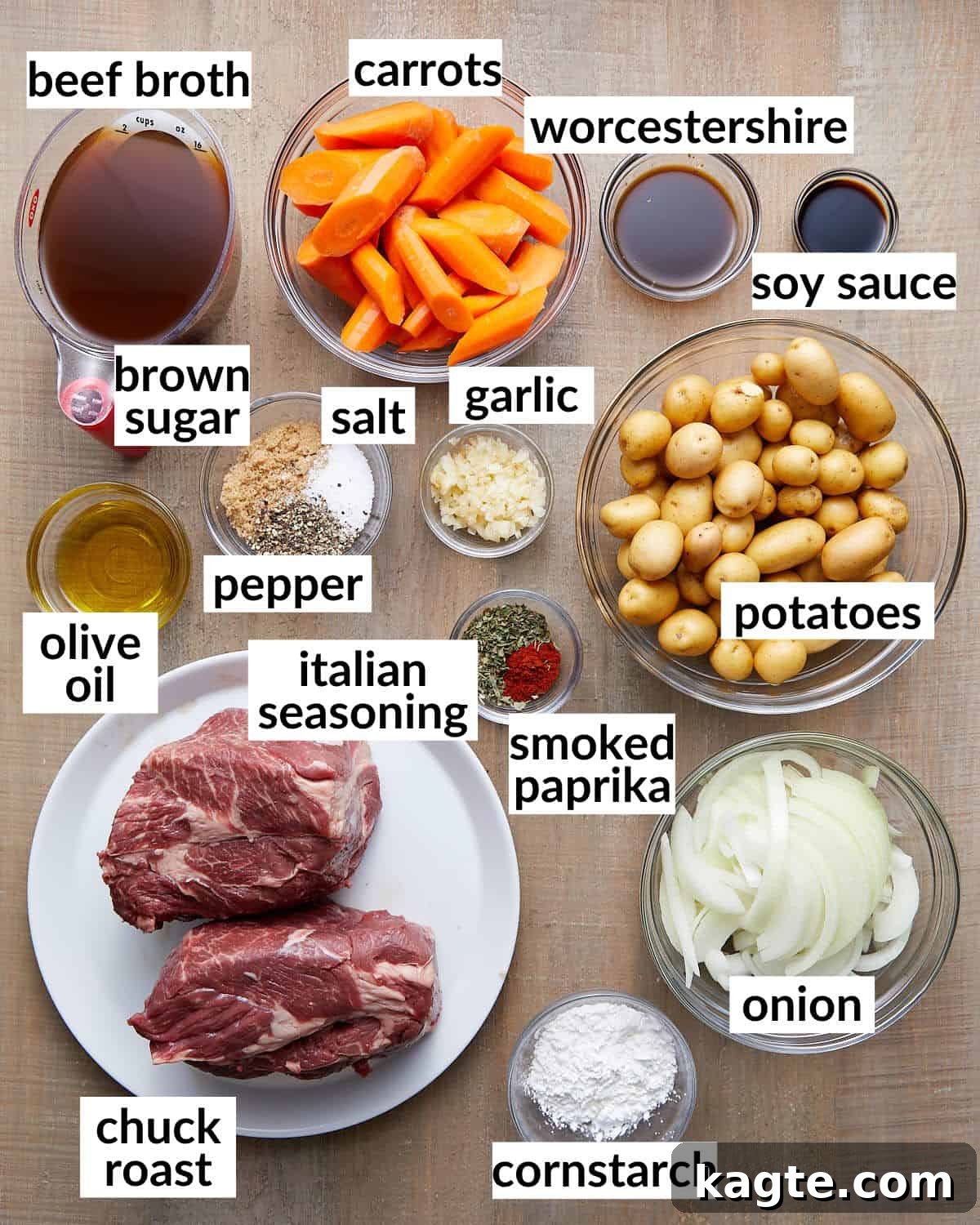
The beauty of this old-fashioned pot roast lies in its simple, wholesome ingredients that come together to create a symphony of flavor. Here’s a closer look at what you’ll need and potential substitutions:
- Boneless Beef Chuck Roast: This is the star of the show. As discussed, its marbling and connective tissue are key to a tender roast. Aim for a 3.5-4 pound roast, cut into two pieces for easier searing and faster breakdown. If you can’t find boneless, a bone-in chuck roast works too, just factor in a slightly longer cooking time and remove the bone before shredding.
- Kosher Salt: All of my recipes are tested with Morton kosher salt unless noted otherwise. Its larger crystals and clean flavor make it superior for everyday cooking. If you’re using table salt, reduce the amount by about half, as it’s finer and saltier by volume. Seriously, pick up some kosher salt next time you’re at the store!
- Brown Sugar: A touch of brown sugar helps create that beautiful caramelization during searing and adds a subtle sweetness that balances the savory notes. You can use light or dark brown sugar. If you don’t have it, a teaspoon of granulated sugar or even a tablespoon of maple syrup or honey can work in a pinch, though the flavor will be slightly different.
- Black Pepper: Freshly ground black pepper is always best for maximum flavor. Use a good quality coarse grind.
- Olive Oil: Essential for searing the beef and sautéing the onions, olive oil adds a mild, fruity note. Vegetable oil, canola oil, or avocado oil are suitable neutral-flavored alternatives.
- Large Onion: Sliced onions add foundational sweetness and aroma to the pot roast. Yellow or white onions are perfect here. If you prefer a milder onion flavor, try sweet onions.
- Garlic: Freshly minced garlic provides an indispensable aromatic depth. I highly recommend using fresh. However, if unavailable, 1 1/2 teaspoons of granulated garlic powder or garlic flakes can be used (adjust to taste, as dried garlic is more potent).
- Italian Seasoning: This blend of dried herbs (typically oregano, basil, thyme, rosemary, marjoram) adds a classic, savory herbaceousness. If you don’t have Italian seasoning, a combination of individual dried herbs can be used – aim for a teaspoon each of oregano, basil, and thyme.
- Smoked Paprika: Smoked paprika offers a beautiful color and a subtle smoky depth that enhances the richness of the beef. Regular sweet paprika can be used as a substitute, but you’ll miss the smoky nuance.
- Worcestershire Sauce: This fermented condiment is a secret weapon, providing a complex umami boost and tanginess that rounds out the flavors. Don’t skip it if you can help it! If absolutely necessary, a dash of soy sauce with a tiny bit of apple cider vinegar can approximate some of its flavor.
- Soy Sauce: A small amount of soy sauce contributes significant umami and saltiness, deepening the overall savory profile without making the dish taste “Asian.” Use regular or low-sodium soy sauce. Tamari (gluten-free soy sauce) also works.
- Beef Broth or Beef Stock: This is your primary braising liquid, providing moisture and flavor. Low-sodium beef broth allows you to control the salt level better. If you are low on beef broth or stock, check out the Best Substitutes for Beef Broth for suitable alternatives like water with bouillon, or even vegetable broth in a pinch.
- Cornstarch: Used to thicken the braising liquid into a luscious gravy. For a gluten-free option, you can use arrowroot powder (use slightly less as it thickens more effectively).
- Baby Yellow Potatoes: These small, tender potatoes hold their shape well and cook beautifully in the pot roast. Aim for potatoes that are 1 to 1.5 inches big. If baby potatoes aren’t available, cut regular yellow potatoes (Yukon Gold) or russet potatoes into 1 to 1.5-inch cubes. Keep them uniform in size for even cooking.
- Whole Carrots: Peeled and cut on a bias into 2-3 inch pieces, carrots add sweetness and color. Larger cuts prevent them from becoming too soft too quickly. Any sturdy root vegetable like parsnips or even celery can be added or substituted.
A complete list of ingredients and precise amounts is conveniently located on the recipe card below.
How to Make Old Fashioned Pot Roast Recipe Without Wine
Quick Overview: A Glimpse into the Process
Preparing this comforting pot roast is simpler than you might think, primarily involving a quick sear and then letting your slow cooker do all the heavy lifting. Here’s a snapshot of the journey:
- Sear the chuck roast and onions for deep flavor.
- Combine ingredients in the crockpot and begin the slow cooking process.
- Add the hearty vegetables towards the end for perfect texture.
- Remove the incredibly tender meat and shred it for serving.
Step by Step Instructions for a Perfect Pot Roast
Follow these detailed steps to achieve a pot roast that’s rich in flavor and wonderfully tender:
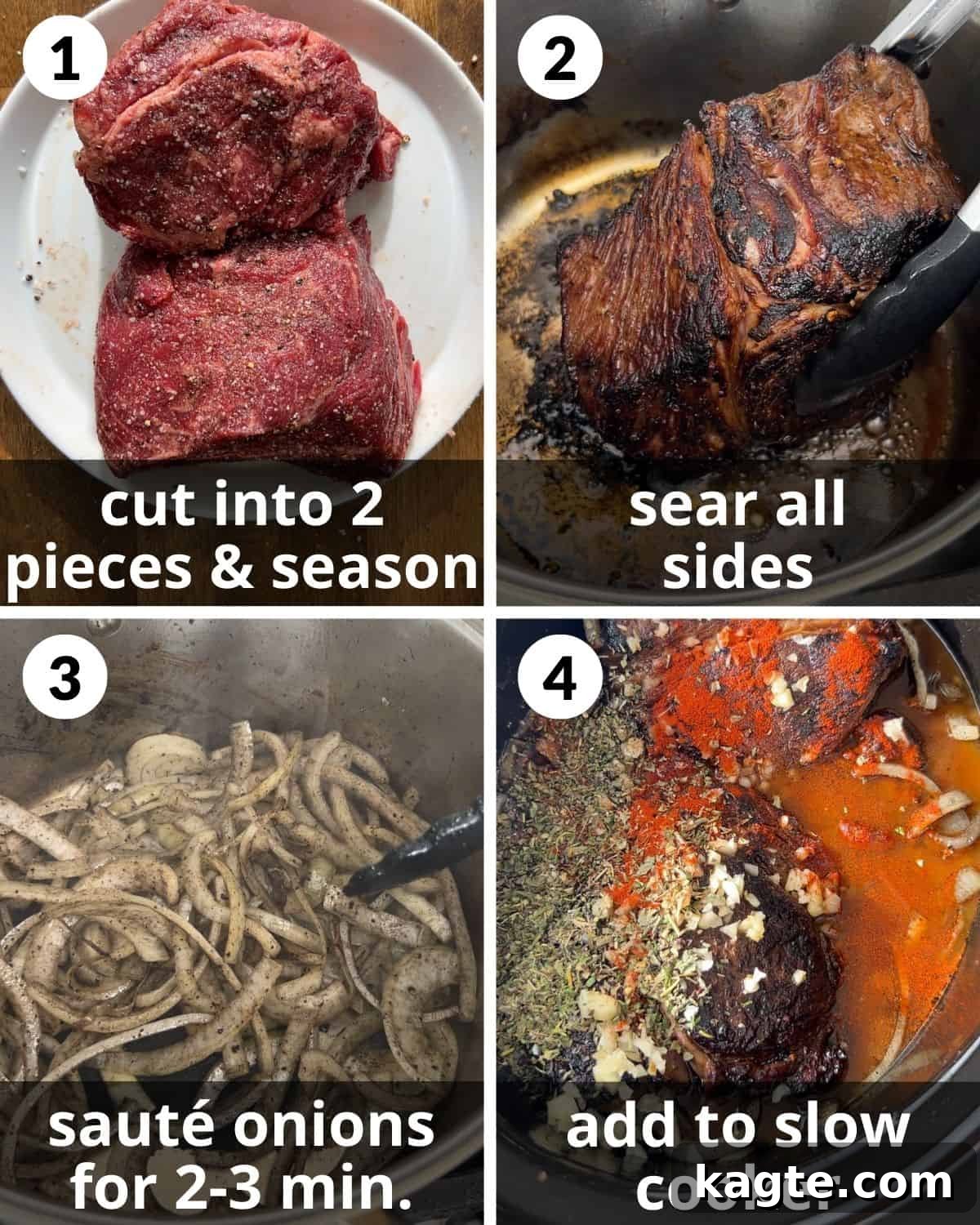
Pro Tip: Searing the meat is a non-negotiable step! It creates a dark brown, flavorful crust on the exterior of the roast, adding incredible depth and complexity to the final dish. Take your time to ensure each side is properly seared for maximum flavor development.
Step 1: Prepare the Roast. In a small bowl, combine the kosher salt, brown sugar, and black pepper. This simple spice blend will season the meat beautifully. Rub and firmly pat this mixture evenly on all sides of each piece of your chuck roast. This ensures the seasoning adheres and penetrates the meat.
Step 2: Sear the Beef. In a large, heavy-bottomed pot or skillet (like a Dutch oven or cast iron skillet), heat the olive oil over medium-high heat until shimmering. Carefully place one piece of the seasoned roast into the hot oil and sear on all sides until a deep, dark brown crust forms. This usually takes 3-5 minutes per side. Transfer the seared meat to your slow cooker. If cooking in batches, add more oil if needed for the second piece. Once all meat is seared, reduce the heat to medium.
Step 3: Sauté the Onions. Add the sliced onions to the remaining oil and flavorful browned bits in the pot. Sauté for 2-3 minutes, stirring occasionally, and gently scrape any delicious brown bits (fond) from the bottom of the pan as they will add incredible flavor to your pot roast. Once softened, add these aromatic onions to the slow cooker alongside the seared beef.
Step 4: Combine Liquids and Spices. Add the minced garlic, Italian seasoning, smoked paprika, Worcestershire sauce, and soy sauce directly to the slow cooker. In a liquid measuring cup or a small bowl, whisk together the beef broth and cornstarch until the cornstarch is fully dissolved and there are no lumps. Pour this mixture over the roast, onions, and spices in the slow cooker. Don’t worry if the very top of the roast isn’t completely covered; it will braise beautifully in the rich liquid.
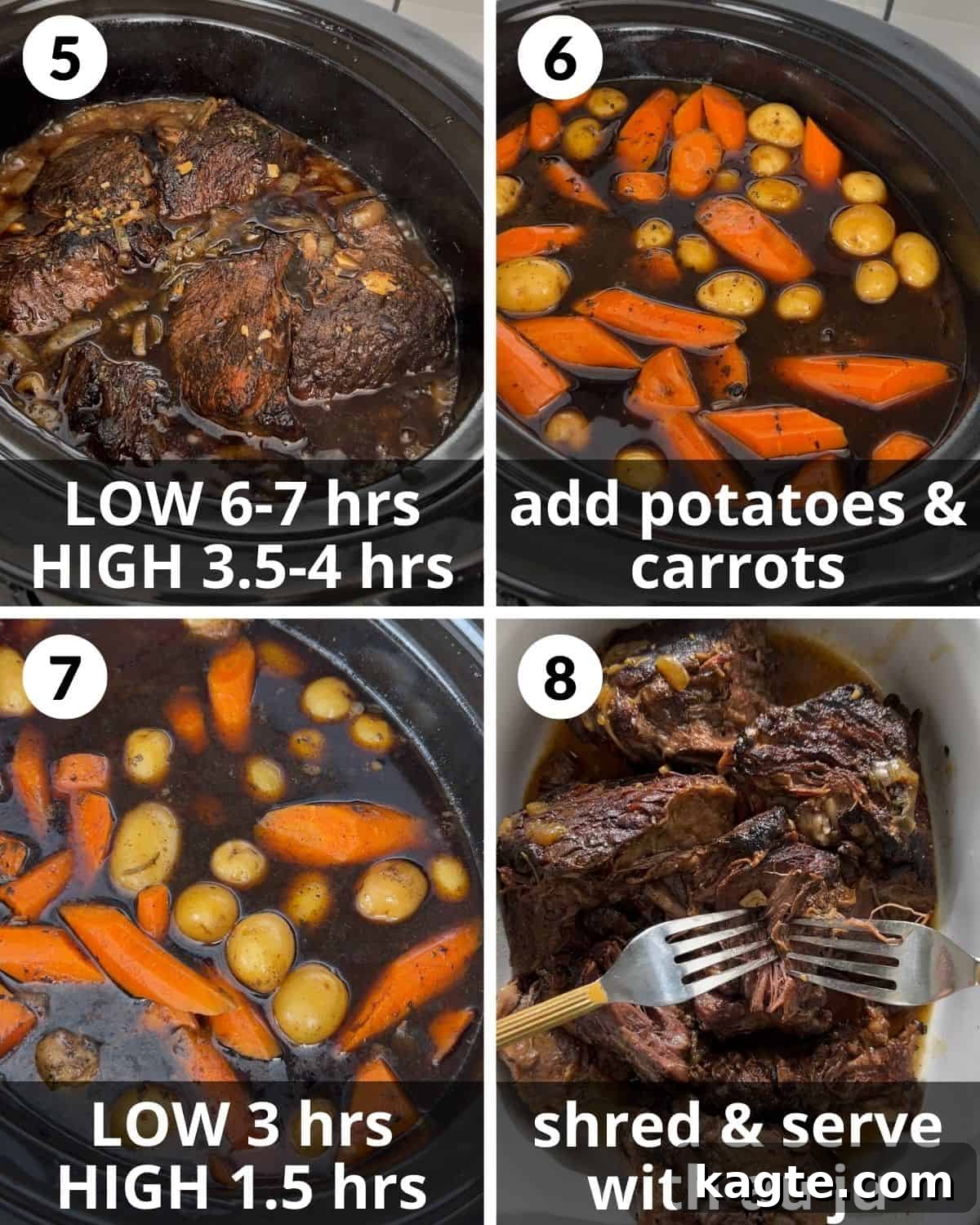
Expert Tip for Veggies: I prefer to add the vegetables towards the end of the cooking cycle. This ensures they cook to a tender-crisp texture, rather than becoming overly mushy or falling apart, retaining their distinct shape and flavor.
Step 5: Initial Slow Cook. Cover the slow cooker with its lid and cook on the LOW setting for 6-7 hours, or on the HIGH setting for 3.5-4 hours. During this time, the chuck roast will begin its transformation into tender perfection.
Step 6: Add the Vegetables. After the initial cooking time (6-7 hours on LOW or 3.5-4 hours on HIGH), carefully remove the lid. Add the prepared baby yellow potatoes and carrots to the slow cooker. Use the back of a spoon to gently press them down into the braising liquid so they are mostly submerged. This helps them cook evenly and absorb all those wonderful flavors.
Step 7: Finish Cooking. Re-cover the slow cooker and continue to cook for an ADDITIONAL 3 hours on LOW or 1.5 hours on HIGH. This allows the vegetables to become tender while the meat finishes its transformation. (If you have a strong preference for extremely soft, melt-in-your-mouth vegetables, please refer to the “Expert Tips” section below for adjustments.)
Step 8: Serve and Enjoy! Once the cooking time is complete and the meat is fork-tender, carefully remove the roast from the slow cooker and place it on a large serving platter or cutting board. Using two forks, shred the meat into large, juicy pieces. With a slotted spoon, remove the cooked vegetables and arrange them around the shredded meat. Ladle the rich, flavorful pan juices (au jus) generously over the meat and vegetables before serving. This is where all the incredible flavor resides!
Recipe Serving Suggestions
The truly wonderful aspect of an old fashioned pot roast recipe is its completeness. It’s a hearty, flavorful meal that perfectly balances protein, vegetables, and a rich gravy all in one pot, making it perfectly satisfying on its own. You honestly don’t need many, if any, additional sides.
However, if you wish to complement this magnificent meal or simply love a little extra something, here are some recommendations:
- Crusty Bread: A warm, crusty loaf of bread is ideal for soaking up every last drop of the delectable au jus. My favorites include No Knead Rustic Bread or a classic baguette.
- Simple Green Salad: A light, crisp salad offers a refreshing contrast to the richness of the pot roast. A vinaigrette-dressed mixed green salad or an Easy Caesar Salad provides a welcome balance.
- Creamy Mashed Potatoes: While this recipe includes potatoes, some find extra mashed potatoes irresistible, especially for soaking up gravy.
- Roasted Asparagus or Green Beans: Lightly roasted or steamed green vegetables can add a fresh, vibrant element without overpowering the main dish.
- Cornbread: For a touch of Southern comfort, a side of warm cornbread can be delightful.
Oven Cooking Method: For the Traditionalist
While the slow cooker offers unparalleled convenience, a pot roast cooked in the oven yields equally delicious results with a deeply caramelized crust and tender interior. If you don’t have a slow cooker or simply prefer the traditional method, here’s how to adapt this pot roast recipe for your oven:
- Preheat Oven: Begin by preheating your oven to a steady 300°F (150°C). A low and slow temperature is crucial for tenderizing the chuck roast.
- Searing and Sautéing: Follow Step 1, 2, and 3 of the slow cooker instructions: Season the beef, sear it thoroughly on all sides in a large Dutch oven or oven-safe pot over medium-high heat, and then sauté the onions in the same pot, scraping up any delicious brown bits. This can all be done directly in your Dutch oven, saving you an extra pan.
- Combine and Simmer: Add the garlic, Italian seasoning, smoked paprika, Worcestershire sauce, soy sauce, and the whisked beef broth and cornstarch mixture to the Dutch oven with the seared beef and onions. Bring the liquid to a light boil on the stovetop.
- First Bake: Once simmering, cover the Dutch oven tightly with its lid (or aluminum foil if your lid isn’t airtight). Transfer it to your preheated oven and bake for 3 hours.
- Add Vegetables and Finish: After 3 hours, carefully remove the Dutch oven from the oven. Add the potatoes and carrots, ensuring they are mostly submerged in the liquid. Re-cover tightly and return to the oven to bake for another 1.5 to 2 hours, or until the meat is fork-tender and the vegetables are cooked to your desired softness.
Expert Tips for Pot Roast Perfection
Achieving a truly remarkable pot roast is about more than just following steps; it’s about understanding the nuances that elevate the dish. Here are some expert tips to ensure your pot roast is consistently tender, juicy, and packed with flavor:
- Never Skip Searing the Beef: This is arguably the most crucial step for maximum flavor. Searing creates the Maillard reaction, developing deep brown crusts that lock in savory flavors and add complexity to the braising liquid. Don’t rush it; ensure all sides are well-browned before transferring to the slow cooker or oven.
- Season Liberally and Evenly: Don’t be shy with the salt, sugar, and pepper rub. Seasoning the meat before searing helps create that delicious crust and ensures flavor permeates throughout the roast. Patting the spices onto the meat ensures good adhesion.
- Control Your Veggie Tenderness: The timing of adding your vegetables significantly impacts their texture.
- If you follow the recipe as instructed, adding veggies later, they will be tender but still have a bit of bite (my preferred texture).
- If you prefer them softer, almost melting, you can adjust the initial cook time to 5-6 hours on LOW or 3-3.5 hours on HIGH. Then, add the veggies and continue cooking for an additional 4 hours on LOW or 2 hours on HIGH. The total cook time will be similar, but the earlier addition allows for more breakdown.
- For truly fall-apart, stew-like veggies, you can even add everything (meat and vegetables) to the slow cooker at the very beginning and cook for 8-10 hours on LOW or 4-6 hours on HIGH.
- Don’t Skimp on the Au Jus: The pan drippings, or au jus, are where all the magic happens. This concentrated liquid is incredibly flavorful, having absorbed all the juices from the meat and vegetables, and all the seasonings. Be sure to generously spoon this delicious liquid over the shredded meat and vegetables before serving. It’s also fantastic for dipping crusty bread!
- Allow the Meat to Rest (Optional but Recommended): While the meat will be incredibly tender right out of the slow cooker, letting it rest for 10-15 minutes on a cutting board before shredding can help the juices redistribute, resulting in an even more succulent roast.
- Avoid Overfilling the Slow Cooker: For even cooking and to prevent spills, do not fill your slow cooker more than two-thirds full.
- Resist the Urge to Peek: Lifting the lid of your slow cooker releases heat and significantly extends the cooking time. Try to keep the lid on until it’s time to add vegetables or check for doneness.
Additions, Variations, & More Ideas
This old fashioned pot roast recipe is a fantastic base, but it’s also wonderfully adaptable. Feel free to experiment with these additions and variations to customize it to your taste:
- With Wine: If you do decide to incorporate wine, this recipe can easily accommodate it. Simply replace 1/2 to 1 cup of the beef broth with a dry red wine, such as Cabernet Sauvignon, Merlot, or Pinot Noir. Add it during Step 4 with the other liquids and spices.
- Different Root Vegetables: Beyond potatoes and carrots, consider adding other hearty root vegetables. Parsnips, turnips, or even chunks of butternut squash can be added with the potatoes and carrots for different flavors and textures.
- Sweet Potatoes: For a touch of sweetness and a different nutritional profile, try swapping the baby yellow potatoes for sweet potatoes, cut into similar 1 to 1.5-inch cubes.
- Fresh Herbs: Elevate the aromatic profile by replacing or supplementing the dried Italian seasoning with fresh chopped herbs. A combination of 3-4 Tablespoons of fresh parsley, rosemary, oregano, or thyme, added towards the end of cooking or as a garnish, will brighten the flavors considerably.
- Mushrooms: Sautéed mushrooms (cremini or button) added with the onions in Step 3, or stirred in during the last hour of cooking, will add an earthy depth.
- Mashed Potatoes from Roast: If you find the potatoes cooked in the pot roast are exceptionally tender, you can use them as the base for a rustic mashed potato side dish. Simply remove them, mash with a fork, and mix with a little butter or some of the au jus.
- Leftovers: Store any leftover pot roast and vegetables in an airtight container in the refrigerator for up to 3-4 days. I recommend storing the meat and vegetables separately from the au jus, as this allows you to control the moisture when reheating. Leftover meat is fantastic for a variety of dishes, including French dip-style sandwiches, shredded beef tacos, or even as a topping for baked potatoes.
- Spice it Up: For a subtle kick, add a pinch of red pepper flakes or a dash of cayenne pepper along with the other spices in Step 4.
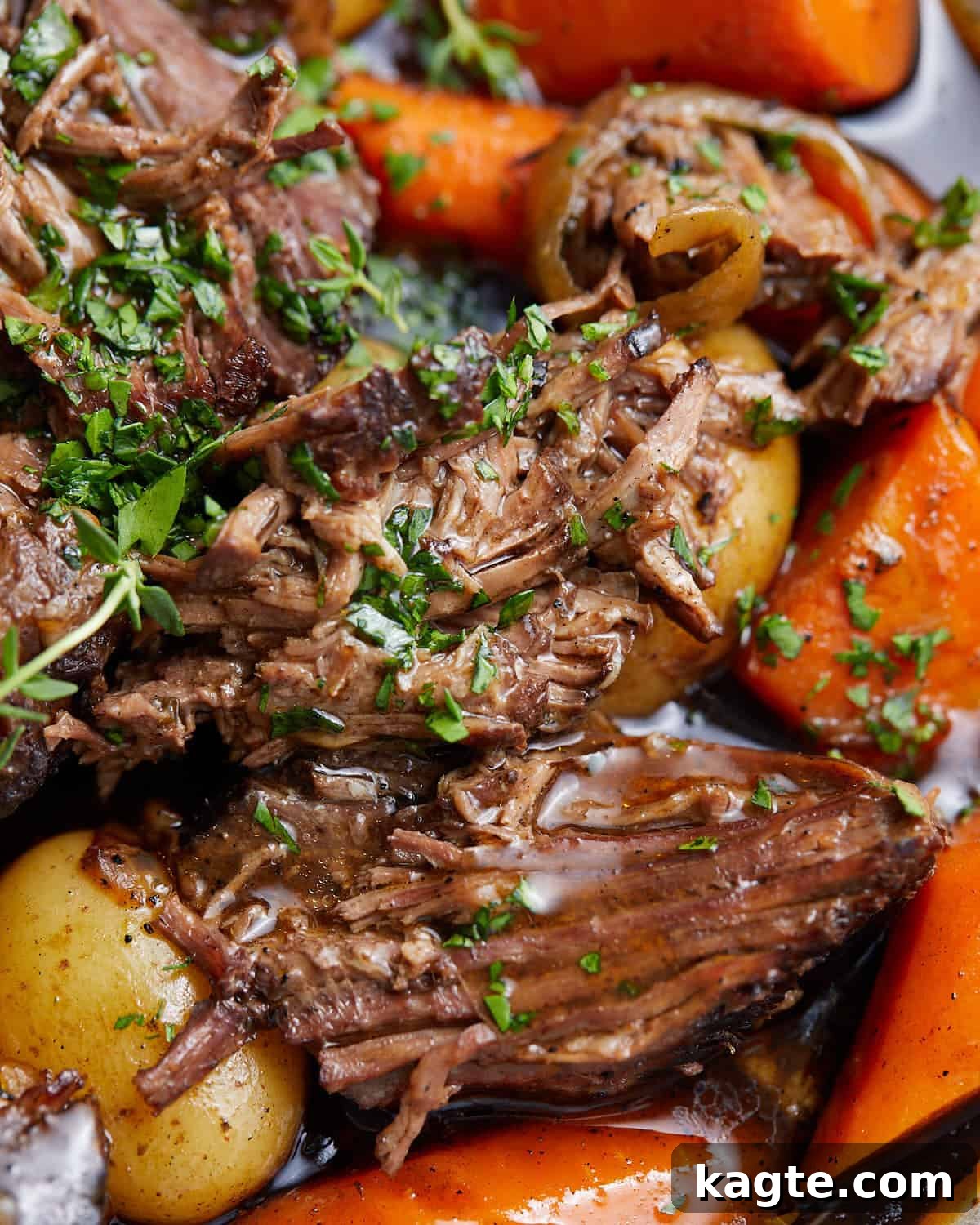
Crafting the Perfect Gravy from Pan Drippings
The flavorful liquid remaining in your slow cooker after the pot roast is done is pure gold. It’s already thickened slightly by the cornstarch and infused with all the savory essences of the meat and vegetables. However, if you desire a thicker, richer gravy to spoon over your pot roast or mashed potatoes, it’s incredibly simple to achieve:
- Separate Solids: After removing the meat and vegetables, pour the remaining liquid from the slow cooker through a fine-mesh sieve into a medium saucepan. Press down on any solids in the sieve to extract as much liquid as possible. Discard the solids.
- Defat (Optional): If there’s a significant layer of fat on top of the liquid, you can skim some of it off using a spoon or a fat separator for a lighter gravy.
- Simmer and Thicken: Bring the strained liquid to a simmer over medium heat on your stovetop. If you want it even thicker, create a slurry by whisking 1-2 tablespoons of cornstarch with an equal amount of cold water until smooth. Slowly whisk this slurry into the simmering liquid, a little at a time, until your gravy reaches the desired consistency. Continue to simmer for 1-2 minutes to cook out any starchy taste.
- Taste and Adjust: Taste the gravy and adjust seasoning with additional salt and pepper if needed. You can also add a splash of Worcestershire sauce or a pinch of fresh herbs for extra depth.
Serve this luscious homemade gravy generously over your pot roast and sides for the ultimate comfort food experience.
Storage and Reheating Leftovers
One of the best things about pot roast is how well it keeps and often tastes even better the next day! To ensure your leftovers remain delicious and safe to eat, follow these simple guidelines:
- Cool Promptly: Allow any leftover pot roast and vegetables to cool down to room temperature within two hours of cooking. Do not leave them out for extended periods.
- Airtight Storage: Transfer the cooled pot roast (meat, vegetables, and any remaining au jus) into separate airtight containers. Storing the meat and vegetables separately from the au jus helps prevent the vegetables from becoming too soggy and allows the meat to retain its texture better.
- Refrigeration: Store leftovers in the refrigerator for up to 3-4 days.
- Freezing (Optional): Pot roast freezes beautifully. Place cooled meat and vegetables in freezer-safe bags or containers. You can also freeze the au jus separately. It will keep well for up to 2-3 months. Thaw overnight in the refrigerator before reheating.
- Reheating Methods:
- Stovetop: The best way to reheat pot roast is gently on the stovetop. Place the shredded meat and vegetables in a saucepan with a splash of the au jus (or a little extra beef broth if you don’t have enough). Heat over medium-low heat, stirring occasionally, until warmed through.
- Oven: For larger quantities, place the meat and vegetables in an oven-safe dish, add a little au jus or broth, cover with foil, and reheat at 300°F (150°C) for 20-30 minutes, or until heated through.
- Microwave: For individual portions, the microwave is convenient. Place meat and veggies on a plate, add a spoon of au jus, cover, and microwave in 1-minute intervals until hot, stirring in between. Be careful not to overheat, as this can dry out the meat.
Recipe FAQs: Your Pot Roast Questions Answered
The ultimate secret to achieving a melt-in-your-mouth tender pot roast lies in slow, moist cooking, a process known as braising. This method, whether done in a slow cooker, Dutch oven, or even a pressure cooker, allows the tough connective tissues in cuts like chuck roast to gradually break down and convert into gelatin. This transformation infuses the meat with moisture and renders it incredibly soft and easy to shred. Undercooked roast, on the other hand, will remain tough and chewy, so patience is key.
Both the oven and the crockpot (slow cooker) can produce excellent pot roast, and neither is inherently “better” than the other; it largely depends on your preference and schedule. The crockpot offers superior convenience and a “set it and forget it” approach, making it ideal for busy days. The oven method, particularly in a Dutch oven, often results in a slightly richer, more caramelized exterior due to higher radiant heat, but requires more monitoring. Both methods excel at slow braising to achieve tenderness.
To prevent a pot roast from drying out, it’s essential to cook it immersed in a flavorful braising liquid, like beef broth, for an extended period. The liquid provides constant moisture, while the slow cooking temperature ensures the meat doesn’t overcook rapidly. Also, choosing a well-marbled cut like chuck roast helps, as the fat renders and bastes the meat from within. Don’t forget to sear the meat beforehand; this locks in juices and adds a protective layer.
For the most tender pot roast, boneless beef chuck roast is consistently recommended. Its generous marbling (intramuscular fat) and high collagen content are perfectly suited for long, slow cooking methods. As the collagen breaks down, it turns into gelatin, basting the meat and making it incredibly succulent and fall-apart tender. Other good choices include beef round (rump roast) or brisket, though they might require slightly longer cooking times to reach the same level of tenderness.
Absolutely! Pot roast is incredibly versatile. Beyond potatoes and carrots, feel free to add other sturdy root vegetables like parsnips, turnips, or even celery. You can also add mushrooms during the last hour of cooking for an earthy flavor, or a few sprigs of fresh rosemary or thyme for an aromatic boost.
A pot roast is done when it is fork-tender. This means you should be able to easily pull apart the meat with two forks or pierce it with minimal resistance. While internal temperature can be a guide (around 190-205°F or 88-96°C), tenderness is the most reliable indicator for pot roast, as it’s meant to be shredded, not sliced like a steak.
More Main Dish Recipes to Savor
Discover More Delicious Main Dishes
Chicken
Garlic Butter Chicken Thighs (Baked & Crispy)
Pasta
Baked Stuffed Shells with Meat Sauce
Fall
Dutch Oven Pot Roast
Soup & Chili
Ground Chicken Chili with Beans
Shop my Amazon Storefront for my favorite kitchen tools and ingredients!
If you try this recipe, please leave a star rating in the recipe card below and/or comment! Your feedback is always appreciated. Follow me on Pinterest, Facebook & Instagram for more delicious recipes and cooking inspiration.
Print Recipe
Save Recipe
Old Fashioned Pot Roast Recipe Without Wine
25 minutes
5 hours
5 hours
25 minutes
8 people
Equipment
-
Slow Cooker
-
Large Pot or Skillet (for searing)
-
Tongs
-
Liquid Measuring Cup
Ingredients
- 3.5-4 pounds boneless beef chuck roast, cut into 2 pieces
- 1 Tablespoon Morton kosher salt*
- 2 Tablespoons brown sugar
- 1 teaspoon black pepper
- 2-3 Tablespoons olive oil
- 1 large onion, sliced
- 10 cloves garlic, minced*
- 1 Tablespoon Italian seasoning
- 1 teaspoon smoked paprika
- 2 Tablespoons Worcestershire sauce
- 1 Tablespoon soy sauce
- 2 cups beef broth or beef stock
- 1/4 cup cornstarch
- 2 pounds baby yellow potatoes*, about 1-1.5 inches big
- 1 pound whole carrots, peeled & cut on a bias into 2-3 inch pieces
Instructions
-
In a small bowl, combine the salt, brown sugar, and pepper. Rub and pat the spice mixture on all sides of each piece of the roast.
-
In a large pot or skillet, heat the olive oil over medium-high heat. Sear one piece of the roast at a time on all sides until dark brown. Place seared meat into the slow cooker. Reduce heat to medium.
-
Add the onions to the remaining oil in the pot and sauté for 2-3 minutes, scraping any brown bits off the bottom of the pan. Add these to the slow cooker.
-
Add the garlic, Italian seasoning, paprika, Worcestershire, and soy sauce to the slow cooker. In a liquid measuring cup or small bowl, whisk together the broth and cornstarch until smooth. Pour the mixture over the roast, onions, and spices. The top of the roast will not be fully covered.
-
Cover and cook on LOW for 6-7 hours or HIGH for 3.5-4 hours.
-
Add the potatoes and carrots. Use the back of a spoon to press them into the broth so they are mostly covered in liquid.
-
Cover and cook for an ADDITIONAL 3 hours on LOW or 1.5 hours on HIGH. (If you prefer softer veggies, see notes below.)
-
Remove the roast and shred it into large pieces. Place on a serving platter with the pan juices. Use a slotted spoon to remove the veggies and arrange alongside the meat.
Did you make this recipe?
Leave a comment below!
Notes
- Kosher Salt: All of my recipes are tested with Morton kosher salt unless noted otherwise. It is the best salt for everyday cooking because of its size and flavor. If using table salt, the amount should be reduced. I highly recommend picking up some kosher next time you are at the store!
- Garlic: I highly recommend fresh garlic, but if you do not have any, use 1 1/2 teaspoons of granulated or garlic powder.
- Sear the beef roast. This extra step adds lots of flavor so I do not recommend skipping it.
- Cook the veggies to your liking. If you follow the recipe as instructed, the veggies should be tender but still have a bit of bite to them (my preference). If you prefer them softer, reduce the initial cook time to 5-6 hours on LOW or 3-3.5 hours on HIGH. Add the veggies and cook for an additional 4 hours on LOW or 2 hours on HIGH. The total cook time should be about the same, but the sooner you put the veggies in the softer they will be. It is also an option to put everything in at the beginning and cook for 8-10 hours on LOW or 4-6 hours on HIGH.
- Serve with the pan drippings. The meat drippings or the au jus is where all of the flavor is at. Be sure to spoon this on top of the tender meat before serving. I also love to dip bread in it.
- Wine: If you would like to use wine, replace 1/2-1 cup of the broth with a dry red wine, like cabernet sauvignon, merlot, or pinot noir.
- Sweet Potatoes: Try sweet potatoes instead of yellow potatoes.
- Fresh Herbs: Replace the dried Italian seasoning with a combination of fresh chopped herbs like parsley, rosemary, oregano, or thyme. Use 3-4 Tablespoons.
- Mashed Potatoes: Use the cooked potatoes from the pot roast dinner to make mashed potatoes.
Nutrition
Calories:
547
kcal
|
Carbohydrates:
36
g
|
Protein:
42
g
|
Fat:
27
g
|
Saturated Fat:
11
g
|
Polyunsaturated Fat:
2
g
|
Monounsaturated Fat:
14
g
|
Trans Fat:
1
g
|
Cholesterol:
137
mg
|
Sodium:
1360
mg
|
Fiber:
5
g
|
Sugar:
8
g
Nutrition information is automatically calculated and should only be used as an approximation. Individual results may vary based on exact ingredients and preparation methods.
Never Miss a Recipe!
Sign up for our weekly newsletter to get new, delicious recipes delivered straight to your inbox. Join our community of home cooks and elevate your kitchen game!