
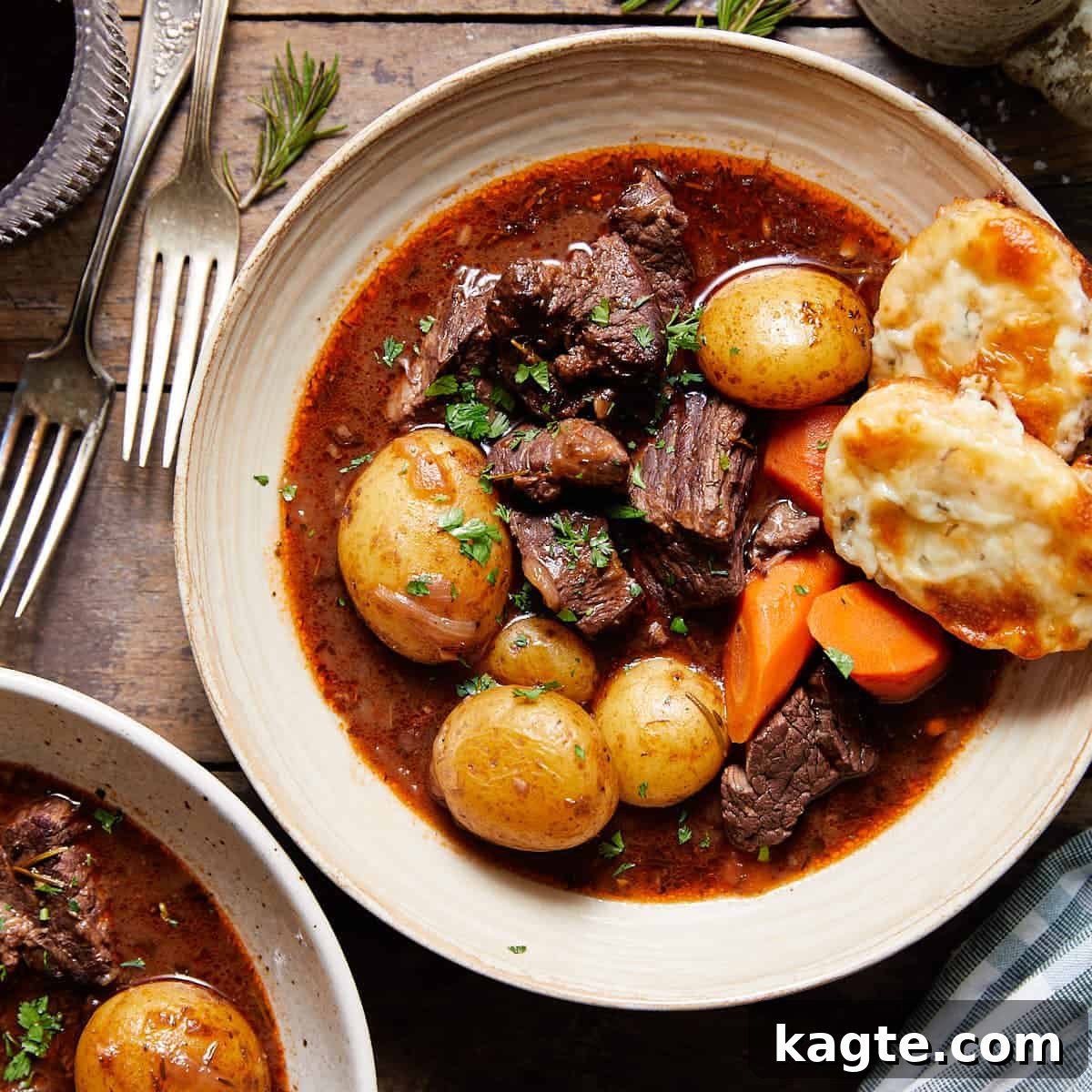
There’s nothing quite like a hearty, comforting bowl of Dutch Oven Beef Stew to chase away the chill of a cold day. This isn’t just any stew; it’s a culinary masterpiece, slow-braised to perfection in the oven, yielding incredibly tender chunks of beef, robust vegetables, and a rich, deeply flavored red wine-infused broth that tastes like it has been simmering all day. It’s the quintessential comfort food, simple to prepare with minimal hands-on time, yet delivering a depth of flavor that feels both gourmet and nostalgic. And for that extra touch of indulgence, don’t forget to serve it with crispy, cheesy croutons!
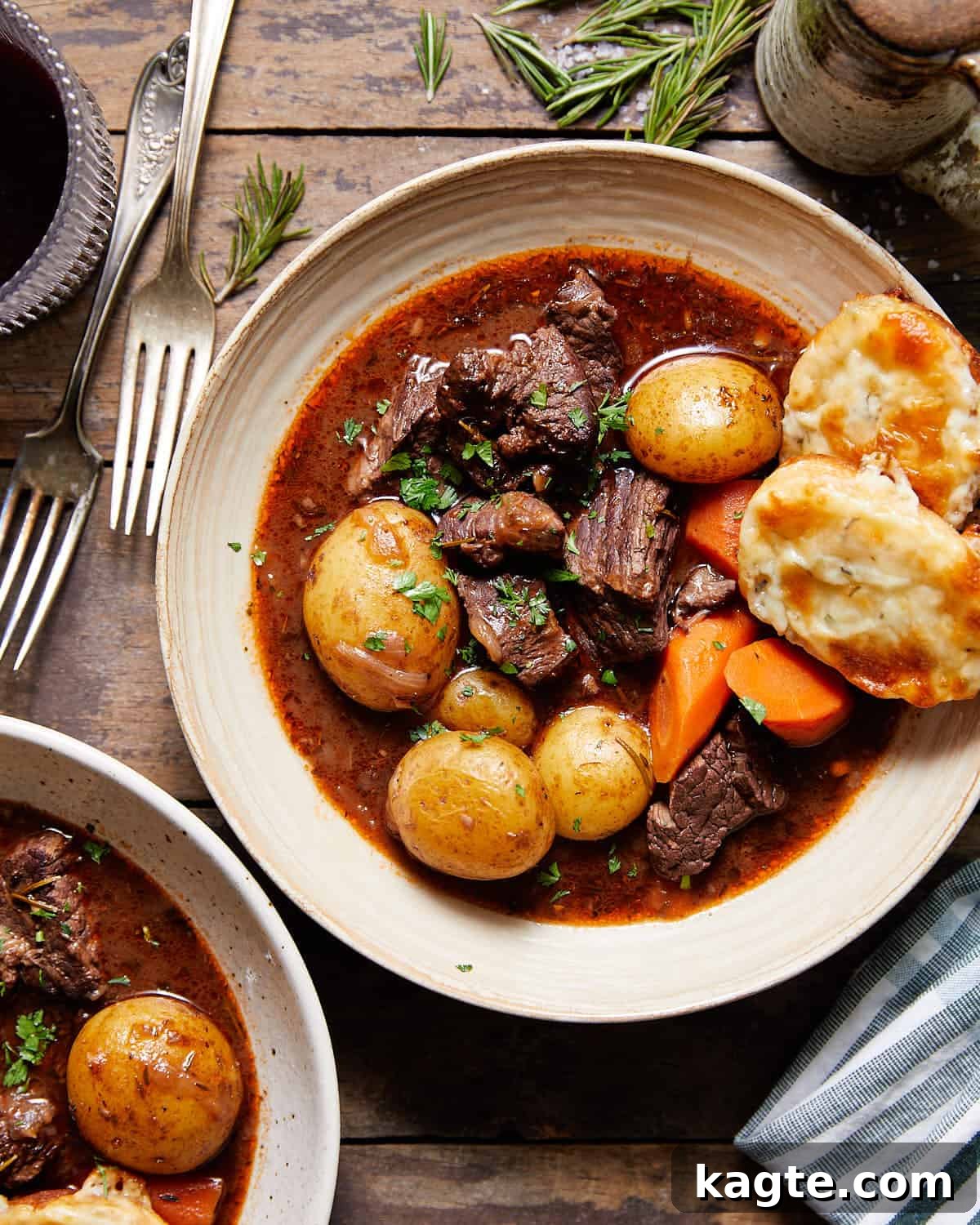
This recipe evokes fond memories of my grandmother’s old-fashioned beef stew, a timeless dish that always brought warmth and joy to our family table. If you cherish classic comfort food, you might also enjoy my Southern Pot Roast, which shares a similar heartwarming appeal. For those seeking more delicious chuck roast recipes, explore my Instant Pot Shredded Beef, the traditional Old Fashioned Beef Stew (Stovetop Version), or my simple yet satisfying Old Fashioned Pot Roast. Each of these recipes promises a perfect, hearty meal for those crisp, chilly days when you crave something truly soul-satisfying.
Table of Contents
- Why This Dutch Oven Beef Stew is a Must-Try
- Mastering the Perfect Beef Cut for Dutch Oven Stew
- Essential Ingredients & Smart Substitutions
- Step-by-Step Guide: How to Make Dutch Oven Beef Stew with Red Wine
- Serving Suggestions: What to Pair with Your Perfect Dutch Oven Beef Stew
- Expert Tips for a Flawless Dutch Oven Beef Stew
- Common Mistakes to Avoid for the Best Beef Stew
- Delicious Additions & Creative Variations for Your Dutch Oven Beef Stew
- Frequently Asked Questions About Dutch Oven Beef Stew
- Explore More Hearty Main Dish Recipes
- Dutch Oven Beef Stew with Red Wine Recipe Card
Why This Dutch Oven Beef Stew is a Must-Try
This Dutch oven beef stew stands out as a true culinary gem, offering a perfect blend of rich flavors and comforting warmth. Here’s why this recipe deserves a permanent spot in your cooking repertoire:
- Unrivaled Flavor Depth: What sets this stew apart is its incredibly rich and complex flavor profile. We build layers of taste using robust ingredients like concentrated tomato paste, aromatic garlic, a generous splash of dry red wine, and umami-packed enhancers such as Worcestershire sauce and even a touch of fish sauce. These elements combine during the slow braising process to create an extraordinary depth that will tantalize your taste buds.
- Effortless One-Pot Wonder: Forget about a sink full of dishes! This entire meal comes together in a single Dutch oven, from searing the beef to simmering the broth and tenderizing the vegetables. This not only streamlines your cooking process but also concentrates all those magnificent flavors into one pot, making cleanup an absolute breeze.
- Consistently Tender Beef: The secret to perfectly tender, melt-in-your-mouth beef lies in two critical steps: a thorough searing to lock in juices and develop a rich crust, followed by a low-and-slow braise in the oven. This gentle cooking method allows the connective tissues in the beef to break down gradually, transforming it into fork-tender perfection every single time.
- Perfectly Make-Ahead Friendly: Much like many slow-cooked dishes, this beef stew tastes even better the next day! The flavors have ample time to meld and deepen overnight, making it an ideal choice for meal prepping during busy weeks or for entertaining guests without last-minute stress. Simply prepare it a day in advance and reheat for an even more exquisite dining experience.
- Nostalgic Comfort: There’s a timeless appeal to a classic beef stew. This recipe captures that familiar, soul-warming essence, reminiscent of home-cooked meals passed down through generations. It’s the kind of dish that brings people together and creates lasting memories, making every spoonful a true taste of comfort.
Mastering the Perfect Beef Cut for Dutch Oven Stew
Choosing the right cut of beef is paramount to achieving a truly tender and flavorful Dutch oven stew. While those pre-packaged “stew meat” cubes might seem convenient, they often contain a random assortment of beef trimmings, which can result in an inconsistent texture, with some pieces remaining tough and others becoming overly stringy. For a stew that boasts melt-in-your-mouth beef, a little foresight goes a long way.
Without a doubt, the undisputed champion for beef stew is a well-marbled chuck roast. This cut, sourced from the shoulder of the cow, is rich in both intramuscular fat and connective tissue. These elements, which might seem undesirable in other cooking methods, are precisely what you want for slow cooking. As the chuck roast slowly braises in the moist heat of the Dutch oven, the tough collagen within the connective tissue gradually breaks down and converts into gelatin. This transformation is what gives the beef its incredibly tender texture and enriches the stew’s broth with a silky, luxurious mouthfeel and profound flavor. When selecting your chuck roast, look for a piece with visible marbling—those fine white streaks of fat woven throughout the meat. While it’s advisable to trim off any excessively large chunks of external fat or gristle, be sure to leave the smaller ribbons of fat intact, as they contribute significantly to the meat’s juiciness and flavor during the long cooking process.
Beyond Chuck: Other Excellent Options for Stew
While chuck roast is highly recommended, there are other cuts that can produce a delicious beef stew, each with its own unique characteristics:
- Beef Brisket: Hailing from the breast or lower chest of the cow, brisket is another cut rich in connective tissue and a good amount of fat. When slow-cooked, it yields beef that is wonderfully tender with a deeply beefy flavor and a satisfyingly silky texture. It’s an excellent choice for a more indulgent or special occasion beef stew.
- Bottom Round Roast: This is a leaner cut derived from the rear leg of the cow. While it can certainly be used in stew, it contains less fat and connective tissue than chuck or brisket, meaning it may result in a slightly firmer texture. It’s a viable option if you’re aiming for a leaner stew and don’t mind a less “melt-in-your-mouth” experience.
- Short Ribs: For a truly luxurious and intensely flavorful stew, boneless beef short ribs are an exceptional choice. They are highly marbled and, after extended braising, become unbelievably tender and rich. Bear in mind that short ribs are generally a more expensive cut and have a higher fat content, making them a premium option.
Regardless of the cut you choose, the key is to prepare it correctly. Always cut the beef into uniform 1.5-inch cubes to ensure even cooking. Most importantly, do not skip the searing step; properly browning the meat on all sides creates a crucial flavor foundation that dramatically enhances the final taste of your Dutch oven beef stew.
Essential Ingredients & Smart Substitutions
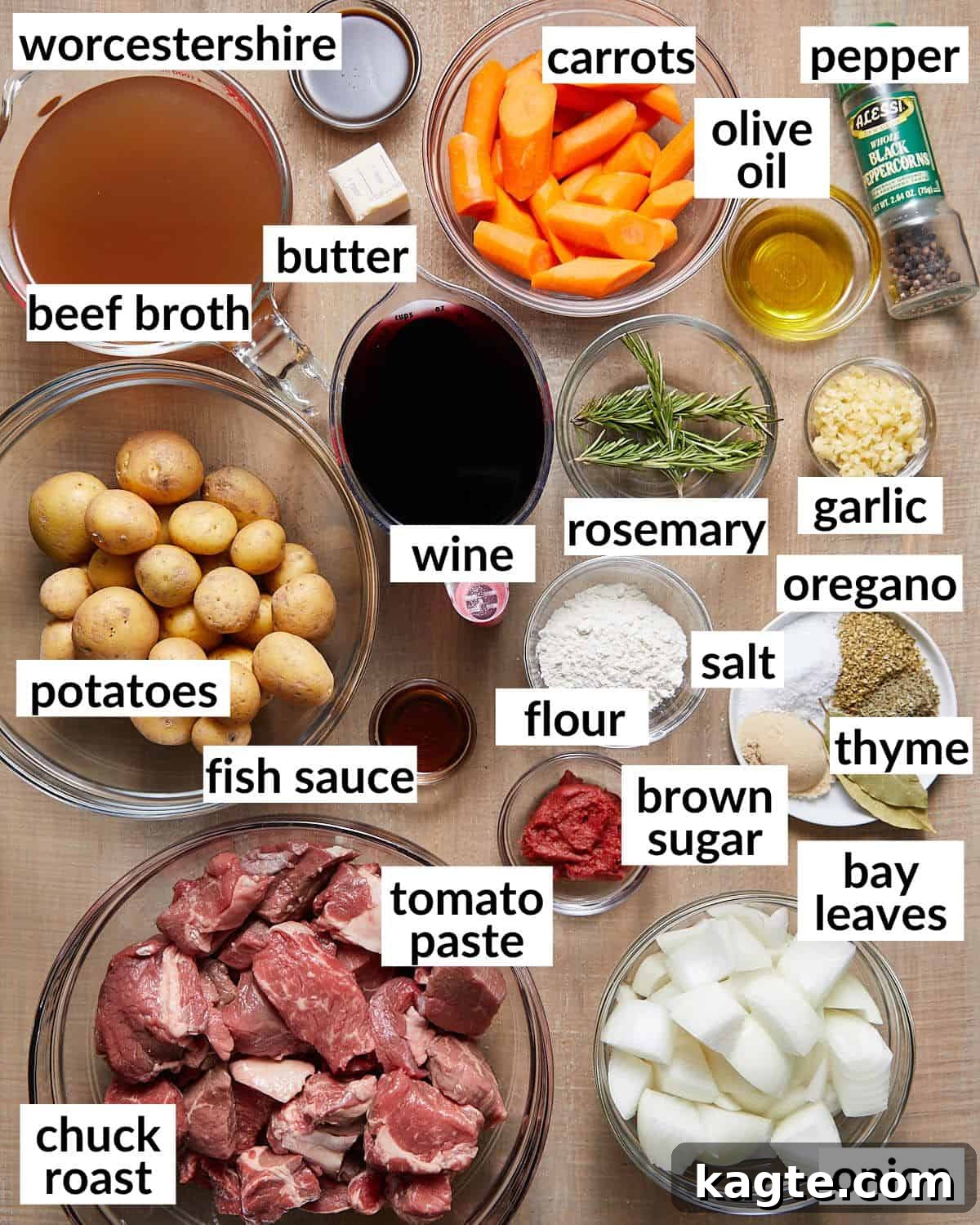
- Olive Oil: Used for searing the beef to develop a rich, brown crust. Any neutral, high-heat cooking oil, such as avocado oil or vegetable oil, can be used as a substitute if needed.
- Beef Stew Meat: As discussed, well-marbled chuck roast, cut into 1.5-inch pieces, is preferred for ultimate tenderness and flavor. Pre-cut stew meat from your butcher is acceptable, but ensure it’s a good quality cut for best results.
- Unsalted Butter: Adds a layer of richness and helps to beautifully caramelize the onions, enhancing the stew’s savory base. If using salted butter, reduce the amount of added kosher salt slightly in the recipe.
- Yellow Onions: These sweet onions provide a foundational sweetness and savory depth to the stew. White onions can be used as an alternative, but yellow onions typically offer a more profound flavor.
- Garlic: This recipe calls for a generous amount of garlic, and for good reason! It mellows significantly during the long cooking process, infusing the stew with an essential aromatic base. Always opt for fresh garlic cloves for the best flavor.
- Tomato Paste: A powerhouse ingredient for building umami and a concentrated, rich tomato flavor. There’s no perfect substitute that quite matches its depth, but in a pinch, you could use about 1/2 cup of canned tomato sauce, simmering it a bit longer to reduce and thicken.
- Brown Sugar: A small amount of brown sugar helps to balance the acidity from the tomato paste and red wine, adding a subtle caramel sweetness that rounds out the stew’s flavors.
- Dried Oregano & Dried Thyme: These classic herbs contribute an earthy, aromatic character that is fundamental to traditional beef stew. If you don’t have both, a general Italian seasoning blend can be used (approximately 2 tablespoons).
- Kosher Salt: Our recipes are developed using Morton kosher salt, known for its larger flakes and clean taste, which allows for better seasoning control. If using finer table salt, remember to reduce the quantity by about half. We highly recommend keeping kosher salt in your pantry for superior cooking results.
- All-Purpose Flour: Used to create a roux that helps to thicken the stew’s broth, giving it a desirable consistency. For a gluten-free alternative, cornstarch can be used; you’ll only need about half the amount, and it should be whisked into cold broth or water to form a slurry before adding to the simmering liquid.
- Beef Stock or Broth: The primary liquid base for the stew. Using high-quality beef stock or bone broth will enhance the richness and overall flavor.
- Dry Red Wine: A bold, dry red wine such as Cabernet Sauvignon, Merlot, or Pinot Noir is crucial for adding incredible depth, complexity, and acidity. The alcohol cooks off, leaving behind concentrated flavor. If you prefer to cook without alcohol, simply replace it with an equal amount of additional beef broth and consider a splash of balsamic vinegar for acidity.
- Worcestershire Sauce: This fermented condiment provides a tangy, savory, and umami-rich layer of flavor that complements beef beautifully.
- Fish Sauce: The unexpected secret ingredient! Don’t worry, it won’t make your stew taste fishy. Instead, it contributes an extraordinary depth of umami, elevating the overall savoriness of the dish. Soy sauce can be used as a 1:1 substitute, but it won’t offer the same nuanced complexity.
- Bay Leaves: These aromatic leaves infuse the stew with a subtle, earthy fragrance during cooking. Remember to remove them before serving, as they are not meant to be eaten.
- Fresh Rosemary: Fresh rosemary sprigs add a wonderful woodsy, fragrant note that pairs exceptionally well with beef. If fresh isn’t available, use about 1 teaspoon of dried rosemary (crushed slightly to release its oils).
- Yellow Baby Potatoes: These smaller, waxy potatoes hold their shape beautifully through long cooking, preventing them from becoming mushy. If using larger potatoes, cut them into uniform 1-inch pieces.
- Carrots: Peeled and sliced diagonally into 1.5-inch chunks, carrots add essential sweetness, vibrant color, and texture. While baby carrots can be used, slicing whole carrots generally yields better visual appeal and flavor.
- Cheesy Croutons: Our favorite way to serve this stew is with homemade mini cheese toasts. To make them, slice half a baguette into about 10 pieces. In a small bowl, mix 4 tablespoons of salted butter with 1/2 teaspoon of Italian seasoning and 4 cloves of minced garlic. Spread this mixture onto the bread slices. Top each piece with 1/2 slice of provolone cheese. Bake at 400°F (200°C) for 8-10 minutes, or until golden and bubbly.
For the complete list of ingredients and precise measurements, please refer to the comprehensive recipe card below.
Step-by-Step Guide: How to Make Dutch Oven Beef Stew with Red Wine
Creating this rich and hearty Dutch oven beef stew is a straightforward process when you follow these steps. The key is to build flavors in layers, ensuring every component contributes to the final delicious result.
Quick Overview
- Sear Beef: Create a deep flavor foundation by browning the beef on all sides.
- Sauté Aromatics: Build the savory base with onions and garlic.
- Add Flavor & Thicken: Incorporate tomato paste, spices, and flour to deepen taste and consistency.
- Deglaze & Simmer: Unlock pan drippings with wine and broth, bringing the mixture to a boil.
- Braise for Tenderness: Slow cook the beef in the oven with herbs for an initial period.
- Introduce Vegetables: Add potatoes and carrots at the right time to ensure perfect texture.
- Finish Braising & Serve: Allow all components to meld into a cohesive, flavorful stew.
Detailed Step-by-Step Instructions
Pro Tip: Don’t Skip the Sear!
Searing the beef is a non-negotiable step that lays the foundation for all the deep, complex flavors in your stew. By creating a rich, caramelized crust on the meat, you’re locking in juices and developing compounds that contribute immense savory notes (Maillard reaction). Never overcrowd the pot; work in batches if necessary to ensure proper browning, not steaming.
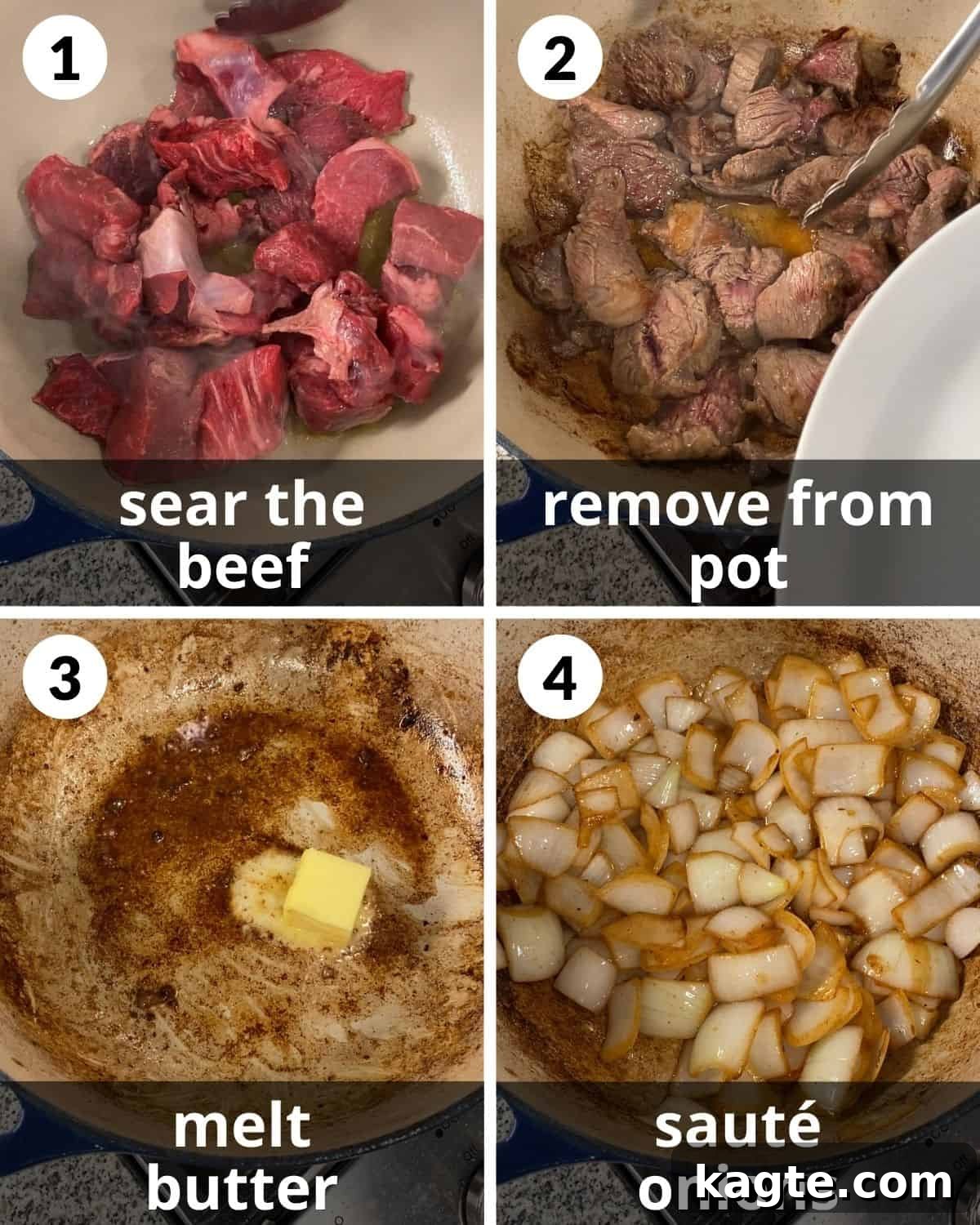
- 1. Prepare & Brown the Beef: Begin by preheating your oven to 350°F (175°C). In a sturdy 6-quart Dutch oven, heat the olive oil over high heat until it shimmers, indicating it’s hot enough. Add about half of your beef chunks to the hot oil, ensuring there’s enough space between each piece to allow for proper searing. Sear the beef on all sides until it develops a deep, golden-brown crust. It’s important to note that the beef will not be cooked through at this stage; we’re solely focused on building flavor.
- 2. Repeat for All Beef: Once the first batch of beef is beautifully browned, remove it from the Dutch oven and transfer it to a clean plate. Repeat the searing process with the remaining beef. Once all the beef is seared, set the plate aside.
- 3. Sauté Onions to Perfection: Reduce the heat to medium. Add the unsalted butter to the Dutch oven, allowing it to melt and coat the bottom of the pot. Introduce the largely diced yellow onions and sauté them for 3-4 minutes, stirring occasionally. Cook until they soften, become translucent, and begin to develop a slight golden-brown hue. This gentle caramelization adds a natural sweetness and depth.
Pro Tip: Master the Deglaze
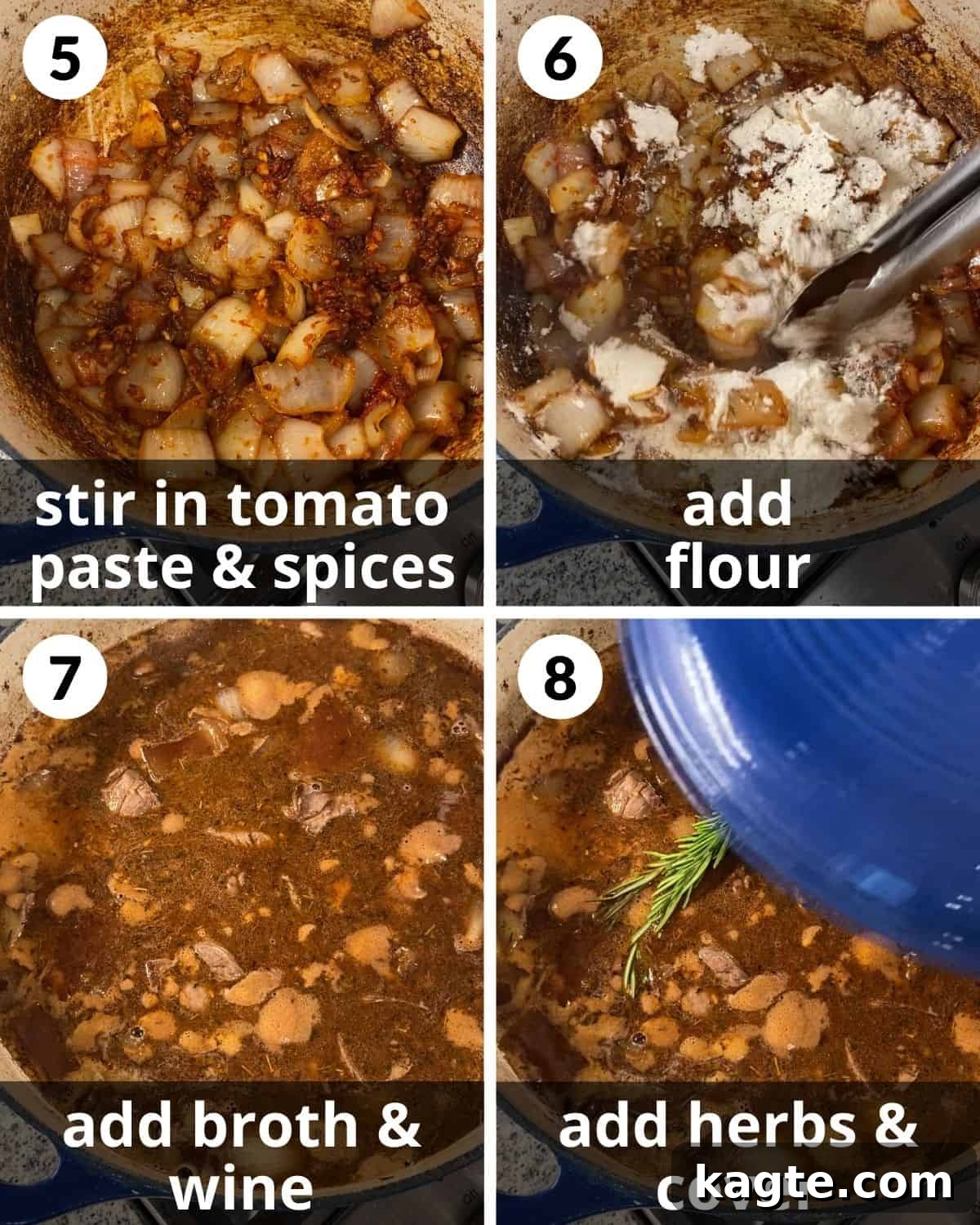
The browned bits (fond) stuck to the bottom of your Dutch oven after searing the beef and sautéing the onions are flavor gold! These caramelized morsels are packed with concentrated savory goodness. When you add the liquids for deglazing, make sure to scrape up every last bit with a wooden spoon or spatula. This crucial step releases all that wonderful flavor into your broth, forming the bedrock of an exceptional stew.
- 4. Infuse with Garlic and Spices: Stir in the minced garlic, tomato paste, brown sugar, dried oregano, dried thyme, kosher salt, and fresh cracked pepper. Continue to cook for 2-3 minutes, stirring constantly. This step allows the spices to toast lightly, enhancing their aromatic qualities, and the tomato paste to deepen in color and flavor, building the umami base.
- 5. Thicken with Flour: Sprinkle the all-purpose flour evenly over the aromatic mixture in the pot. Cook for 1-2 minutes, stirring continuously, to toast the flour. This process creates a simple roux, which will help to thicken the stew and provide a smooth, velvety consistency to the sauce.
- 6. Deglaze the Pot & Reintroduce Beef: Carefully pour in the dry red wine, followed by the beef stock or broth, Worcestershire sauce, and fish sauce. Immediately use a wooden spoon to vigorously scrape up all the delicious browned bits that have accumulated at the bottom of the pot during the searing and sautéing steps. Bring the liquid to a gentle boil, then return all the browned beef and any accumulated juices from the plate back into the Dutch oven.
- 7. Initial Braise with Herbs: Stir in the bay leaves and fresh rosemary sprigs. Cover the Dutch oven tightly with its lid and transfer it to your preheated oven. Allow the stew to braise undisturbed for 1.5 hours. During this initial braise, resist the urge to stir; the low, slow heat will work its magic to tenderize the beef and allow the flavors to slowly meld.
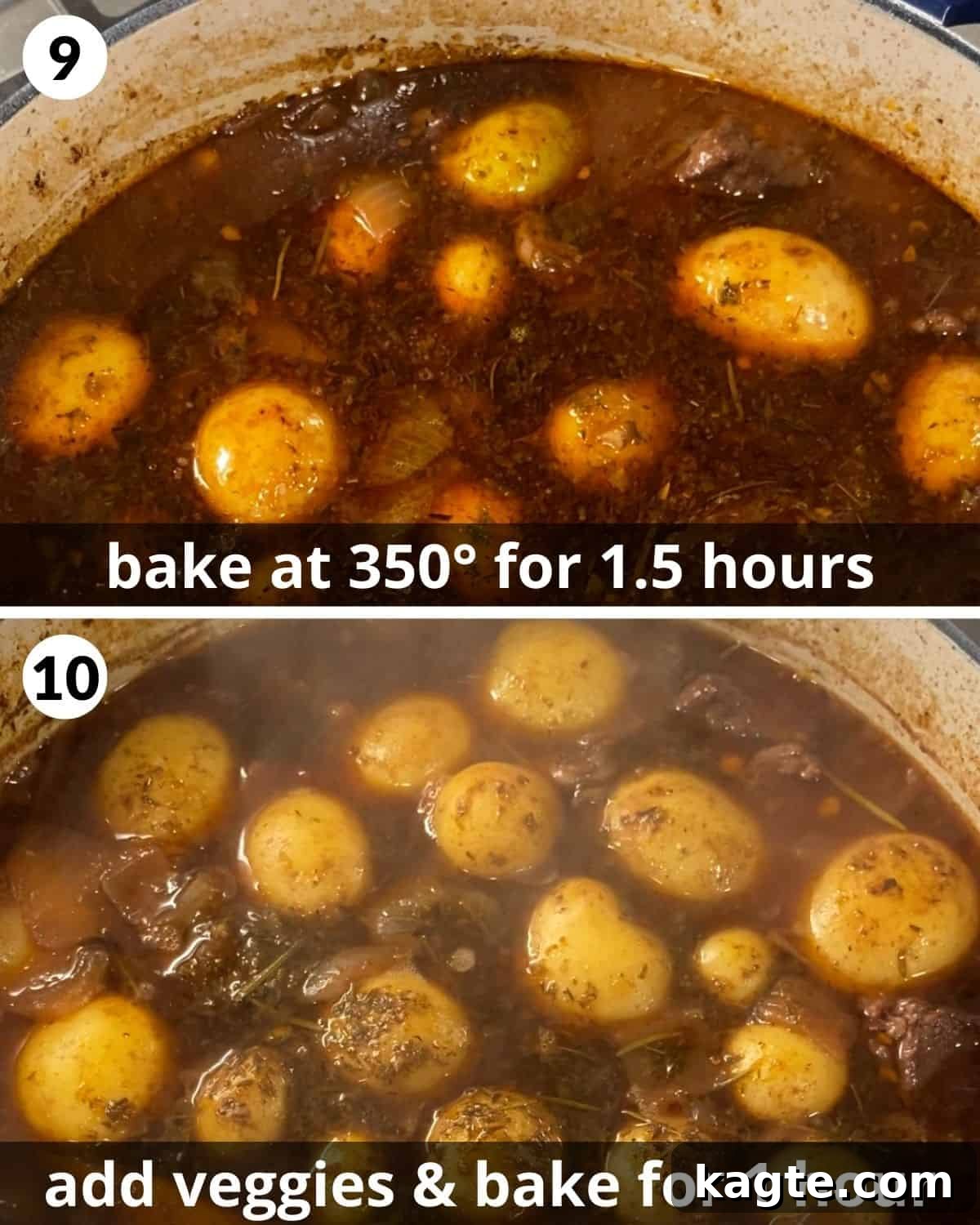
- 8. Add Hearty Vegetables: After the initial 1.5 hours of braising, carefully remove the Dutch oven from the oven. Stir in the yellow baby potatoes and the diagonally sliced carrots. Gently push them down into the liquid so they are mostly submerged in the rich broth, ensuring they cook evenly.
- 9. Complete the Braise & Serve: Cover the Dutch oven once more and return it to the oven for an additional 1-1.5 hours, or until both the beef is exceptionally fork-tender and the vegetables are cooked to your desired tenderness, yet still hold their shape. Once cooked, remove and discard the bay leaves and rosemary sprigs. For optimal flavor development, let the stew rest, covered, for 10-15 minutes before serving. This allows the flavors to settle and the sauce to thicken slightly. Serve hot, perhaps with those irresistible cheesy croutons or a crusty piece of bread to soak up every last drop of that glorious sauce.
Serving Suggestions: What to Pair with Your Perfect Dutch Oven Beef Stew
A classic Dutch Oven Beef Stew is a complete meal in itself, but a few well-chosen accompaniments can elevate the dining experience to new heights. Beyond a delightful glass of red wine that complements the stew’s rich flavors, here are some of my favorite sides to serve:
- Crusty Rustic Bread: You only need a few simple ingredients to make this homemade bread, and no sourdough starter is required! Its chewy interior and crispy crust are perfect for soaking up every last bit of the savory, thick stew gravy.
- Fluffy Yeast Rolls: These tender, buttery, and slightly sweet rolls are an absolute delight. Their soft texture and rich flavor provide a wonderful contrast to the robustness of the stew, and they’re superb for dipping.
- Homemade Drop Biscuits: Light, fluffy, and wonderfully buttery, these easy-to-make biscuits are a fantastic choice, especially if you prefer a side that’s less structured than bread. They’re perfect for crumbling into the stew or serving alongside.
- Creamy Mashed Potatoes or Polenta: For an extra layer of comfort, serve your stew over a bed of creamy mashed potatoes, polenta, or even rice. The starch will beautifully absorb the rich sauce, making for an even more satisfying dish.
- Simple Green Salad: To cut through the richness of the stew, a light and fresh green salad with a bright vinaigrette is an excellent addition. It provides a refreshing contrast and adds a touch of color to your meal.
If you’re still looking for more inspiration, be sure to check out my comprehensive post on 50 Sides for Pot Roast – many of those options would pair perfectly with this beef stew as well!
Expert Tips for a Flawless Dutch Oven Beef Stew
Achieving a truly exceptional beef stew goes beyond just following the steps. Incorporating these expert tips will help you create a dish that’s consistently tender, deeply flavorful, and utterly satisfying:
- Patience is Key: Let the Oven Do the Work: Once your Dutch oven is securely lidded and nestled in the oven, resist the temptation to frequently check or stir the stew. The magic of slow braising happens with consistent, gentle heat. Unnecessary lifting of the lid can cause temperature fluctuations, slowing down the cooking process and potentially hindering the beef from reaching its peak tenderness. Trust the oven to do its job.
- Size Matters: Cut Your Veggies Right: To ensure your potatoes and carrots remain intact and don’t turn into mush during the extended braising, it’s crucial to cut them into substantial, uniform pieces, roughly 1 to 1.5 inches. This allows them to cook through slowly while maintaining their shape and a pleasant texture, providing a delightful bite alongside the tender beef.
- Allow it to Rest: Just like a perfectly roasted piece of meat, beef stew benefits significantly from a short rest period after it comes out of the oven. Letting it sit, covered, for 10-15 minutes allows the flavors to deepen and meld further, and the sauce to thicken slightly. This resting time also makes it easier to skim off any excess fat from the top if desired, resulting in a cleaner-tasting stew.
- It Gets Better with Time: Make-Ahead & Storage: This Dutch oven beef stew is a fantastic candidate for meal prep because its flavors genuinely improve and develop overnight. If you’re planning for leftovers or entertaining, consider making it a day in advance. Store completely cooled stew in an airtight container in the refrigerator for up to 3-4 days. For longer storage, freeze individual portions in freezer-safe containers or bags for up to 3 months. Always thaw frozen stew overnight in the refrigerator before gently reheating.
- Don’t Forget the Crunch: Serving with Croutons (or Alternatives): While optional, those cheesy croutons provide an irresistible textural contrast to the soft, tender stew. The golden, garlicky crunch elevates the entire dish from simply comforting to truly crave-worthy. If you prefer, crusty bread, warm biscuits, or even a dollop of creamy mashed potatoes make excellent vehicles for soaking up the rich sauce.
- Season in Layers: Don’t just season at the end. Season the beef before searing, add salt and pepper with the onions and garlic, and taste and adjust the seasoning before the final braise. This layering technique ensures that every component of the stew is flavorful, contributing to a well-balanced and delicious final product.
- Choose the Right Dutch Oven: A good quality heavy-bottomed Dutch oven (ideally 6-quart capacity) is essential. Its excellent heat retention and even heat distribution are key to the stew’s success, preventing scorching and promoting tender, slow cooking.
Common Mistakes to Avoid for the Best Beef Stew
Even the most seasoned home cooks can fall victim to common pitfalls when making beef stew. Avoiding these mistakes will ensure your Dutch oven beef stew is consistently spectacular:
- Overcrowding the Pot During Searing: This is arguably one of the biggest mistakes. When you pack too much beef into the Dutch oven at once, the temperature drops, and the meat begins to steam rather than sear. Steamed beef won’t develop that crucial deep, caramelized crust, which is essential for building rich, complex flavors in your stew. Always sear in smaller batches, giving each piece plenty of space, to achieve that coveted browned exterior.
- Skipping the Searing Step Entirely: Don’t be tempted to simply toss all the raw ingredients into the pot and let them simmer. The browning of the beef (and often the aromatics) is a non-negotiable step. Searing creates the Maillard reaction, a chemical process that produces hundreds of new flavor compounds, forming an irreplaceable foundation for the stew’s overall taste.
- Using the Wrong Cut of Beef: Opting for lean cuts like sirloin or round steak, which are better suited for quick cooking, will result in dry, tough, and unappetizing stew meat during the long braising process. Always stick to well-marbled, tougher cuts rich in connective tissue, such as chuck roast, brisket, or short ribs, which are designed to break down and become incredibly tender with slow cooking.
- Incorrect Vegetable Timing: Adding delicate vegetables too early can lead to them becoming mushy and disintegrating into the stew. Conversely, adding hardy root vegetables like potatoes and carrots too late can leave them undercooked. For a perfectly textured stew, add these root vegetables after the initial braising period for the beef, allowing them to finish cooking in the final hour or so. This ensures they are tender but still hold their shape.
- Compromising on Wine Quality (or Omitting it Carelessly): The dry red wine in this recipe is not just for moisture; it adds crucial acidity, tannins, and depth of flavor that get concentrated during the reduction and braising. Using a very cheap or overly sweet wine can negatively impact the final taste. If you choose to omit wine for dietary reasons, it’s vital to compensate with additional beef broth and a splash of balsamic vinegar or extra Worcestershire sauce to mimic the acidity and complexity it would otherwise provide.
- Under-seasoning: A bland stew is a disappointing stew. Remember to season at various stages of cooking—when searing the beef, sautéing the aromatics, and finally, tasting and adjusting the seasoning before the stew finishes braising. Layering your salt and pepper, along with the herbs and other flavor enhancers, ensures a well-balanced and delicious final product.
Delicious Additions & Creative Variations for Your Dutch Oven Beef Stew
While this Dutch Oven Beef Stew recipe is perfect as is, it also serves as a fantastic canvas for your culinary creativity. Here are some delightful additions and variations to customize your stew:
- A Spicy Kick: For those who enjoy a bit of heat, introduce a pinch of red pepper flakes along with your dried herbs, or stir in a splash of your favorite hot sauce during the last 30 minutes of cooking. This adds a subtle, warming layer of spice without overpowering the stew’s classic flavors.
- Enhanced Herbaceousness: While rosemary is fantastic, consider swapping it for fresh thyme, or even create a classic French “bouquet garni” by tying together sprigs of fresh parsley, thyme, and a bay leaf with kitchen twine. This allows for easy removal after the herbs have infused their beautiful aromas into the stew. You can also add a tablespoon of fresh chopped marjoram or sage with the other dried herbs for a different aromatic profile.
- Fresh Garnish for Brightness: Just before serving, a sprinkle of freshly chopped parsley or chives can add a vibrant pop of color and a fresh, herbaceous note that brightens the richness of the stew. This simple finish makes the dish look as good as it tastes.
- A Cheesy Finish: Beyond the cheesy croutons, a generous sprinkle of grated Parmesan or Pecorino Romano cheese on top of each bowl before serving can add a salty, umami-rich boost. Its nutty notes pair wonderfully with the hearty beef and red wine broth.
- Mushroom Magic: For an extra layer of earthy flavor, sauté 8 ounces of sliced cremini or button mushrooms in the Dutch oven after removing the browned beef, before adding the onions. Cook until they release their liquid and brown beautifully, then proceed with the recipe. Alternatively, add them during the last hour of braising.
- Root Vegetable Medley: Expand beyond potatoes and carrots! Consider adding parsnips, turnips, or even sweet potatoes (cut into 1-inch chunks) during the second stage of braising with the other root vegetables. These additions will lend different textures and subtle sweet or earthy flavors.
- Green Vegetable Boost: Stir in a cup of frozen peas, green beans, or chopped kale during the last 15-20 minutes of cooking. This adds a welcome touch of freshness and additional nutrients without overcooking the more delicate vegetables.
- Slow Cooker or Instant Pot Adaptation: While this recipe is optimized for a Dutch oven, it can be adapted. For a slow cooker, sear the beef and sauté aromatics on the stovetop first (highly recommended for flavor), then combine all ingredients in the slow cooker and cook on low for 8 hours or high for 4-5 hours. For an Instant Pot, sear the beef using the ‘Sauté’ function, then add all liquids and seasonings, pressure cook for about 35-40 minutes on high pressure, followed by a natural release. Add quick-cooking vegetables like peas or corn after pressure cooking.
The 10 Best Worcestershire Sauce Substitutes
Worcestershire sauce, with its unique blend of flavors, adds depth and richness to many dishes. It enhances everything, from marinades to savory stews. If you find yourself without this key ingredient, don’t worry! There are excellent alternatives to ensure your Dutch Oven Beef Stew still shines with amazing flavor. Dive into our guide to discover the perfect substitute for any situation.
Read More
Frequently Asked Questions About Dutch Oven Beef Stew
A Dutch oven is the ultimate vessel for beef stew due to its heavy construction and excellent heat retention. Its thick walls and tight-fitting lid ensure even cooking, creating consistent, tender results. The cast iron (or similar material) also allows for easy searing on the stovetop and then seamlessly transfers to the oven for a long, slow braise, building incredible depth of flavor that’s hard to achieve with other pots. It helps develop the “fond” (browned bits) at the bottom of the pot, which are crucial for a rich, flavorful broth.
The secret lies in several key elements: selecting the right cut of beef (like well-marbled chuck roast), proper searing to develop rich flavor, building a complex broth with aromatics and umami-rich ingredients (like tomato paste, red wine, Worcestershire, and fish sauce), and slow cooking to allow the connective tissues in the meat to break down, resulting in incredibly tender, melt-in-your-mouth beef. Layering flavors at each step makes all the difference, along with patience during the braising process.
If your beef stew is too thin, you have a few options. The easiest is to create a cornstarch slurry: mix 1-2 tablespoons of cornstarch with an equal amount of cold water until smooth. Stir this into the simmering stew and cook for a few more minutes until it thickens. Alternatively, you can remove some of the liquid, reduce it on the stovetop over medium-high heat until it thickens, and then return it to the stew. Another method is to mash a portion of the cooked potatoes and stir them back into the stew, which adds natural starch and thickness.
Absolutely! While dry red wine adds an incredible layer of depth and complexity, you can certainly make a delicious beef stew without it. Simply replace the red wine with an equal amount of additional high-quality beef broth or beef stock. To compensate for some of the acidity and complexity lost, consider adding a splash of balsamic vinegar (about 1-2 tablespoons) or a teaspoon of apple cider vinegar along with a bit more Worcestershire sauce to the broth. The stew will still be wonderfully flavorful and comforting.
Leftover Dutch oven beef stew stores exceptionally well, often tasting even better the next day as the flavors continue to meld. Store completely cooled stew in an airtight container in the refrigerator for up to 3-4 days. For longer storage, you can freeze individual portions in freezer-safe containers or bags for up to 3 months. Thaw frozen stew overnight in the refrigerator before reheating gently on the stovetop over medium-low heat, stirring occasionally, or in the microwave until heated through. Add a splash of broth or water if it appears too thick during reheating to restore its ideal consistency.
Explore More Hearty Main Dish Recipes
Chicken
Garlic Butter Chicken Thighs (Baked & Crispy)
Pasta
Baked Stuffed Shells with Meat Sauce
Fall
Dutch Oven Pot Roast
Soup & Chili
Ground Chicken Chili with Beans
Did you make this recipe?
If you try this recipe, please leave a star rating in the recipe card below and/or comment! We always appreciate your feedback.
Follow us on all of the platforms below.
Dutch Oven Beef Stew with Red Wine
Equipment
-
6 Quart Dutch Oven
-
Tongs
-
8 inch Chef’s Knife
Ingredients
- 2 Tablespoons olive oil
- 3 pounds beef stew meat, 1.5 inch pieces*
- 2 Tablespoons unsalted butter
- 2 yellow onions, largely diced
- 8-10 cloves garlic, minced
- 1/4 cup tomato paste
- 1 Tablespoon brown sugar
- 1 Tablespoon dried oregano
- 2 teaspoons dried thyme
- 1 teaspoon kosher salt
- fresh cracked pepper
- 1/4 cup all-purpose flour
- 4 cups beef stock or broth
- 2 1/2 cups dry red wine*
- 2 Tablespoons Worcestershire sauce
- 1 Tablespoon fish sauce
- 2 bay leaves
- a few sprigs fresh rosemary
- 1 1/2 pounds yellow baby potatoes, 1 inch*
- 6 medium carrots, peeled & sliced diagonally in 1.5 inch pieces
- cheesy croutons, for serving*
Instructions
-
1. Brown the Beef: Preheat your oven to 350°F (175°C). Add the olive oil to a 6-quart Dutch oven. Heat over high heat until shimmering. Add about half of the beef, ensuring not to overcrowd the pot. Sear until the beef is deeply browned on all sides, forming a rich crust. This step is crucial for developing flavor; the beef will not be cooked through.2 Tablespoons olive oil, 3 pounds beef stew meat,
-
2. Repeat with Remaining Beef: Remove the browned beef from the Dutch oven and set it aside on a plate. Repeat the searing process with the remaining beef until all pieces are well-browned.
-
3. Sauté Onions: Turn the heat down to medium. Add the unsalted butter to the Dutch oven, allowing it to melt. Add the diced yellow onions and sauté for 3-4 minutes, or until they soften and begin to brown slightly, developing a sweet flavor base.2 Tablespoons unsalted butter
-
4. Infuse with Garlic and Spices: Stir in the minced garlic, tomato paste, brown sugar, dried oregano, dried thyme, kosher salt, and fresh cracked pepper. Cook for 2-3 minutes, stirring constantly, until the mixture is fragrant and the tomato paste darkens, indicating its flavors have developed.2 yellow onions,, 8-10 cloves garlic,, 1/4 cup tomato paste, 1 Tablespoon brown sugar, 1 Tablespoon dried oregano, 2 teaspoons dried thyme, 1 teaspoon kosher salt, fresh cracked pepper
-
5. Thicken with Flour: Add the all-purpose flour and cook for 1-2 minutes, stirring constantly, to toast the flour. This creates a roux that will thicken the stew’s broth.1/4 cup all-purpose flour
-
6. Deglaze and Simmer: Deglaze the pan by pouring in the dry red wine, beef stock or broth, Worcestershire sauce, and fish sauce. Scrape all the flavorful browned bits off the bottom of the pot with a wooden spoon. Bring the liquid to a gentle boil, then add the browned beef back into the pot.4 cups beef stock or broth, 2 1/2 cups dry red wine*, 2 Tablespoons Worcestershire sauce, 1 Tablespoon fish sauce
-
7. Initial Braise with Herbs: Stir in the bay leaves and fresh rosemary sprigs. Cover the Dutch oven tightly with its lid and transfer it to the preheated oven. Braise for 1.5 hours without stirring.2 bay leaves, a few sprigs fresh rosemary
-
8. Add Hearty Vegetables: After 1.5 hours, carefully remove the Dutch oven from the oven. Stir in the yellow baby potatoes and sliced carrots. Gently push them down so they are mostly covered with the rich broth.1 1/2 pounds yellow baby potatoes, 1 inch*, 6 medium carrots,
-
9. Complete the Braise & Serve: Cover the Dutch oven again and return it to the oven for an additional 1-1.5 hours, or until the vegetables are tender but still hold their shape, and the beef is fork-tender. Remove bay leaves and rosemary sprigs before serving. Let the stew rest for 10-15 minutes to allow flavors to fully develop. Serve hot, garnished with cheesy croutons if desired.
Notes
- Beef Stew Meat: Look for well-marbled cuts like chuck roast, cut into 1.5-inch pieces. You can also use pre-cut stew meat from the butcher, but always prioritize chuck roast for the most tender, flavorful results. Searing it well is key, regardless of the cut.
- Kosher Salt: All of our recipes are tested with Morton kosher salt unless otherwise specified. Its larger flake size and clean flavor make it superior for everyday cooking. If substituting with fine table salt, remember to reduce the quantity by about half. We highly recommend adding kosher salt to your pantry for better seasoning control.
- Dry Red Wine: A good quality dry red wine, such as Cabernet Sauvignon, Merlot, or Pinot Noir, will significantly enhance the depth of your stew. The alcohol cooks off, leaving behind concentrated flavor. If you prefer to avoid alcohol, an equal amount of robust beef broth is a suitable substitute. Consider adding a small splash of balsamic vinegar for a touch of acidity if omitting wine.
- Yellow Baby Potatoes: These smaller potato varieties are excellent for stew because they maintain their shape and don’t become mushy during the long cooking process. If using larger potatoes, cut them into uniform 1-inch pieces to ensure even cooking.
- Cheesy Croutons: Elevate your stew experience with these homemade cheesy croutons. Slice half of a baguette into approximately 10 pieces. In a small bowl, combine 4 tablespoons of salted butter with 1/2 teaspoon of Italian seasoning and 4 cloves of minced garlic. Spread this mixture generously over the bread slices. Top each piece with half a slice of provolone cheese. Bake at 400°F (200°C) for 8-10 minutes, or until golden brown and bubbly.
- Let the Oven Do the Work: Once your Dutch oven is in the oven, resist the urge to peek or stir frequently. The consistent, low heat of the oven is what breaks down tough connective tissues in the beef and allows the flavors to meld beautifully. Unnecessary stirring can cool the stew down and disrupt this tenderizing process.
- Cut Veggies into Larger Pieces: To prevent your potatoes and carrots from turning to mush, aim for pieces roughly 1 to 1.5 inches in size. This ensures they cook through but retain their pleasant texture during the extended braising time.
- Rest Before Serving: Just like a good roast, stew benefits from a brief rest after coming out of the oven. Allowing it to sit for 10-15 minutes helps the flavors settle and allows the sauce to thicken slightly. It also makes it easier to skim any excess fat from the top if desired.
Nutrition
Nutrition information is automatically calculated, so should only be used as an approximation.