
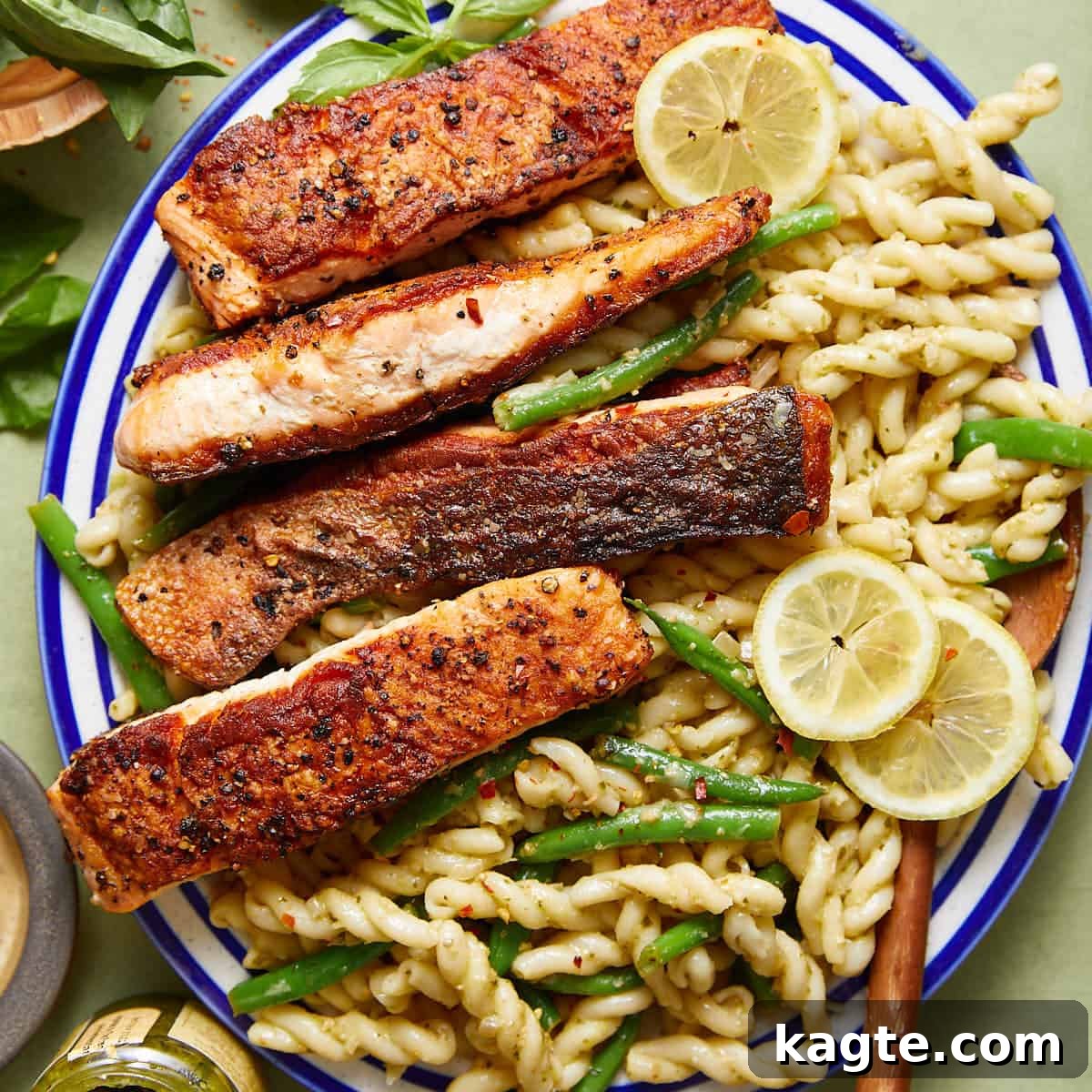
This healthy Easy Salmon Pasta without Cream offers a delightfully light and flavorful dining experience, bursting with fresh summer ingredients. Crafted in just about 30 minutes, this dish proves that you don’t need heavy cream to achieve a truly satisfying pasta. It’s an incredibly delicious meal, thoughtfully prepared with aromatic garlic, zesty lemon, fragrant pesto, and savory Parmesan cheese, making it an instant family favorite.
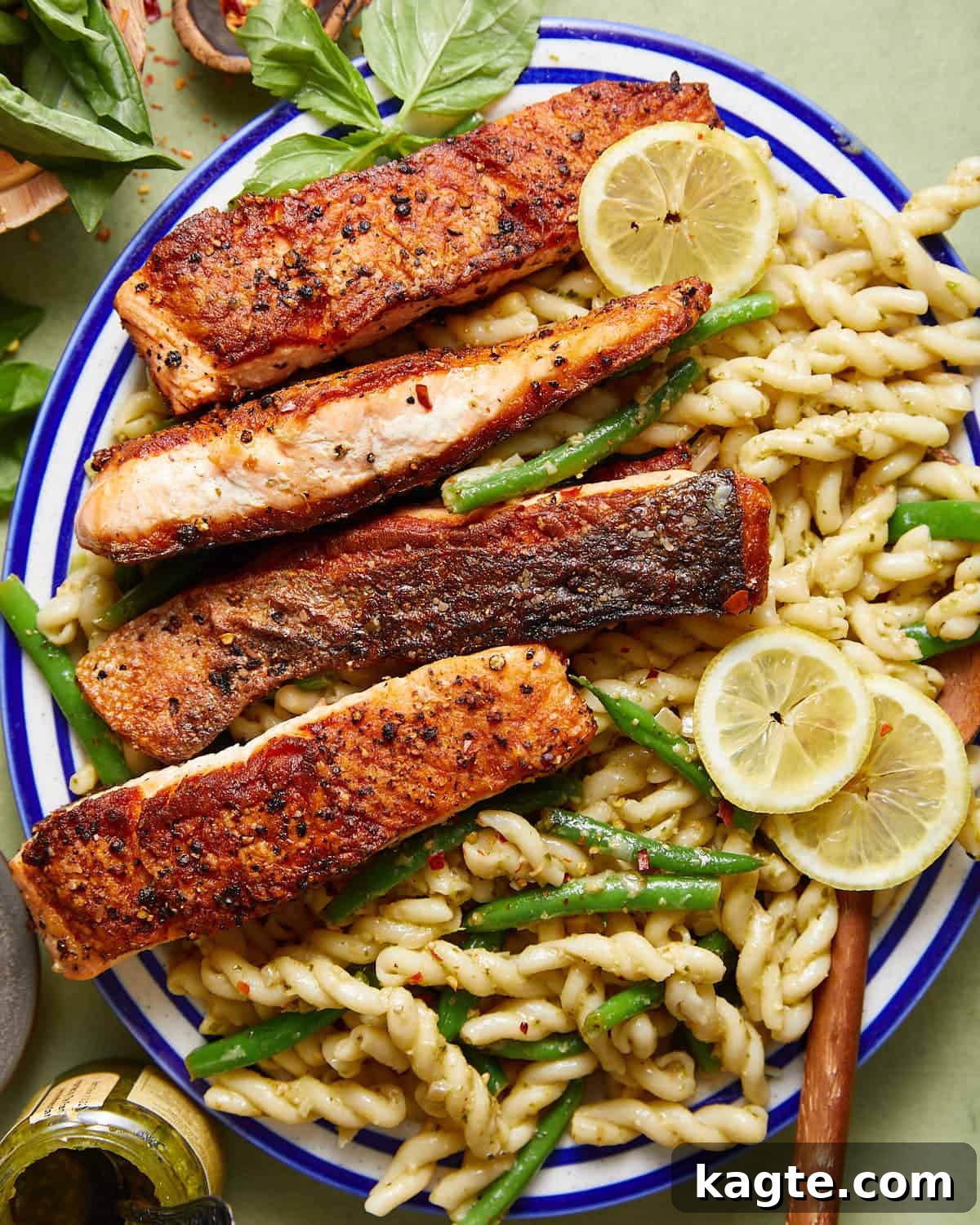
Salmon stands out as a culinary superstar, celebrated for its ease of cooking and its exceptional nutritional profile, particularly as a rich source of lean protein and omega-3 fatty acids. If you’re a fan of quick and flavorful seafood dishes, you’ll love exploring other salmon recipes. Some personal favorites that consistently receive rave reviews on social media include my Coconut Lime Salmon, which offers a tropical twist, and my Panko Crusted Salmon, known for its irresistible crispy texture.
For those evenings when time is of the essence, my Teriyaki Salmon Rice Bowl is a stellar choice, designed to be a quick, complete meal ideal for busy weeknight lunches or dinners. The best part? It’s typically ready in under 30 minutes, making it incredibly convenient. If you’re looking for another speedy salmon recipe that’s also perfect for meal prepping, consider my Pesto Crusted Salmon with Garlic Lemon Panko. This dish is not only filling and packed with flavor, but it also pairs wonderfully with a fresh salad, crusty bread, or a side of roasted potatoes, all while being prepared in less than half an hour!
Table of Contents
- Why You’ll Love This Recipe
- Ingredients & Substitutions
- How to Make Salmon Pasta without Cream
- Recipe Serving Suggestions
- Expert Cooking Tips
- Most Common Mistakes to Avoid
- Additions & Variations
- Storage & Reheating Instructions
- Recipe FAQs
- More Main Dish Recipes
- Salmon Pasta without Cream Recipe Card
Why You’ll Love This Easy & Healthy Salmon Pasta Without Cream
- No Cream, Yet Incredibly Flavorful: This recipe masterfully achieves a rich, luscious, and bright sauce without relying on heavy dairy. The magical combination of fresh lemon, dry white wine, and grated Parmesan cheese creates a sophisticated flavor profile that’s both light and deeply satisfying. You’ll be amazed at the depth of flavor without the added calories of cream.
- Minimal Cleanup: One Skillet + One Pot: Say goodbye to stacks of dirty dishes! This streamlined recipe requires just one skillet for searing the salmon and building the exquisite sauce, and one pot for cooking the pasta and green beans. This efficient approach means less time scrubbing and more time enjoying your delicious meal.
- Perfect for Spring and Summer Dining: Embrace the freshness of the seasons with this ideal warm-weather dish. Light, seasonal ingredients such as crisp green beans and vibrant basil pesto infuse this pasta with an extra boost of freshness, making it a refreshing and invigorating meal for any spring or summer evening.
- Highly Customizable to Your Taste: This recipe is wonderfully versatile, allowing you to tailor it to your dietary preferences or what you have on hand. Feel free to swap traditional pasta for whole wheat or gluten-free alternatives. You can also easily substitute green beans with other seasonal green vegetables like tender asparagus, crisp snap peas, or healthy broccolini for a fresh twist.
- Quick & Convenient Weeknight Meal: Ready in approximately 30-35 minutes from start to finish, this salmon pasta is the ultimate solution for busy weeknights when you need a healthy, homemade dinner on the table fast. It’s a gourmet-tasting meal that fits effortlessly into a hectic schedule.
Key Ingredients & Smart Substitutions for Your Salmon Pasta
- Fresh Salmon Fillets: Opt for skin-on fillets, ideally Atlantic salmon, as the skin crisps beautifully during searing, adding an extra layer of texture and flavor. Sockeye salmon is another excellent choice. If using frozen salmon, ensure it’s completely thawed and thoroughly patted dry before cooking to achieve the best sear. For those who aren’t keen on salmon, shrimp or even chicken breast can be wonderful substitutes, offering a different protein while maintaining the dish’s light profile.
- Kosher Salt: In my kitchen, Morton kosher salt is the standard for its consistent crystal size and balanced flavor, which allows for precise seasoning. All my recipes are developed with this in mind. If you’re using table salt, remember to reduce the quantity as it is finer and saltier by volume. A good quality kosher salt is highly recommended for everyday cooking.
- Freshly Cracked Black Pepper: A simple yet essential seasoning that introduces a subtle warmth and depth to the salmon and the overall dish. Adjust the amount to your preference. For a kick of heat, consider adding a pinch of red pepper flakes with the garlic.
- Olive Oil: This forms the base for searing the salmon and starting the sauce, contributing a wonderful Mediterranean flavor. While any neutral oil can be used in a pinch, a good quality extra virgin olive oil enhances the overall taste significantly.
- Shallot: Known for its milder, sweeter, and more delicate flavor compared to common yellow onions, shallots provide a nuanced aromatic foundation for the sauce. If a shallot isn’t available, a quarter of a small yellow onion, very finely diced, can be used as a substitute.
- Shortcut Pasta: Pastas with ridges or twists like rotini, fusilli, penne, or cavatappi are ideal for this recipe as their texture effectively “catches” and holds the light sauce. Feel free to use whole wheat pasta for added fiber or a gluten-free variety to accommodate dietary needs.
- Green Beans: Fresh green beans are crucial for their crisp-tender texture and vibrant color. They cook quickly alongside the pasta. Seasonal swaps such as slender asparagus spears, sweet snap peas, or tender broccolini would also be fantastic additions.
- Garlic: Freshly minced garlic is paramount for a bold, aromatic flavor that truly shines in this dish. While pre-minced garlic can be used for convenience, its intensity won’t quite match that of fresh cloves. Aim for fresh whenever possible.
- Dry White Wine: A crisp, dry white wine like Sauvignon Blanc or Pinot Grigio is perfect for deglazing and adding a layer of sophisticated acidity. Avoid sweet wines, as they will throw off the flavor balance. For a non-alcoholic alternative, use chicken broth (or vegetable broth) with a generous splash of fresh lemon juice.
- Cold Salted Butter: The addition of cold butter at the end is a crucial technique for emulsifying the sauce, creating a glossy, rich texture without using cream. If using unsalted butter, simply adjust the amount of salt to taste.
- Lemon: Both the zest and the fresh juice of one lemon are indispensable. The zest provides an intense aromatic brightness, while the juice offers a tangy counterpoint that cuts through the richness of the salmon and pesto, making the dish feel incredibly fresh. Always use fresh lemon juice for the best results.
- Parmigiano Reggiano: Freshly grated Parmigiano Reggiano is vital for its salty, nutty depth and its ability to melt smoothly into the sauce. Pre-shredded cheeses often contain anti-caking agents that prevent a silky melt. Pecorino Romano can be used for a slightly sharper, more piquant flavor profile.
- Basil Pesto: Pesto adds a wonderful herbaceous richness and depth of flavor. Use your favorite high-quality store-bought brand for convenience, or a homemade version if you have it. For an interesting variation, consider trying arugula pesto for a peppery note or sun-dried tomato pesto for a more robust, umami flavor.
A complete list of all ingredients and precise amounts can be found on the recipe card below.
How to Make Easy Salmon Pasta without Cream: A Step-by-Step Guide
Quick Overview of the Cooking Process
- Season and sear your salmon fillets to golden perfection.
- Sauté the delicate shallots and fragrant garlic.
- Cook your pasta and green beans in generously salted water.
- Craft a luscious pan sauce, building layers of flavor.
- Combine the pasta and vegetables with the exquisite sauce.
- Serve immediately with the beautifully seared salmon on top.
Detailed Step-by-Step Instructions
Quick Tip: Don’t skip the crucial step of drying your salmon fillets! Any excess moisture on the surface will prevent the fish from achieving that perfect, crispy sear. Patting dry ensures a golden crust.
- Prepare the Salmon: Begin by placing your fresh salmon fillets on a plate lined with paper towels. Gently but thoroughly pat each fillet completely dry on all sides. This step is essential for achieving a crispy skin and a good sear. Season the salmon generously with kosher salt and freshly cracked black pepper. While the salmon rests, fill a large pot with water, add about 1 tablespoon of salt (it should taste like the sea!), and bring it to a rolling boil.
- Sear the Salmon to Perfection: Heat a large, heavy-bottomed skillet (cast iron or stainless steel works best) over medium-high heat. Once hot, add the olive oil. Carefully place the seasoned salmon fillets, skin-side down, into the hot skillet. Allow them to sear undisturbed for approximately 5-6 minutes. This crucial time allows the skin to become wonderfully crispy and release easily from the pan. Once the skin is golden and crisp, gently loosen it from the skillet with a spatula and flip the fillets. Continue to sear for another 4-5 minutes, or until the salmon is cooked through to your desired doneness. The internal temperature should reach at least 140°F (60°C).
- Sauté the Shallot: Once the salmon is cooked, carefully remove it from the pan and transfer it to a clean plate. Tent the plate loosely with aluminum foil to keep the salmon warm while you finish the pasta. Reduce the heat under the skillet to medium. Add the finely diced shallots directly to the same skillet where the salmon was seared. Do not wipe out the pan; those browned bits (fond) are packed with flavor! Sauté the shallots for 4-5 minutes until they soften and become translucent.
- Cook Pasta & Green Beans: While the shallots are sautéing and later, as the wine reduces, it’s time to cook your pasta. Add your chosen pasta to the large pot of boiling salted water. Cook for precisely one minute less than the shortest recommended cooking time on the package. This ensures the pasta is al dente and can finish cooking in the sauce. When the pasta is about 2-3 minutes from being done, stir in the halved green beans. They will blanch quickly and retain their vibrant color and crisp-tender texture. Before draining, make sure to reserve about 1 cup of the starchy pasta water – it’s liquid gold for your sauce!
- Sauté the Garlic: After the shallots have softened, add the minced garlic to the skillet. Sauté for just another 1-2 minutes until it becomes fragrant. Be careful not to burn the garlic, as it can quickly turn bitter.
- Deglaze with Wine: Pour the dry white wine into the hot skillet. Use a wooden spoon or spatula to vigorously scrape up any browned bits (fond) that are stuck to the bottom of the pan. This deglazing process releases all those concentrated, delicious flavors into the sauce.
Quick Tip: When adding butter to your sauce, ensure it’s cold. Cold butter helps to emulsify the sauce more effectively, resulting in a beautifully glossy, smooth, and cohesive finish.
- Reduce the Wine: Allow the wine in the skillet to simmer and reduce for about 5 minutes. This concentrates its flavor and cooks off the alcohol, leaving behind a wonderful aroma.
- Incorporate Pasta Water: Add approximately 1/2 cup of the reserved pasta water to the skillet. Stir it into the reducing wine and shallots until well combined. The starch from the pasta water will help thicken and bind the sauce.
- Add the Cold Butter: Stir in the cold, salted butter, piece by piece, allowing each to melt and emulsify into the sauce. Continue stirring gently until the sauce becomes glossy and smooth. Reduce the heat to medium-low.
- Toss Everything Together: Add the cooked pasta and green beans directly to the skillet with the sauce. Squeeze in the fresh lemon juice and grate in the lemon zest. Sprinkle in the grated Parmesan cheese. Toss vigorously until all the pasta and green beans are thoroughly coated in the silky sauce. Continue to cook for 1-2 minutes, allowing the pasta to absorb more flavor.
- Stir in the Pesto: Turn off the heat completely before stirring in the basil pesto. This preserves its vibrant color and fresh, herbaceous flavor, preventing it from “cooking out.” If the sauce seems too thick, add an additional splash of reserved pasta water, a tablespoon at a time, until it reaches your desired consistency.
- Serve Immediately: Divide the pesto pasta among serving plates. Flake the seared salmon fillets into large pieces or place them whole on top of each serving, skin-side up for maximum crispness. Garnish with extra lemon wedges, a sprinkle of fresh herbs, and additional Parmesan cheese, if desired. Enjoy your fresh and healthy salmon pasta without cream!
Recipe Serving Suggestions to Enhance Your Meal
This light and flavorful salmon pasta is a complete meal on its own, but a few simple additions can elevate the dining experience. I highly recommend serving it with extra fresh lemon wedges on the side for an added burst of citrus, a generous sprinkle of freshly grated Parmesan cheese, and a pinch of red pepper flakes if you enjoy a touch of heat. Fresh herbs like finely chopped parsley or basil also make a beautiful and aromatic garnish.
Often, I find this dish so satisfying that I simply enjoy it as is, perhaps paired with a glass of the leftover dry white wine used in the recipe. However, if you’re looking to create a more elaborate meal, here are some fantastic side dish suggestions that complement the flavors perfectly:
- Garlic Rosemary Focaccia Muffins: These miniature focaccias are wonderfully herby, boasting a crispy golden exterior and a tender interior. They’re perfect for soaking up any remaining sauce.
- Easy Caesar Salad: A crisp, refreshing Caesar salad with a homemade dressing (especially one without anchovies, if preferred) provides a lovely contrast to the richness of the salmon and pasta.
- Homemade Garlic Bread Rolls: Soft, buttery, and infused with the irresistible aromas of rosemary and garlic, these rolls are a classic accompaniment to any pasta dish and are guaranteed to be a crowd-pleaser.
- Simple Green Salad: A mixed green salad with a light vinaigrette offers freshness and balance.
- Roasted Asparagus: If you didn’t use asparagus in the pasta, roasted asparagus makes a quick and elegant side.
Expert Cooking Tips for Perfect Salmon Pasta Every Time
- Master Your Mise en Place: “Mise en place” (everything in its place) is key to a stress-free cooking experience, especially for a quick recipe like this. Have all your ingredients prepped, chopped, and measured before you start cooking. This ensures the salmon stays warm and doesn’t get cold by the time the pasta is ready.
- Achieve the Perfect Salmon Sear: Patience is a virtue when searing salmon. Once the fillets are placed skin-side down in the hot skillet, resist the urge to move them. Let them cook undisturbed for the recommended time. This allows the skin to crisp up beautifully and create a natural non-stick layer, making it easy to release and flip. A good sear means better flavor and texture.
- Generously Salt Your Pasta Water: The pasta water should be as salty as the sea. This is the only opportunity to season the pasta itself from the inside out, infusing it with flavor. Don’t be shy with the salt; most of it will drain away, leaving perfectly seasoned pasta.
- Slightly Undercook the Pasta: Always aim to cook your pasta one minute less than the package instructions indicate, leaving it slightly al dente. The pasta will finish cooking directly in the sauce, allowing it to absorb more of the delicious flavors and achieve a perfect texture.
- Reserve Plenty of Pasta Water: This starchy, savory liquid is truly liquid gold! It’s your secret weapon for creating a silky, emulsified sauce. Reserve more than you think you’ll need (at least a cup). You can add it gradually at the end to adjust the sauce’s consistency and help it cling beautifully to the pasta.
- Add Pesto Off the Heat: To preserve the fresh, vibrant, herbaceous flavor and brilliant green color of your basil pesto, always stir it into the pasta and sauce after you’ve turned off the heat. High heat can dull the pesto’s freshness and cause it to lose its bright hue.
- Use Freshly Grated Parmesan: For the smoothest melt and the most authentic, rich flavor, opt for a block of Parmigiano Reggiano and grate it fresh. Pre-shredded cheeses often contain cellulose or anti-caking agents that can prevent them from melting into a truly silky sauce, resulting in a grainy texture.
- Check Salmon Doneness with a Thermometer: For perfectly cooked, moist salmon, an instant-read thermometer is your best friend. Insert it into the thickest part of the fillet; the ideal internal temperature for medium-cooked salmon is around 140-145°F (60-63°C). Remove it just before it reaches this temperature, as it will continue to cook slightly while resting.
Most Common Mistakes to Avoid When Making Salmon Pasta
- Overcooking the Salmon: Salmon is delicate and can dry out quickly if cooked too long. Overcooked salmon becomes flaky, tough, and loses its rich flavor. To avoid this, use an instant-read thermometer and aim to pull the salmon off the heat around 140°F (60°C). Remember, it will continue to cook slightly as it rests.
- Underseasoning the Dish: A bland dish is often a result of insufficient seasoning at various stages. This recipe relies on proper salting at every step: season the salmon generously, ensure your pasta water tastes like the sea, and taste and adjust the sauce before serving. Don’t be afraid to add a final pinch of salt and pepper to truly make the flavors sing.
- Overcrowding the Pan: When searing salmon, it’s crucial to give each fillet enough space in the skillet. If your pan is too small for all four fillets, sear them in two batches. Overcrowding the pan lowers the temperature, steaming the fish instead of searing it, which prevents the skin from crisping and results in a less flavorful crust.
- Cooking Garlic Too Long (Burning): Garlic has a delicate flavor that can turn bitter very quickly if cooked at too high a heat or for too long. Add the minced garlic after the shallots have softened and sauté it for only 1-2 minutes, just until it becomes fragrant. Keep a close eye on it to prevent burning.
- Using Sweet Wine Instead of Dry: The dry white wine in this recipe is chosen for its acidity and crispness, which helps to deglaze the pan and balance the flavors. Using a sweet wine, such as Moscato or Riesling, will introduce unwanted sweetness that can throw off the entire balance of the savory dish. Stick to a dry white like Sauvignon Blanc or Pinot Grigio. If omitting wine, use chicken broth with lemon juice.
- Not Patting Salmon Dry: As mentioned in our quick tip, moisture is the enemy of a good sear. If your salmon fillets are not completely dry, they will steam rather than sear, leading to rubbery skin and less browning. Always use paper towels to remove all surface moisture before seasoning and placing in the pan.
Exciting Additions & Creative Variations
- Add Bursting Cherry Tomatoes: For a delightful pop of sweetness and vibrant color, halve some cherry tomatoes and sauté them alongside the shallots. They’ll soften slightly and release their juices, adding another layer of freshness to the sauce.
- Seasonal Veggie Swaps: While green beans are wonderful, this recipe is incredibly adaptable to other spring and summer vegetables. Consider swapping them for tender asparagus spears, sweet sugar snap peas, or healthy broccolini. Just adjust the blanching time in the pasta water as needed to ensure they are crisp-tender.
- Infuse Some Spice: If you appreciate a little heat, add a pinch or two of red pepper chili flakes to the skillet when you sauté the garlic. This will infuse a subtle warmth throughout the dish without overpowering the other flavors.
- Boost with Fresh Spinach: For an extra dose of greens and a slight wilted texture, toss in a few handfuls of fresh baby spinach with the cooked pasta. The residual heat from the pasta and sauce will quickly wilt the spinach right into the dish.
- Crunchy Toasted Pine Nuts: Elevate the texture and add a nutty dimension by sprinkling toasted pine nuts or even chopped walnuts over the finished dish just before serving. The crunch provides a fantastic contrast to the tender pasta and flaky salmon.
- Herbaceous Finish: Beyond basil pesto, experiment with a sprinkle of fresh chopped dill or chives as a garnish for a different aromatic touch.
- Different Protein: As mentioned, shrimp or chicken work beautifully. For a plant-based option, consider seared tofu or chickpeas.
Storage & Reheating Instructions for Leftovers
Storage: To best preserve the texture and flavor of both the salmon and the pasta, it’s ideal to store them separately. Place any leftover salmon fillets in an airtight container and the pasta in another airtight container. Refrigerate promptly within two hours of cooking. They will keep fresh in the refrigerator for up to 3 days.
Reheating:
- Pasta: For the pasta, gently reheat it in a non-stick skillet over medium-low heat. To prevent it from drying out and to help loosen the sauce, add a splash of water, chicken broth, or even a bit of reserved pasta water (if you saved extra). Stir gently and frequently until the pasta is warmed through and the sauce is revitalized.
- Salmon: Reheating salmon can be tricky as it tends to dry out easily. For best results, reheat the salmon in a separate skillet over medium heat for just a few minutes per side until warmed through. Alternatively, you can reheat it in a preheated oven at a low temperature, around 300°F (150°C), for about 5-10 minutes, or until it’s just heated through. Be very careful not to overcook it during reheating, as this will compromise its delicate texture.
- Microwave (least recommended): While possible, microwaving may alter the texture of both the salmon and pasta, potentially making the salmon rubbery and the pasta mushy. If you must use a microwave, reheat in short bursts, stirring the pasta frequently, and check the salmon often.
Common Recipe FAQs About Salmon Pasta Without Cream
What should I season my salmon with?
Good quality salmon, especially when searing, truly shines with simple seasoning. A generous application of just salt and freshly cracked black pepper is often all it needs to highlight its natural flavors.
What is the secret to perfectly seared salmon?
The secret to the best seared salmon is a hot skillet and minimal disturbance. Add a good splash of a high-heat friendly oil (like olive oil or avocado oil) to a large skillet and heat it over medium-high flame until it shimmers. Place the salmon skin-side down and let it cook undisturbed to develop a crispy crust.
Can I use frozen salmon for this recipe?
Absolutely! If using frozen salmon, ensure you thaw it completely in the refrigerator overnight or using the cold water method. Crucially, after thawing, pat the fillets extremely dry with paper towels before seasoning and searing. Excess moisture will prevent a proper sear and crisp skin.
What can I use if I don’t have white wine?
For a non-alcoholic substitute, chicken broth or vegetable broth works perfectly. To mimic the acidity that white wine provides, add a generous splash of fresh lemon juice (about 1-2 tablespoons) to the broth when deglazing the pan.
What kind of pasta works best for this cream-free sauce?
Pastas with short, irregular shapes and a good surface area are ideal for catching this light, flavorful sauce. Rotini, fusilli, penne, cavatappi, or even farfalle (bow-tie pasta) are excellent choices. Their textures hold onto the pesto and lemon notes beautifully.
More Delightful Main Dish Recipes
Chicken
Garlic Butter Chicken Thighs (Baked & Crispy)
Pasta
Baked Stuffed Shells with Meat Sauce
Fall
Dutch Oven Pot Roast
Soup & Chili
Ground Chicken Chili with Beans
Discover more kitchen essentials and favorites at my Amazon Storefront!
If you try this delightful Salmon Pasta without Cream recipe, please take a moment to leave a star rating in the recipe card below and/or share your comments! I truly value your feedback and appreciate hearing from you. For more culinary inspiration, follow me on Pinterest, Facebook & Instagram.
Save
Salmon Pasta without Cream
By Brianna May
Rating: 5 from 50 votes
This Salmon Pasta Without Cream is light, fresh, and exceptionally flavorful. It features perfectly seared salmon fillets served over a bright and lemony pesto pasta, complemented by tender green beans, aromatic garlic, and a splash of dry white wine. The sauce achieves a silky and satisfying texture—all without the need for heavy cream—relying instead on the magic of cold butter, rich Parmesan, and starchy pasta water. It’s a simple yet elevated dinner, making it perfect for even the busiest weeknights.
Prep Time: 5 minutes
Cook Time: 30 minutes
Total Time: 35 minutes
Servings: 4 people
Equipment
- 4 Quart Dutch Oven
- Garlic Press
- Cheese Grater with Handle
Ingredients
- 4 6-ounce fresh salmon fillets
- 2 teaspoons Morton kosher salt, plus more for pasta water
- Freshly cracked black pepper
- 2 Tablespoons olive oil
- 1 shallot, finely diced
- 10 ounces shortcut regular or whole wheat pasta, plus pasta water
- 2 cups halved green beans
- 6 fresh garlic cloves, minced
- 1/2 cup dry white wine
- 3 Tablespoons cold salted butter
- 1 lemon, juiced & zested
- 1.5 ounces (1/2 cup) Parmigiano Reggiano, freshly grated
- 1/4 cup basil pesto
Instructions
- Prep the Salmon: Place the salmon fillets on a paper towel-lined plate. Pat each dry and season with the salt and pepper. Fill a large pot with water and add about 1 Tablespoon of salt. Bring to a boil while you sear the salmon.
- Sear the Salmon: Heat a large skillet over medium-high heat. Add the olive oil. Place the fillets skin side down. Sear for about 5-6 minutes without touching. Gently loosen the skin from the skillet and flip. Sear for another 4-5 minutes or until cooked through to your liking. The internal temperature should be at least 140 degrees F (60 C).
- Sauté Shallot: Remove the salmon from the pan. Set aside on a clean plate and tent with foil. Reduce to medium heat. Add the shallots to the skillet that the salmon was seared in. Do not wipe it out. Sauté the shallot for 4-5 minutes until softened.
- Cook Pasta & Green Beans: While the shallots sauté and the wine reduces, add your pasta to the large pot of salted water and boil for one minute less than the shortest time recommended on the package. Once the pasta is about 2-3 minutes from being done, stir in the green beans. Drain the pasta and green beans, reserving about 1 cup of pasta water.
- Sauté Garlic: Add the minced garlic and sauté for another 1-2 minutes until fragrant.
- Deglaze: Deglaze the pan with the dry white wine, scraping any delicious brown bits (fond) off the bottom of the skillet with a wooden spoon.
- Reduce Wine: Allow the wine to simmer and reduce for about 5 minutes, concentrating its flavor.
- Add Pasta Water: Add about 1/2 cup of the reserved pasta water and stir until combined and the sauce starts to thicken slightly.
- Add Butter: Stir in the cold butter, piece by piece, until it is completely melted and emulsified, making the sauce glossy. Reduce the heat to medium-low.
- Toss Together: Add the cooked pasta, green beans, fresh lemon juice, lemon zest, and grated Parmesan cheese to the skillet. Toss everything until well combined and the pasta is thoroughly coated in the sauce. Cook for 1-2 minutes, allowing the pasta to absorb flavors.
- Add Pesto: Turn the heat off and stir in the basil pesto. Add more reserved pasta water if needed, a tablespoon at a time, to achieve your desired sauce consistency.
- Serve: Serve the pesto pasta immediately. Flake the seared salmon fillets into large pieces or place them whole on top of the pasta, skin side up. Garnish with extra lemon wedges and fresh herbs if desired.
Did you make this recipe? Leave a comment below!
Notes
- Fresh Salmon Fillets: Use skin-on fillets for the best texture and flavor. Atlantic or sockeye salmon are great choices. If using frozen, thaw completely and pat dry before searing. Shrimp or chicken breast can be substituted.
- Kosher Salt: All recipes are tested with Morton kosher salt. Reduce amount if using table salt.
- Green Beans: Fresh green beans offer the best texture. Asparagus, snap peas, or broccolini are excellent seasonal swaps.
- Dry White Wine: Choose a crisp wine like Sauvignon Blanc or Pinot Grigio. Avoid sweet varieties. For a non-alcoholic option, use chicken broth with a splash of lemon juice.
- Prep Ingredients Beforehand: This “mise en place” ensures efficient cooking and keeps the salmon warm.
- Searing the Salmon: Do not move the salmon once placed in the hot pan until a crispy skin forms and it easily releases. This creates a superior sear.
- Salting Pasta Water: Season your pasta water generously; it should taste like the sea. This is vital for seasoning the pasta from within.
- Use Freshly Grated Parmesan: For the smoothest melt and richest flavor, grate your Parmesan fresh from a block. Pre-shredded cheese may not melt as well.
Nutrition
Calories: 663kcal | Carbohydrates: 64g | Protein: 30g | Fat: 30g | Saturated Fat: 10g | Polyunsaturated Fat: 3g | Monounsaturated Fat: 10g | Trans Fat: 0.3g | Cholesterol: 70mg | Sodium: 1588mg | Fiber: 5g | Sugar: 6g
Nutrition information is automatically calculated and should only be used as an approximation.