
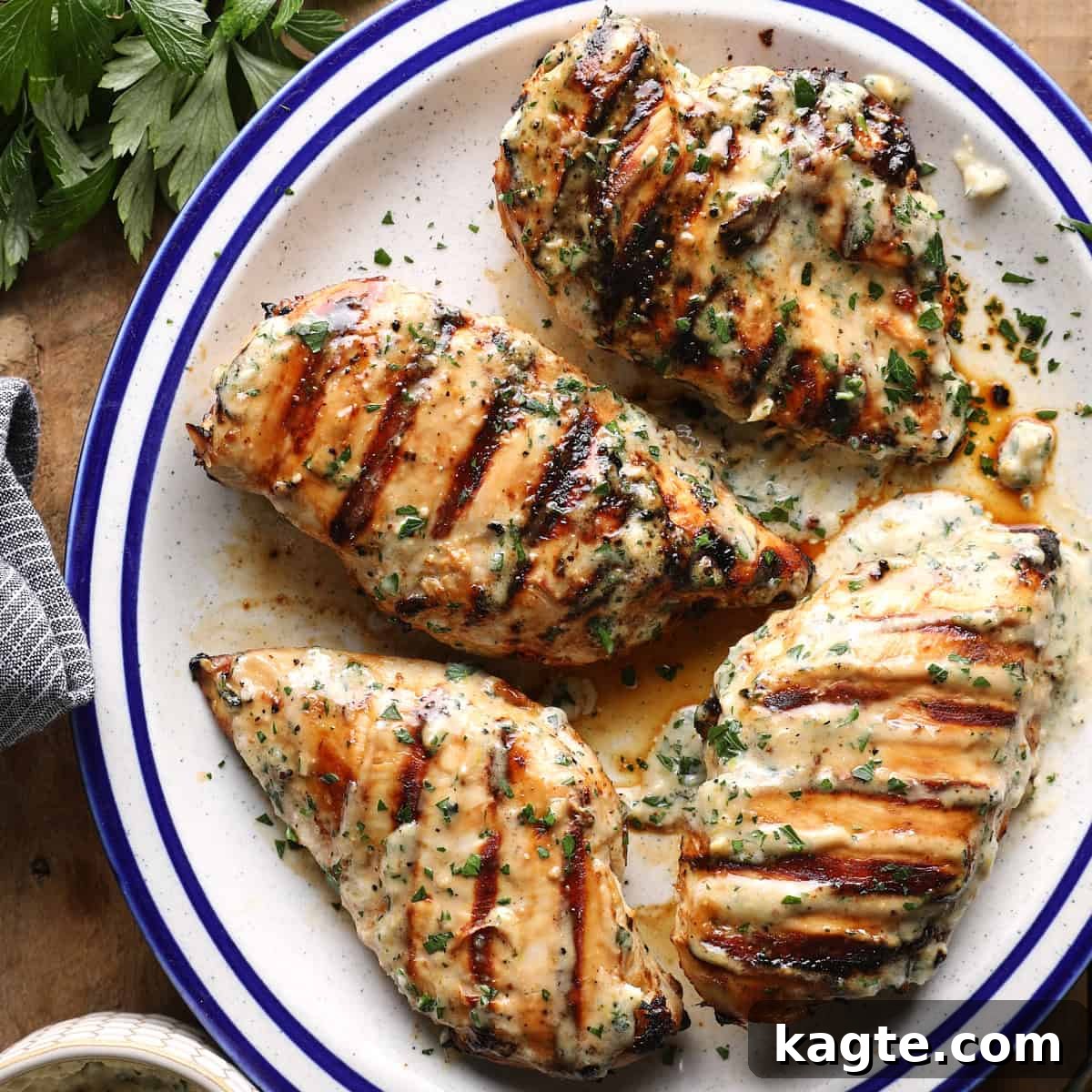
Caesar Dressing Marinated Grilled Chicken turns a half-used bottle of salad dressing into an easy, flavor-packed dinner. The dressing is brightened with fresh garlic and lemon, the chicken is grilled over controlled heat, and everything is finished with a buttery Parmesan sauce for extra richness.
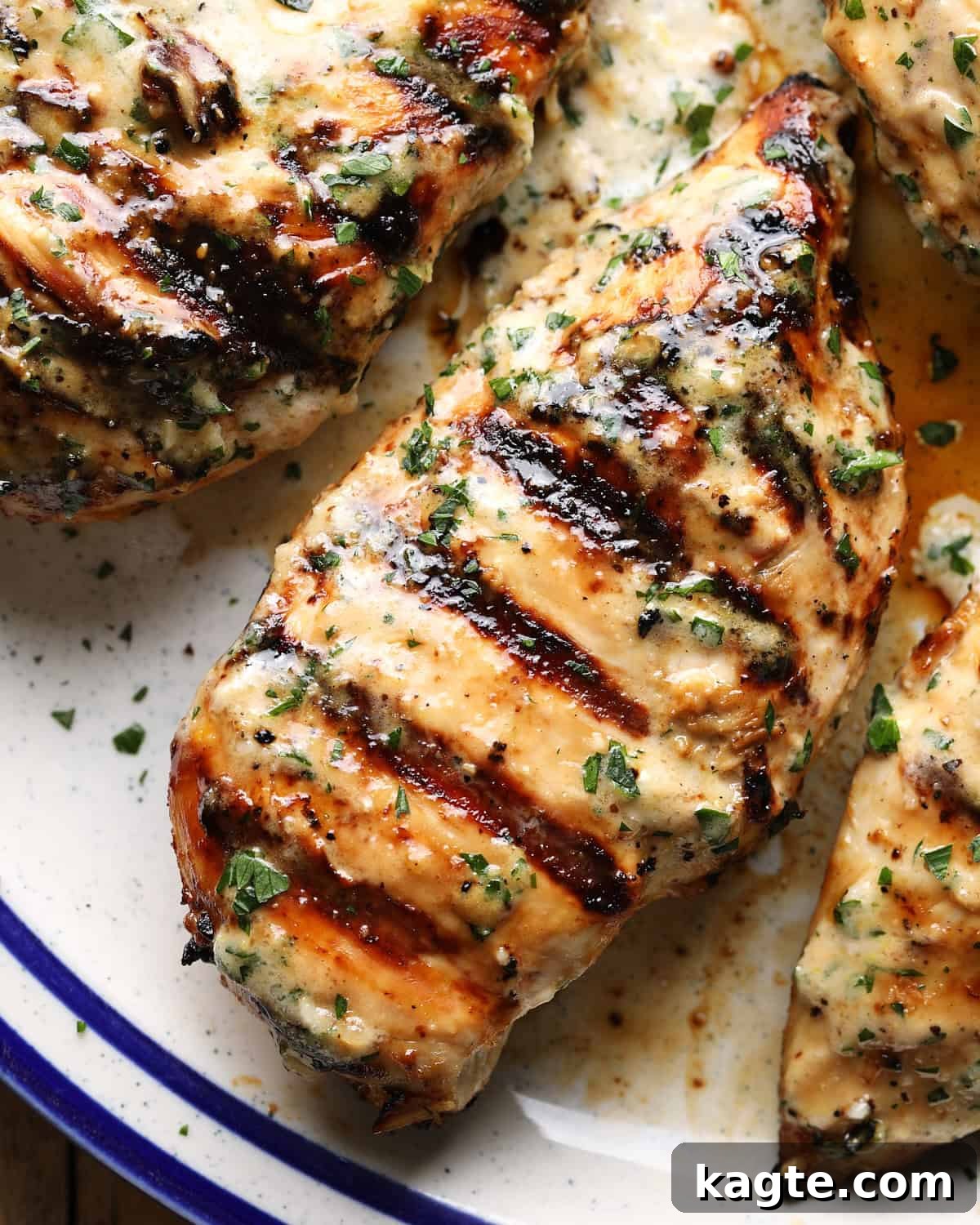
Marinating longer than a few hours can damage the chicken’s texture, so after testing I found that 3–6 hours is the ideal window. That lets the salt and Caesar flavor penetrate without the acidic dressing or lemon juice turning the surface mushy.
One small but important step is reserving a portion of the clean marinade before it touches the raw chicken. That reserved bit is mixed with melted butter, Parmesan, and parsley to make a finishing sauce that gets brushed on right after grilling. It restores fresh, bright Caesar flavor that can otherwise become muted during cooking.
🔍 At a Glance
- ⏱️ Ready in: 3 hours 35 minutes (10 min. prep, 3 hours marinating, ~25 min. cook)
- 👥 Serves: 6
- 📌 Main Ingredients: Chicken breasts, Caesar dressing, garlic, lemon, Parmesan
- 🔥 Cook Method: Grill (or skillet)
- 😋 Flavor Profile: Savory, garlicky, lemony, buttery, cheesy
- 📝 Great For: Summer grilling, simple dinners, cookouts, and meal prep
Table of Contents
- 🔍 At a Glance
- Why This Recipe Works
- Ingredients & Why They Matter
- Why I Don’t Marinate Overnight
- Caesar Grilled Chicken Step by Step
- Pro Tips
- Common Mistakes
- Variations to Try
- No Grill? Stove Method
- What To Serve With This Recipe
- Caesar Grilled Chicken Recipe
- Recipe FAQs
Why This Recipe Works
- Caesar dressing does the heavy lifting. A creamy Caesar provides fat, acid, salt, and Parmesan flavor. Fresh garlic and lemon lift the bottled dressing so the chicken tastes vibrant and homemade.
- Controlled heat avoids scorching. Preheating the grill on high then reducing to medium-low protects the garlic and creamy coating from burning while the thick breasts cook through.
- The finishing sauce restores fresh flavor. Because marinaded flavors mellow with heat, brushing the cooked chicken with the reserved marinade combined with butter, Parmesan, and parsley gives a glossy finish and a final boost of intensity.
Ingredients & Why They Matter
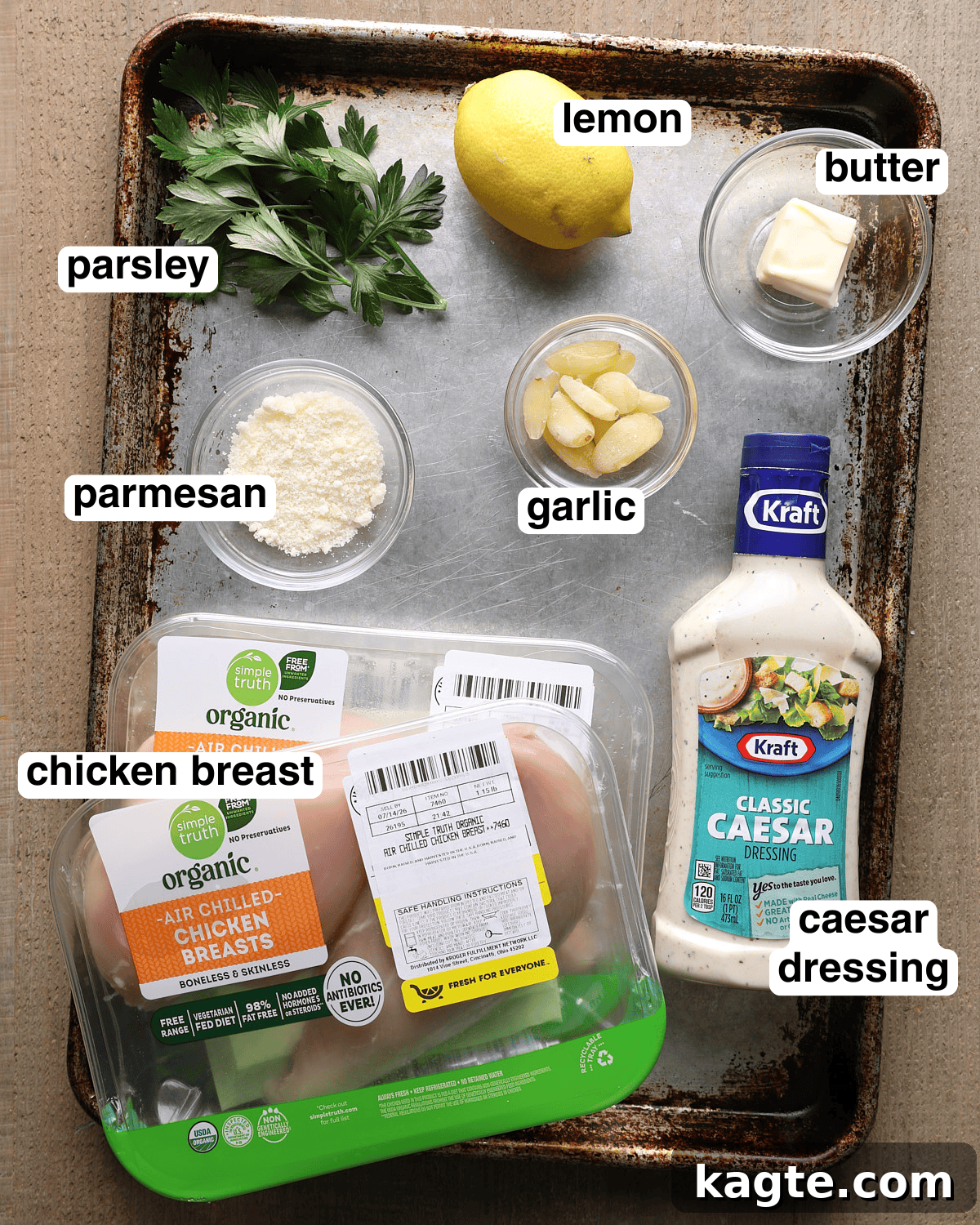
- Ingredients & Why They Matter
- Boneless Skinless Chicken Breasts: Lean and mild, they take on the Caesar flavors well. Pound thicker portions slightly so all pieces cook evenly. You can substitute 2½ pounds boneless skinless thighs if you prefer darker meat.
- Caesar Dressing: Use a full-fat creamy dressing you enjoy. It supplies fat, acid, salt, and savory notes that cling to the chicken.
- Fresh Garlic: Grate or mince so it disperses evenly. Some garlic stays in the bag, so a larger amount (listed in the recipe) ensures a garlicky result.
- Lemon Zest & Juice: Zest brings concentrated lemon aroma; juice brightens the marinade. Because juice adds acidity, limit marinating time to avoid a mushy surface.
- Salt & Pepper: Be conservative with extra salt since the dressing, Parmesan, and butter contribute saltiness. Adjust pepper to taste.
- Butter & Parmesan: Melted butter and finely grated Parmesan make the finishing sauce glossy, rich, and more cohesive.
- Fresh Parsley: Adds color and a clean herbal note to the finishing sauce.
See the recipe card below for exact measurements and the full ingredient list.
Why I Don’t Marinate This Chicken Overnight
Longer marinating isn’t always better. I tested extended times and found the exterior became soft and pasty. Acidic ingredients like vinegar or lemon change protein structure at the surface: a few hours can tenderize, but many hours can make the outside mealy rather than juicy.
Marinades mainly flavor the surface, so overnight marinating doesn’t significantly deepen flavor but does risk a poor texture. For this recipe, marinate for at least 3 hours but no more than 6 hours.
| Marinating Time | Result |
|---|---|
| 30–60 minutes | Light Caesar flavor; usable if short on time |
| 2–3 hours | Well seasoned with a firmer texture |
| 3–6 hours | Best balance of flavor, moisture, and texture |
| 8 hours or overnight | Not recommended; exterior can become mushy |
Caesar Grilled Chicken Step by Step
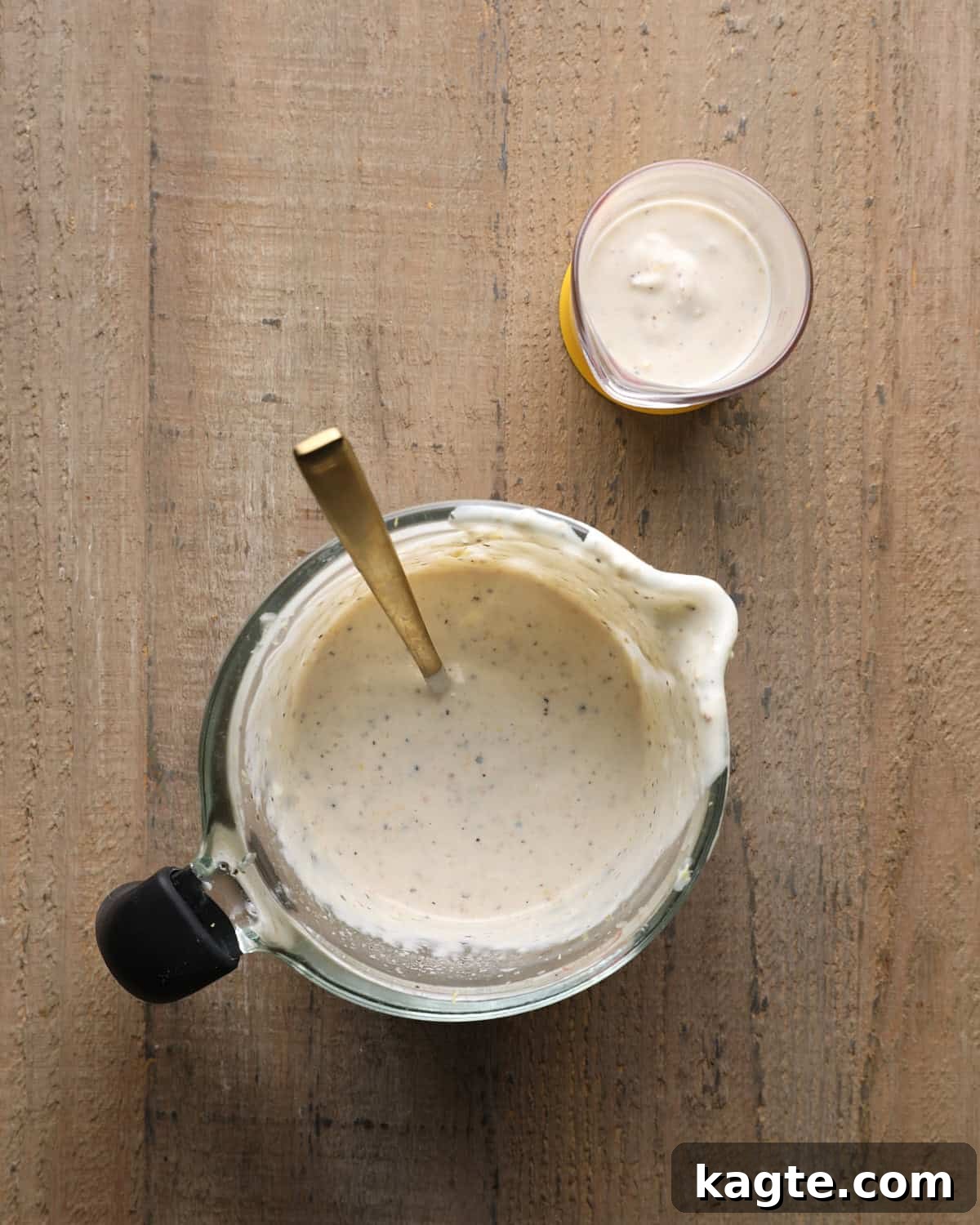
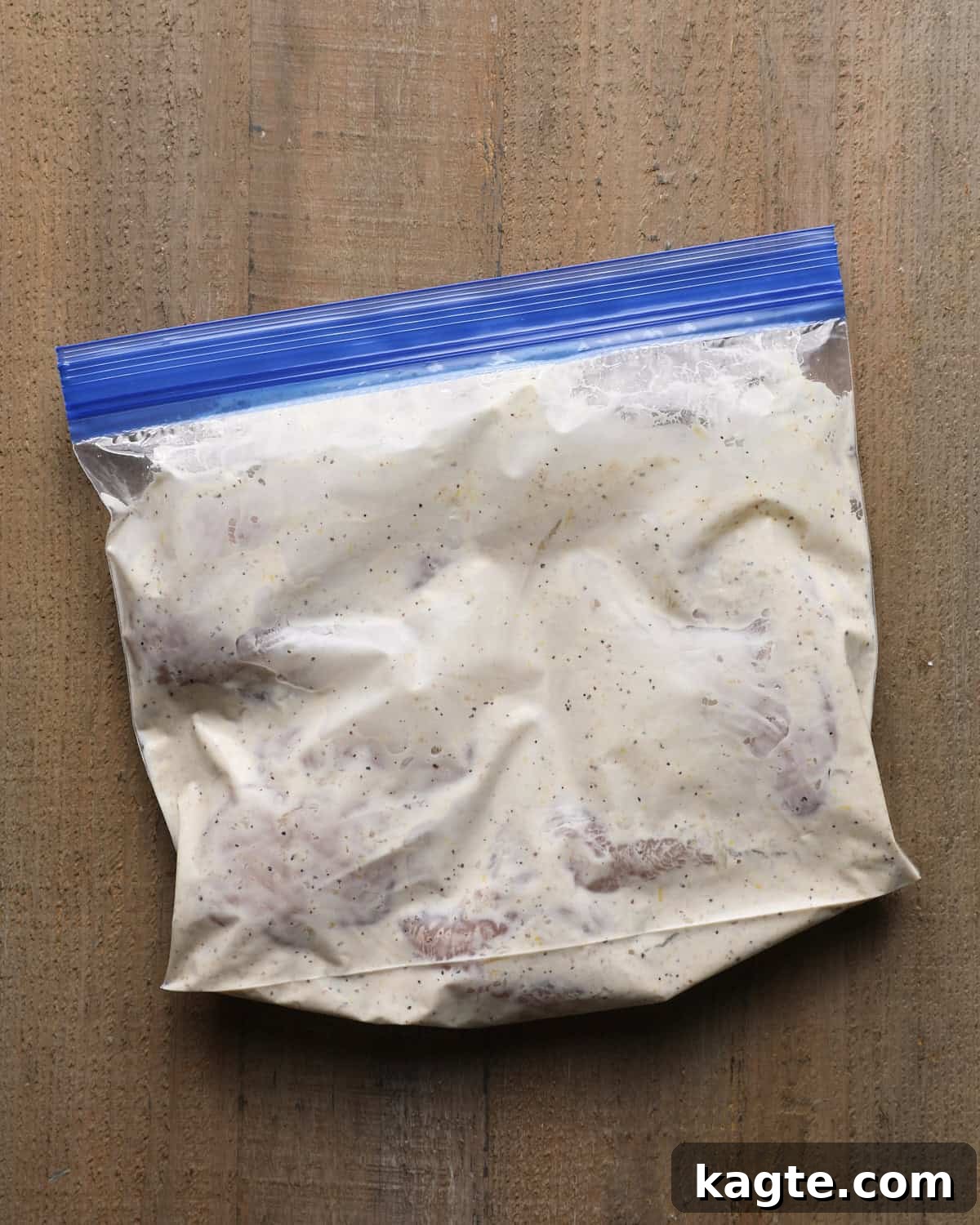
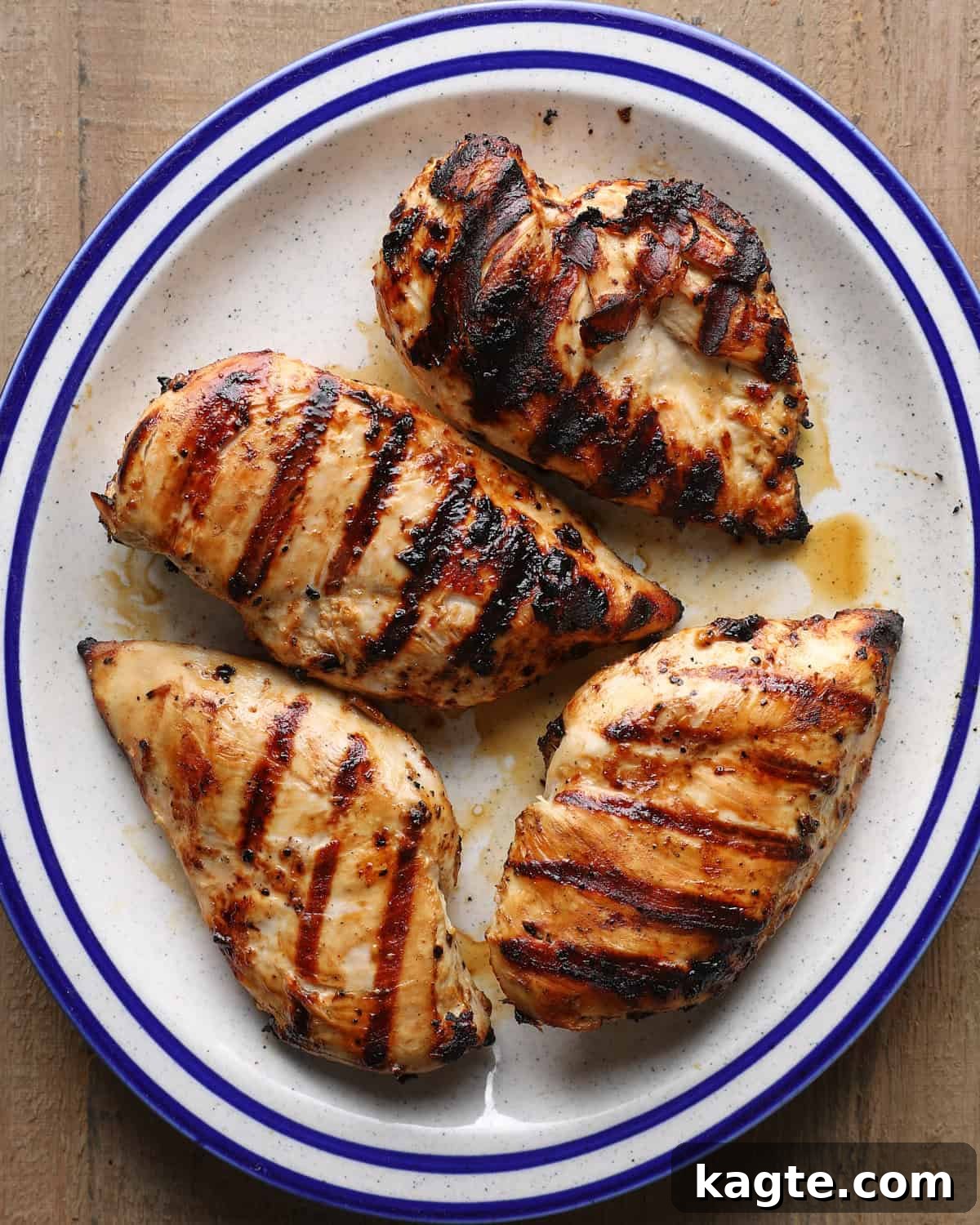
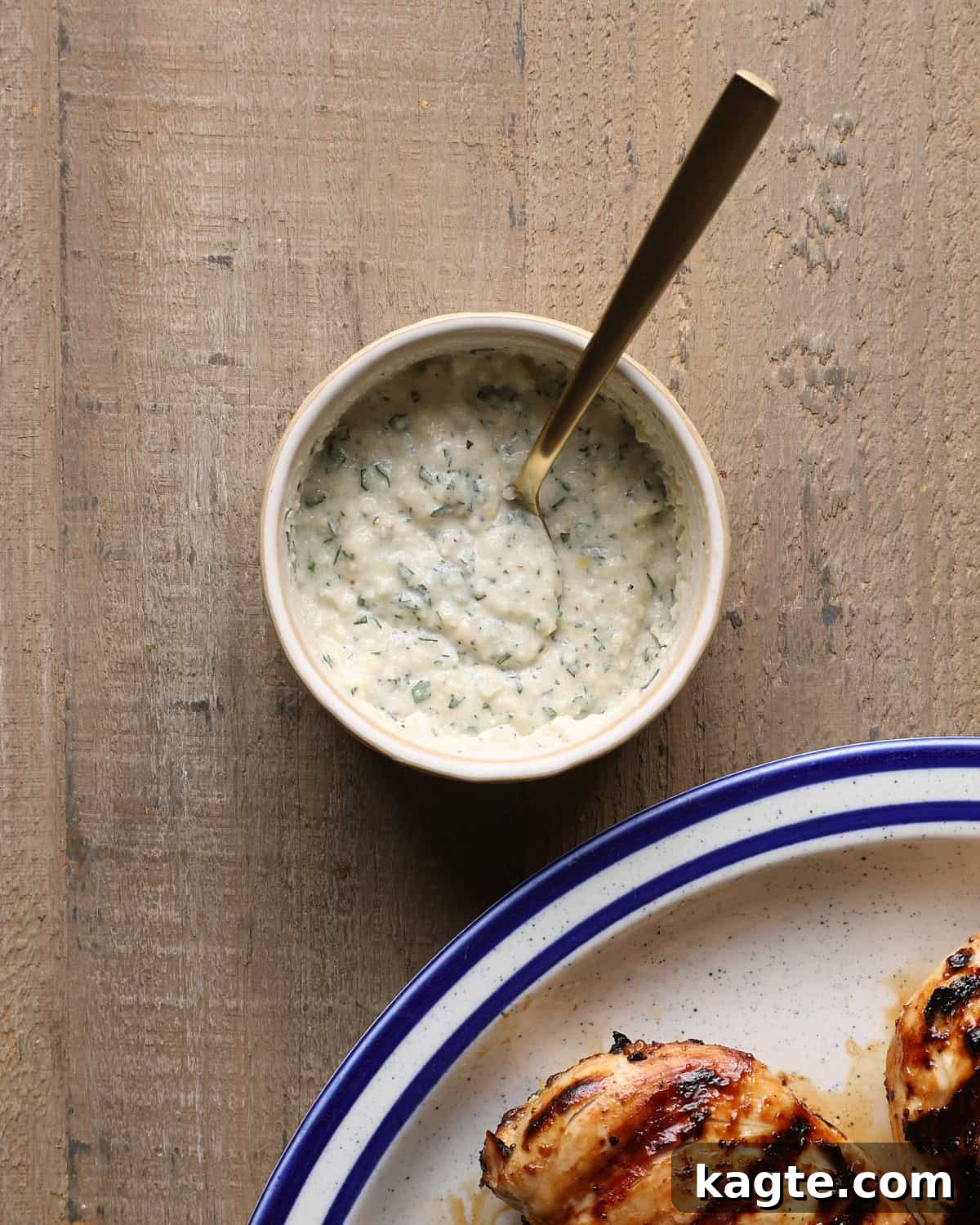
- Make and reserve the marinade. Whisk Caesar dressing, finely grated garlic, lemon zest, lemon juice, kosher salt, and black pepper. Before the marinade touches raw chicken, transfer 1/4 cup to a separate bowl and refrigerate for the finishing sauce.
- Marinate in a bag. Add the chicken and remaining marinade to a large resealable bag. Press out the air, massage until evenly coated, and refrigerate for 3–6 hours. Do not marinate overnight.
- Grill the chicken. Preheat the grill on high to heat the grates, then reduce to medium-low. Remove chicken, let excess marinade drip off, and place breasts on the grill. Cook 10–12 minutes on the first side, letting them cook more than halfway through before flipping. Flip with a wide spatula once the chicken begins to release naturally and continue until the thickest part reaches 165°F.
- Brush and rest. While chicken finishes, stir the reserved 1/4 cup marinade with melted butter, Parmesan, and parsley. Transfer cooked chicken to a clean platter, brush generously with the finishing sauce, and rest 5 minutes before slicing against the grain.
💡 Bri’s Best Tip
Don’t assume longer marinating equals better flavor. Keep the marinating time between 3 and 6 hours for the best texture and Caesar flavor.
Pro Tips for Perfect Caesar Marinated Grilled Chicken
- Reserve the finishing sauce first: Set aside 1/4 cup of marinade before it touches the raw chicken to use later with butter and Parmesan.
- Preheat high, then reduce: Hot grates help sear and brown; lowering the heat prevents the creamy coating from burning.
- Use a spatula for flipping: A wide spatula supports the breast so the browned exterior doesn’t tear away when you flip.
- Check each piece individually: Remove breasts as they reach 165°F; sizes vary so cooking times will too.
Common Mistakes
- Marinating overnight: The lemon and Caesar dressing are acidic and can make the exterior mushy. Stick to 3–6 hours.
- Flipping too early: If the chicken resists when you try to flip, give it another minute; it will release when properly browned.
- Using contaminated marinade: Discard marinade that touched raw chicken. Only use the reserved, uncontaminated portion for the finishing sauce.
- Slicing immediately: Let the chicken rest 5 minutes after grilling to retain juices before slicing.
Swap It Up: Variations to Try
- Add Dijon: Whisk 1 tablespoon Dijon mustard into the marinade for extra tang and better adhesion.
- Add pesto: Stir 2 tablespoons basil pesto into the marinade and use basil in the finishing sauce instead of parsley.
- Make it spicy: Add 1/4 teaspoon cayenne or 1/2 teaspoon red pepper flakes to the marinade; add hot sauce to the finishing sauce for more heat.
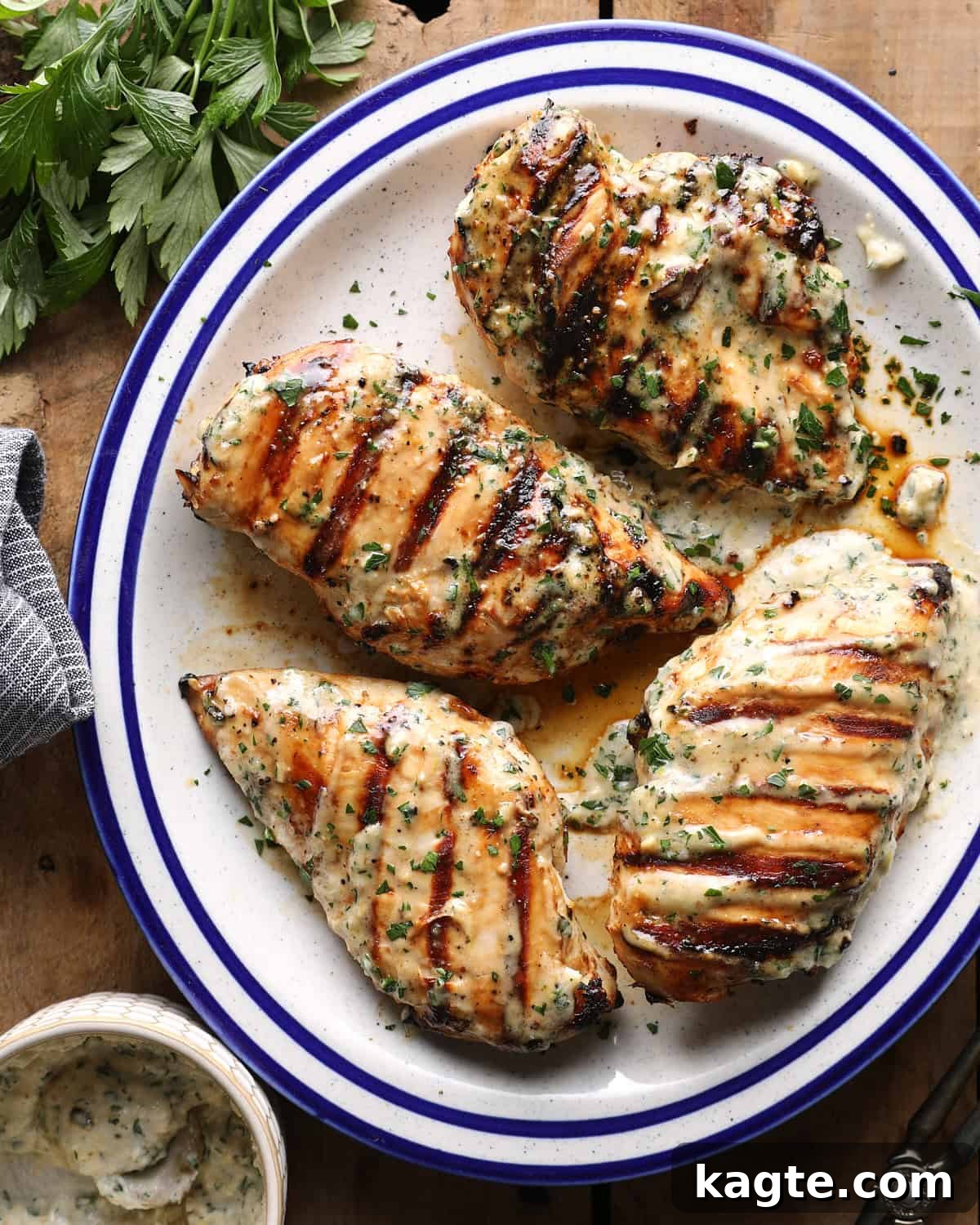
No Grill? Make This Caesar Chicken on the Stove
Pan-searing is an excellent indoor alternative. It yields a golden crust while keeping the inside juicy and cooks quickly on busy nights.
- Prepare the chicken. Remove from marinade and let excess drip off. Pound thicker areas to even thickness. Discard used marinade.
- Preheat the skillet. Heat 1 tablespoon olive oil in a large skillet over medium. Add chicken in a single layer, working in batches if needed.
- Sear the chicken. Cook 6–8 minutes on the first side without moving. Flip, reduce heat to medium-low, and cook 5–8 more minutes or until 165°F. If browning too fast, add a tablespoon or two of water and cover for the last few minutes. Brush with the finishing sauce and rest 5 minutes before slicing.
What To Serve With This Recipe
The garlicky, lemony, and cheesy profile pairs well with simple sides: roasted or mashed potatoes, grilled vegetables, pasta salads, or fresh greens. Leftovers are great in wraps, grain bowls, pasta salads, or sliced over a Caesar salad.
- Oven-roasted or garlic-parsley potatoes
- Grilled zucchini and summer squash
- Pesto orzo salad for a chilled side
- Roasted sweet potatoes to balance the salt and cheese
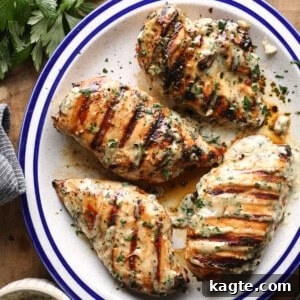
Caesar Grilled Chicken
Ingredients
Chicken and Marinade
- 2 1/2 pounds boneless skinless chicken breasts (about 4–6 breasts)
- 1 heaping cup Caesar dressing (preferably creamy and full-fat)
- 12 cloves garlic, finely grated or minced
- 1 large lemon, zested and juiced
- 1 teaspoon Morton kosher salt
- Freshly cracked black pepper, to taste
Finishing Sauce
- 1/4 cup reserved Caesar marinade (set aside before adding raw chicken)
- 2 tablespoons salted butter, melted
- 2 tablespoons grated Parmesan cheese (finely grated)
- 1 tablespoon chopped fresh parsley
Instructions
- Make and separate the marinade. Whisk dressing, garlic, lemon zest and juice, kosher salt, and pepper. Reserve 1/4 cup in a small covered bowl for the finishing sauce.
- Marinate the chicken. Add chicken and remaining marinade to a gallon bag. Massage to coat, press out air, seal, and refrigerate 3–6 hours. Do not marinate overnight.
- Grill the chicken. Preheat grill on high, then reduce to medium-low. Let excess marinade drip off and grill breasts 10–12 minutes on the first side, letting them cook more than halfway through before flipping. Flip with a wide spatula and continue until the thickest part reaches 165°F.
- Brush and rest. Mix reserved marinade with melted butter, Parmesan, and parsley. Brush over hot chicken, rest 5 minutes, then slice against the grain.
Notes
- Use a creamy, full-fat Caesar dressing you like; its flavor will come through clearly.
- Always reserve the 1/4 cup of clean marinade before adding raw chicken; discard the rest after marinating.
- Do not marinate overnight; 3–6 hours gives the best texture.
- Preheat the grill on high, then lower to medium-low before cooking to avoid burning the garlic and dressing.
- Store leftovers in an airtight container in the refrigerator for 3–4 days and reheat gently to avoid drying.
Nutrition
Calories: 483 kcal | Carbohydrates: 5 g | Protein: 42 g | Fat: 32 g | Sodium: 1142 mg
Nutrition information is an approximation.
Recipe FAQs
The Caesar dressing and lemon juice are acidic and change the protein structure on the chicken’s surface. Given enough time, the exterior can turn from tender to soft or mealy. For this recipe, prolonged marinating negatively affected texture.
Only use the portion you reserved before adding raw chicken. Discard any marinade that contacted raw poultry. Mix the reserved portion with butter, Parmesan, and parsley for the finishing sauce.
Refrigerate in an airtight container within two hours of cooking and use within 3–4 days. Reheat gently in a covered skillet over medium-low with a splash of water or microwave in short intervals at reduced power to avoid drying out the meat.
Did you make this recipe?
If you try this recipe, please leave feedback and a rating in the recipe card above — your notes help refine the method for others.