
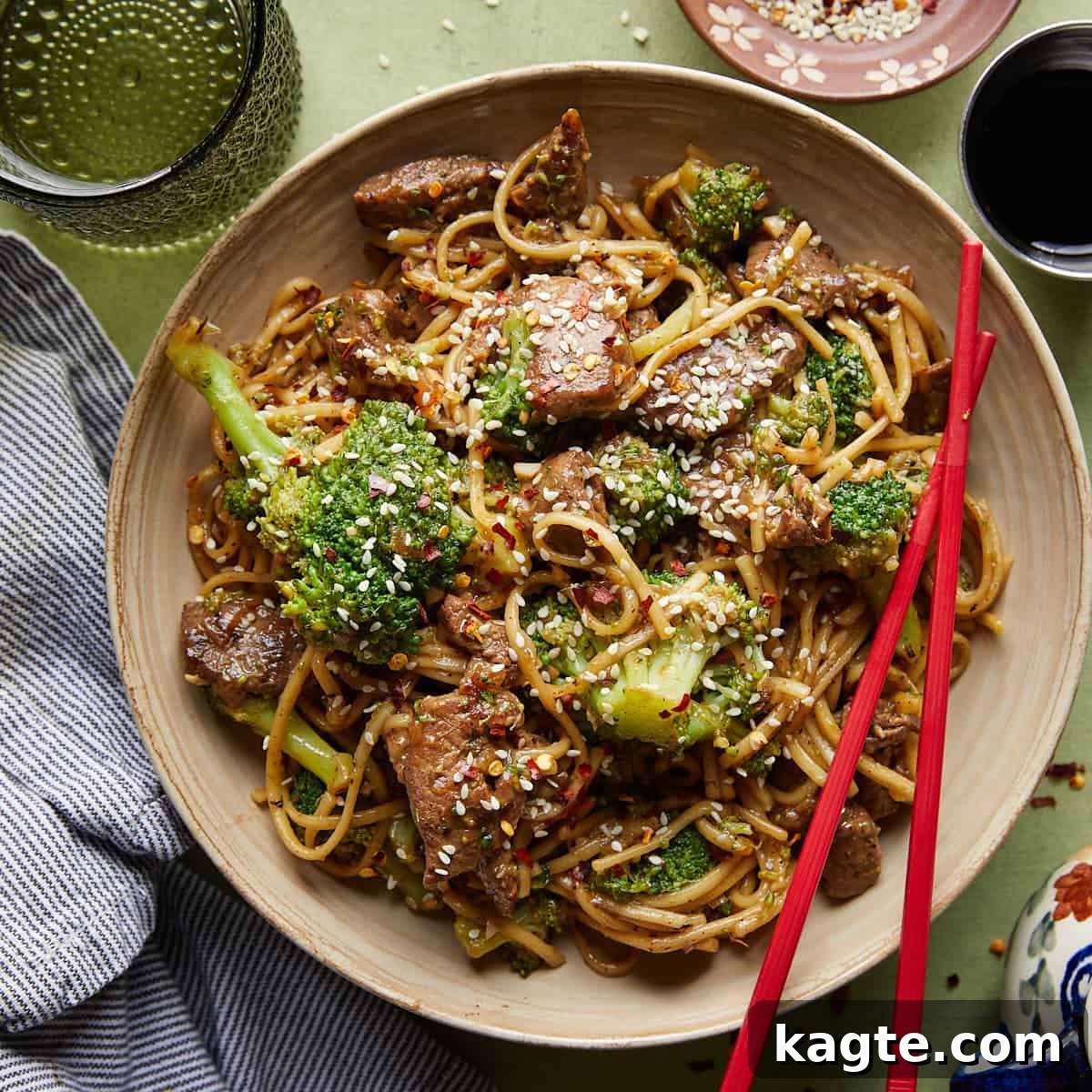
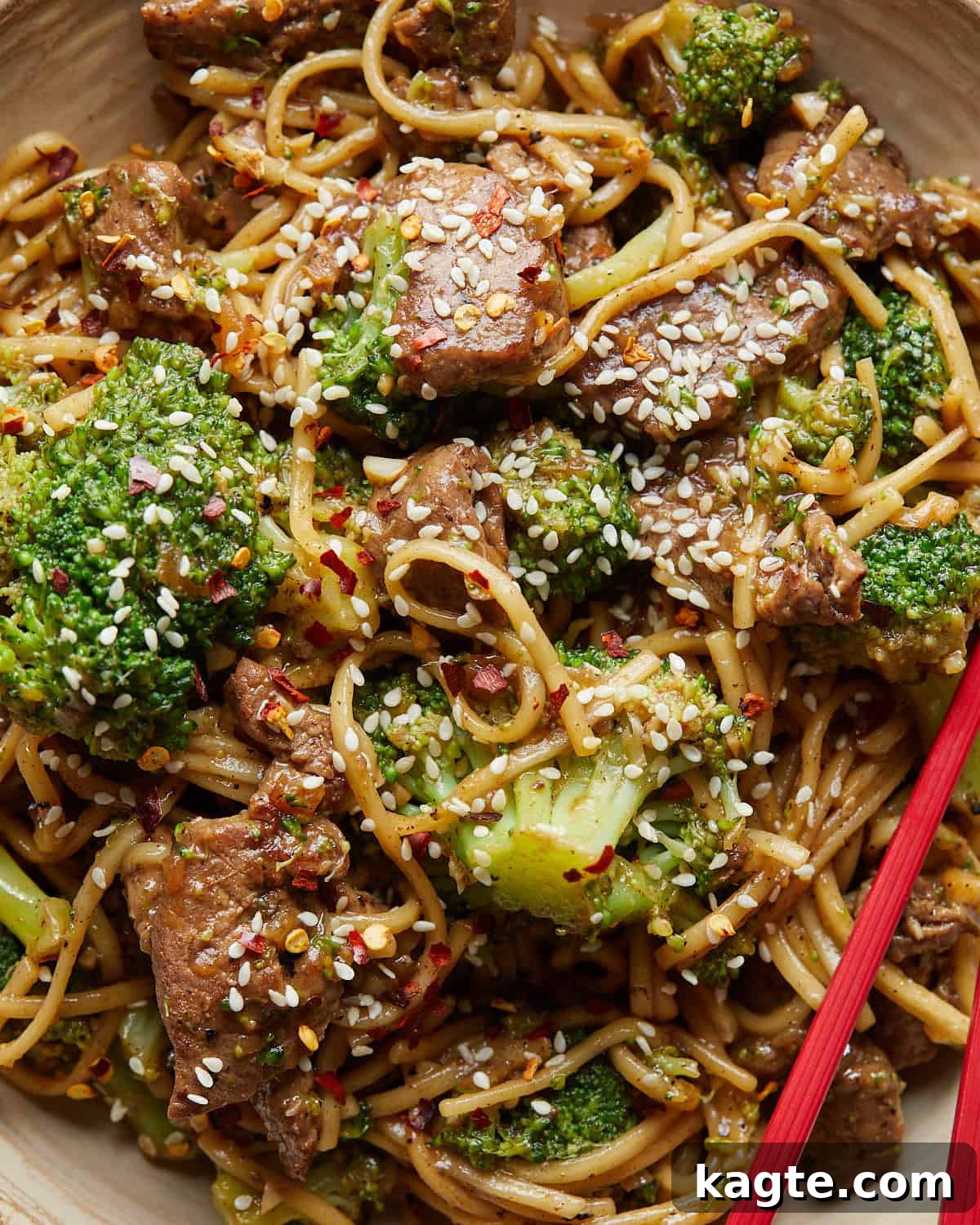
Easy Beef and Broccoli Noodles offers a delightful culinary journey, bringing together succulent slices of beef, vibrant, crisp broccoli florets, and perfectly cooked noodles, all embraced by a rich, savory, and irresistible sauce. This classic stir-fry dish stands out as the ultimate solution for a satisfying weeknight dinner, thanks to its straightforward ingredients and incredibly quick preparation time. It’s a complete meal that effortlessly balances carbohydrates, fresh vegetables, and lean protein in a single, flavorful recipe, making it a go-to choice for busy evenings when you crave something wholesome and delicious.
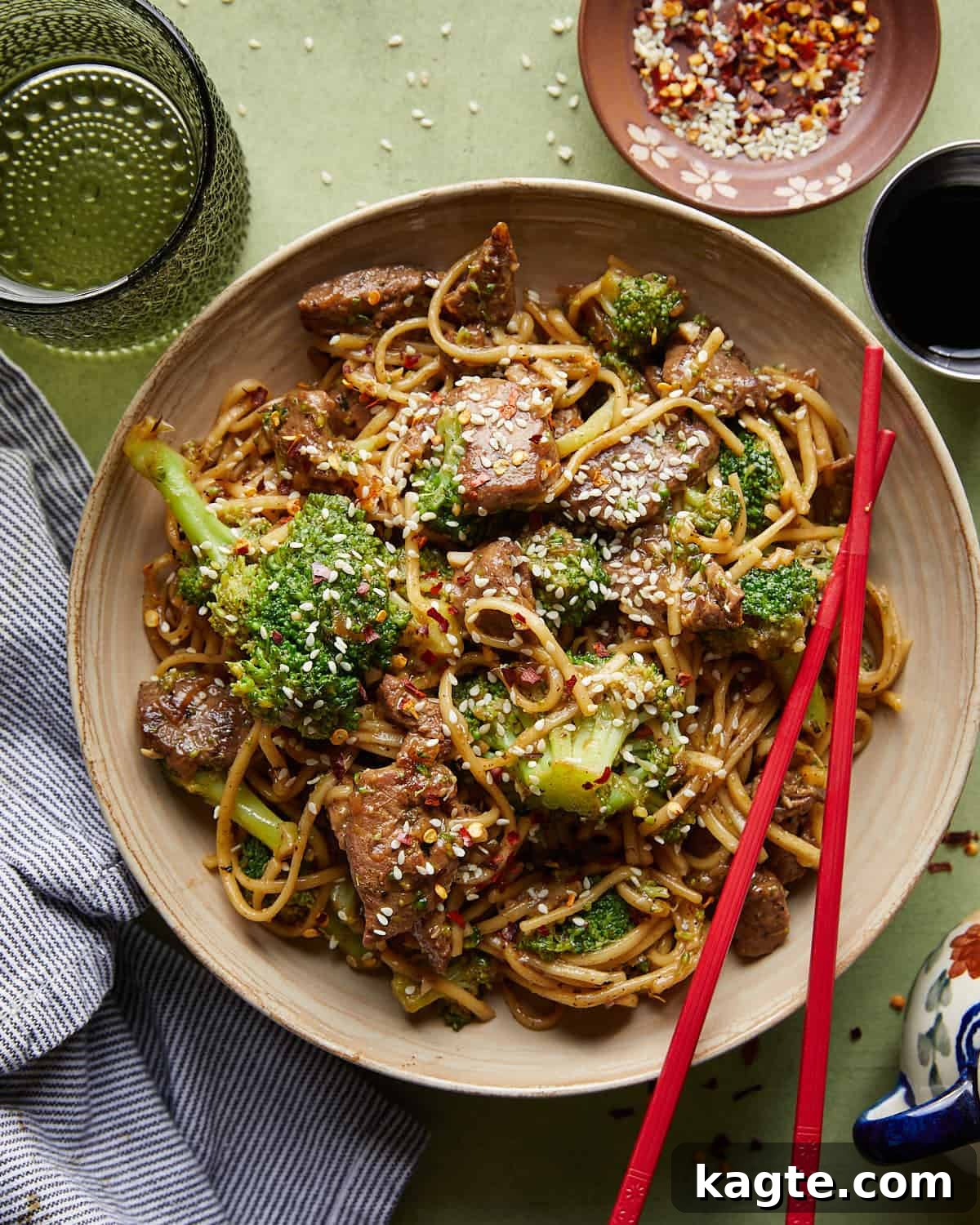
There’s immense satisfaction in preparing a dish that is not only packed with flavor but also offers a balanced nutritional profile, providing all the essential food groups in one harmonious meal. While many turn to takeout for quick Asian cuisine, making Beef and Broccoli Noodles at home allows for complete control over ingredients, ensuring freshness and enabling customization to fit any dietary preference or taste. This homemade version often surpasses its restaurant counterparts, delivering a fresher, more authentic, and deeply satisfying experience. If you’re a fan of the diverse and dynamic world of stir-fries, you might also love exploring other quick and delightful options. Be sure to try my Ground Pork Stir Fry or my Chicken & Green Bean Stir Fry. Both recipes promise a quick, immensely satisfying, and wonderfully easy meal, perfect for expanding your weeknight repertoire.
Why You’ll Love This Recipe
This Beef and Broccoli Noodles recipe isn’t just another meal; it’s a culinary experience designed for maximum enjoyment with minimal fuss. Here’s why it will quickly become a cherished favorite in your kitchen:
- Better Than Takeout: Say goodbye to expensive delivery and questionable ingredients. This homemade version offers unparalleled freshness, vibrant flavors, and the comfort of a meal prepared with care. You control the quality of the beef, the crispness of the broccoli, and the balance of the sauce, resulting in a dish that’s superior in taste and nutrition, often ready faster than a delivery driver can get to your door.
- Incredibly Customizable: The beauty of stir-fries lies in their adaptability, and this recipe is no exception. It’s an open canvas for your culinary creativity. Easily swap in your favorite vegetables such as snap peas, bell peppers, or carrots for added color and texture. Experiment with different noodle types, or introduce a new protein like chicken, shrimp, or tofu. You can also adjust the spice level to your liking, making it perfect for everyone at the table.
- Bursting with Flavor: Prepare your taste buds for an explosion of savory goodness. Tender, perfectly seared beef, vibrant and crisp-tender broccoli, and chewy noodles are all coated in a rich, deeply savory, and subtly sweet sauce. Each bite delivers a harmonious blend of umami, garlic, ginger, and sesame, creating a complex and utterly addictive flavor profile that will have you coming back for more.
- Quick & Easy Weeknight Solution: Designed with busy schedules in mind, this recipe streamlines the cooking process. With minimal prep and quick stir-frying, you can have a restaurant-quality meal on the table in under 35 minutes. It’s the perfect answer for those evenings when time is short but the craving for something truly delicious is strong.
Best Noodles for Beef & Broccoli
Choosing the right noodles can significantly elevate your Beef and Broccoli Noodles dish, transforming it from good to extraordinary. Each type brings its own unique texture and ability to absorb the rich, savory sauce. Here are some of the best options, with considerations for flavor and texture:
- Lo Mein Noodles: These soft, delightfully chewy wheat-flour noodles are the traditional and often preferred choice for classic beef and broccoli stir-fries. Their springy texture and porous nature allow them to soak up the flavorful sauce beautifully, ensuring every strand is coated and bursting with taste. They are widely available in the Asian section of most grocery stores and are highly recommended for an authentic experience.
- Rice Noodles: For those seeking a gluten-free alternative or a lighter texture, thin rice noodles are an excellent choice. They offer a delicate chewiness and a subtle flavor that won’t overpower the robust sauce. Their ability to absorb liquids makes them perfect for soaking up all the delicious stir-fry goodness, providing a delightful contrast to the tender beef and crisp broccoli.
- Egg Noodles: If you prefer a heartier, more substantial bite, egg noodles are a fantastic option. Their slightly richer flavor, attributed to the egg content, adds another layer of depth to the dish. They have a satisfying chew and hold up well to the vigorous tossing of a stir-fry, making them a durable and delicious choice.
- Udon Noodles: These thick, delightfully chewy Japanese wheat noodles provide a wonderfully satisfying texture. Udon noodles are robust enough to stand up to the rich beef and broccoli, contributing to a truly hearty and filling meal. Their smooth surface still allows the sauce to cling effectively, ensuring a flavorful mouthful with every bite.
- Soba Noodles: Made from buckwheat flour, soba noodles introduce a unique, nutty flavor profile that can add an interesting twist to your stir-fry. They are a more nutritious option, often higher in fiber, and their firm texture integrates well with the other ingredients, offering a distinct and enjoyable eating experience.
- Ramen Noodles: Beyond instant soup, fresh ramen noodles are a fantastic choice for stir-fries. They are wonderfully chewy, cook incredibly quickly, and have an excellent capacity to absorb sauces. For ultimate convenience, you can even use the noodles from instant ramen packets (discarding the seasoning packets) or opt for fresh ramen for a more authentic and gourmet feel.
While lo mein noodles are our top recommendation for their traditional fit and ideal texture, feel empowered to choose any of these delicious options. Your selection can be guided by your personal taste preferences, dietary needs, or simply what you have on hand, ensuring a delightful and personalized beef and broccoli noodle experience every time!
Ingredients & Substitutions
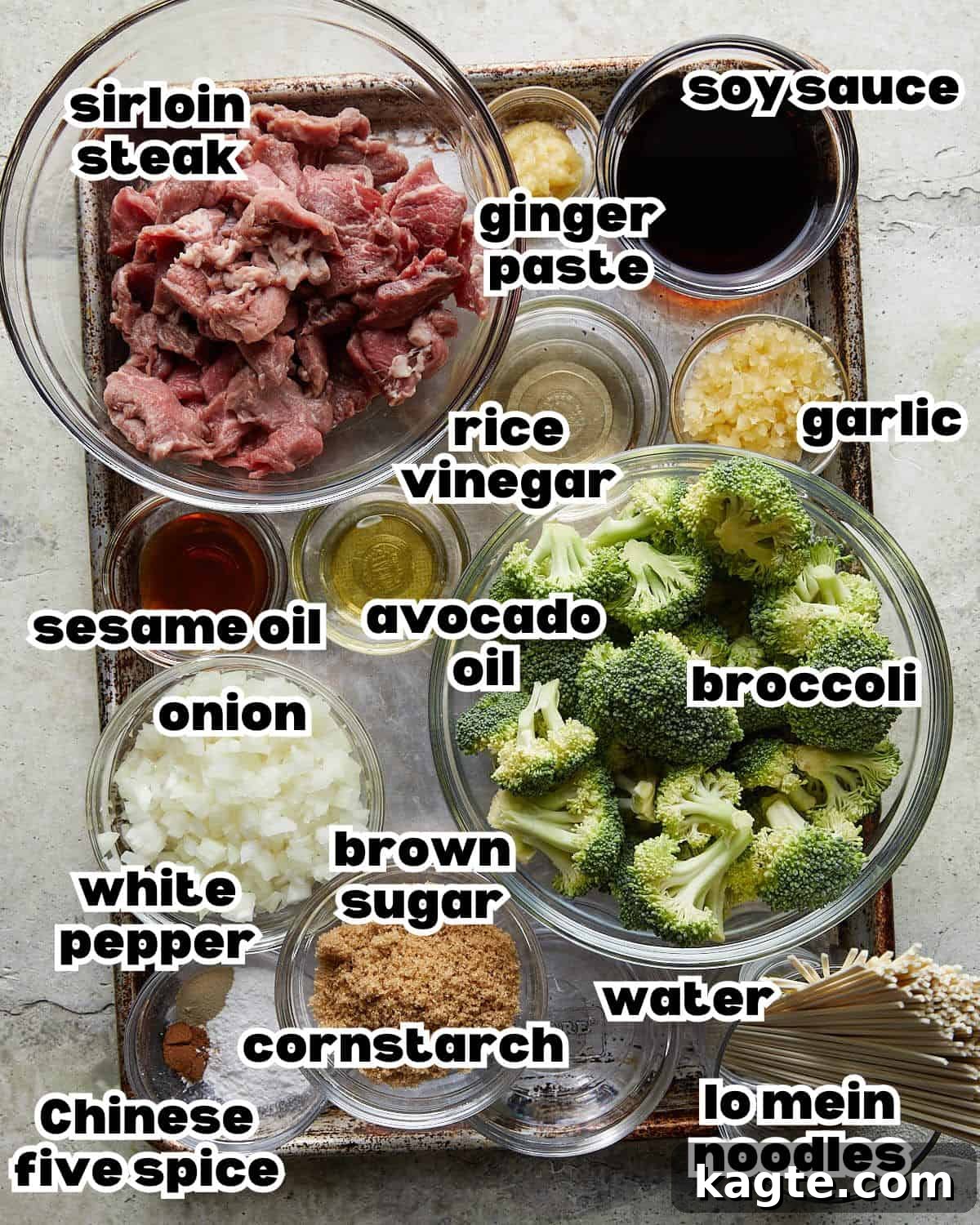
Understanding your ingredients and their potential substitutions is key to culinary flexibility. Here’s a breakdown of the core components and how you can adapt them:
- Water: While water works perfectly, for an added layer of depth and umami, feel free to swap it with chicken or vegetable broth. This small change can subtly enhance the overall flavor profile of your sauce.
- Soy Sauce: The cornerstone of many Asian sauces, soy sauce provides essential saltiness and umami. For a gluten-free option, tamari is an excellent 1:1 substitute, or you can use coconut aminos for a soy-free alternative, though you might need to adjust for sweetness and saltiness.
- Brown Sugar: This adds a touch of sweetness to balance the savory notes. Honey or maple syrup can be used for a liquid sweetener, typically 1:1, or coconut sugar for a granulated alternative, which also adds a slight caramel note.
- Rice Wine Vinegar: Essential for its mild acidity and authentic Asian flavor, rice wine vinegar brightens the sauce. If unavailable, apple cider vinegar or white wine vinegar can serve as suitable replacements, though they may slightly alter the flavor profile.
- Toasted Sesame Oil: This ingredient is a flavor powerhouse. It’s crucial to use *toasted* sesame oil, as its deep, nutty aroma is what we’re after. Regular sesame oil has a much milder flavor and won’t impart the same rich, characteristic taste to the dish.
- Ginger Paste: Freshly grated ginger is always best for its pungent, aromatic kick. If using ginger paste for convenience, ensure it’s fresh. Alternatively, 1 teaspoon of ground ginger can replace 1 tablespoon of fresh ginger or paste, but expect a slightly less vibrant flavor.
- Garlic: Freshly minced garlic offers the most robust flavor. If you’re short on time, 2 teaspoons of garlic powder can be used, but the fresh version truly makes a difference in this recipe.
- Cornstarch: This acts as a thickener for the sauce, giving it that glossy, restaurant-style consistency. Arrowroot powder is a fantastic 1:1 substitute for cornstarch, offering similar thickening power without altering the flavor.
- White Pepper: Offering a milder, earthier heat than black pepper, white pepper is traditional in many Asian dishes. Black pepper works perfectly fine if white pepper is unavailable, providing a similar but slightly different kind of warmth.
- Chinese Five Spice: While optional, a pinch of Chinese five spice adds a complex, aromatic depth to the sauce, with notes of star anise, cloves, cinnamon, Sichuan pepper, and fennel seeds. If you don’t have it, a small pinch of cinnamon and star anise can offer a good approximation.
- Broccoli Florets: Fresh broccoli is highly recommended for its texture and vibrant color. To save time during busy weeknights, opt for pre-washed and pre-cut bags of broccoli florets from the produce section. Frozen broccoli can also be used; just ensure it’s thawed and blanched properly.
- Lo Mein Noodles: These classic, chewy wheat noodles are ideal for this dish and can be found in the Asian or international aisle of most well-stocked grocery stores. Refer to the “Best Noodles for Beef & Broccoli” section for other fantastic noodle options.
- Avocado Oil: With its high smoke point and neutral flavor, avocado oil is perfect for stir-frying. Vegetable oil, canola oil, or peanut oil are all excellent substitutes that can withstand high heat without imparting unwanted flavors.
- Sirloin Steak: Lean and flavorful, sirloin steak cooks up beautifully. Flank steak or skirt steak are fantastic alternatives, both known for their tenderness when thinly sliced against the grain. Ensure they are cut thinly for quick cooking.
- Onion: White or yellow onion provides a sweet and savory base. For a milder flavor and a touch of green, the white parts of green onions (scallions) can be used instead, reserving the green tops for garnish.
A complete list of all ingredients and precise amounts is detailed on the recipe card below.
How to Make Beef and Broccoli Noodles
Quick Overview
Crafting these delectable Beef and Broccoli Noodles is a streamlined process designed for efficiency without compromising on flavor. Here’s a brief glance at the key steps:
- Prepare the aromatic and flavorful sauce.
- Marinate the beef to infuse it with savory goodness.
- Blanch the broccoli until perfectly crisp-tender.
- Cook the noodles to an ideal al dente texture.
- Sauté the onion as a fragrant base.
- Sear the steak to a beautiful, caramelized finish.
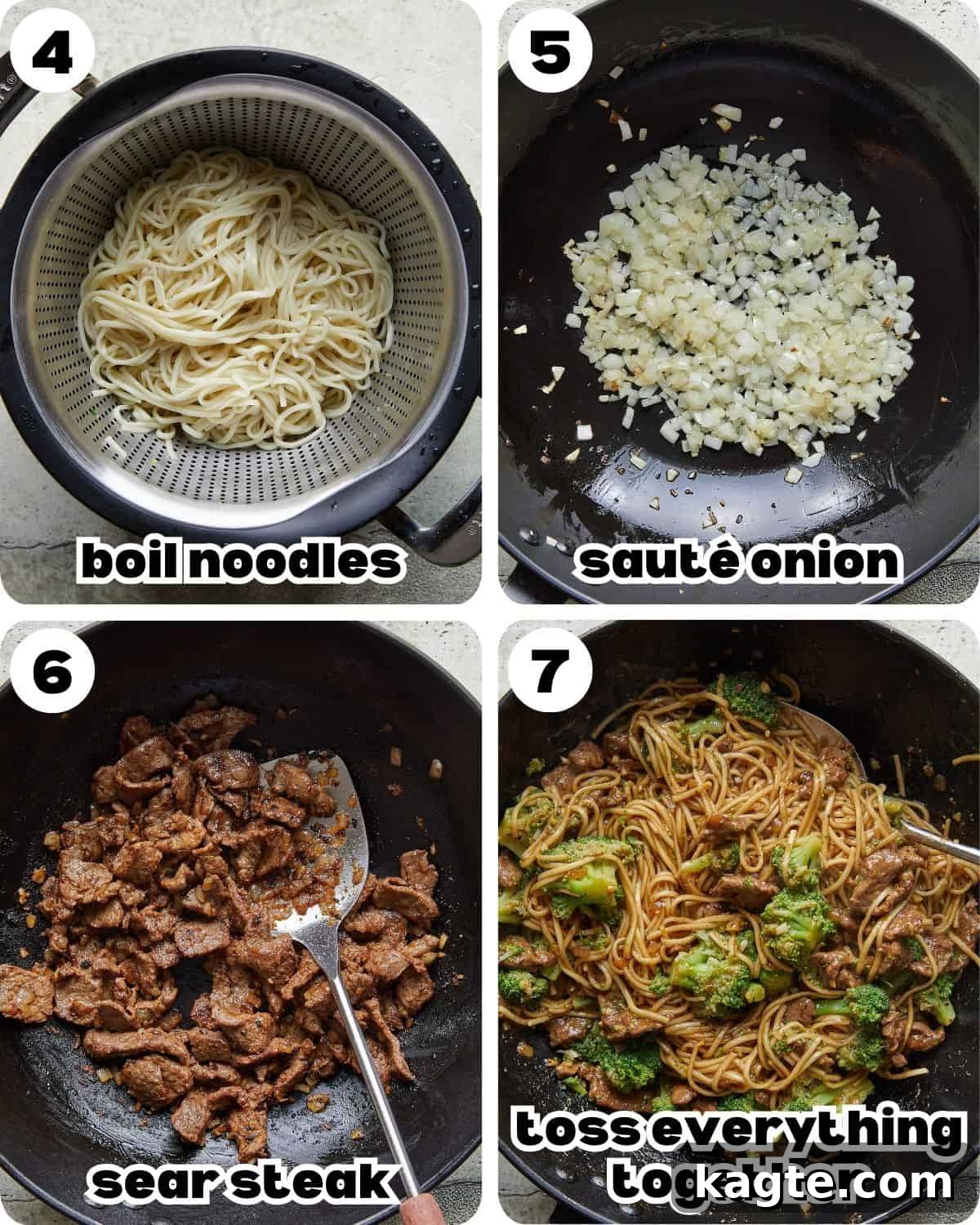
- Finally, combine all ingredients with the sauce for a glorious stir-fry.
Step by Step Instructions
Follow these detailed steps to create a restaurant-quality Beef and Broccoli Noodle dish right in your own kitchen:
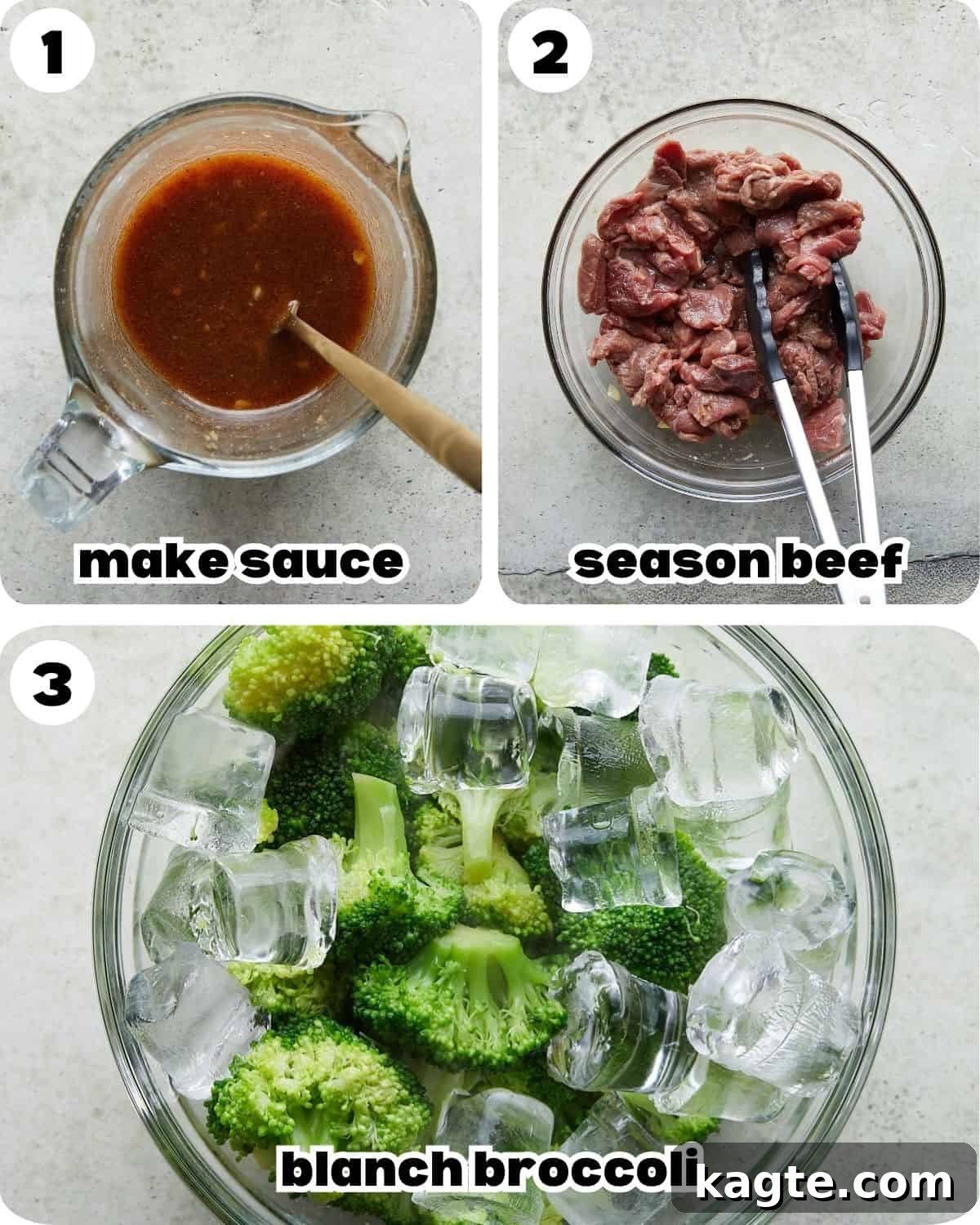
Quick Tip for Broccoli Perfection
To ensure your broccoli florets are perfectly tender-crisp and maintain their vibrant green color, always blanch them briefly before adding them to the stir-fry. This crucial step prevents them from being undercooked or becoming mushy during the fast stir-frying process.
- Prepare the Sauce: In a medium-sized bowl, embark on creating the heart of your dish—the savory sauce. Vigorously whisk together the water, soy sauce, rich brown sugar, tangy rice wine vinegar, aromatic toasted sesame oil, pungent ginger paste, finely minced garlic, cornstarch (your secret weapon for thickening), a dash of white pepper, and the optional yet wonderfully complex Chinese five spice. Mix until all ingredients are thoroughly combined and the cornstarch has dissolved, ensuring a smooth consistency. Set this flavorful concoction aside, as it will unite all the components of your stir-fry later.
- Marinate the Beef: Begin preparing your protein by placing the thinly sliced sirloin steak in a separate medium bowl. Drizzle 2-3 tablespoons of your freshly made sauce over the beef, ensuring each strip is lightly coated. Gently toss to combine, allowing the flavors to begin permeating the meat. Let this marinate briefly while you move on to prepping the broccoli and noodles. This short marination period contributes significantly to the beef’s tenderness and flavor.
- Cook the Broccoli: Bring a large pot of generously salted water to a rolling boil. Carefully add the broccoli florets and blanch them for just 2-3 minutes. You’re looking for them to turn a bright, vivid green and achieve a tender-crisp texture – still firm with a slight bite, but no longer raw. Promptly drain the broccoli and immediately transfer it to a bowl filled with ice water (or simply run under very cold water) to halt the cooking process and preserve its vibrant color and texture. Once cooled, drain again and set aside.
Quick Tip for Perfect Beef Searing
When searing your beef, it’s essential to work in batches if necessary and ensure that each piece of steak has direct contact with the hot surface of the pan. This technique allows for proper caramelization and even cooking, resulting in beautifully browned and tender beef every time.
- Cook the Noodles: Utilize the same pot you used for the broccoli (no need for extra dishes!). Bring fresh water to a boil, then add the lo mein noodles. Cook them precisely according to the package instructions until they reach an al dente stage – tender but still with a slight bite. Avoid overcooking, as mushy noodles will not hold up well in the stir-fry. Drain the noodles thoroughly and rinse them well with cold water to prevent sticking, then set them aside.
- Sauté the Onion: Place a large wok or a spacious skillet over medium heat. Add the avocado oil and allow it to shimmer. Introduce the finely diced white or yellow onion to the hot oil and sauté for 2-3 minutes. Stir occasionally until the onion softens and becomes delicately translucent, releasing its sweet aroma and creating a fragrant base for your stir-fry.
- Sear the Beef: Increase the heat to medium-high. Add the thinly sliced, marinated sirloin steak to the wok in a single layer, ensuring not to overcrowd the pan (cook in batches if necessary). Sear the beef for a few minutes on each side until it develops a beautiful caramelization and is cooked through to your desired doneness. The high heat is key to achieving that perfect seared texture. Once cooked, remove the beef from the pan and set it aside momentarily.
- Combine & Thicken: Reduce the heat in the wok back to medium. Return the seared beef to the wok, along with the cooked noodles and the remaining reserved sauce. Toss all ingredients gently but thoroughly, ensuring everything is evenly coated. Continue to cook for a few minutes, stirring constantly, until the sauce begins to thicken and beautifully cling to the noodles and beef. Finally, add the blanched broccoli florets and toss once more, just until they are heated through and coated in the glossy sauce. Serve immediately and savor the flavors!
Expert Tips for Success
Mastering this Beef and Broccoli Noodles recipe is all about a few key techniques. Follow these expert tips to ensure your dish is consistently delicious and perfectly executed:
- Slice the Beef Thinly and Against the Grain: This is perhaps the most crucial tip for tender beef. To ensure your sirloin steak is melt-in-your-mouth tender and cooks quickly and evenly, always slice it against the grain into thin strips, about 1/4-inch thick. If the steak is a bit soft, freezing it for 15-20 minutes beforehand will firm it up, making it significantly easier to achieve those perfect, uniform thin slices. This prevents the beef from becoming tough or chewy.
- Blanch the Broccoli for Vibrant Color and Texture: Blanching the broccoli florets before adding them to the stir-fry is a non-negotiable step. This brief dip in boiling water followed by an ice bath locks in their vibrant green color and ensures they are perfectly crisp-tender – not raw, but still possessing a delightful bite. Overcooked, soggy broccoli is a common stir-fry pitfall, so aim for that tender-crisp stage, knowing it will soften slightly more when combined with the hot sauce.
- Don’t Overcook the Noodles: The texture of your noodles can make or break your stir-fry. Cook the lo mein noodles until they are just al dente, meaning they are tender but still firm to the bite. Overcooking will result in mushy, clumpy noodles that won’t hold up well in the stir-fry, losing their desirable chewiness and absorbing too much sauce, leading to a less pleasant texture.
- Ensure High Heat for Searing Beef: For that beautifully caramelized, flavorful sear on your beef, it’s essential to cook it over medium-high heat. If your pan isn’t hot enough, the beef will steam rather than sear, resulting in a grayish, less flavorful outcome. Don’t overcrowd the pan; cook the beef in batches if necessary, ensuring each piece makes direct contact with the hot surface for optimal browning.
- Prep Everything Ahead (Mise en Place): Stir-frying is a rapid cooking method, so having all your ingredients prepped and ready before you start cooking is paramount. This means slicing the beef, chopping the onion, mincing the garlic and ginger, blanching the broccoli, and having your sauce whisked and ready to pour. This “mise en place” approach ensures a smooth, stress-free cooking process and prevents anything from burning while you’re scrambling for the next ingredient.
Recipe Serving Suggestions
While Easy Beef and Broccoli Noodles is a complete meal in itself, these serving suggestions can enhance the experience and make your dinner even more delightful:
- Garnish with Fresh Green Onions: A simple yet impactful addition! Finely chopped fresh green onions (scallions) sprinkled on top just before serving add a burst of fresh flavor, a mild oniony crunch, and a beautiful pop of vibrant green color, making the dish more appealing.
- Sprinkle with Toasted Sesame Seeds: For an extra layer of texture and nutty aroma, toasted sesame seeds are a fantastic garnish. Lightly toast them in a dry pan for a few minutes until fragrant before sprinkling generously over the finished dish. They add a delightful crunch that complements the tender beef and noodles.
- Add Fresh Herbs for Aroma: Elevate the aromatic profile of your stir-fry by adding a handful of fresh cilantro or Thai basil leaves as a garnish. These herbs introduce a fragrant, fresh element that brightens the overall flavor and provides a lovely herbal counterpoint to the savory sauce.
- Include a Refreshing Side Salad: To balance the richness of the stir-fry, consider serving it alongside a crisp, refreshing side salad. A Spicy Cucumber Salad or an Asian Chopped Salad can provide a cool, tangy crunch that complements the main dish beautifully, making for a well-rounded meal.
- Serve with Extra Chili Garlic Sauce: For those who love a bit of heat, offering extra chili garlic sauce or sriracha on the side allows everyone to customize their spice level. A drizzle of hot sauce can really awaken the flavors.
Additions & Variations
One of the best aspects of stir-fries is their incredible versatility. Don’t hesitate to get creative with your Easy Beef and Broccoli Noodles. Here are some ideas to customize and enhance your dish:
- Customize the Veggies: While broccoli is a classic, don’t limit yourself! You can easily incorporate a medley of other vegetables to add more texture, color, and nutrients. Consider adding sliced bell peppers (red, yellow, or orange for sweetness), crisp snap peas, thinly sliced carrots, mushrooms, baby corn, or water chestnuts. Ensure you only use around 6 cups of total vegetables to ensure there’s enough sauce to coat everything adequately without diluting the flavor.
- Spice It Up: If you love a fiery kick, there are many ways to add heat. Stir in some chili garlic sauce or sriracha directly into the main sauce mixture. For a milder, lingering heat, a pinch of crushed red pepper flakes can be added during the sautéing of the onions or at the very end as a garnish. Fresh sliced chilies (like bird’s eye chilies) can also provide an intense burst of spice.
- Swap the Protein: This recipe is incredibly adaptable to different proteins. Instead of beef, try using thinly sliced chicken breast or thighs, lean ground pork, succulent shrimp (add them towards the end as they cook quickly), or even firm tofu for a vegetarian option. Each protein will bring its own unique flavor and texture to the dish, making it feel new every time.
- Add Extra Crunch and Texture: For a delightful textural contrast, top the finished dish with toasted sesame seeds (as mentioned in serving suggestions), crunchy crushed peanuts, or crispy fried shallots. These additions provide an unexpected layer of flavor and a satisfying crunch that makes each bite more interesting.
- Make it Vegetarian/Vegan: Easily convert this recipe by swapping the beef for extra firm tofu or tempeh. Ensure to press the tofu to remove excess water before cubing and pan-frying until golden. For the sauce, use vegetable broth instead of chicken broth (if used), and ensure your soy sauce is vegan (most are, but some brands may contain non-vegan ingredients).
- Introduce More Umami: For an even deeper umami flavor, consider adding a teaspoon of oyster sauce (if not vegetarian) or mushroom sauce to the main sauce mixture. A dash of fish sauce can also add a subtle, savory complexity, but use sparingly.
The 10 Best Substitutes for Avocado Oil
Avocado oil has gained immense popularity in recent years, thanks to its rich flavor, versatility, and numerous health benefits. However, if you find yourself without it, or simply want to explore alternatives, there are plenty of excellent substitutes available. This article delves into the top 10 best substitutes for avocado oil, detailing their properties, uses, and how they compare, ensuring your cooking never misses a beat.
Read More
Frequently Asked Questions
Q: Can I make this dish ahead of time?
A: While stir-fries are best enjoyed fresh off the wok, you can certainly do some prep ahead. The sauce can be made 2-3 days in advance and stored in the refrigerator. The beef can be sliced and marinated up to 24 hours ahead. Broccoli can be blanched and stored in the fridge for a day. However, it’s not recommended to cook the entire dish completely beforehand, as noodles can become soggy and vegetables lose their crispness upon reheating.
Q: How do I store leftovers?
A: Store any leftover Beef and Broccoli Noodles in an airtight container in the refrigerator for up to 3-4 days. For best results, reheat gently in a skillet over medium heat, adding a splash of water or broth to loosen the sauce if needed.
Q: My sauce isn’t thickening. What went wrong?
A: The most common reason for a thin sauce is not enough cornstarch or not cooking it long enough after adding the sauce. Ensure you whisk the cornstarch thoroughly into the cold liquid before adding it to the pan. Once added, cook for a few minutes, stirring continuously, over medium heat to allow the cornstarch to activate and thicken the sauce. If it’s still too thin, you can mix another 1/2 tablespoon of cornstarch with 1 tablespoon of cold water to create a slurry, then whisk it into the sauce and cook until thickened.
Q: How can I make my beef extra tender?
A: Besides slicing against the grain and marinating, you can use a technique called “velveting” the beef. After marinating, toss the beef with a teaspoon of baking soda for about 15-20 minutes before rinsing thoroughly. This helps tenderize the meat fibers. Make sure to rinse well to avoid any metallic taste. Then proceed with searing as usual.
More Beef Recipes
If you’ve enjoyed the rich flavors of this Beef and Broccoli Noodles recipe, you’ll be delighted to explore more mouth-watering beef dishes. Here are a few other favorites to inspire your next meal:
Fall
Dutch Oven Pot Roast
Side Dish
What To Serve With Mashed Potatoes (25 Dinner Ideas)
Main
Lebanese Green Bean Stew with Beef (Loubieh Bi Zeit)
Side Dish
What To Serve With Steak Bites: 15 EASY Side Dishes
Did you make this recipe?
If you try this recipe, please leave a star rating in the recipe card below and/or comment! I always appreciate your feedback.
Follow me on all of the platforms below.
- TikTok
- YouTube
Print Recipe
Easy Beef and Broccoli Noodles
15 minutes
20 minutes
35 minutes
5
Equipment
-
Steel Wok
Ingredients
- 1/3 cup water
- 1/3 cup soy sauce
- 1/4 cup brown sugar
- 2 Tablespoons rice wine vinegar
- 1 Tablespoon toasted sesame oil
- 1 Tablespoon ginger paste
- 8 cloves garlic, minced
- 1 Tablespoon cornstarch
- 1/4 teaspoon white pepper
- 1/4 teaspoon Chinese five spice, optional
- 6 cups broccoli florets
- 8 ounces dried lo mein noodles
- 1 1/2 Tablespoons avocado oil
- 1 pound sirloin steak, thinly sliced
- 1/2 white or yellow onion, diced finely
Instructions
-
Prepare the Sauce: In a small bowl, whisk together the water, soy sauce, brown sugar, rice wine vinegar, toasted sesame oil, ginger paste, minced garlic, cornstarch, white pepper, and Chinese five spice (if using). Set aside.
-
Marinate the Beef: In a medium bowl, toss the sirloin with 2-3 tablespoons of the sauce. Let this marinate while you prepare the broccoli and noodles.
-
Cook the Broccoli: Bring a large pot of salted water to a boil and blanch the broccoli florets for 2-3 minutes, until bright green and tender-crisp. Drain and set aside, adding some ice on top to stop the cooking.
-
Cook the Noodles: In the same pot, cook the lo mein noodles according to the package instructions until al dente. Drain and rinse well with cold water, then set aside.
-
Sauté the Onion: In a large wok or large skillet over medium heat, add the avocado oil. Add the onion and sauté for 2-3 minutes, until softened and slightly translucent.
-
Sear the Beef: Increase the heat to medium-high. Add the thinly sliced sirloin steak and sear for a few minutes until caramelized and cooked through.
-
Combine: Reduce the heat to medium. Add the cooked noodles and the remaining sauce to the wok, tossing gently until the sauce thickens. Lastly, toss in the broccoli.
Did you make this recipe?
Leave a comment below!
Notes
- Toasted Sesame Oil: Be sure to use toasted sesame oil, as regular sesame oil does not have the same flavor.
- Chinese Five Spice: This is optional, but a pinch of cinnamon and star anise is a good alternative.
- Cooking Noodles: Cook the lo mein noodles just until al dente. Overcooking can make them mushy, causing them to break down in the stir-fry.
- Searing Beef: Ensure each steak piece is touching the hot pan to guarantee even cooking. Work in batches if necessary to avoid overcrowding.
Nutrition
Calories: 448kcal
|
Carbohydrates: 56g
|
Protein: 29g
|
Fat: 12g
|
Saturated Fat: 3g
|
Polyunsaturated Fat: 2g
|
Monounsaturated Fat: 6g
|
Cholesterol: 55mg
|
Sodium: 1096mg
|
Fiber: 4g
|
Sugar: 13g
Nutrition information is automatically calculated, so should only be used as an approximation.