

Welcome to the ultimate guide for creating a truly delectable and **Healthy Chicken Curry** right in your own kitchen! Forget the heavy, often overly rich Indian takeout; this lighter version redefines comfort food, proving that you don’t have to sacrifice flavor for health. Crafted with unsweetened full-fat coconut milk, this recipe delivers an unbelievably creamy texture without the unnecessary oils and salts often found in restaurant dishes. Plus, it’s generously packed with fresh vegetables, ensuring every bite is not only delicious but also brimming with essential nutrients.

This **easy chicken curry** recipe is your perfect weeknight solution, offering a creamy, rich, and deeply satisfying meal that’s both nourishing and wallet-friendly. Unlike many traditional takeout options, our homemade rendition uses carefully selected ingredients and cooking methods to reduce oil and sodium content, allowing the natural, vibrant flavors to shine. Serve this delightful curry with fluffy basmati rice, or opt for a low-carb alternative like cauliflower rice, for a complete and utterly fulfilling dining experience that’s superior to any restaurant fare.
Craving more homemade Indian-inspired dishes that rival your favorite takeout spots? Explore these other fantastic recipes: Easy Coconut Curry Shrimp, Creamy Butter Chicken Pasta, or our Healthy Chicken Tikka Masala. For those with avocado oil allergies or preferences, don’t worry! I’ve also put together The 10 Best Substitutes for Avocado Oil to ensure everyone can enjoy this fantastic dish.
Table of Contents
- Why You’ll Love This Healthy Chicken Curry
- Ingredients & Smart Substitutions
- How to Make Healthy Chicken Curry
- Slow Cooker Instructions
- Recipe Serving Suggestions
- Essential Cooking Tips
- Additions & Flavorful Variations
- Frequently Asked Questions (FAQs)
- More Main Dish Recipes
- Healthy Chicken Curry Recipe Card
Why You’ll Love This Healthy Chicken Curry
Prepare to fall in love with this **homemade chicken curry** for so many reasons. It’s not just a meal; it’s an experience that brings the rich, aromatic flavors of Indian cuisine to your table in a wholesome way. Here’s why this recipe will become a cherished favorite:
- Incredibly Creamy Texture: The secret to this curry’s luxurious mouthfeel lies in the use of canned full-fat coconut milk. It’s the hero ingredient that provides deep richness and a silky consistency, ensuring your **coconut milk chicken curry** is sumptuously creamy without needing excessive heavy cream or butter.
- Bold and Authentic Flavors: This recipe doesn’t shy away from flavor. A carefully balanced blend of authentic Indian spices like garam masala, curry powder, cumin, turmeric, and coriander creates a complex and deeply aromatic profile. Each spice plays a vital role in building the robust, fragrant taste that makes this **easy chicken curry** truly unforgettable.
- Lean and Healthy Protein: We utilize boneless, skinless chicken breasts, which are a lean protein source, making this a lighter alternative to recipes that might call for higher-fat chicken thighs. This choice helps to keep the calorie count lower while still providing a satisfying and filling meal. You get all the protein goodness without the extra fat.
- Customizable for Your Health Needs: Making your curry at home gives you complete control over the ingredients. This means you can easily adjust the amount of salt and oil to perfectly suit your dietary requirements or personal preferences, making it an ideal choice for anyone looking to eat healthier or manage specific dietary restrictions.
- A Hint of Sweetness: A touch of honey is added to the sauce, not just for sweetness, but to beautifully balance the savory spices and the tanginess of the tomatoes. This subtle sweetness rounds out the overall flavor profile, adding depth and complexity to every spoonful.
- Perfectly Balanced Heat: For those who appreciate a gentle warmth in their curry, cayenne powder provides a pleasant “kick of heat.” You have the flexibility to adjust the amount of cayenne to match your personal spice tolerance, from a mild tingle to a more pronounced warmth.
- Naturally Rich Sauce Base: Unlike many curry recipes that require chicken broth, this one simplifies things by using the juices from crushed tomatoes as its flavorful base. This not only adds a lovely acidity and depth to the sauce but also reduces the need for additional liquid, allowing the flavors to concentrate beautifully.
- Packed with Nutrients: We believe a healthy meal should be vibrant and full of goodness. This recipe integrates nutrient-dense vegetables like fresh spinach and crushed tomatoes, boosting the vitamin and mineral content and adding wonderful color and texture to your plate.
Ingredients & Smart Substitutions
Crafting the perfect **Healthy Chicken Curry** begins with understanding your ingredients. Here’s a closer look at the key components and some helpful notes for substitutions:
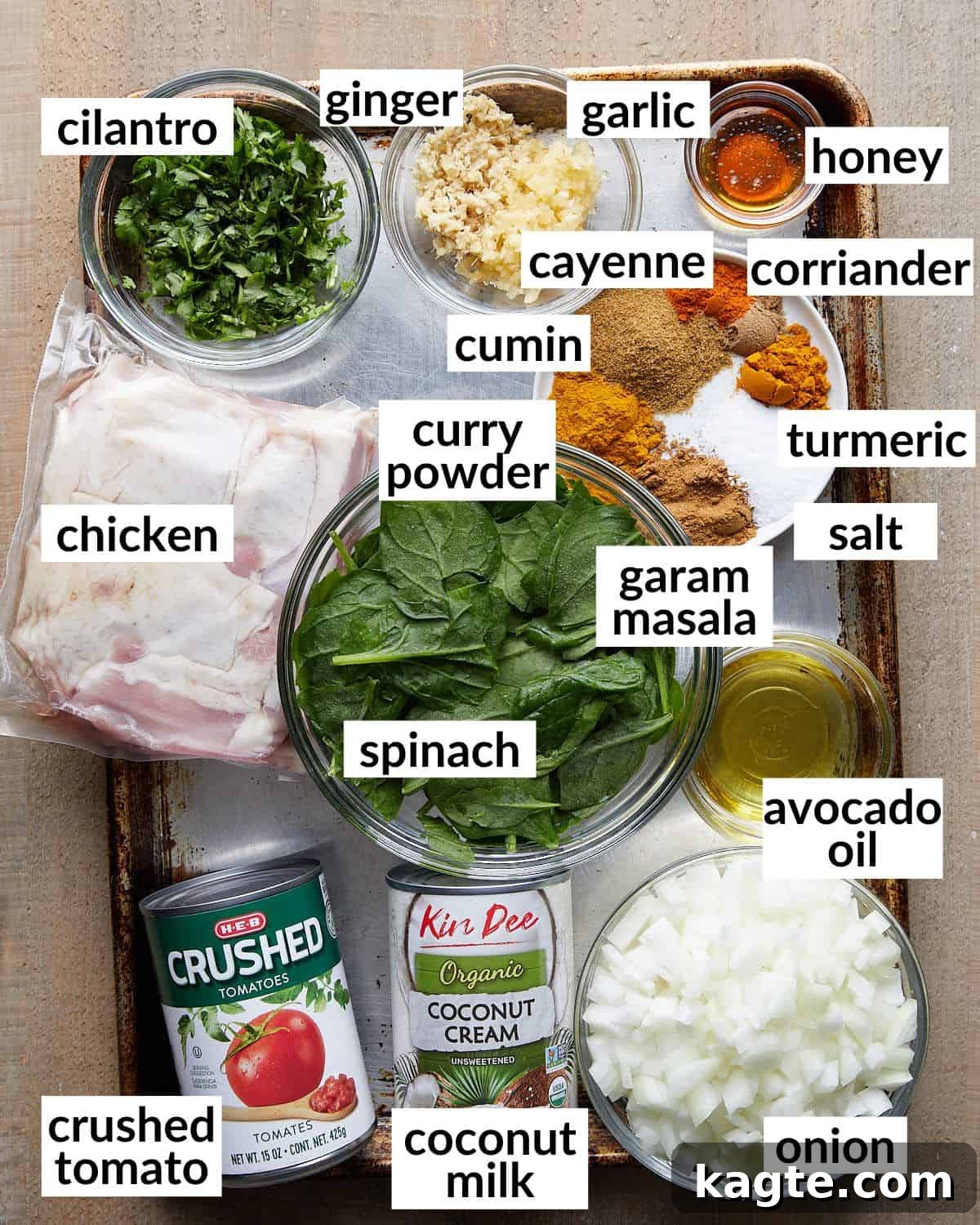
- Garam Masala: This essential Indian spice blend is non-negotiable for achieving the authentic flavor profile of this curry. It’s typically available in the spice aisle of most large grocery stores. If you struggle to find it locally, specialized Indian grocery stores will certainly carry it, or you can easily order quality garam masala online. Do not skip this ingredient!
- Cayenne Pepper: The beauty of this **spicy chicken curry** is its adaptability to your heat preference. Feel free to adjust the quantity of cayenne pepper – use less for a milder curry or a little more for an extra fiery kick.
- Coconut Milk: For this recipe, it is imperative to use full-fat, unsweetened canned coconut milk. Cartoned coconut beverages, often found in the dairy alternative section, contain added water and gums that will alter the consistency and richness of your curry significantly. Always choose the creamy, concentrated variety from a can for the best results.
- Kosher Salt: All my recipes are developed and tested using Morton kosher salt due to its consistent grain size and pure flavor. If you’re using table salt, remember that it is finer and denser, so you’ll need to use approximately half the amount to avoid over-salting. Investing in kosher salt is highly recommended for more predictable and flavorful cooking results.
- Avocado Oil: This neutral-flavored oil is fantastic for high-heat cooking. However, if you prefer, good alternatives include grapeseed oil or refined coconut oil. Avoid extra virgin olive oil as its flavor can be too strong and its smoke point too low for this application.
- Chicken Breast: While we recommend boneless, skinless chicken breast for a leaner option, boneless, skinless chicken thighs can also be used if you prefer a richer, more succulent texture. Adjust cooking time slightly if using thighs, as they may take a bit longer to cook through.
- Fresh Ginger and Garlic: These aromatics are foundational to Indian cuisine. Always opt for fresh ginger and garlic, minced finely, for the most vibrant and pungent flavors. Pre-minced versions in jars often lack the same intensity.
- Yellow Onion: Finely minced yellow onion will slowly caramelize and create a sweet, savory depth in your sauce. Make sure to chop it finely so it practically melts into the curry.
- Crushed Tomatoes: A 15-ounce can of crushed tomatoes provides the perfect acidity and a natural base for our sauce. Look for high-quality crushed tomatoes for the best flavor.
- Spinach and Cilantro: Fresh spinach adds a nutritional boost and wilts down beautifully into the sauce. Fresh cilantro, added at the end, provides a burst of fresh, herbaceous flavor. Do not substitute dried cilantro if possible.
For a complete list of ingredients and precise measurements, please refer to the recipe card below.
How to Make Healthy Chicken Curry
Making this **Healthy Chicken Curry** is surprisingly straightforward, even for those new to Indian cooking. Follow these simple steps for a truly rewarding culinary experience.
Quick Overview
- Prepare and sauté the chicken with spices.
- Add aromatics and deglaze the pan.
- Simmer to thicken the rich curry sauce.
- Finish with fresh greens and serve.
Step by Step Instructions
Chef’s Tip: Always start with a cold pan when adding oil and spices to the chicken. This gradual heating helps to gently toast the spices, releasing their full aroma and preventing them from burning, which can lead to a bitter taste.
Step 1: In a large, cold skillet or Dutch oven, combine the avocado oil, bite-sized chicken pieces, garam masala, curry powder, cumin, kosher salt, ground turmeric, ground coriander, and cayenne pepper. Toss everything together until the chicken is thoroughly coated with the aromatic spices.
Step 2: Place the skillet over medium-high heat. Sauté the seasoned chicken, stirring occasionally, until it’s beautifully browned on all sides and mostly cooked through. You’ll notice delicious brown bits forming at the bottom of the pan – these are crucial for flavor!
Step 3: Add the finely minced yellow onion to the skillet. Continue to sauté for 5-7 minutes, or until the onion softens and becomes translucent, scraping up any browned bits from the bottom of the pan as you stir.
Step 4: Incorporate the minced garlic and fresh minced ginger into the pan. Sauté for another 1-2 minutes, stirring constantly, until the wonderful fragrances of garlic and ginger fill your kitchen. Be careful not to burn the garlic.
Pro Tip: Patience is key! Allow the curry sauce ample time to thicken and reduce before adding the delicate spinach and cilantro. This step ensures a richer, more concentrated flavor and a perfect consistency.
Step 5: Pour in the can of crushed tomatoes, using the liquid to deglaze the pan. Vigorously scrape up all those flavorful brown bits from the bottom of the skillet with a wooden spoon – this adds immense depth to your sauce.
Step 6: Stir in the full-fat coconut milk and honey. Bring the mixture to a gentle boil, then reduce the heat to medium-low. Allow the curry to simmer uncovered for approximately 15 minutes, stirring occasionally. During this time, the sauce will reduce and thicken, intensifying its flavors. This is often when I start preparing my basmati rice.
Step 7: Once the sauce has achieved your desired thickness, stir in the fresh spinach and chopped cilantro. Continue to cook for just a minute or two, until the spinach has completely wilted into the sauce. Turn off the heat immediately to preserve the fresh flavors.
Step 8: Serve your exquisite **Healthy Chicken Curry** hot, spooned generously over a bed of fluffy basmati rice. Garnish with additional fresh cilantro if desired, and prepare for a meal that will transport your taste buds!
Slow Cooker Instructions
Transform this delightful recipe into an effortless **slow cooker healthy chicken curry** for those busy days when convenience is key. This method allows the flavors to meld beautifully over several hours, resulting in an incredibly tender chicken and a deeply flavorful sauce.
- Begin by adding all ingredients, with the exception of the fresh cilantro and spinach, into your slow cooker insert. Give everything a good stir to combine.
- Cover the slow cooker and cook on high for 3-4 hours, or on low for 6-8 hours. The chicken should be fork-tender and the sauce fragrant and simmering.
- Approximately 15-20 minutes before serving, stir in the fresh cilantro and spinach. Replace the lid and allow the residual heat to wilt the spinach and warm the cilantro, infusing their freshness into the curry.
- Serve this comforting slow cooker chicken curry over a generous portion of basmati rice or your preferred accompaniment.
- Enjoy the rich, slow-cooked flavors of your homemade Indian meal!
Recipe Serving Suggestions
Elevate your **Healthy Chicken Curry** experience with thoughtful garnishes and complementary side dishes. These additions not only enhance the visual appeal but also add layers of flavor and texture.
For a perfect finishing touch, consider garnishing your warm bowl of curry with a sprinkle of fresh cilantro or finely sliced green onions. A dollop of cooling Greek yogurt can beautifully contrast the curry’s warmth and spices, while a spritz of fresh lemon juice adds a bright, zesty lift. These small touches make a big difference!
This **creamy chicken curry with vegetables** is divine served with a variety of starches to soak up every last drop of the luscious sauce. Here are a few ideas:
- Fluffy Instant Pot Basmati Rice: The classic pairing, perfect for absorbing all the rich flavors.
- Moist Cornbread (No Buttermilk Needed): An unconventional but surprisingly delicious pairing for dipping.
- Soft and Buttery Old-Fashioned Yeast Rolls: For a comforting, bread-based accompaniment.
- Cheesy Garlic Herb Butter Rolls: An indulgent choice that complements the savory curry beautifully.
- Cauliflower Rice: For a low-carb option, serve over steamed or sautéed cauliflower rice.
- Naan Bread: Warm, soft naan is ideal for scooping up the rich sauce.
Essential Cooking Tips for the Best Curry
Achieving a restaurant-quality **healthy chicken curry** at home is easier than you think with these expert tips designed to enhance flavor, texture, and overall enjoyment.
- Allow the Sauce to Thicken Properly: This is perhaps the most crucial tip for a rich and flavorful curry. After adding the coconut milk and honey, let the sauce simmer gently for the recommended 15 minutes, stirring occasionally. This reduction process concentrates the flavors and creates that velvety, desirable consistency. Resist the urge to rush this step; a well-thickened sauce is key to an exceptional curry.
- Always Pre-Chop All Ingredients: Indian cooking often involves quick, sequential additions of ingredients. To prevent anything from burning or overcooking, ensure all your vegetables are chopped, garlic and ginger are minced, and spices are measured out before you even turn on the stove. This mise en place approach makes the cooking process smooth, enjoyable, and guarantees perfectly cooked results for your **healthy chicken curry with coconut milk**.
- Use Full-Fat Coconut Milk for Optimal Creaminess: While light coconut milk might seem like a healthier alternative, for this recipe, full-fat canned coconut milk is essential. It provides the necessary richness and body, contributing significantly to the silky, creamy texture that defines a great curry. Using a low-fat version will result in a much thinner sauce and a less satisfying mouthfeel.
- Taste and Adjust Seasoning: Don’t be afraid to taste the curry as it simmers and adjust the salt and spices to your preference. Everyone’s palate is different, and this flexibility is one of the joys of home cooking.
- Don’t Overcook the Chicken: Chicken breast can dry out quickly if overcooked. Sauté it until it’s just mostly cooked through in the initial steps, as it will continue to cook and tenderize as the curry simmers in the sauce.
Additions & Flavorful Variations
This **healthy chicken curry Indian recipe** is wonderfully versatile, allowing for creative additions and variations to suit different tastes and dietary needs. Feel free to experiment and make it your own!
- Boost with More Veggies: Enhance the nutritional value and texture of this creamy curry by incorporating additional vegetables. Excellent options that pair well include florets of broccoli or cauliflower, sliced bell peppers (red, yellow, or orange), green beans, or even diced sweet potatoes. Add harder vegetables earlier in the simmering process to ensure they cook through.
- Add Plant-Based Protein with Tofu: For those seeking a higher protein content or a more varied texture, consider adding firm or extra-firm tofu alongside or in place of the chicken. Press the tofu to remove excess water, then cube and pan-fry it until golden before adding it to the curry during the simmering phase. This makes a fantastic **tofu chicken curry** hybrid.
- Swap Chicken with Fiber-Rich Beans: To create a hearty, fiber-rich vegetarian version of this **easy chicken curry**, replace the chicken breast with 1-2 cans of your favorite beans, such as chickpeas, kidney beans, or cannellini beans. Drain and rinse them thoroughly before adding them to the sauce during the final simmering stages, allowing them to warm through and absorb the delicious curry flavors. This makes a wonderfully wholesome and satisfying meal.
- Spice it Up (or Down!): If you love heat, consider adding a fresh finely chopped green chili (like Serrano or Thai chili) along with the garlic and ginger. For less heat, simply reduce or omit the cayenne pepper.
- A Touch of Tang: A squeeze of fresh lime juice at the end can brighten up the flavors.

Frequently Asked Questions (FAQs)
Here are some common questions about **healthy chicken curry** to help you understand its nutritional aspects and how it fits into a balanced diet.
How healthy is chicken curry?
Chicken curry can indeed be a very healthy meal, especially when prepared at home with wholesome ingredients like lean protein (chicken breast), fresh vegetables, and beneficial spices. It offers a good balance of protein, vitamins, and minerals. However, traditional takeout chicken curry often contains significant amounts of sugar, excessive salt, and unhealthy fats due to large portions and cooking methods. For optimal health benefits, consuming restaurant versions in moderation is advisable. This homemade **healthy chicken curry** recipe is specifically designed to be lighter and more nutritious.
Can I eat chicken curry on a diet?
Absolutely, you can enjoy chicken curry while on a diet, particularly if you opt for a lighter, homemade version such as this **healthy chicken curry**. By controlling the ingredients, you can minimize calories, fat, and sodium while maximizing nutrient density. Pairing it with cauliflower rice instead of basmati rice can further reduce carbohydrate intake. As with any significant dietary change, it’s always wise to consult with your doctor or a registered dietitian to ensure it aligns with your specific health and dietary goals.
Why is curry sometimes considered unhealthy?
Curry, particularly from takeout restaurants, can sometimes be considered unhealthy due to its preparation. Many commercial recipes use high levels of sugar, salt, and saturated fats (from oil or ghee) to enhance flavor and richness. Additionally, portion sizes at restaurants tend to be very generous, making it easy to consume multiple servings in one sitting, leading to an excessive intake of calories, unhealthy fats, and sodium. The beauty of making **homemade chicken curry** is the ability to use fresh, quality ingredients and moderate these elements to create a truly healthy and balanced meal.
More Main Dish Recipes
If you loved this **healthy chicken curry**, you’ll surely enjoy exploring more of our main dish recipes that are perfect for any occasion!
Chicken
Garlic Butter Chicken Thighs (Baked & Crispy)
Pasta
Baked Stuffed Shells with Meat Sauce
Fall
Hearty Dutch Oven Pot Roast
Soup & Chili
Flavorful Ground Chicken Chili with Beans
Shop my Amazon Storefront for recommended kitchen tools and ingredients!
If you try this recipe, please leave a star rating in the recipe card below and/or comment! I always appreciate your feedback. Follow me on Pinterest, Facebook & Instagram for more delicious recipes and cooking inspiration.

Print Recipe
Healthy Chicken Curry
By Brianna May
Rated 5 stars from 39 votes
Prep Time: 5 minutes
Cook Time: 35 minutes
Total Time: 40 minutes
Servings: 4
Equipment
- Shallow Dutch Oven
- Stirring Spoon
- Kitchen Shears
Ingredients
- 2 Tablespoon avocado oil
- 1.5 pounds boneless skinless chicken breast or thighs, cut into bite-sized pieces
- 2 teaspoons EACH garam masala, curry powder, & cumin*
- 1 1/2 teaspoons Morton kosher salt*
- 1 teaspoon ground turmeric
- 1/2 teaspoon EACH ground coriander & cayenne pepper*
- 8 cloves garlic, finely minced
- 1 heaping Tablespoon minced fresh ginger
- 1 yellow onion, finely minced
- 1 Tablespoon honey
- 1 15-ounce can crushed tomatoes
- 1 13.5-ounce can full-fat unsweetened coconut milk*
- 1 5-ounce clamshell spinach
- 1/4 cup chopped cilantro, plus more for serving
- steamed basmati rice, for serving
Instructions
- In a cold large skillet, toss the oil, chicken, garam masala, curry powder, cumin, salt, turmeric, coriander, and cayenne.
- Turn the heat to medium high and sauté the chicken until brown bits form in the bottom of the pan and it is mostly cooked through.
- Add the onion and sauté for 5-7 minutes.
- Add the garlic and ginger. Sauté for 1-2 minutes or until fragrant.
- Deglaze the pan with the crushed tomatoes, scraping any brown bits off the bottom.
- Stir in the coconut milk and honey. Bring to a boil. Reduce the heat to medium low and allow the curry to reduce for about 15 minutes, stirring occasionally. I usually prepare the rice while the curry simmers.
- After the sauce has been reduced, stir in the spinach and cilantro. Once the spinach has wilted, turn off the heat. Serve over rice.
Did you make this recipe? Leave a comment below!
Notes
- Garam Masala: This is an Indian spice available in most grocery stores. It’s a crucial flavor for this dish, so don’t skip it. If you can’t find it in your local store, you may need to visit an Indian grocery store. Or, you can order garam masala online.
- Cayenne: Use less or more cayenne pepper when making this healthy chicken curry based on your heat tolerance/preference.
- Coconut Milk: Use canned full-fat unsweetened coconut milk when making this curry recipe. Other kinds of coconut milk won’t work, as they have additional ingredients (like gums) that can alter the curry consistency.
- Kosher Salt: All of my recipes are tested with Morton kosher salt unless noted otherwise. It is the best salt for everyday cooking because of its size and flavor. If using table salt, the amount should be reduced. I highly recommend picking up some kosher next time you are at the store!
- Let the sauce thicken. The best way to create a richer flavor in this healthy chicken curry is by allowing the sauce to thicken. You can do this by letting the sauce simmer once most of the ingredients have been added. It should be reduced before you add the spinach and cilantro.
- Pre-chop ingredients. The steps can move quickly in this healthy chicken curry recipe with coconut milk. To avoid burning or overcooking the ingredients, ensure everything is prepped before beginning the recipe.
- Use full-fat coconut milk. Using full-fat coconut milk helps create a silkier, creamier curry. You won’t get as rich of a sauce if you use a low-fat version like light coconut milk.
Save this recipe!
Get this sent to your inbox, plus get new recipes from us every week!
Nutrition
Calories: 3646 kcal | Carbohydrates: 92g | Protein: 72g | Fat: 357g | Saturated Fat: 308g | Polyunsaturated Fat: 6g | Monounsaturated Fat: 21g | Trans Fat: 0.02g | Cholesterol: 109mg | Sodium: 1330mg | Fiber: 34g | Sugar: 54g
Nutrition information is automatically calculated, so should only be used as an approximation.