
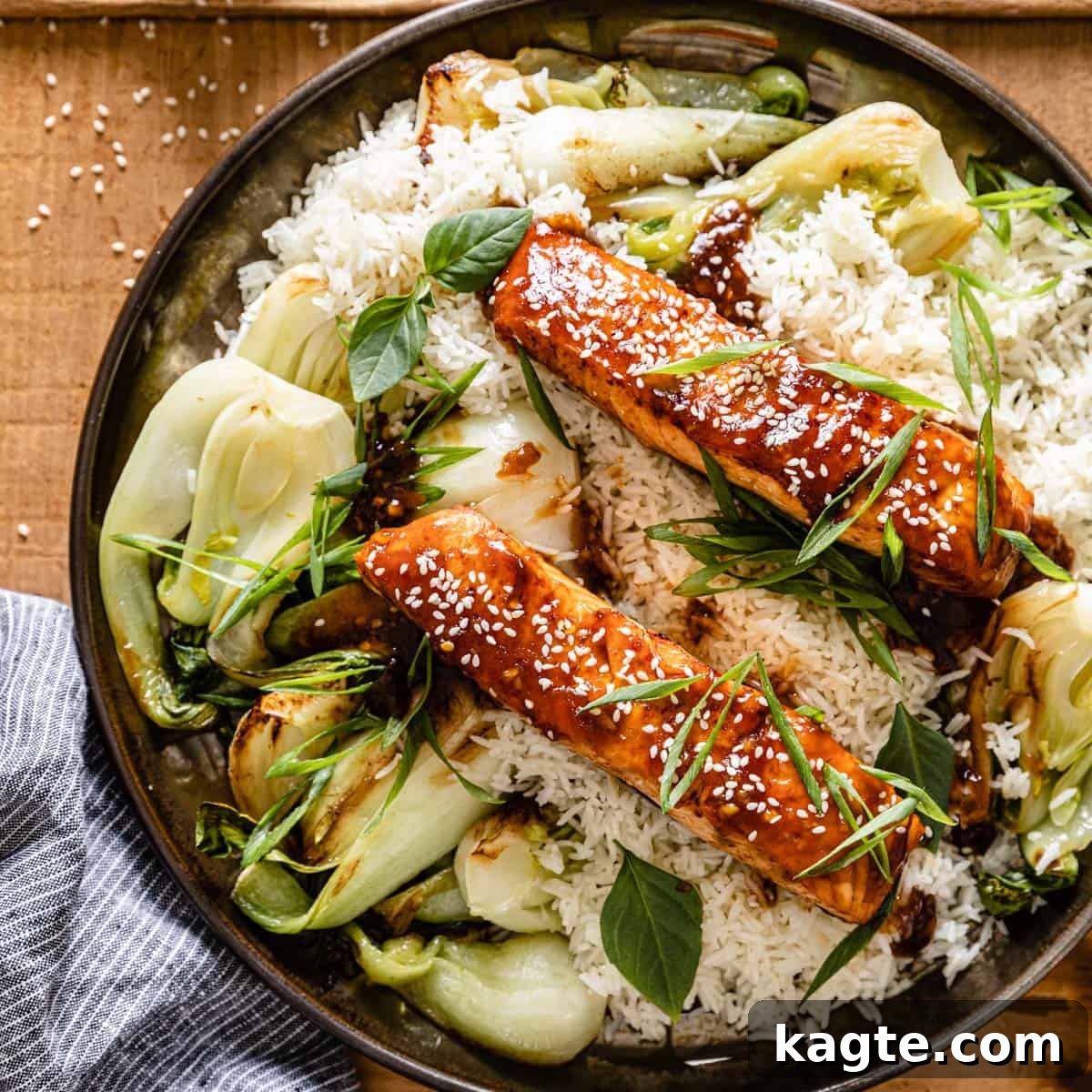
Welcome to the ultimate guide for creating a perfectly cooked, intensely flavorful Air Fryer Teriyaki Salmon. This recipe transforms fresh salmon fillets into a culinary masterpiece with irresistibly crispy skin and a succulent, juicy interior, all brought together by the most vibrant homemade teriyaki sauce you’ll ever taste. Forget complicated cooking methods and lengthy preparation times; this dish is designed for speed, ease, and exceptional flavor, making it a healthy and hearty dinner option ready in under 20 minutes. It’s an ideal choice for busy weeknights, special occasions, or whenever you crave a wholesome meal that doesn’t compromise on taste.
Imagine tender, flaky salmon coated in a glossy, sweet-and-savory glaze, served over fluffy rice with your favorite crisp green vegetables. This isn’t just a meal; it’s an experience that delights the senses and nourishes the body. Our detailed recipe ensures you achieve restaurant-quality results right in your own kitchen, leveraging the power of your air fryer for an effortless cooking process that yields fantastic texture every time. Get ready to elevate your weeknight dinner routine with this phenomenal Air Fryer Teriyaki Salmon.
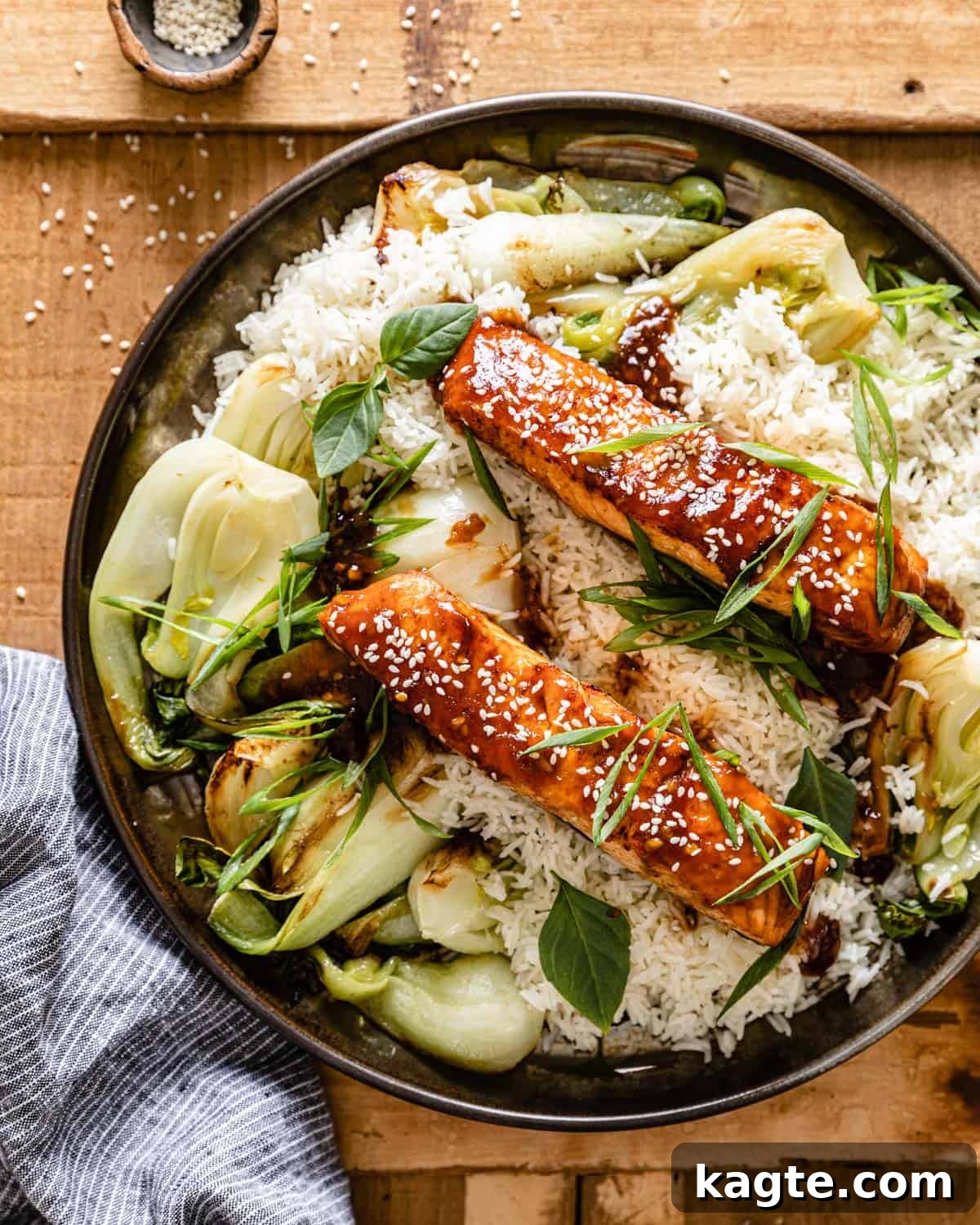
If you’re a fan of rich, homemade teriyaki sauces, don’t stop here! You’ll also love exploring other delicious recipes like my Ground Chicken Lettuce Wraps or the equally tempting Air Fryer Teriyaki Chicken Thighs, both showcasing the versatility of this beloved Asian-inspired flavor profile. For more incredible salmon creations, make sure to try my simple one-pot Coconut Lime Salmon or the light and fresh Lemon Salmon Pasta without Cream, proving just how adaptable and delightful salmon can be in various culinary settings.
Table of Contents
- Highlights & Why You’ll Love This Recipe
- Ingredient Notes & Substitutions
- Helpful Equipment & Tools for Success
- Step-by-Step Instructions for Perfect Salmon
- Make Ahead & Storage Tips
- Expert Tips for Air Frying Salmon
- Recipe Notes & Scaling
- Creative Variations & Dietary Adaptations
- Frequently Asked Questions (FAQs)
- Related Recipes to Explore
- Teriyaki Salmon (Air Fryer) Recipe Card
Highlights & Why You’ll Love This Recipe
Discover why this Air Fryer Teriyaki Salmon recipe is destined to become a staple in your kitchen. It’s more than just a meal; it’s a commitment to delicious, healthy, and convenient eating. This dish stands out for its exceptional balance of flavors and textures, promising a satisfying experience with every bite.
- Effortlessly Easy & Wholesomely Healthy: This recipe leverages the air fryer for minimal fuss and maximum health benefits. Salmon is packed with omega-3 fatty acids, and preparing it in the air fryer reduces the need for excessive oils, making it a lean and nutritious choice.
- Irresistibly Sticky, Sweet, & Tangy Teriyaki Glaze: The star of the show is undoubtedly the homemade teriyaki glaze. It’s perfectly balanced with sweet honey and brown sugar, savory soy sauce, tangy rice vinegar, and a hint of spice, creating a glossy coating that clings beautifully to the salmon.
- Perfectly Crispy Air-Fried Skin & Juicy, Flaky Interior: The air fryer works wonders on salmon skin, rendering it delightfully crispy, providing a wonderful textural contrast to the moist and buttery flesh within. Say goodbye to dull, dry salmon!
- Dinner on the Table in Under 20 Minutes: From start to finish, this dish is incredibly quick to prepare, making it an absolute lifesaver for busy weeknights when time is of the essence but you still want a homemade, satisfying meal.
- Moist, Buttery, & Flaky Perfection: The controlled environment of the air fryer ensures that the salmon cooks evenly and gently, preserving its natural moisture and delicate texture. Each bite melts in your mouth.
- A Cleaner Cooking Experience: Unlike traditional stovetop searing, air frying salmon significantly reduces splatters and grease, leading to a much tidier kitchen and less cleanup after dinner.
- Adaptable for Low Carb/Keto Lifestyles: With a few simple substitutions for the sweetener and thickening agent in the teriyaki sauce, this recipe can be easily adapted to fit a low-carb or keto dietary plan without sacrificing flavor.
- Impressive Yet Simple: Whether you’re cooking for yourself, your family, or entertaining guests, this Air Fryer Teriyaki Salmon looks and tastes impressive, yet it’s surprisingly simple to execute.
Ingredient Notes & Substitutions
Crafting the perfect Air Fryer Teriyaki Salmon starts with understanding your ingredients. While the recipe calls for specific items, knowing their roles and potential substitutions can empower you to cook with confidence and flexibility.
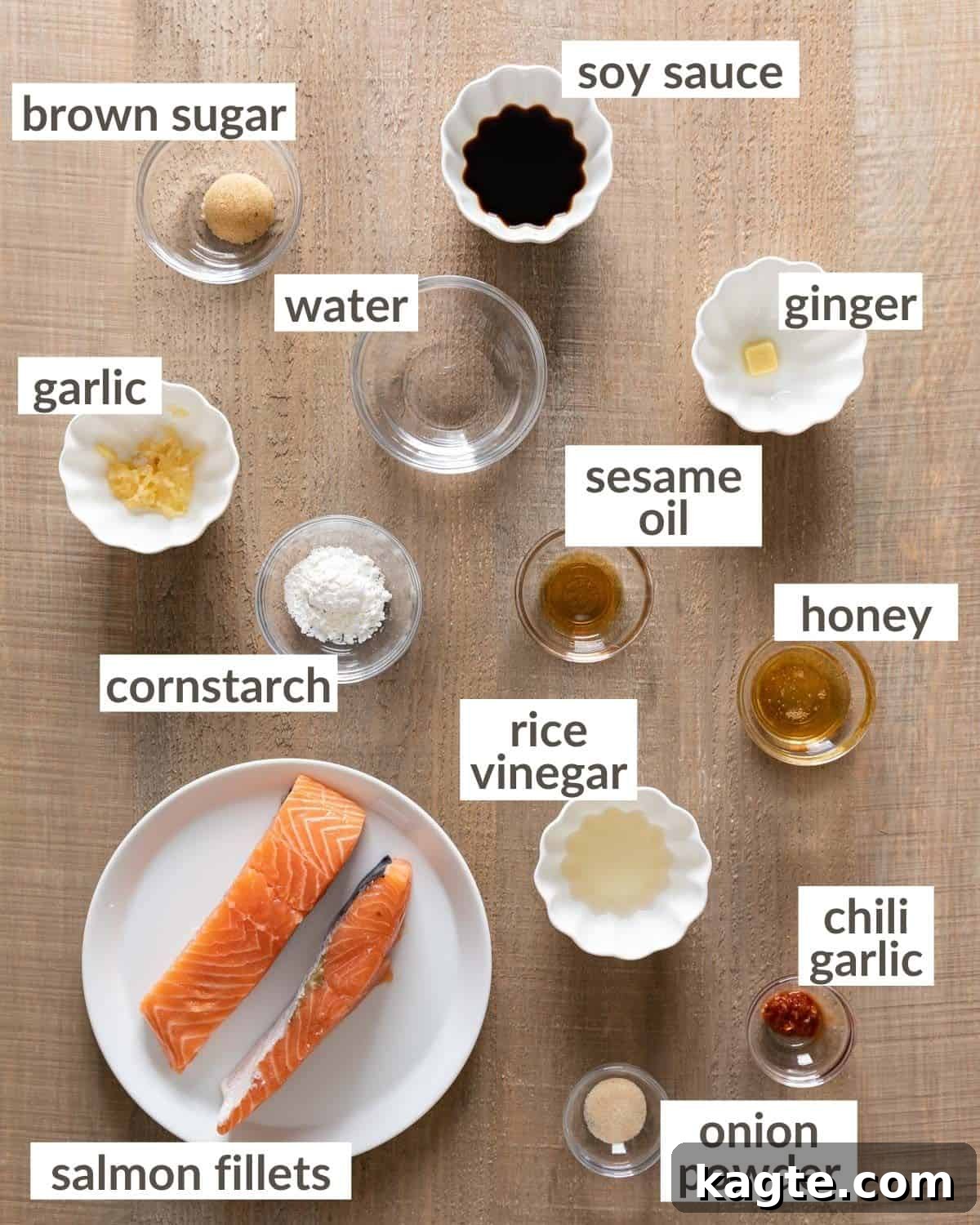
- Salmon Fillets: Opt for high-quality salmon fillets, preferably with the skin on. The skin helps protect the delicate flesh from drying out in the air fryer and crisps up beautifully, adding texture and flavor. Wild-caught salmon often has a richer flavor and firmer texture. Aim for fillets of similar thickness to ensure even cooking. If using skinless salmon, you might reduce the cooking time slightly and watch it closely to prevent overcooking.
- Toasted Sesame Seed Oil: This ingredient is crucial for that authentic, nutty Asian flavor in the teriyaki sauce. Always choose dark or toasted sesame oil, as it boasts a far more intense and aromatic flavor compared to its lighter, untoasted counterpart. It’s primarily used for flavoring rather than cooking at high heat.
- Fresh Garlic & Ginger: Freshly pressed garlic and ginger are non-negotiable for the most vibrant teriyaki sauce. Their pungent and aromatic qualities elevate the glaze significantly. Ginger paste is a convenient alternative to fresh ginger, offering a similar flavor profile without the need for grating.
- Soy Sauce: The base of our savory teriyaki. For a gluten-free option, use tamari. Low-sodium soy sauce is also a great choice if you’re mindful of sodium intake, allowing you to control the saltiness of the sauce.
- Rice Vinegar: Adds a crucial tang and acidity to balance the sweetness of the sauce. Do not confuse it with seasoned rice vinegar, which often contains added sugar and salt. Unseasoned rice vinegar is preferred here.
- Honey & Brown Sugar: These provide the classic sweet, sticky characteristic of teriyaki sauce. Honey also adds a subtle floral note. You can adjust the quantities slightly to your preferred level of sweetness. For low-carb variations, consider erythritol or another sugar substitute.
- Onion Powder: A convenient way to add a layer of savory onion flavor to the sauce without the moisture or texture of fresh onion.
- Chili Garlic Sauce: This ingredient provides a mild heat and depth of flavor. If you don’t have it on hand, an equal amount of sriracha can be used as a substitute, though chili garlic sauce typically offers more texture and a more complex garlic flavor. If you’re sensitive to spice, feel free to reduce the amount to 1/4 teaspoon or omit it entirely. For a spicier kick, you can increase the amount or add a pinch of cayenne pepper.
- Cornstarch and Water Slurry: This is what thickens your teriyaki sauce into a beautiful, glossy glaze. Ensure you mix the cornstarch with cold water before adding it to the hot sauce to prevent lumps.
A complete list of ingredients and their precise amounts is readily available on the recipe card below for your convenience.
Helpful Equipment & Tools for Success
Having the right tools can make all the difference in ensuring your cooking experience is smooth and your Air Fryer Teriyaki Salmon turns out perfectly. Here are some recommendations:
- COSORI Air Fryer Max XL: This specific air fryer model is highly recommended for its generous basket size, powerful cooking capabilities, and exceptionally easy cleaning. A larger basket ensures better air circulation, which is key for crispy results, especially when cooking multiple salmon fillets.
- 2 Pack Black Kitchen Tongs: Silicone-tipped tongs are essential for handling delicate salmon fillets without tearing them and for protecting the non-stick coating of your air fryer basket. Their heat resistance also makes them safe to use while cooking.
- Calphalon Classic Hard-Anodized Nonstick Pots and Pans: A good quality non-stick saucepan is vital for preparing the teriyaki sauce. These heavy-duty pans are reliable, durable, and ensure your sauce heats evenly without sticking or burning.
- Instant-Read Meat Thermometer: While not listed in the original equipment, this is an absolutely crucial tool for precision cooking. A meat thermometer (like this one) guarantees your salmon is cooked to perfection – juicy and safe to eat – without being overcooked and dry.
Step-by-Step Instructions for Perfect Salmon
Preparing this Air Fryer Teriyaki Salmon is straightforward, broken down into two main parts: air frying the salmon and crafting the flavorful homemade teriyaki sauce. Follow these simple steps for a truly delicious result.
Overview
- First, you will perfectly air fry your salmon fillets, ensuring crispy skin and a tender interior.
- Concurrently, you’ll prepare the rich and glossy homemade teriyaki sauce.
- Finally, brush the cooked salmon with the warm teriyaki glaze just before serving for maximum flavor and presentation.
Step by Step
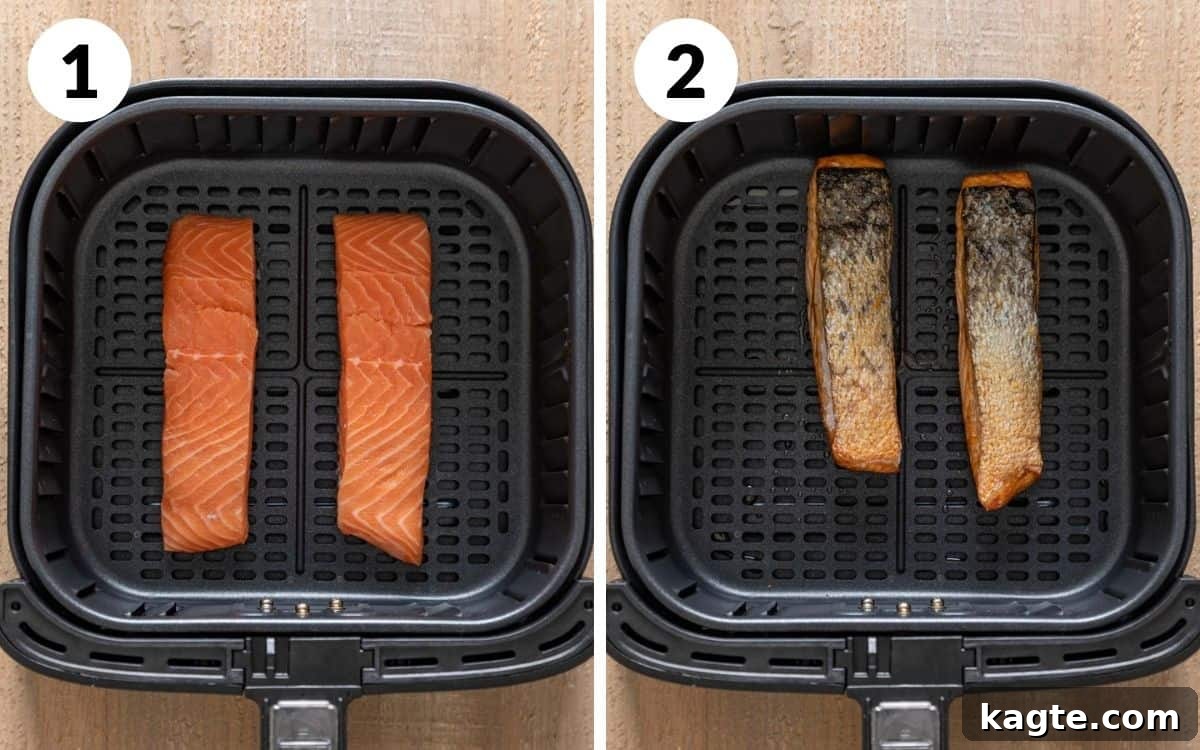
Step 1: Prepare the Air Fryer and Salmon Preheat your air fryer to 400 degrees Fahrenheit (200°C) for a full 5 minutes. This crucial step ensures the air fryer is hot enough to immediately start crisping the salmon skin and cook evenly. While preheating, gently pat your salmon fillets dry with paper towels. Place the salmon fillets directly into the preheated air fryer basket, making sure the skin side is down. Ensure there’s a little space between each fillet for optimal air circulation.
Step 2: Air Fry the Salmon to Perfection Air fry the salmon for 8-10 minutes. For even cooking and crispier skin, carefully flip the fillets halfway through the cooking time. The exact cooking time can vary based on the thickness of your salmon fillets and your air fryer model. The salmon is perfectly cooked when its internal temperature reaches 145 degrees Fahrenheit (63°C). Use an instant-read meat thermometer for accuracy. At this point, the flesh will be opaque and easily flake with a fork.
PRO TIP: Investing in a reliable meat thermometer is a game-changer. It eliminates guesswork, guaranteeing that you never overcook or undercook your precious salmon. For those who prefer sushi-grade salmon cooked to a rarer doneness, aim for an internal temperature of 120 degrees Fahrenheit (49°C).
Step 3: Begin the Teriyaki Sauce While your salmon is air frying, start preparing the homemade teriyaki sauce. In a small non-stick saucepan, heat 1 teaspoon of toasted sesame oil over medium heat. Once the oil is warm and fragrant, add the pressed garlic and ginger paste. Sauté them for 2-3 minutes, stirring frequently, until they become fragrant and lightly golden. Be careful not to burn the garlic.
Step 4: Simmer and Thicken the Sauce To the saucepan, add the soy sauce, rice vinegar, honey, brown sugar, and onion powder, along with the chili garlic sauce (if using). Stir everything together and bring the mixture to a gentle simmer. In a separate small bowl, whisk together the cornstarch and 3 Tablespoons of cold water until a smooth slurry forms. Pour this cornstarch slurry into the simmering sauce, stirring constantly. Continue to cook for 1-2 minutes, bringing the sauce to a boil, until it visibly thickens into a beautiful, glossy glaze. Remove from heat.
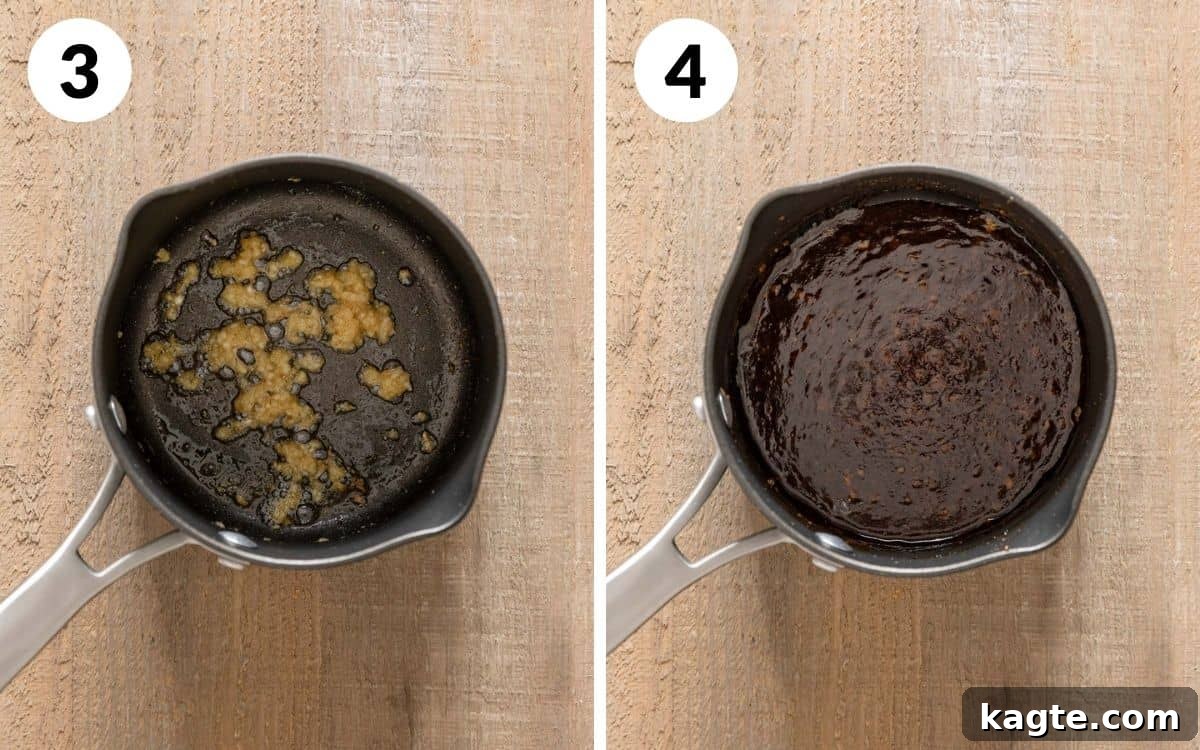
SAUCE TIP: The thickness of your teriyaki sauce is a matter of preference. The longer you allow it to simmer after adding the cornstarch slurry, the thicker and more syrupy it will become. If it gets too thick, you can always thin it out with a tiny bit of water or broth.
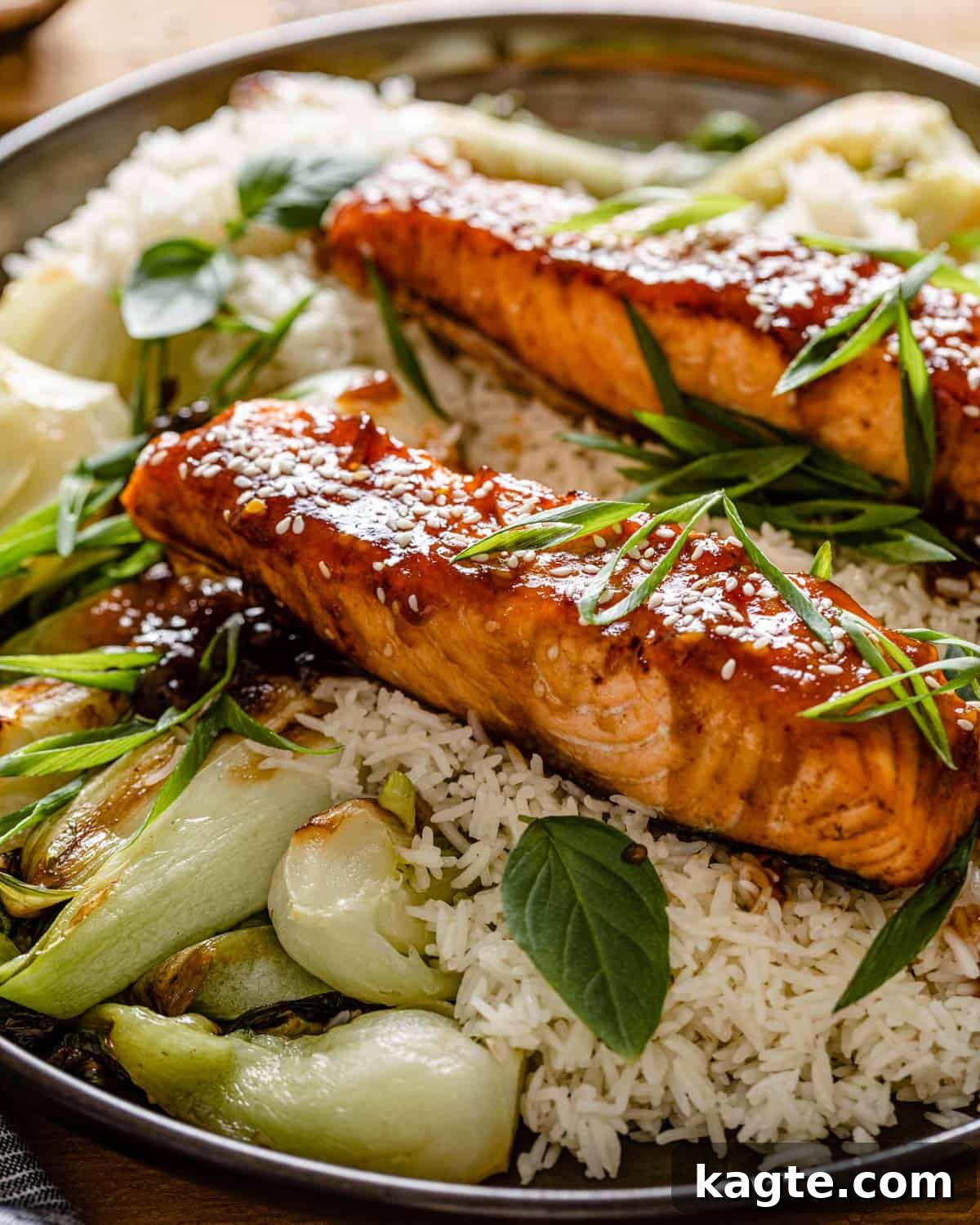
Step 5: Glaze and Serve Once the salmon is cooked to your desired doneness and the teriyaki sauce has reached its perfect consistency, it’s time to bring it all together. Carefully remove the salmon fillets from the air fryer. Generously brush each fillet with the warm, sticky homemade teriyaki glaze just before serving. This method ensures maximum flavor penetration and a beautiful presentation. Serve immediately with your favorite sides.
Make Ahead & Storage Tips
Planning ahead can make mealtime even easier. Here’s how to manage your Air Fryer Teriyaki Salmon for optimal freshness and convenience:
- Make Ahead: The homemade teriyaki sauce is a fantastic component to prepare in advance. You can cook it, allow it to cool completely, and then store it in an airtight container in the refrigerator for up to 5 days. This makes weeknight cooking even faster – just cook the salmon, warm the sauce, and assemble!
- Refrigerator Storage for Leftovers: Any leftover teriyaki salmon (air fryer cooked) should be stored promptly in an airtight container in the refrigerator. It will remain fresh and delicious for 2-3 days.
- Reheating Leftover Salmon:
- Microwave: For quick reheating, place salmon in a microwave-safe dish and heat in 30-second increments until warmed through. Be cautious not to overheat, as this can dry out the fish.
- Air Fryer: For best results and to regain some of that crispy skin, reheat the salmon in your air fryer at 370 degrees Fahrenheit (185°C) for 3-5 minutes, or until heated through. This method helps preserve the texture better than a microwave.
- Freezer: Unfortunately, I generally do not recommend freezing either the cooked teriyaki salmon or the teriyaki sauce itself. Freezing and thawing can negatively impact the texture of cooked salmon, making it mushy or dry. The cornstarch-thickened sauce can also become grainy or separate after freezing. This dish is best enjoyed fresh or within a few days from the refrigerator.
Expert Tips for Air Frying Salmon
Achieving perfectly cooked, restaurant-quality Air Fryer Teriyaki Salmon is simple with these expert tips. These insights will help you maximize flavor and texture every time you make this delicious dish.
- Always Use Salmon with the Skin On: This is a game-changer! The skin acts as a protective barrier, locking in moisture and preventing the delicate salmon flesh from drying out in the intense heat of the air fryer. Moreover, when cooked correctly, the skin becomes wonderfully crispy and adds a delightful textural contrast and extra flavor to your meal.
- Ensure Fillets are Uniform in Size: For consistent results, try to select salmon fillets that are roughly the same thickness and weight. This guarantees that all pieces cook evenly and reach their perfect doneness at approximately the same time, preventing some from being overcooked while others are still underdone.
- Prioritize Homemade Teriyaki Sauce: While store-bought teriyaki sauce offers convenience, making your own at home is vastly superior in terms of flavor and health. Homemade sauce allows you to control the quality of ingredients, adjust sweetness and spice to your liking, and avoid unnecessary preservatives and additives often found in commercial brands. The fresh garlic and ginger alone make a huge difference!
- Preheat Your Air Fryer Thoroughly: Just as you would preheat an oven, preheating your air fryer is essential. Run your air fryer at 400 degrees Fahrenheit (200°C) for 5 minutes with nothing in the basket. A preheated air fryer ensures that the salmon begins cooking immediately upon entry, promoting even cooking and helping the skin crisp up beautifully without sticking. There’s no need to add extra oil or cooking spray to the basket or the fish, the skin provides enough natural fat.
- Avoid Overcrowding the Air Fryer Basket: For optimal air circulation – which is the key to air frying – ensure there is a clear gap between each salmon fillet in the basket. Overcrowding traps steam, preventing the hot air from circulating effectively and resulting in steamed, rather than crispy, salmon. If cooking for more than two, cook in batches.
- Utilize an Instant-Read Meat Thermometer: This is your best friend for perfectly cooked salmon. Insert the thermometer into the thickest part of the fillet. The ideal internal temperature for cooked salmon is 145 degrees Fahrenheit (63°C). If you prefer your salmon a little less done, perhaps for sushi-grade quality, you can aim for 120 degrees Fahrenheit (49°C). This tool takes all the guesswork out of cooking fish.
- Be Generous with the Teriyaki Glaze: Don’t be shy! Liberally brush your perfectly cooked air-fried salmon fillets with plenty of the warm, glossy teriyaki sauce just before serving. The rich glaze adds a burst of sweet and savory flavor that truly elevates the dish. Any extra sauce can be drizzled over accompanying rice and vegetables, transforming them into a delightful part of the meal. This glazing method often adds more concentrated flavor than marinating the salmon before cooking, as marinade can sometimes burn in the air fryer.
- Pat Salmon Dry: Before placing salmon in the air fryer, always pat the fillets thoroughly dry with paper towels. Excess moisture on the surface can steam the fish instead of allowing the skin to crisp up.
Recipe Notes & Scaling
Here are some additional considerations to help you master this Air Fryer Teriyaki Salmon recipe, whether you’re cooking for two or a larger gathering.
- Doubling the Recipe: This recipe is designed to serve two people, making it perfect for a couple’s dinner or a single serving with leftovers. If you have a larger air fryer basket, you can often fit up to four salmon fillets, allowing you to easily double the recipe for four servings. When doubling the sauce, one batch of the homemade teriyaki sauce is typically sufficient to lightly coat four salmon fillets. However, if you and your guests enjoy extra sauce for drizzling over rice or vegetables, I highly recommend making a double batch of the teriyaki sauce to ensure everyone gets enough of that delicious glaze.
- Salmon Thickness Matters: Keep in mind that thinner salmon fillets will cook faster than thicker ones. Always use a meat thermometer for accuracy, but also visually monitor thinner fillets from around the 6-minute mark to prevent overcooking.
- Air Fryer Models Vary: Cooking times can vary slightly between different air fryer brands and models due to wattage and design differences. The provided times are a guideline; adjust as necessary based on your specific appliance.
Creative Variations & Dietary Adaptations
This Air Fryer Teriyaki Salmon recipe is incredibly versatile, allowing for easy customization to suit different tastes and dietary needs. Don’t hesitate to get creative in your kitchen!
- Amp Up the Spice: If you love a bit of heat, you can easily make your teriyaki salmon spicy. Add 1/4 teaspoon of cayenne pepper to the sauce along with the other ingredients. Alternatively, you can simply double the amount of chili garlic sauce for a more pronounced fiery kick. Adjust to your personal spice preference!
- Swap for Chicken: Not a fan of fish, or simply looking for another protein option? This teriyaki sauce works wonderfully with chicken! Try adapting the recipe with my Air Fryer Teriyaki Chicken Thighs, using the same delicious homemade glaze for a flavorful poultry dish.
- Go Low Carb or Keto: For those following a low-carb or ketogenic diet, this recipe can be easily adapted. Simply substitute the honey and brown sugar with a keto-friendly sweetener like erythritol or stevia (adjust to taste). For thickening, replace cornstarch with xanthan gum (use a much smaller amount, typically 1/4 to 1/2 teaspoon, mixed with water) or omit it for a thinner glaze. Explore a dedicated low carb teriyaki sauce recipe for specific ratios.
- Oven Baking Method: No air fryer? No problem! You can still enjoy this fantastic teriyaki salmon by baking it in a conventional oven. Preheat your oven to 450 degrees Fahrenheit (230°C). Line a baking sheet with parchment paper or foil for easy cleanup. Place the salmon fillets, skin side down, on the prepared baking sheet. Bake for 13-15 minutes, or until the internal temperature of the salmon reaches 145 degrees Fahrenheit (63°C). Brush generously with the homemade teriyaki sauce before serving.
- Add a Citrus Zing: A squeeze of fresh lime or lemon juice over the cooked salmon just before serving can add a bright, refreshing counterpoint to the rich teriyaki sauce.
- Garnish with Fresh Herbs: A sprinkle of fresh chopped cilantro, green onions, or sesame seeds can add a burst of color and additional flavor dimension.
Frequently Asked Questions (FAQs)
Here are some common questions about making and serving Air Fryer Teriyaki Salmon, along with helpful answers to ensure your success.
Air fried teriyaki salmon is incredibly versatile! I highly recommend serving it over a bed of steamed white or brown rice to soak up all that wonderful sauce. Pair it with crisp green vegetables like sautéed bok choy, blanched asparagus, steamed broccoli, or green beans. A simple side salad with a light vinaigrette also complements the richness of the salmon beautifully. Don’t forget to drizzle extra teriyaki sauce over everything for an unforgettable meal!
Yes, for the best results, I strongly recommend thawing your salmon completely before air frying. Frozen salmon will cook unevenly, potentially resulting in a dry exterior and an undercooked interior, and the texture might be compromised. To thaw, remove the salmon from its packaging and place it in a covered container in the refrigerator overnight. If you’re in a hurry, you can place the vacuum-sealed salmon (if packaged that way) in a bowl of cold water for about 30-60 minutes, changing the water every 15 minutes.
According to food safety guidelines, salmon should be cooked to an internal temperature of 145 degrees Fahrenheit (63°C). At this temperature, the salmon will be moist, flaky, and opaque throughout. For those who enjoy sushi-grade salmon cooked to a slightly rarer, still pink doneness, an internal temperature of 120-125 degrees Fahrenheit (49-52°C) is often preferred, but ensure you are using very high-quality, fresh salmon from a trusted source for this.
Yes, in most cases, you can use aluminum foil in an air fryer, but with some precautions. Ensure it’s not blocking the air circulation too much, and never place it directly at the bottom where it could block the airflow or touch the heating element. However, for this specific teriyaki salmon recipe, I generally do not recommend using foil. The holes in the air fryer basket are crucial for proper air circulation, which is what helps the salmon skin get incredibly crispy. Using foil would inhibit this process, potentially leading to less crispy skin.
Absolutely! It is not only perfectly safe to eat salmon skin, but it can also be incredibly delicious when prepared correctly. When air-fried, salmon skin becomes wonderfully crispy and develops a rich, savory flavor. It’s also packed with beneficial omega-3 fatty acids, just like the flesh. If the idea of eating the skin doesn’t appeal to you, you can easily remove it after cooking, but I encourage you to try it at least once!
The most reliable way to determine if salmon is done is by using an instant-read meat thermometer, aiming for 145°F (63°C). If you don’t have one, you can check for opaqueness and flakiness. Properly cooked salmon will transition from a translucent, shiny, deep red color to an opaque, pale pink. When gently pressed with a fork at its thickest point, the flesh should easily flake apart. Avoid any parts that still look very raw or glossy.
Salmon is truly a powerhouse of nutrition! It’s renowned for being an excellent source of omega-3 fatty acids, particularly EPA and DHA, which are crucial for heart health, brain function, and reducing inflammation. Beyond omega-3s, salmon is also rich in high-quality protein, making it very satiating and supportive of muscle health. It also provides essential vitamins and minerals like Vitamin D, B vitamins (B12, B6, niacin), and selenium, all contributing to overall well-being. Incorporating salmon into your diet regularly is a fantastic way to boost your nutritional intake.
Related Recipes to Explore
Side Dish
What To Serve With Mashed Potatoes (25 Dinner Ideas)
Fall
Air Fryer BBQ Chicken Thighs
30 Minute Meals
20 Easy Cosori Air Fryer Recipes
Main
Crispy Air Fryer Pork Belly Bites
Teriyaki Salmon (Air Fryer)
Equipment
-
Air Fryer
-
Tongs
-
Nonstick pan/pot
Ingredients
- 2 6 ounce salmon fillets
- 1 teaspoons toasted sesame seed oil*
- 3 cloves garlic pressed
- 1/2 teaspoon ginger paste
- 2 Tablespoons soy sauce
- 1 Tablespoon rice vinegar
- 1 Tablespoon honey
- 1 Tablespoon brown sugar
- 1/2 teaspoon onion powder
- 1/2 teaspoon chili garlic sauce*
- 3 Tablespoons water
- 2 teaspoons cornstarch
Instructions
-
Review all recipe notes and instructions before beginning to familiarize yourself with the process.
-
Preheat your air fryer to 400 degrees Fahrenheit (200°C) for 5 minutes. Place the salmon fillets in the air fryer basket, skin side down, ensuring they are not overcrowded.
-
Air fry the salmon for 8-10 minutes. For even cooking and crispier skin, flip the fillets halfway through the cooking time. The salmon is done when its internal temperature reaches 145 degrees Fahrenheit (63°C).
-
While the salmon cooks, prepare the teriyaki sauce. Heat the sesame oil in a small saucepan over medium heat. Sauté the pressed garlic and ginger paste for 2-3 minutes until fragrant.
-
Add the soy sauce, rice vinegar, honey, brown sugar, onion powder, and chili garlic sauce to the saucepan. Bring the mixture to a simmer. In a small bowl, whisk together the cornstarch and cold water to form a smooth slurry. Add this slurry to the simmering sauce and bring it to a boil, cooking for 1-2 minutes or until the sauce thickens to a glossy glaze.
-
Once the salmon is cooked, remove it from the air fryer. Generously brush the salmon fillets with the warm homemade teriyaki glaze just before serving for maximum flavor and presentation.
Notes
Chili Garlic Sauce: Sriracha can be substituted if chili garlic sauce is unavailable, though chili garlic sauce offers a more complex flavor. Reduce or omit if sensitive to spice.
COSORI Air Fryer Max XL: This air fryer is highly recommended for its powerful performance and ease of cleaning.
2 Pack Black Kitchen Tongs: Silicone tongs protect your air fryer’s non-stick coating and are heat resistant for safe handling.
Calphalon Classic Hard-Anodized Nonstick Pots and Pans: Durable non-stick pans are ideal for crafting the perfect teriyaki sauce without sticking.
Make Ahead: The teriyaki sauce can be prepared up to 5 days in advance and stored in an airtight container in the refrigerator.
Refrigerator Storage: Leftover air-fried teriyaki salmon can be stored in an airtight container in the fridge for 2-3 days.
Reheating: Reheat in the microwave in 30-second intervals or in the air fryer at 370°F (185°C) for 3-5 minutes until thoroughly heated.
Salmon Skin: Cooking salmon with the skin on helps retain moisture and results in deliciously crispy skin.
Even Cooking: Use salmon fillets of similar size to ensure they cook evenly and finish at the same time.
Doneness Check: A meat thermometer ensures perfectly cooked salmon, reaching 145°F (63°C). Sushi-grade salmon can be cooked to 120°F (49°C) if preferred.
Nutrition
Nutrition information is automatically calculated and should be used as an approximation only.