

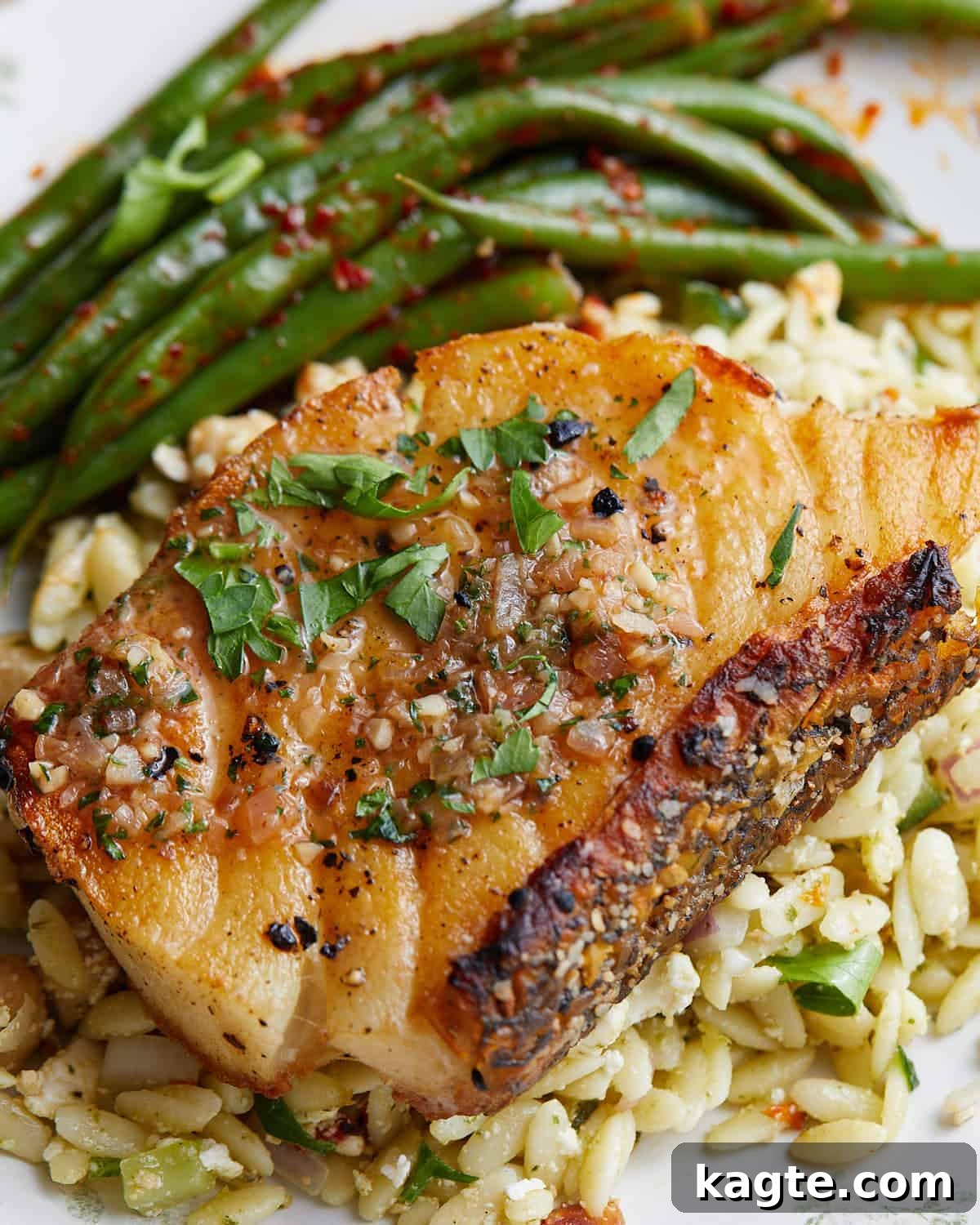
This comprehensive guide will show you how to prepare a restaurant-quality Pan Seared Chilean Sea Bass with an exquisite white wine sauce right in your own kitchen. This elegant dish comes together in less than 30 minutes, featuring perfectly seared, flaky, and incredibly flavorful fish. The simple yet luxurious pan sauce, bursting with the complementary notes of butter, fresh lemon, and a touch of white wine, elevates the Chilean Sea Bass to an unforgettable culinary experience.
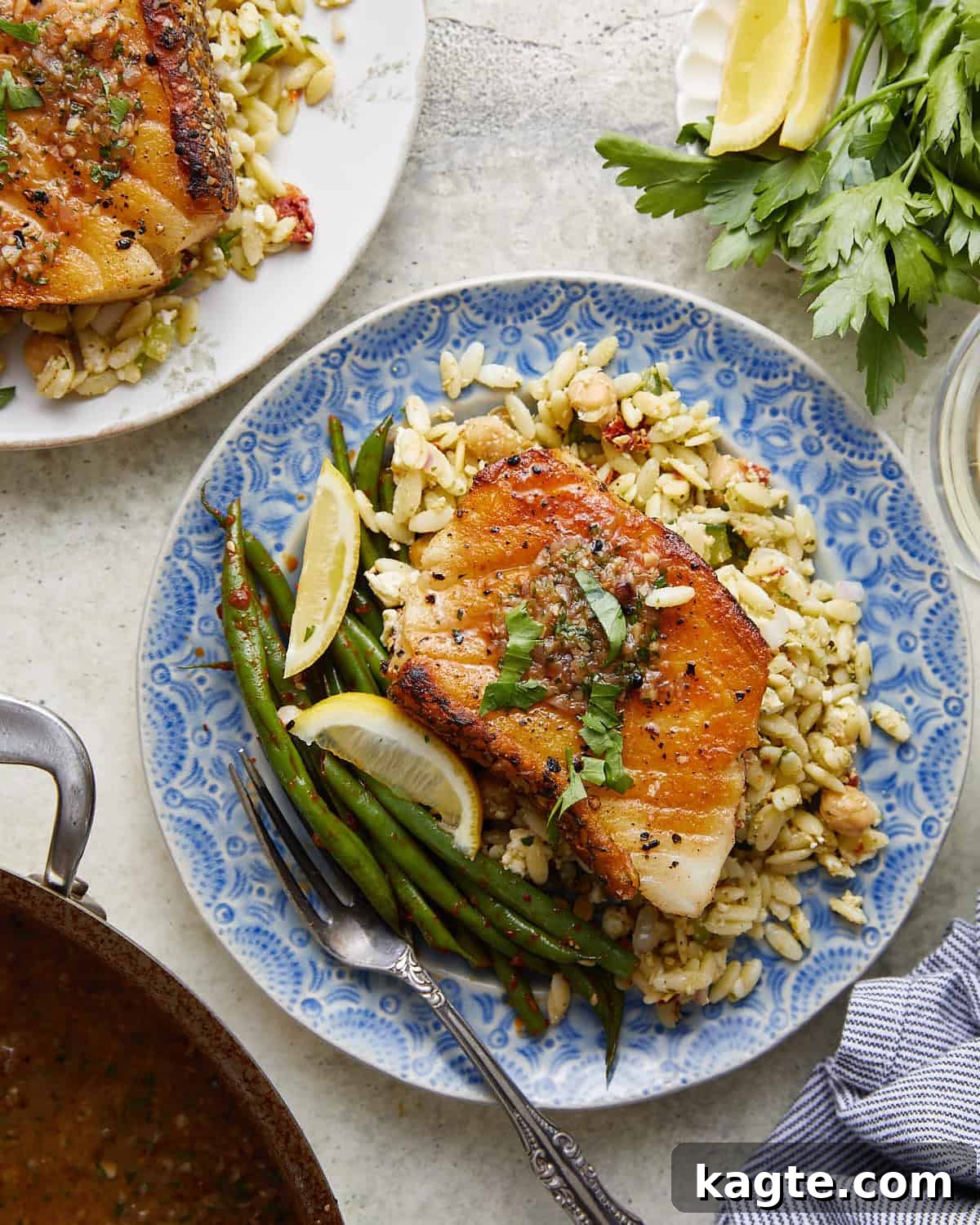
Often hailed as the “filet mignon of the sea,” Chilean Sea Bass truly lives up to its reputation. Its delicate, buttery flavor and incredibly tender, flaky texture make it a highly sought-after delicacy. Every time I prepare this fish, I am reminded of its exceptional taste and the sheer delight it brings to any meal.
While it is considered a premium protein, often reserved for special occasions due to its price point—much like preparing delectable Cast Iron Skillet Lamb Chops—the investment is undeniably worth it. The ease and speed with which this dish comes together ensure that even an ordinary weeknight can feel like a celebration. If you appreciate fantastic fish, you might also enjoy my vibrant Fish Tacos with Mango Salsa or my effortlessly elegant Easy Salmon Pasta without Cream.
Table of Contents
- What is Chilean Sea Bass?
- Where To Buy The Best Chilean Sea Bass
- How To Select the Freshest Fish Fillets
- Why You’ll Adore This Pan-Seared Sea Bass Recipe
- Key Ingredients & Clever Substitutions
- Step-by-Step Guide to Making Pan Seared Sea Bass
- Perfect Pairings: Recipe Serving Suggestions
- Chef’s Secrets: Expert Tips & Variations
- Alternative White Fish Substitutions
- Frequently Asked Questions (FAQs)
- More Delicious Main Dish Recipes
- Pan Seared Chilean Sea Bass Recipe
What is Chilean Sea Bass?
Despite its intriguing name, “Chilean Sea Bass” is not actually a member of the bass family. This popular market name refers to two distinct species of fish: the Patagonian toothfish and the Antarctic toothfish. So, when you purchase this exquisite fish from your local market, you’re actually bringing home a toothfish!
These fascinating creatures inhabit the frigid, deep waters of the southern Atlantic, Pacific, Arctic, and Indian oceans. Their natural habitat contributes to their unique characteristics and delicious flavor profile. Chilean Sea Bass is renowned for its incredibly rich, succulent flavor and distinctively meaty, yet tender, texture. The high oil content in its flesh makes it exceptionally moist and gives it a melt-in-your-mouth quality that few other fish can match.
The unparalleled taste and texture of these toothfishes have made them highly sought-after globally, unfortunately leading to concerns about overfishing in certain areas. This high demand, combined with the challenges of deep-sea fishing and sustainable management efforts, contributes to its premium price point. However, when sourced responsibly, it remains a truly luxurious and rewarding culinary experience. A fun fact: a commercially caught Patagonian toothfish can weigh an average of 15-22 pounds!
Where To Buy The Best Chilean Sea Bass
Finding high-quality Chilean Sea Bass is crucial for the best culinary outcome. Most well-stocked grocery stores with a reputable seafood counter and specialized seafood markets will carry this type of fish. I often find superior quality at higher-end grocery stores known for their fresh produce and seafood, such as Central Market or Whole Foods.
When purchasing, don’t hesitate to speak with the fishmonger. They are a valuable resource and can provide insights into the fish’s origin, catch method, and freshness. Furthermore, a good fishmonger can expertly cut the fish into perfectly portioned 6-ounce fillets, ensuring uniform cooking and reducing preparation time at home. Always prioritize retailers that emphasize sustainable sourcing practices to support responsible fishing.
How To Select the Freshest Fish Fillets
Even in trusted establishments, knowing how to identify the freshest Chilean Sea Bass fillets can make a significant difference. It’s important to remember that most Chilean Sea Bass is flash-frozen at sea immediately after being caught to preserve its quality during transport, and then thawed at the store. This is a standard practice and does not diminish its quality if handled correctly.
Here are some key tips for picking the best fillets:
- Examine Thickness: Opt for thicker, uniform pieces. Thicker fillets are more forgiving to cook, retaining moisture better and being less prone to overcooking, ensuring a perfectly tender interior.
- Check Coloration: The flesh should be pristine white, with the exception of its natural dark grey skin. Avoid any fillets with discolored spots, dullness, or yellowing, which can indicate age or improper handling.
- Assess Texture: The surface of the fish should be firm and moist, but not slimy. A slimy texture is a clear sign of spoilage. Gently press the flesh; it should spring back immediately without leaving an indentation.
- Evaluate Odor: Fresh fish should have a mild, clean, ocean-like aroma, not an overpowering or “fishy” smell. A strong, pungent odor is a definite red flag.
For optimal freshness and flavor, plan to cook the fish within 24 hours of purchasing it. If you need to store it longer, wrap it tightly and place it on ice in the coldest part of your refrigerator.
Why You’ll Adore This Pan-Seared Sea Bass Recipe
This Pan-Seared Chilean Sea Bass recipe isn’t just a meal; it’s an experience. Here’s why it will become a staple in your culinary repertoire:
- Crispy, Golden Skin: The pan-searing technique is unmatched for achieving a beautifully crispy, golden-brown crust on the fish’s skin. This textural contrast between the crunchy exterior and the tender interior is absolutely divine and adds a professional touch to your dish.
- Unbelievably Moist and Flaky: Thanks to its natural oil content and the rapid cooking method, the fish retains its moisture perfectly, resulting in a buttery, flaky texture that genuinely melts in your mouth with every bite.
- Sublime, Mild Flavor Profile: Chilean Sea Bass boasts an incredibly mild yet rich and buttery flavor. Unlike some stronger-tasting fish, its delicate profile serves as an ideal canvas for the vibrant pan sauce, without being masked.
- Remarkably Quick Preparation: From start to finish, this entire recipe—including searing the fish and crafting the luscious sauce—takes approximately 20-25 minutes. It’s perfect for busy weeknights when you desire something gourmet without the time commitment.
- Effortless One-Pan Cooking: Minimize cleanup with this elegant dish, as the entire Chilean Sea Bass recipe, including the delectable sauce, comes together in a single skillet. More flavor, less washing!
- Luxurious Pan Sauce: The accompanying pan sauce is a star in itself. It’s a harmonious blend of rich butter, aromatic shallots and garlic, bright white wine, zesty lemon, and fresh parsley. This simple sauce perfectly complements the fish, adding layers of flavor and moisture.
- Ideal for Special Occasions: Chilean Sea Bass exudes sophistication, making this recipe perfect for an impressive at-home date night, a celebratory dinner, or simply when you want to treat yourself to something truly special. It’s guaranteed to impress.
Key Ingredients & Clever Substitutions
Crafting the perfect Pan Seared Chilean Sea Bass begins with understanding your ingredients. Here’s a deeper look at what you’ll need and how to make smart substitutions:
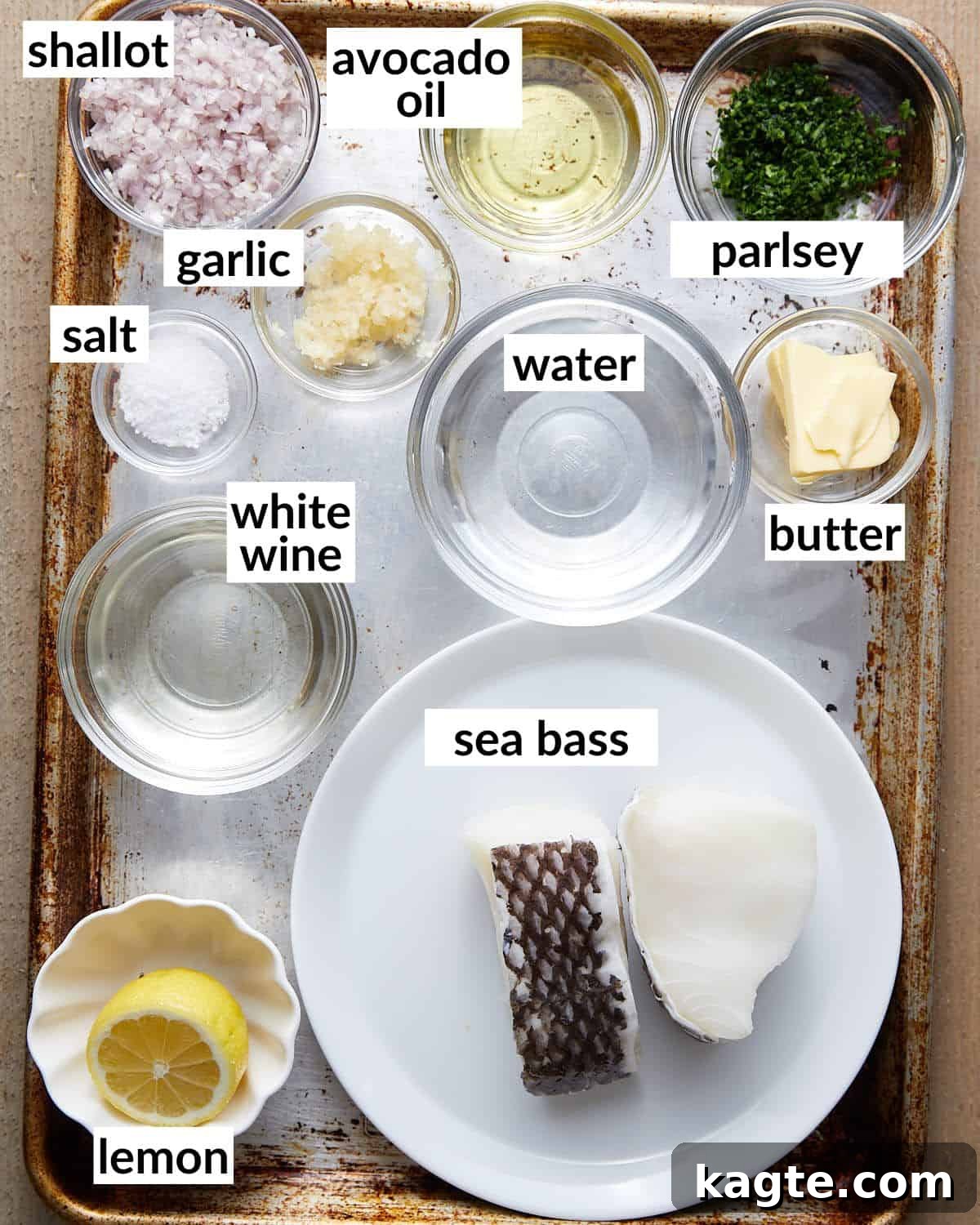
- Chilean Sea Bass Fillets: For an ideal portion, I recommend 6 ounces of fish per person. This recipe provides ample pan sauce for up to four 6-ounce fillets. If you’re preparing four fillets, increase the kosher salt to 2 teaspoons for proper seasoning. To ensure even searing and avoid overcrowding, I advise cooking no more than two fillets per pan at a time. Quality is paramount here – look for thick, firm fillets as discussed in the selection section.
- Kosher Salt: All my recipes are meticulously tested using Morton kosher salt due to its superior flake size and consistent flavor, which makes it ideal for everyday cooking. If you’re using table salt, which is much finer and denser, you’ll need to reduce the amount by about half to avoid over-salting. I highly encourage stocking up on kosher salt during your next grocery run!
- Freshly Ground Black Pepper: A simple yet essential seasoning that enhances the natural flavors of the fish without overpowering it. Always use freshly ground for the best aroma and taste.
- Avocado Oil or Olive Oil: These oils are excellent for searing due to their high smoke points, allowing the pan to get hot enough for a perfect crust without burning the oil. Avocado oil is particularly neutral in flavor, letting the fish shine, while good quality olive oil can add a subtle richness.
- Shallot: Finely diced shallots provide a delicate, sweet, and aromatic base for the pan sauce, offering a milder flavor than onions. If you don’t have shallots, a very small amount of finely minced yellow onion can be used, but be aware its flavor is stronger.
- Garlic: Minced garlic adds a foundational layer of aromatic flavor to the sauce. Freshly minced is always best for maximum impact.
- Dry White Wine: An inexpensive, dry white wine like Pinot Grigio, Sauvignon Blanc, or unoaked Chardonnay is perfect for deglazing the pan and forming the sauce’s body. The alcohol cooks off, leaving behind a wonderful depth of flavor. If you prefer to avoid alcohol, a good quality chicken or vegetable broth can be used as a substitute, though the flavor profile will be slightly different.
- Water: Used to thin the sauce slightly and ensure a perfect consistency after the wine reduction.
- Lemon (Zested & Juiced): Fresh lemon is indispensable in this recipe. The zest provides aromatic oils and bright, concentrated citrus flavor, while the juice adds a tangy acidity that cuts through the richness of the butter and fish, brightening the entire dish.
- Cold Salted Butter: Cold butter is crucial for creating a glossy, emulsified pan sauce. When added off the heat, it slowly melts, thickening the sauce and adding a rich, luxurious finish without separating. Using salted butter also contributes to the sauce’s overall seasoning.
- Fresh Parsley: Chopped fresh parsley adds a vibrant green garnish and a clean, herbaceous finish that complements the other flavors beautifully. Do not substitute with dried parsley here; the fresh herb is key.
For a complete list of ingredients and precise amounts, please refer to the recipe card below.
Step-by-Step Guide to Making Pan Seared Sea Bass
Quick Overview
- Prepare and season the sea bass.
- Sear the fish to golden perfection.
- Whip up the vibrant pan sauce.
- Serve the sauce generously over the seared fish.
Step by Step Instructions
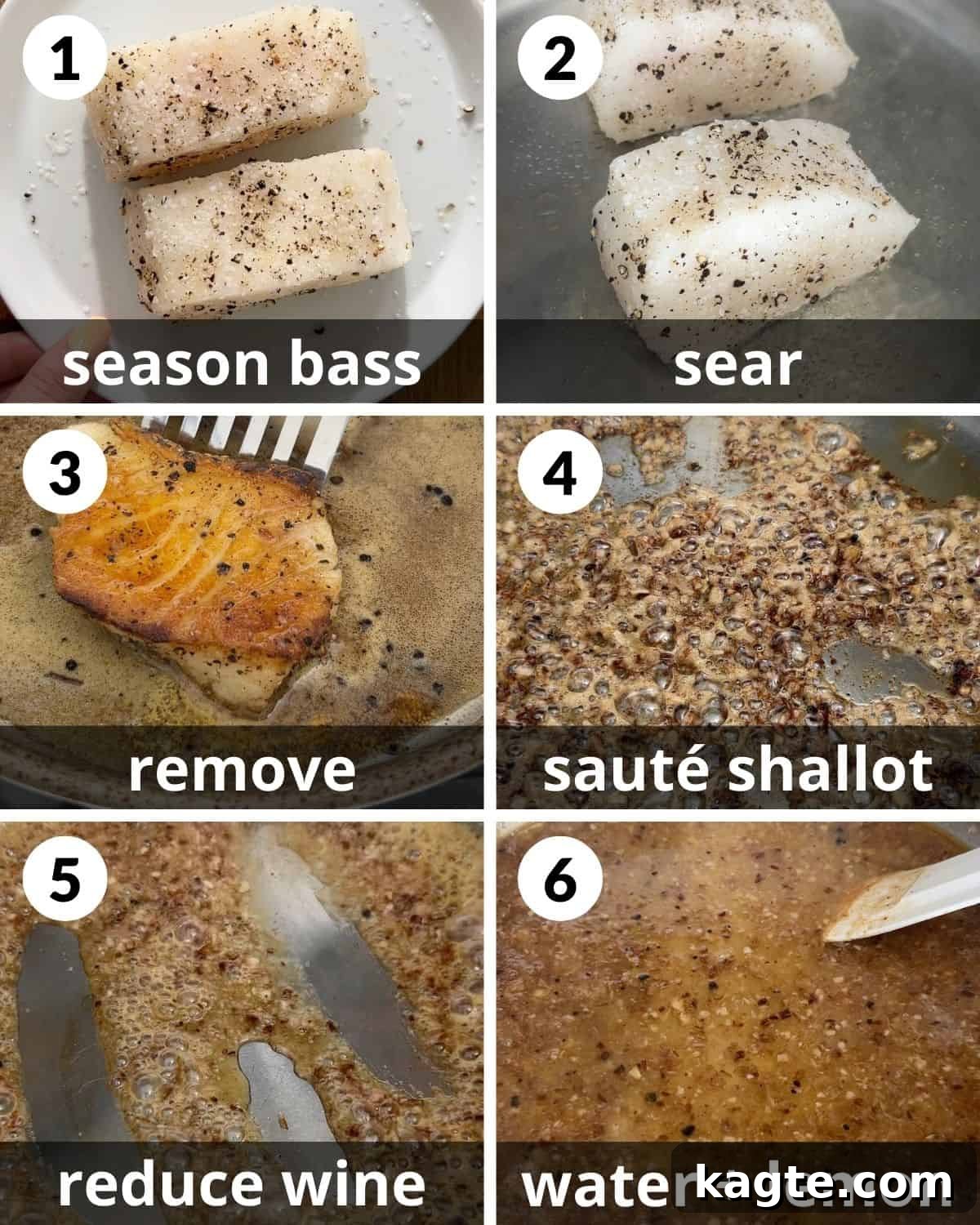
Chef’s Tip: Resist the urge to move the fish while it sears! This allows the skin to crisp up beautifully and develop that coveted golden-brown color.
Step 1: Begin by preparing your Chilean Sea Bass fillets. Gently pat them dry with paper towels to remove any excess moisture. This crucial step ensures a superior sear and a crispy skin. Generously season both sides of the fillets with kosher salt and freshly ground black pepper. Set the seasoned fish aside at room temperature for about 10-15 minutes. This helps the fish cook more evenly and prevents it from seizing up when it hits the hot pan.
Step 2: Heat the avocado oil (or olive oil) in a large, heavy-bottomed skillet—stainless steel or cast iron works best—over medium-high heat. Ensure the pan is hot before adding the fish. Carefully place the seasoned fillets into the hot skillet, skin side down. Allow them to sear undisturbed for approximately 4-6 minutes, or until the skin is deeply golden brown and crispy. The fish should release easily from the pan when ready to flip. Using a fish spatula, gently loosen the skin and carefully flip the fillets. Sear for another 3-5 minutes on the flesh side, or until the fish is cooked through to your preferred doneness. The internal temperature should reach at least 140°F (60°C) for safe consumption, and the flesh should be opaque and flake easily with a fork.
Step 3: Once cooked, remove the perfectly seared fillets from the pan and transfer them to a plate. Tent loosely with foil to keep warm while you prepare the sauce. Reduce the heat in the skillet to medium.
Step 4: Add the finely diced shallot to the remaining oil and flavorful drippings in the skillet. Sauté for 3-4 minutes, stirring occasionally, until the shallot softens and becomes translucent. Next, add the minced garlic and continue to sauté for another 1-2 minutes until fragrant, being careful not to burn it.
Step 5: Pour the dry white wine into the skillet to deglaze the pan. Use a wooden spoon or spatula to scrape up any browned bits (fond) from the bottom of the pan. These bits are packed with flavor and will enrich your sauce. Allow the wine to simmer and reduce by half, which concentrates its flavor and cooks off most of the alcohol.
Step 6: Reduce the heat to medium-low. Add the water, fresh lemon juice, and lemon zest to the pan. Bring the sauce to a gentle simmer and let it cook for 2-3 minutes, allowing the flavors to meld beautifully. This step ensures the sauce is well-balanced before adding the final touches.
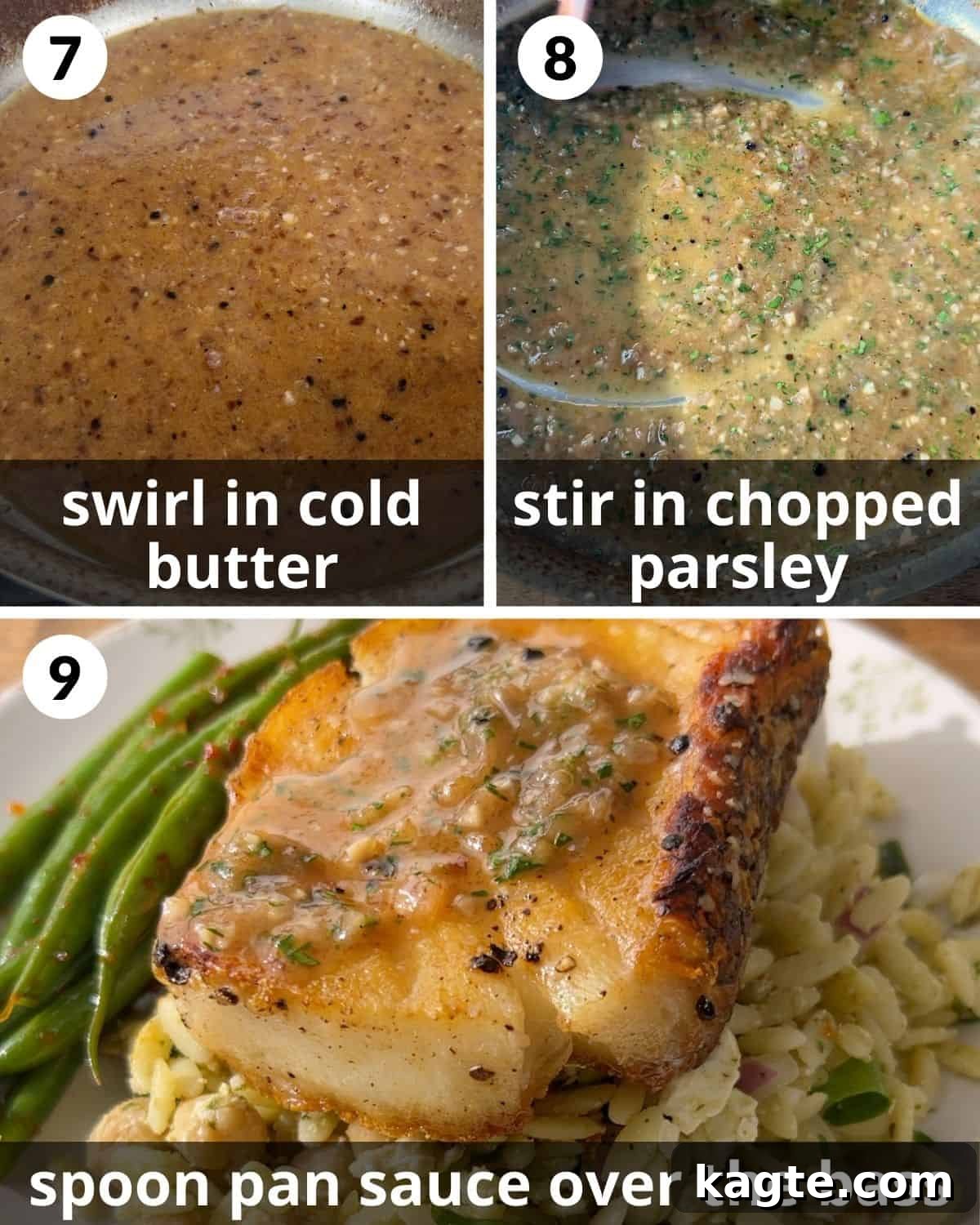
Pro Tip: Always use cold butter when finishing pan sauces. This encourages it to melt slowly and emulsify into the liquid, creating a gorgeously glossy, smooth, and cohesive sauce without separating.
Step 7: Turn off the heat. Add the cold salted butter to the sauce, stirring continuously until the butter is completely melted and beautifully combined, giving the sauce a rich, velvety texture and a luxurious sheen.
Step 8: Remove the skillet from the heat entirely. Stir in the freshly chopped parsley. The residual heat will warm the herbs without overcooking them, preserving their fresh flavor and vibrant color.
Step 9: To serve, spoon a generous amount of the warm, glistening white wine lemon butter sauce over the seared Chilean Sea Bass fillets. Garnish with a fresh sprig of parsley or an extra lemon slice for an elegant presentation.
Perfect Pairings: Recipe Serving Suggestions
Once your exquisite Pan Seared Chilean Sea Bass is ready, serving it appropriately will complete the gourmet experience. Be sure to generously spoon that incredible white wine lemon butter sauce over each fillet; it’s truly the star that ties the dish together. For an added touch of freshness and visual appeal, garnish with more freshly chopped parsley and a few extra lemon slices.
When it comes to side dishes, Chilean Sea Bass is versatile and pairs wonderfully with a variety of options that complement its rich, buttery flavor without overwhelming it. Here are some fantastic ideas to inspire your meal:
- Pesto Orzo Salad: A light and herbaceous pasta salad offers a refreshing contrast.
- Goat Cheese & Arugula Salad: The peppery notes of arugula and the tangy goat cheese create a vibrant balance.
- Oven Roasted Yukon Potatoes: Crispy on the outside, creamy on the inside, these potatoes are a comforting classic.
- Red Skin Mashed Potatoes or Yukon Gold Mashed Potatoes: Creamy mashed potatoes soak up the pan sauce beautifully.
- Air Fryer Scalloped Potatoes: A rich and cheesy potato gratin for a more decadent pairing.
- Steamed Asparagus or Green Beans: Simple, crisp-tender vegetables provide a healthy and colorful accompaniment.
- Creamy Risotto: A light lemon risotto or an herb risotto would be a luxurious match.
For even more inspiration and a broader range of ideas, be sure to explore my comprehensive guide on What To Serve With Sea Bass.
Chef’s Secrets: Expert Tips & Variations
Achieving a perfect Pan Seared Chilean Sea Bass is all about technique and a few clever tricks. These expert tips and variations will help you master this dish and make it your own:
- Pat Your Fish Thoroughly Dry: This cannot be overstated. Use paper towels to gently but firmly pat every surface of the fish fillets before seasoning. Removing excess moisture is absolutely critical for developing that beautiful, crispy, golden-brown crust we’re aiming for. Moisture is the enemy of sear!
- Season Generously and Simply: The exquisite flavor of Chilean Sea Bass shines brightest with minimal seasoning. The best approach is often just good quality salt and freshly ground black pepper. Treat it like a premium steak; you don’t want to mask its natural, delicate buttery taste. Avoid heavy spices that might compete with the fish’s inherent deliciousness.
- Ensure Your Pan is Piping Hot: Patience is a virtue before adding the fish to the pan. Allow your stainless steel or cast iron skillet to heat thoroughly over medium-high heat. A quick test: wet your fingertips with a little water and flick a few drops into the hot skillet. If they sizzle immediately and evaporate, your pan is ready for searing. A sufficiently hot pan ensures an instant crust and prevents sticking.
- Embrace Cold Butter for Your Pan Sauce: As mentioned in the instructions, adding cold butter to the warm pan sauce off the heat is a game-changer. This technique, known as “mounting” the sauce, allows the butter to slowly melt and emulsify into the liquid. The result is a wonderfully thick, glossy, and smooth sauce that clings beautifully to the fish, rather than separating into an oily mess.
- Avoid Leftovers – Cook What You’ll Eat: Chilean Sea Bass, like many delicate fish, is best enjoyed immediately after cooking. Its texture and flavor are significantly diminished upon reheating. Therefore, I highly recommend only preparing enough fish for one sitting. However, the delightful pan sauce is an exception; any leftover sauce can be stored in an airtight container in the refrigerator for up to 2 days and can be gently reheated.
- Experiment with Herbs: While parsley is a classic choice, consider fresh dill or chives for a slightly different aromatic profile in your pan sauce. A sprig of thyme or rosemary could also be added to the pan while searing the fish for an infused flavor, then removed before making the sauce.
- Spice it Up (Optional): For those who enjoy a little heat, a pinch of red pepper flakes added with the garlic can introduce a subtle warmth to the sauce without overpowering the fish.
- Citrus Variations: Instead of or in addition to lemon, a squeeze of fresh orange juice or a bit of lime zest could introduce an interesting twist to the pan sauce.
- Brown Butter Nuance: For a deeper, nuttier flavor, allow the butter to brown slightly before adding the shallots in Step 4. Just be careful not to burn it!
Other White Fish Substitutions
Chilean Sea Bass is undoubtedly a treat, but its premium price point, often ranging up to $40 per pound depending on your location and supplier, can make it a rare indulgence. Fortunately, this exquisite pan-searing recipe works beautifully with several other mild white fish varieties that offer excellent flavor and texture without the same cost. Here are some fantastic alternatives:
- Cod: A popular and readily available choice, cod has a mild flavor and firm, flaky white flesh that holds up well to searing. It’s a great everyday option.
- Halibut: Considered another premium white fish, halibut offers a dense, firm, and meaty texture with a sweet, delicate flavor. It’s a fantastic substitute if you’re looking for something equally luxurious, albeit still somewhat pricey.
- Swordfish: Known for its meaty, steak-like texture and rich flavor, swordfish fillets are robust enough to withstand high heat searing and will develop a beautiful crust.
- Grouper: Grouper has a distinct yet mild flavor with large, firm flakes. It cooks beautifully, offering a substantial texture that won’t fall apart in the pan.
- Red Snapper: With its lean, moist, and subtly sweet flesh, red snapper is excellent for pan-searing. Its skin crisps up wonderfully, adding another layer of texture.
- Mahi Mahi: This firm, sweet-flavored fish with large, moist flakes is a fantastic option. It has a slightly more pronounced flavor than cod but still pairs wonderfully with the lemon-butter sauce.
While these options provide excellent alternatives, I generally do not recommend using tilapia for this recipe. Tilapia is often farm-raised, typically sold in very thin fillets, and tends to have a much milder, sometimes less appealing flavor and softer texture compared to the more robust and naturally flavorful white fish listed above. Its thinness also makes it prone to overcooking and drying out during searing, making it less suitable for this particular method.
Frequently Asked Questions (FAQs)
Absolutely, pan-frying (or pan-searing, as we call it) is arguably the best and most highly recommended method for cooking Chilean Sea Bass. It allows the fish to develop a beautifully crispy skin and a tender, moist interior, locking in all its rich flavors quickly.
The technique employed in this recipe closely mirrors the method often favored by Chef Gordon Ramsay for pan-searing fish. His approach typically involves generously seasoning the bass with salt and pepper, placing it skin-side down in a very hot pan with oil, and allowing it to sear undisturbed to create a crisp skin before flipping it to finish cooking on the other side. This ensures maximum flavor development and a perfect crust.
Without a doubt, pan-frying or pan-searing stands out as the superior cooking technique for sea bass. This method delivers an irresistibly crispy skin while preserving the fish’s natural moisture, resulting in a flaky, buttery, and incredibly tender flesh. Other methods like baking or poaching can be good, but they don’t achieve that sought-after textural contrast.
For the ultimate culinary experience, sea bass is unequivocally better pan-fried. While baking can cook the fish, it generally lacks the ability to create the desirable crispy skin and deeply browned, flavorful crust that pan-searing provides. Baking tends to result in a softer texture all around, whereas pan-frying offers a dynamic contrast of textures.
For safe consumption and optimal texture, Chilean Sea Bass should be cooked to an internal temperature of at least 140°F (60°C). You can check this with an instant-read thermometer inserted into the thickest part of the fillet. The fish will also appear opaque throughout and flake easily with a fork when it’s done.
Mushy sea bass is typically a sign of either overcooking or starting with fish that wasn’t fresh or was improperly handled (e.g., thawed and refrozen multiple times). Overcooking breaks down the delicate muscle fibers too much, leading to a mushy texture. Ensure you cook to the correct internal temperature and follow the searing times closely.
More Delicious Main Dish Recipes
Chicken
Garlic Butter Chicken Thighs (Baked & Crispy)
Pasta
Baked Stuffed Shells with Meat Sauce
Fall
Dutch Oven Pot Roast
Soup & Chili
Ground Chicken Chili with Beans
Shop my Amazon Storefront for recommended kitchen tools and more!
If you enjoyed this Pan Seared Chilean Sea Bass recipe, please leave a star rating in the recipe card below and/or a comment sharing your experience! Your feedback is always greatly appreciated. Connect with me and find more delicious recipes by following me on Pinterest, Facebook & Instagram.

Save
Pan Seared Chilean Sea Bass
Equipment
-
Stainless Steel Cookware
-
Stainless Fish Turner
-
Microplane Grater
Ingredients
- 2-4 6- ounce fillets Chilean sea bass, pat dry*
- 1 teaspoon Morton kosher salt*
- freshly ground black pepper
- 2 Tablespoons avocado oil or olive oil
- 1/2 shallot, diced finely
- 3 cloves garlic, minced finely
- 1/3 cup dry white wine*
- 1/2 cup water
- 1/2 lemon, zested & juiced
- 1 1/2 Tablespoons cold salted butter
- a few sprigs of parsley, chopped finely
Instructions
-
Season the sea bass fillets with the salt and pepper. Be sure they are well coated. Set aside at room temperature.
-
Heat the avocado oil over medium-high heat in a large skillet (stainless steel or cast iron). Place the fillets skin side down. Sear for about 4-6 minutes without touching. Gently loosen the skin from the skillet and flip using a fish spatula. Sear for another 3-5 minutes, depending on the thickness of the fillets, or until cooked to your liking. The internal temperature should be at least 140 degrees.
-
Remove the fillets from the pan and set aside. Reduce the pan to medium heat.
-
Add the shallot to the remaining oil in the skillet. Sauté for 3-4 minutes or until softened. Add the garlic and sauté for 1-2 minutes.
-
Deglaze the pan with the wine, scraping any brown bits off the bottom of the pan. Reduce the wine by half.
-
Reduce the heat to medium-low and add the water, lemon juice, and lemon zest. Simmer for 2-3 minutes.
-
Turn off the heat and add the butter. Stir until the butter is well combined.
-
Remove the skillet from the heat and stir in the parsley.
-
Spoon the sauce over the seared fillets.
Notes
- Sea Bass: I recommend 6 ounces of fish per person. There will be enough pan sauce for up to 4 6-ounce fillets. If you are making 4 fillets, increase the salt to 2 teaspoons. I recommend cooking only 2 fillets per pan.
- Kosher Salt: All of my recipes are tested with Morton kosher salt unless noted otherwise. It is the best salt for everyday cooking because of its size and flavor. If using table salt, the amount should be reduced. I highly recommend picking up some kosher next time you are at the store!
- White Wine: I recommend an inexpensive bottle of pinot grigio or sauvignon blanc.
- Pat dry. Use a paper towel to gently pat the fish before seasoning to remove any excess moisture. This will help the exterior to brown and crisp up nicely.
- Season generously with salt and pepper. The best seasoning for Chilean sea bass is salt and pepper. Like a good quality steak, you do not want to mask the flavor of the bass so I recommend keeping the seasoning simple.
- Make sure the pan is hot. Allow the pan to heat up before adding the fish. If you are unsure if the pan is ready, wet the tips of your fingers with some water. Flick the water into the hot skillet. If it sizzles, it is ready.
- Use cold butter in the pan sauce. This will help the butter to slowly melt into the sauce and not separate from the other liquids. It should be glossy and smooth.
-
Don’t make leftovers. Only buy enough fish to cook and eat in one sitting. It is not nearly as good reheated. However, leftover sauce can be stored in an airtight container in the refrigerator for about 2 days.
Nutrition
Nutrition information is automatically calculated, so should only be used as an approximation.