
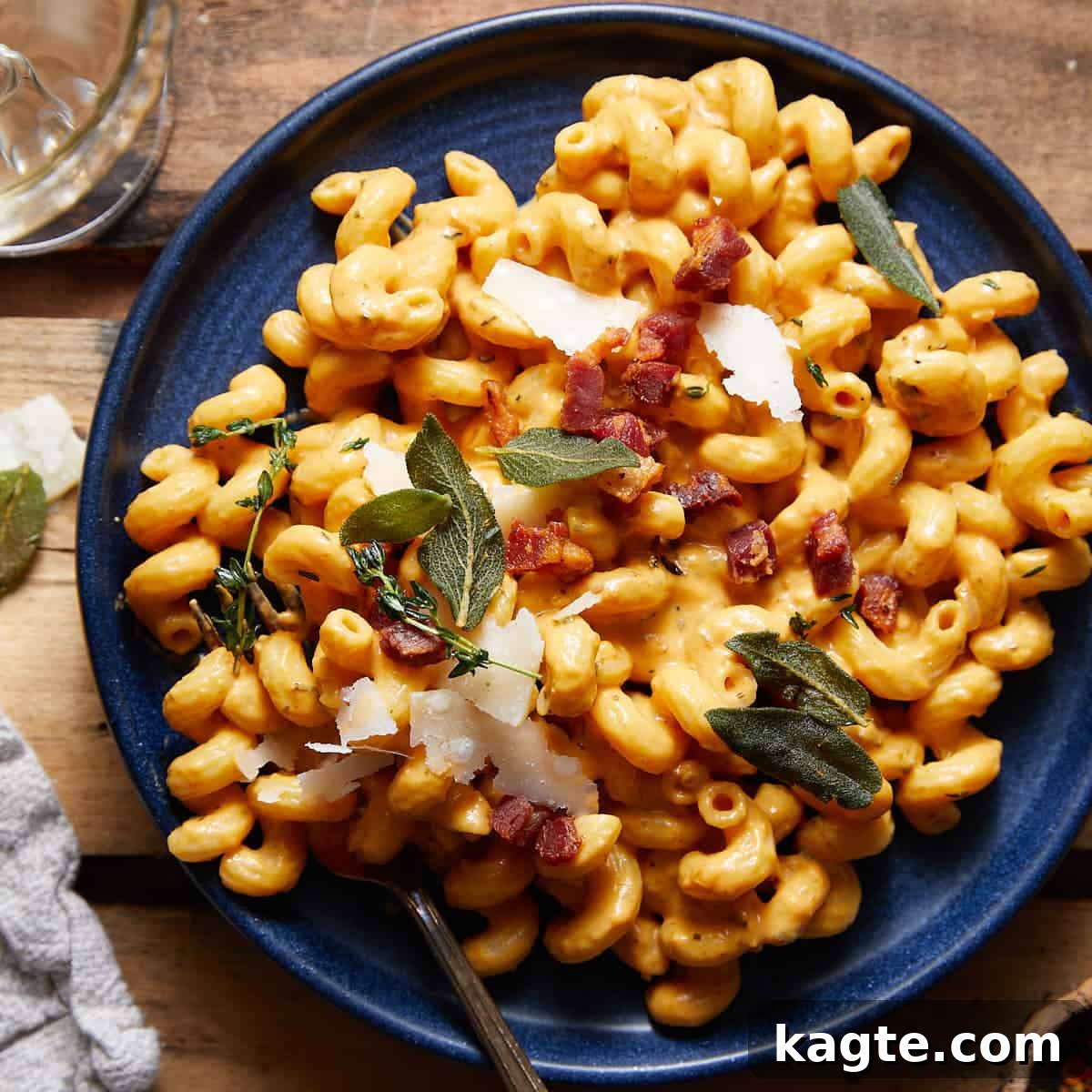
Welcome to the heart of autumn flavors with this incredibly creamy
Pumpkin Pasta Sauce. Imagine a dish that perfectly encapsulates the cozy
essence of fall: rich pumpkin purée, crispy pancetta, fragrant sage,
grated Parmesan, and luxurious heavy cream, all coming together in a
silky smooth sauce. This isn’t just another meal; it’s a warm embrace
on a chilly evening, an easy weeknight dinner solution that feels
gourmet, and the ultimate comfort food for the season.
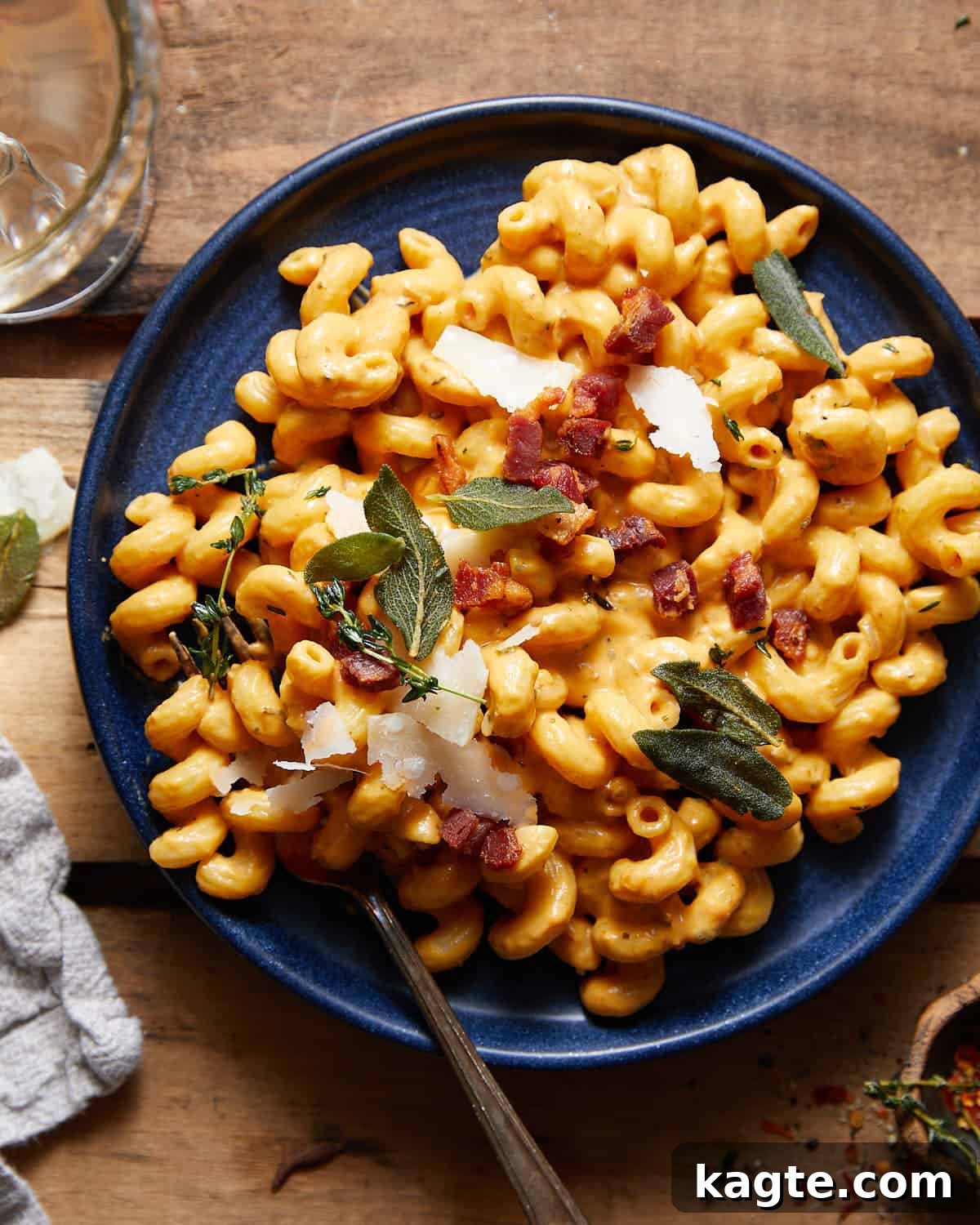
While pumpkin often takes center stage in beloved dessert recipes like my
Pumpkin Pie with Graham Cracker Crust
or the
Best Pumpkin Cream Cheese Bread, I believe its versatile, subtly sweet, and earthy notes deserve a place
in savory dishes too. This recipe was born from a desire to explore
pumpkin’s potential beyond sweets, crafting a deeply satisfying and
flavorful meal that celebrates autumn in a truly unique way. It’s a
delightful departure from the expected, bringing an unexpected depth to your
pasta nights.
If you’re exploring pasta sauces beyond pumpkin, or if you’re keen to try
other delightful options, don’t miss my
Pink Sauce Pasta, a vibrant and creamy classic; the
Simple Lobster Ravioli Sauce, for an elegant and quick seafood experience; or the rich and aromatic
Butter Chicken Pasta, a fusion dish that’s incredibly popular. Each offers a distinct flavor
profile for every palate and occasion.
Table of Contents
- Why You’ll Love This Recipe
- Ingredients & Substitutions
- How to Make Pumpkin Pasta Sauce
- Recipe Serving Suggestions
- Expert Tips & Variations
- How To Store Pumpkin Pasta Sauce
- Recipe FAQs
- More Pasta Recipes
- Pumpkin Pasta Sauce Recipe Card
Why You’ll Love This Recipe: A Taste of Autumnal Bliss
This Pumpkin Pasta Sauce recipe is more than just a meal; it’s an experience
that brings the warmth and coziness of fall directly to your dinner table.
Here’s why it’s destined to become a staple in your autumnal cooking
repertoire:
-
Effortlessly Easy – In today’s busy world, quick and
delicious meals are gold. This dish comes together in less than 30
minutes, making it a perfect solution for those hectic weeknights when
you crave something comforting without spending hours in the kitchen.
It’s quick enough for a casual family dinner but impressive enough for
guests. -
Unbelievably Creamy – The combination of smooth pumpkin
purée and rich heavy cream creates a sauce that is truly velvety and
indulgent. Every strand of pasta is coated in a luscious, decadent
texture that will leave you wanting more. It’s the kind of creaminess
that defines true comfort food. -
Herbaceous Aroma – Fresh sage, dried thyme, and
rosemary are the aromatic backbone of this sauce. Sage, with its warm,
slightly peppery notes, is particularly delightful when fried until
crisp. These herbs infuse the sauce with a complex, earthy fragrance and
flavor that perfectly complements the sweetness of the pumpkin,
elevating it beyond a simple sauce. -
Rich and Cheesy – The addition of freshly grated
Parmesan Reggiano cheese is a game-changer. Its sharp, nutty, and salty
flavor melts into the sauce, adding an incredible depth of richness and
umami that balances the other ingredients beautifully. It’s not just a
topping; it’s an integral part of the sauce’s irresistible character. -
Subtly Flavored Pumpkin – If you’re new to savory
pumpkin dishes, fear not! The “pumpkin” flavor in this sauce is
pleasantly mild and not overpowering. Pumpkin purée on its own is quite
subtle, acting as a canvas that readily absorbs and enhances the flavors
of the other ingredients. It adds a gentle sweetness and body without
dominating the palate. -
Delightful Texture Contrast – The crispy fried pancetta
(or bacon, if you prefer) is essential for adding a much-needed textural
contrast and a burst of savory, salty flavor. Its crispiness cuts through
the creaminess of the sauce, providing a satisfying bite that makes each
forkful dynamic and exciting. It’s the perfect counterpoint that elevates
the entire dish.
Essential Ingredients & Smart Substitutions
Crafting the perfect pumpkin pasta sauce starts with understanding each
ingredient and its role. Here’s a breakdown of what you’ll need and how you
can adapt it:
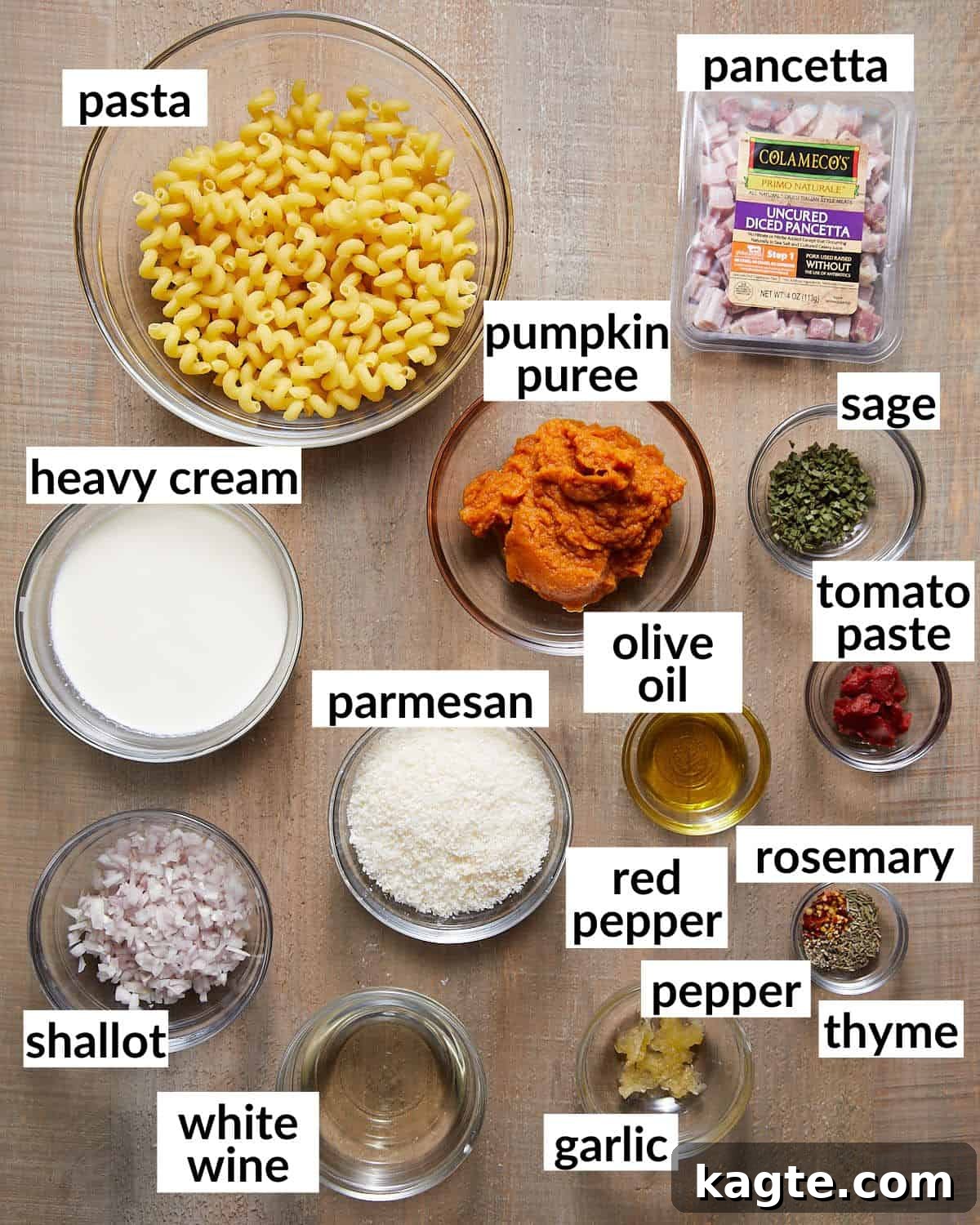
-
Sage: Fresh sage is paramount here; its distinctive,
aromatic, and slightly peppery flavor truly defines this sauce. To
prepare it, simply stack the leaves, cut them into thin strips (chiffonade),
then rotate and chop into small, uniform squares. If fresh sage is
unavailable, you can use about 1/2 teaspoon of dried rubbed sage, though
the flavor profile will be less vibrant. -
Red Pepper Flakes: These add a subtle warmth and a
hint of spice that beautifully complements the creamy sauce without
overpowering it. If you prefer a milder flavor or are sensitive to
spice, feel free to reduce the amount to 1/4 teaspoon or omit them
entirely. -
White Wine: A dry, citrusy white wine such as a
Sauvignon Blanc or Pinot Grigio is ideal for deglazing the pan. Its
acidity helps to lift all the flavorful brown bits from the bottom of the
skillet, adding a fantastic depth to the sauce. If you prefer not to
use alcohol, a good quality vegetable broth can be used as a
non-alcoholic alternative, though it will slightly alter the flavor
profile. -
Pumpkin Purée: The star of the show! It’s crucial to
use plain canned pumpkin purée, not pumpkin pie filling. Always
check the ingredients list on the back of the can to ensure that pumpkin
is the only ingredient, free from added spices or sugar. This allows
you to control the seasoning precisely. -
Pasta: This sauce is incredibly versatile and pairs
well with various pasta shapes. Short-cut pastas like cavatappi, penne,
or rigatoni are excellent for catching and holding the creamy sauce.
Alternatively, wider long pastas such as fettuccine, tagliatelle, or
pappardelle also work wonderfully, providing ample surface area for the
sauce to cling to. Choose your favorite! -
Pancetta or Bacon: Diced pancetta adds a salty, savory
depth and a delightful crispy texture. If pancetta isn’t readily
available, high-quality thick-cut bacon can be an excellent
substitute, offering a similar smoky and crispy element. -
Parmesan Reggiano: This hard, granular cheese is
unmatched in flavor. Opt for freshly grated Parmesan Reggiano for its
superior taste and melting quality, which enriches the sauce
beautifully. Avoid pre-grated Parmesan in plastic containers, as it
often contains anti-caking agents that can affect texture and flavor. -
Heavy Cream: Essential for achieving that luxurious,
velvety texture. It mellows the flavors and adds a rich mouthfeel.
There’s no direct substitute that provides the same richness, but a
combination of milk and a bit of cornstarch slurry could be attempted
for a lighter version, though the results will differ.
Complete list of ingredients and amounts is located on the recipe card below.
How to Make The Best Pumpkin Pasta Sauce
Creating this delightful pumpkin pasta sauce is a straightforward process,
designed to bring maximum flavor with minimal fuss. Follow these simple
steps for a truly comforting meal.
Quick Overview
- Fry pancetta until crisp.
- Sauté fresh sage and dried herbs.
- Cook garlic and shallots until fragrant.
- Deglaze the pan with white wine.
- Stir in pumpkin purée, tomato paste, heavy cream, & pasta water.
- Simmer until thickened, then toss with cooked pasta.
Step by Step Instructions for a Flavorful Sauce
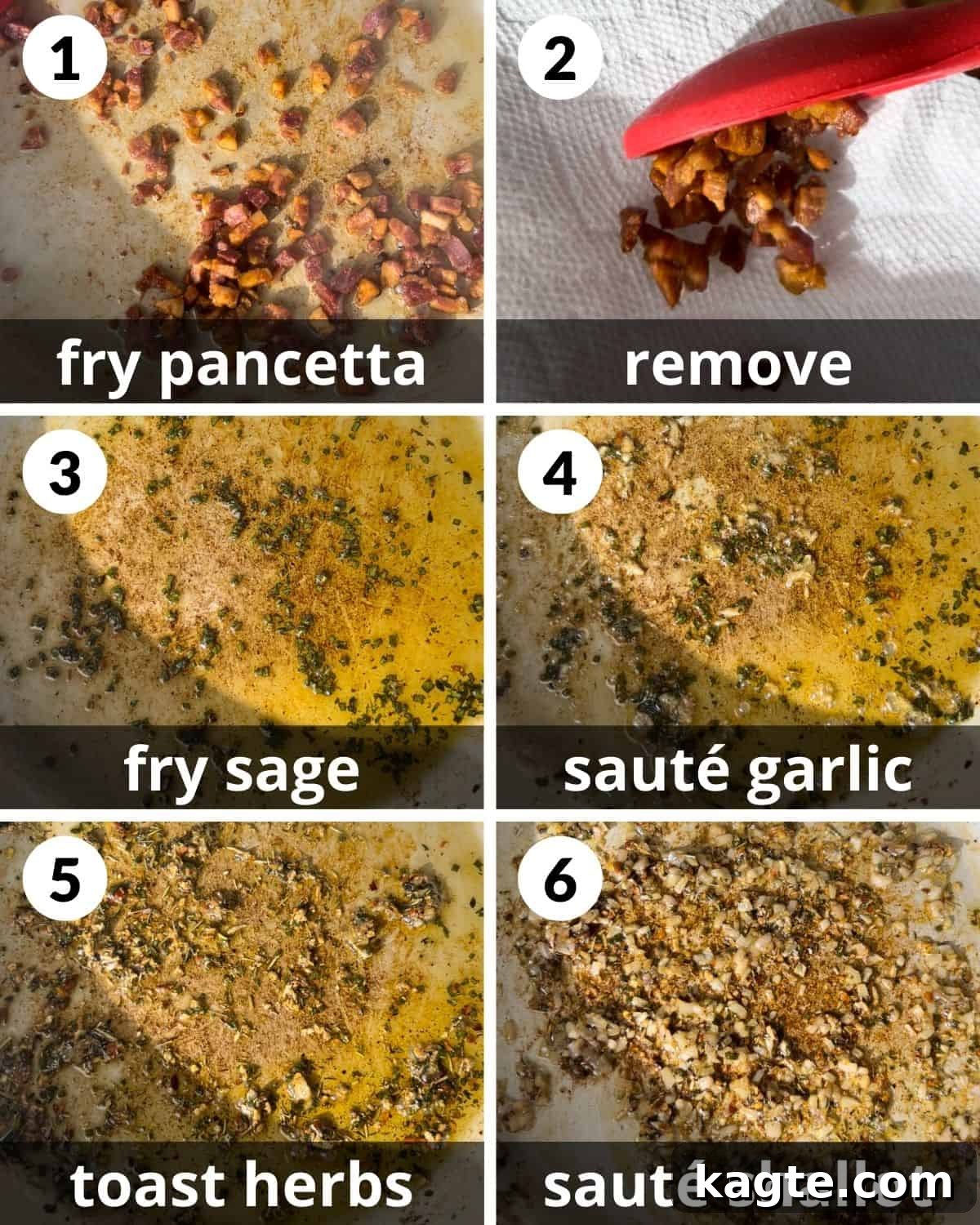
Don’t forget to scrape up all those flavorful brown bits from the bottom of the pan – they add incredible depth!
Step 1: In a large, heavy-bottomed
skillet or Dutch oven, heat over medium heat. Add the diced pancetta and fry
for 7-8 minutes, stirring occasionally, until it is beautifully browned and
crispy, and most of its fat has rendered out. While the pancetta is cooking,
start preparing your chosen pasta according to the package directions, ensuring
it remains al dente. Crucially, before draining, reserve at least 1/2 cup
of the starchy pasta water – it will be your secret ingredient for a silky
sauce.
Step 2: Carefully remove the crispy
pancetta from the skillet using a slotted spoon, leaving the rendered grease
behind. Transfer the pancetta to a plate lined with a paper towel to drain
any excess fat and keep it crispy. Set the pancetta aside for later.
Step 3: Reduce the heat slightly to
medium-low. Add the olive oil to the pancetta fat in the skillet. Add the
freshly chopped sage leaves and fry for 1-2 minutes until they become
fragrant and slightly crisp. Frying the sage mellows its strong flavor and
brings out its aromatic qualities.
Step 4: Add the pressed garlic to
the skillet and sauté for 1-2 minutes. Be careful not to burn the garlic;
you want it to be fragrant and golden, not browned, as burnt garlic can
turn bitter.
Step 5: Stir in the dried thyme,
rosemary, red pepper flakes, and black pepper. Sauté these spices for
another 1-2 minutes, allowing their aromas to release into the hot oil. This
brief frying step intensifies their flavors.
Step 6: Add the diced shallot to
the mixture and sauté for 2-3 minutes, stirring until it softens and becomes
translucent. Shallots add a delicate, sweet onion flavor that forms a
perfect base for the sauce.
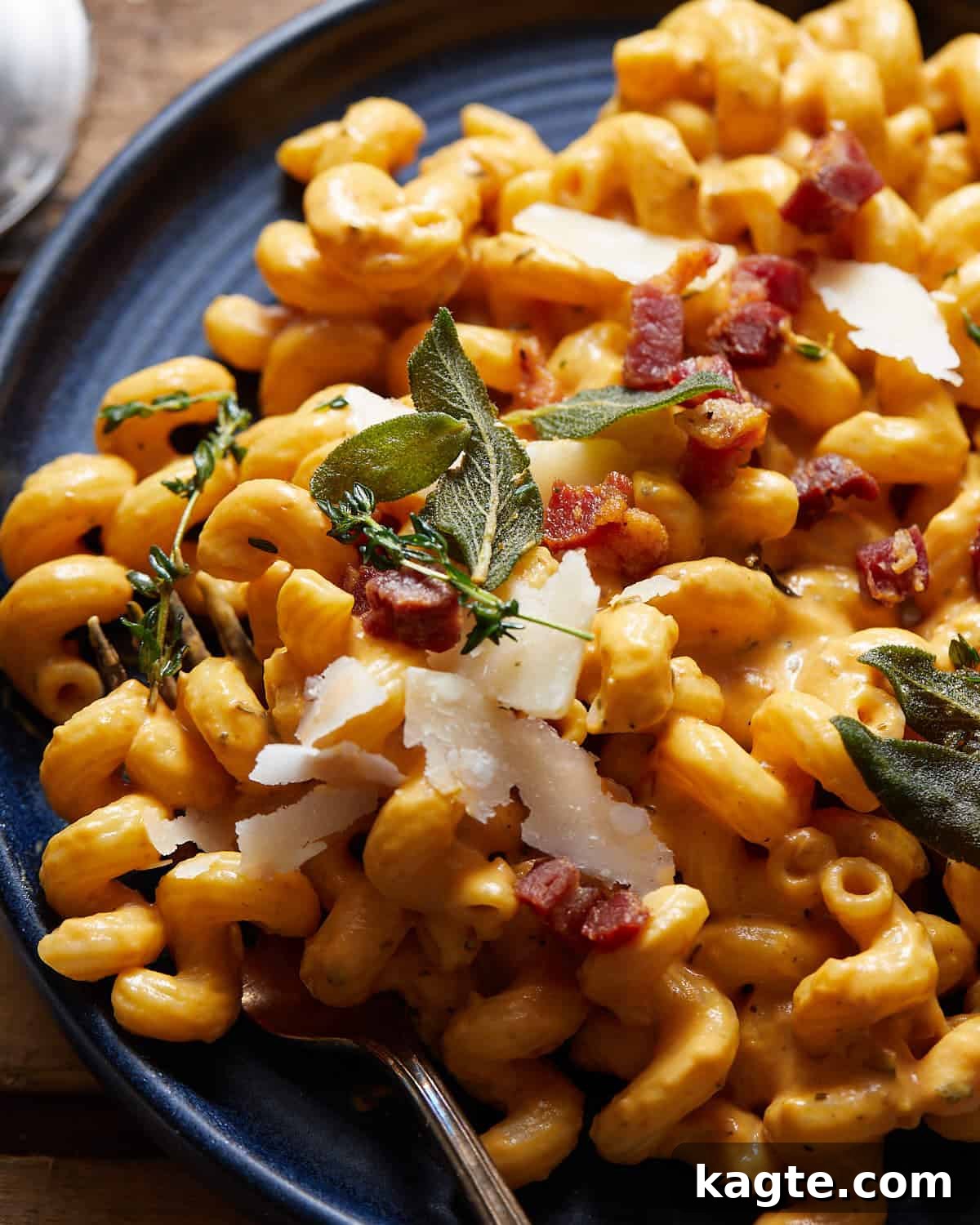
Al dente pasta finished in the sauce absorbs all the wonderful flavors and thickens it perfectly.
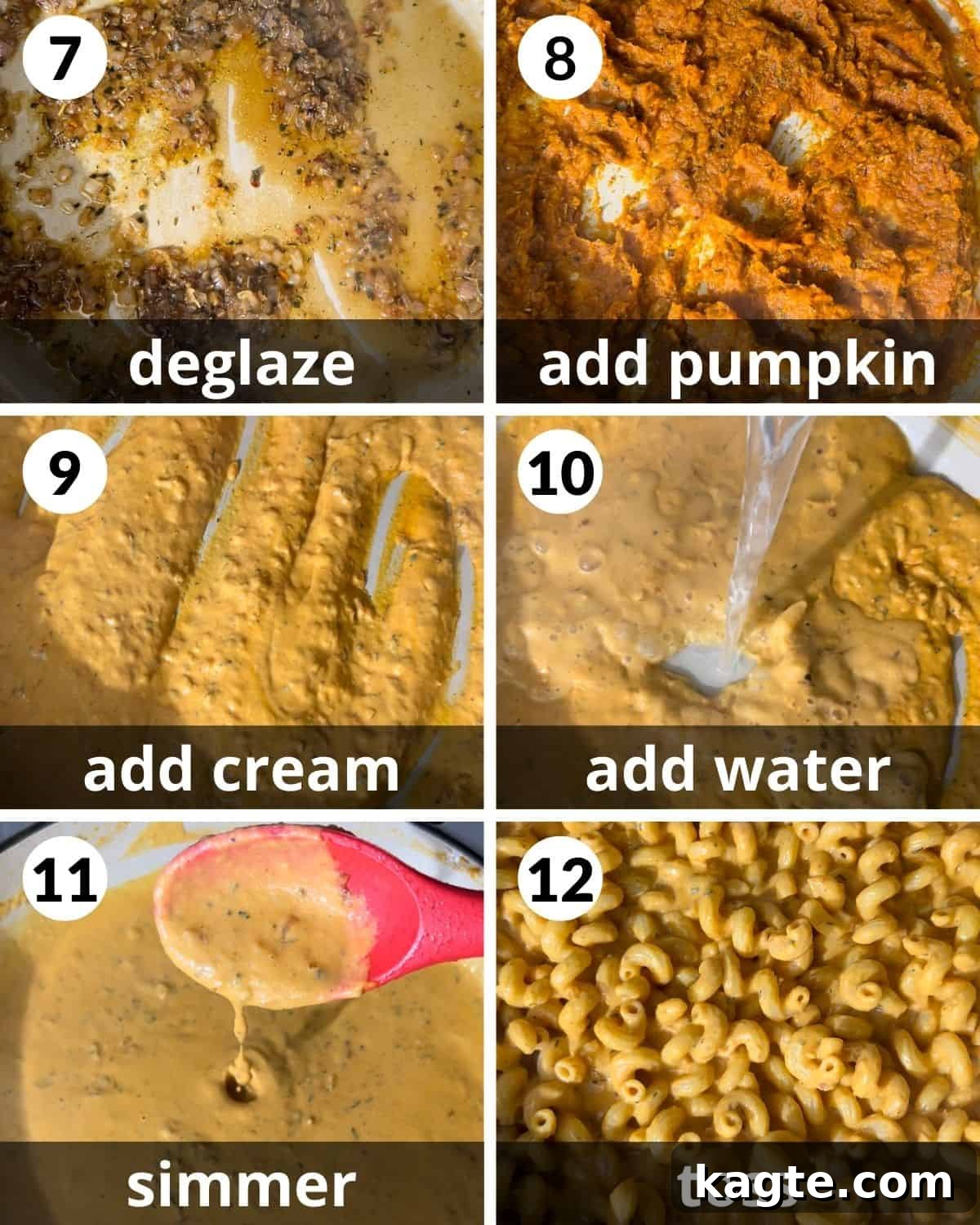
Step 7: Increase the heat slightly
and carefully pour in the white wine. Use a wooden spoon to vigorously
scrape any browned bits (fond) from the bottom of the pan. These bits are
packed with flavor and will dissolve into the wine, enriching your sauce.
Allow the wine to reduce for 1-2 minutes, letting the alcohol cook off.
Step 8: Stir in the plain pumpkin
purée and tomato paste. The tomato paste adds an extra layer of umami and a
slight tang that complements the pumpkin. Cook, stirring constantly, for
1-2 minutes to allow the raw flavor of the tomato paste to cook out and the
pumpkin to warm through.
Step 9: Reduce the heat to low.
Pour in the heavy cream and stir gently until it is fully incorporated into
the pumpkin mixture. Keep the heat low to prevent the cream from curdling.
You’ll notice the sauce begin to take on its signature creamy texture.
Step 10: Add 1/2 cup of the reserved
starchy pasta water to the sauce. This starchy liquid is magic; it not only
helps to thin the sauce to the perfect consistency but also helps it to
emulsify and cling beautifully to the pasta.
Step 11: Stir all the ingredients
together until they are well combined and the sauce is smooth and uniform. At
this point, taste and adjust seasonings, adding salt and black pepper as
needed. Remember, the pasta water is salty, and Parmesan will add saltiness
too, so season gradually.
Step 12: Finally, add the partially
cooked pasta directly into the skillet with the pumpkin sauce. Toss
everything together thoroughly, allowing the pasta to finish cooking in the
sauce for about one minute. This last step allows the pasta to absorb the
rich flavors of the sauce. Simmer gently until the sauce reaches your
desired thickness and coats the pasta perfectly. Serve immediately, topped
generously with the crispy reserved pancetta and an extra sprinkle of fresh
Parmesan cheese. Enjoy your masterpiece!
Recipe Serving Suggestions: What to Pair with Your Pumpkin Pasta
This luscious pumpkin pasta, tossed with your favorite noodles, is undeniably
hearty and satisfying enough to be a complete meal on its own. However, if
you’re looking to elevate your dining experience or add some extra protein
and fresh sides, here are some fantastic ideas to complement this autumnal
delight:
-
Protein Boost: For a more substantial meal, consider
adding sliced
Cast Iron Chicken Breast
on top of your pasta. Its tender, juicy texture and savory flavor pair
beautifully with the creamy pumpkin sauce. Pan-seared scallops or
shrimp would also be an excellent, elegant addition. -
Fresh Green Sides: A vibrant salad provides a refreshing
contrast to the richness of the pasta. Pair it with a crisp
Kale Crunch Salad
for a healthy bite, or opt for a sophisticated
Goat Cheese Salad with Arugula, whose peppery greens and tangy cheese will cut through the creaminess. -
Artisan Bread for Dipping: Don’t let a single drop of
that glorious sauce go to waste! Serve with a crusty slice of
Easy Rustic Bread
or a fragrant
Parmesan Rosemary Bread
for soaking up any extra sauce. The crispy crust and soft interior are
perfect for scooping up every last bit. -
Perfect Wine Pairing: What better to accompany your meal
than the rest of the bottle of dry white wine (like Sauvignon Blanc or
Pinot Grigio) that you used in the recipe? Its crisp acidity and fruity
notes will harmonize with the flavors of the sauce, making for a truly
enjoyable pairing.
Expert Tips & Delicious Variations for Perfect Pumpkin Pasta
Achieving a truly exceptional pumpkin pasta sauce involves a few key
techniques and a readiness to experiment. Here are some expert tips to
ensure your dish is perfect every time, along with ideas for delicious
variations:
-
Embrace Pancetta or Bacon: This isn’t just an
optional extra; the crispy pancetta or bacon is crucial for adding a
layer of savory umami and a delightful textural contrast. Ensure the
pancetta is fried until deeply golden and crispy, with its white fat
fully rendered. This process releases incredible flavor into the pan,
which forms the foundation of your sauce, providing a wonderful salty
bite against the creamy pasta. -
The Magic of Frying Sage: Don’t just toss in fresh
sage leaves. Frying them, along with the other dried spices, in the
rendered pancetta fat is a game-changer. This brief sautéing process
not only releases and intensifies their aromatic oils but also softens
the slightly bitter edge that uncooked sage can sometimes have, leaving
you with a much more pleasant and fragrant herb. -
Master the Deglaze: Deglazing the pan with white wine
after sautéing the aromatics is a critical step for building flavor. As
the wine hits the hot pan, use a wooden spoon to vigorously scrape up all
the caramelized brown bits (fond) stuck to the bottom. These bits are
concentrated flavor bombs that will dissolve into your sauce, adding an
unparalleled depth and complexity that cannot be achieved otherwise. -
Invest in Quality Parmesan Reggiano: While it might
seem like a small detail, the quality of your Parmesan cheese makes a
significant difference. True Parmesan Reggiano is a splurge, but its
rich, nutty, and salty flavor is incomparable. Avoid the pre-grated
varieties found in plastic jars, as they often contain anti-caking
agents that can make your sauce gritty and lack the genuine, robust
flavor of freshly grated cheese. -
Handle Cream with Care: Heavy cream is the secret to
this sauce’s luxurious smoothness, but it requires gentle handling.
Always ensure the heat is low when you add the cream to the sauce.
Overheating or bringing cream to a rapid boil can cause it to curdle,
resulting in an unappetizing texture. A gentle simmer is all you need
to incorporate it beautifully. -
Perfecting the Pasta: Two rules for pasta: always
heavily salt the water it boils in (it should taste like the sea!),
and never overcook it. I highly recommend cooking your pasta for about
1 minute less than the shortest time indicated on the package. Then,
transfer it directly to the sauce to finish cooking for about a minute.
This allows the pasta to absorb the sauce’s flavors and releases just
enough starch to help thicken and bind the sauce perfectly, making it
cling to every strand. -
Spice It Up: For those who love a bit more heat,
increase the red pepper flakes or add a pinch of cayenne pepper. -
Vegetarian Option: To make this recipe vegetarian,
simply omit the pancetta and start by sautéing the sage in 1-2
tablespoons of olive oil. The sauce will still be wonderfully flavorful!
How To Store & Reheat Your Pumpkin Pasta Sauce
Planning ahead or simply having leftovers is a breeze with this pumpkin pasta
sauce. Once cooled, store any remaining sauce (or the pasta tossed with
sauce) in an airtight container in the refrigerator for up to 3-4 days. For
longer storage, this sauce freezes beautifully. You can freeze it in an
airtight container or freezer-safe bag for 2-3 months.
When you’re ready to enjoy it again, reheat refrigerated or thawed frozen
sauce gently in the microwave or on the stovetop over low heat, stirring
occasionally. If the sauce appears too thick, you can add a splash of
chicken broth, vegetable broth, or even a bit of milk to achieve your
desired consistency.
Recipe FAQs: Your Pumpkin Pasta Questions Answered
Pumpkin pasta sauce has a wonderfully mild and earthy flavor, often
compared to a sweet potato or butternut squash, with a subtle natural
sweetness. When combined with savory ingredients like herbs, garlic,
and cheese, the pumpkin acts as a rich base, allowing the other
flavors to shine through while providing a creamy texture and a
distinctive autumnal touch. It’s comforting and warmly spiced,
without being overtly “pumpkin spice” flavored.
A classic savory pumpkin sauce, like this recipe, is primarily made
from plain pumpkin purée, which forms its creamy base. Key flavoring
ingredients typically include heavy cream for richness, aromatic
elements like garlic, shallots, and fresh herbs (especially sage),
and often a touch of cheese like Parmesan for depth. White wine is
also commonly used for deglazing and adding complexity.
Adding starchy pasta water is a crucial technique for achieving a
perfectly emulsified and flavorful pasta sauce. The starch in the
water helps to bind the sauce ingredients together, creating a
smooth, cohesive texture that clings beautifully to the pasta.
Furthermore, the salty water adds an extra layer of seasoning to
the sauce, ensuring every bite is well-balanced and delicious. It’s
the secret to restaurant-quality pasta at home.
Shop my Amazon Storefront for kitchen essentials!
More Irresistible Pasta Recipes to Explore
If you’re a pasta enthusiast like us, there’s always a new dish to discover.
Here are more delectable pasta recipes from our collection that you might
love:
Pasta
Baked Stuffed Shells with Meat Sauce
Pasta
What To Serve With Penne Alla Vodka (Side Dishes & Proteins)
30 Minute Meals
One Pan Shrimp Orzo with Lemon Recipe
Side Dish
What To Serve With Pasta Salad: 30 Ideas for Lunch or Dinner
If you create this incredible recipe, we would absolutely love to hear from you!
Please leave a star rating in the recipe card below
and/or drop a comment to share your experience. Your feedback is
invaluable to us. Don’t forget to follow us on
Pinterest,
Facebook &
Instagram
for more delicious recipes and cooking inspiration.
Save Recipe
Pumpkin Pasta Sauce
6 votes
Pumpkin Pasta Sauce
is made with pumpkin purée, pancetta, sage, parmesan, and heavy
cream. Toss it with your favorite pasta for the perfect easy
weeknight dinner. It is total fall comfort food.
people
Equipment
-
Stirring Spoon
-
Microplane Grater
-
Garlic Press
Ingredients
-
4
ounces
diced pancetta or bacon -
1
Tablespoon
olive oil -
1
Tablespoon
fresh chopped sage -
4
cloves
garlic
pressed -
1/2
teaspoon
dried thyme -
1/2
teaspoon
dried rosemary -
1/2
teaspoon
red pepper flakes* -
1/4
teaspoon
black pepper -
1
shallot
diced -
1/3
cup
white wine* -
3/4
cup
plain pumpkin purée* -
1
Tablespoon
tomato paste -
3/4
cup
heavy cream -
1/2
cup
freshly grated parmesan reggiano
plus more for serving -
8
ounces
pasta
plus about 1/2 cup pasta water*
Instructions
-
In a large skillet over medium heat, fry the pancetta for
7-8 minutes or until it is browned and the fat is rendered.
While the sauce is cooking, prepare the pasta according to the
package. Save at least 1/2 cup of pasta water. -
Remove the pancetta (not the grease) from the skillet and place
it on a plate with a paper towel. Set aside. -
Turn the heat to medium and add the olive oil. Add the sage and
fry for 1-2 minutes. -
Add the garlic and sauté for 1-2 minutes.
-
Add the thyme, rosemary, red pepper flakes, and black pepper.
Sauté for 1-2 minutes. -
Add the shallot and sauté for 2-3 minutes or until softened.
-
Deglaze the pan with the wine, scraping any brown bits off the
bottom. Reduce for 1-2 minutes. -
Add the pumpkin and tomato paste. Stir and cook for 1-2 minutes.
-
Turn the heat to low. Stir in the cream.
-
Add 1/2 cup of pasta water.
-
Stir until combined.
-
Add the pasta and finish cooking it in the sauce. Simmer until
desired thickness. Top with the pancetta and more parmesan cheese.
Did you make this recipe? Leave a comment below!
Notes
-
Sage: To chop the sage, stack the leaves on top of each other. Cut
them into long strips and then rotate the strips and chop into
small squares. -
Red Pepper Flakes: Reduce to 1/4 teaspoon or omit if you are sensitive to
spice. -
White Wine: Use a dry citrusy white wine like sauvignon blanc or pinot
grigio. -
Pumpkin: Check the back of the can to ensure the only ingredient is
pumpkin. There should not be any spices or sugar. Pasta: Use any short cut pasta (like cavatappi, penne, or
rigatoni), or a wider long pasta, like fettuccine,
tagliatelle, or pappardelle. -
Don’t overheat the cream. Be sure the heat is low when adding the cream. It can easily
curdle if overheated. -
Salt the pasta water & don’t overcook. Be sure to heavily salt the water the pasta is boiled in. I
also recommend cooking the pasta for about 1 minute less than
the shortest time recommended on the package and finishing it
in the sauce for about a minute.
Nutrition
Nutrition information is automatically calculated, so should only be
used as an approximation.