
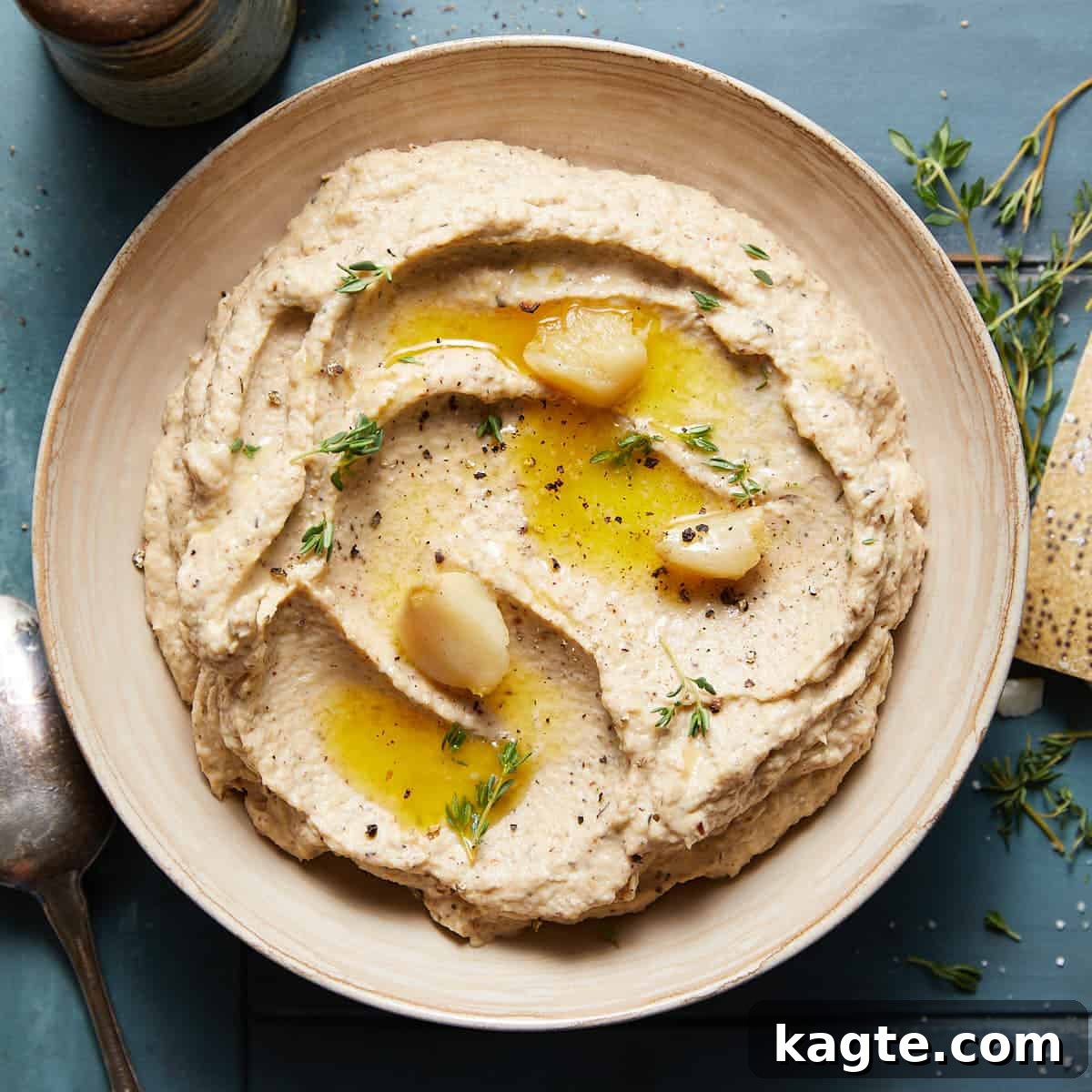
Craving a side dish that’s both comforting and incredibly healthy? Look no further than this delightful Keto Roasted Mashed Cauliflower. Forget the bland, watery cauliflower mashes of the past – this recipe transforms humble cauliflower into a creamy, rich, and silky smooth culinary masterpiece. Bursting with the savory notes of roasted garlic, tangy sour cream, and sharp Parmesan cheese, it’s a low-carb, gluten-free, and vegetarian alternative that truly stands out. It’s the perfect way to enjoy a classic comfort food texture without the excess carbs, making it ideal for keto lifestyles or anyone looking to add more nutritious vegetables to their plate.
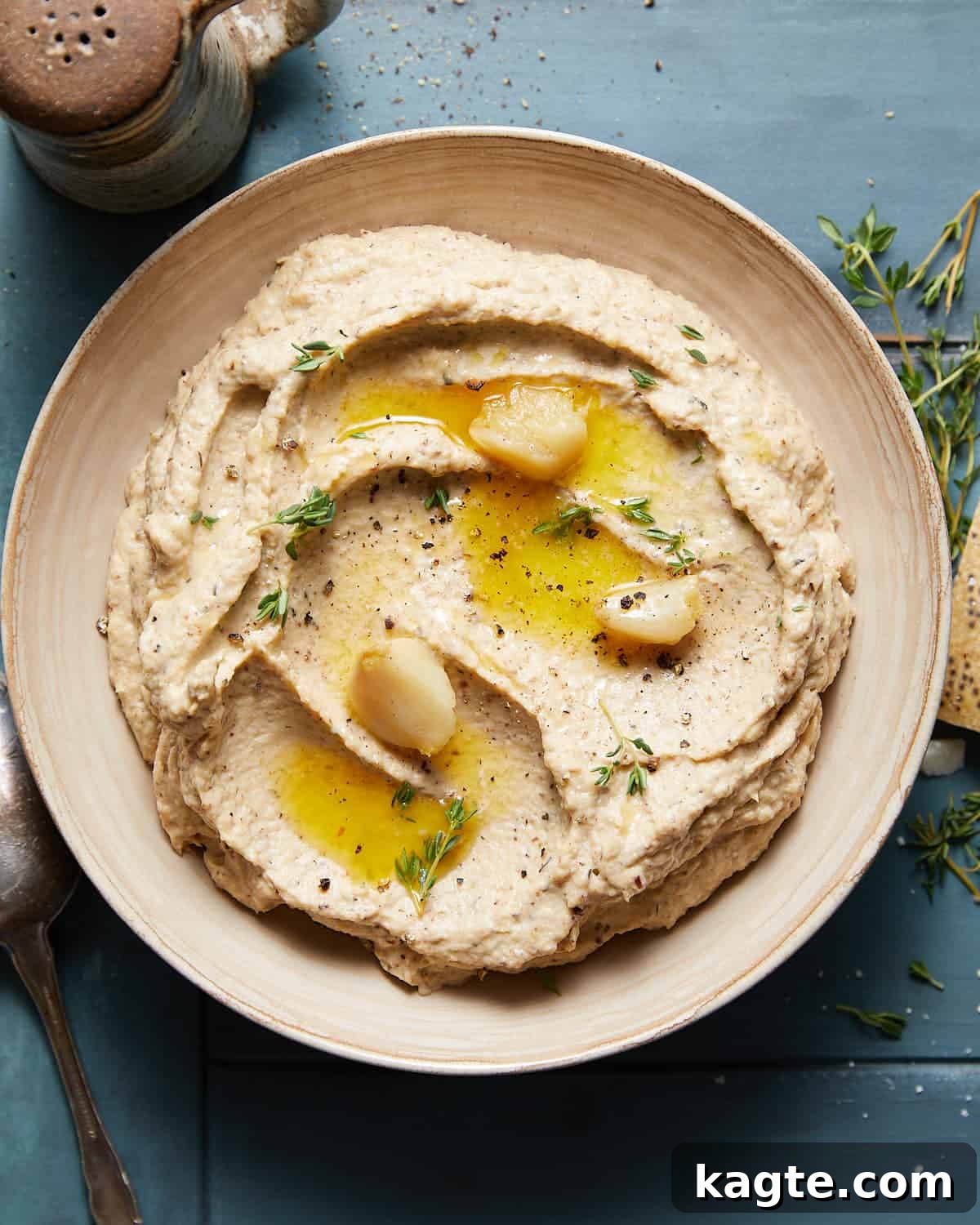
For those adhering to a ketogenic diet or simply seeking delicious low-carb options, this roasted mashed cauliflower recipe is a revelation. It serves as a phenomenal substitute for traditional mashed potatoes, providing all the satisfying texture and rich flavor without the carb load. If you’re accustomed to beloved potato dishes like Garlic Red Skin Mashed Potatoes or Yukon Gold Mashed Potatoes, prepare to be amazed by how this cauliflower mash delivers a similar level of indulgence and satisfaction.
Table of Contents
- Why You’ll Love This Roasted Cauliflower Mash
- Essential Ingredients & Smart Substitutions
- Step-by-Step: How to Make Roasted Mashed Cauliflower
- Recipe Serving Suggestions
- Expert Tips & Creative Variations
- How To Reheat Leftover Cauliflower Mash
- Recipe FAQs: Your Questions Answered
- More Delicious Side Dish Recipes
- Creamy Roasted Mashed Cauliflower Recipe
Why You’ll Love This Roasted Cauliflower Mash
This isn’t just another cauliflower recipe; it’s a culinary experience designed to impress with its depth of flavor and velvety texture. Here’s why this roasted mashed cauliflower will become a staple in your kitchen:
- Unbelievably Creamy & Rich – The secret to its luxurious texture lies in the generous addition of butter, tangy sour cream, and savory Parmigiano Reggiano cheese. These ingredients combine to create a puree that is not just smooth, but truly buttery and opulent, melting in your mouth with every spoonful.
- Enhanced Flavor Through Roasting – Unlike methods such as boiling or steaming, roasting the cauliflower unlocks an incredible depth of flavor and a nutty sweetness. The Maillard reaction during roasting caramelizes the natural sugars, creating complex notes that elevate the dish far beyond what simple boiling could achieve. Moreover, roasting a whole head of garlic alongside the cauliflower infuses the mash with a mellow, sweet, and aromatic garlic flavor that is truly next-level.
- Effortlessly Easy Preparation – Despite its gourmet taste, this recipe is remarkably simple and mostly hands-off. While the vegetables do require some time in the oven to achieve that perfect golden-brown roast, the active preparation time is minimal, allowing you to focus on other aspects of your meal or simply relax while your oven does the work.
- Perfectly Low Carb & Diet-Friendly – For those adhering to a keto or low-carb diet, this side dish is an absolute game-changer. It offers the satisfying comfort of mashed potatoes without derailing your dietary goals. Additionally, it’s naturally gluten-free and vegetarian, making it a versatile option for various dietary needs and preferences.
- Versatile & Simple Side Dish – Whether you’re preparing a casual weeknight dinner or a more elaborate holiday feast, this mashed cauliflower is an ideal companion. Its robust flavor profile pairs beautifully with a wide array of proteins, making it an easy yet elegant addition to any meal.
- Packed with Nutritious Fiber – Beyond its delicious taste, cauliflower is a cruciferous vegetable renowned for its health benefits. It’s an excellent source of dietary fiber, which supports digestive health and contributes to a feeling of fullness, making this a healthy and satisfying choice for your table.
Essential Ingredients & Smart Substitutions
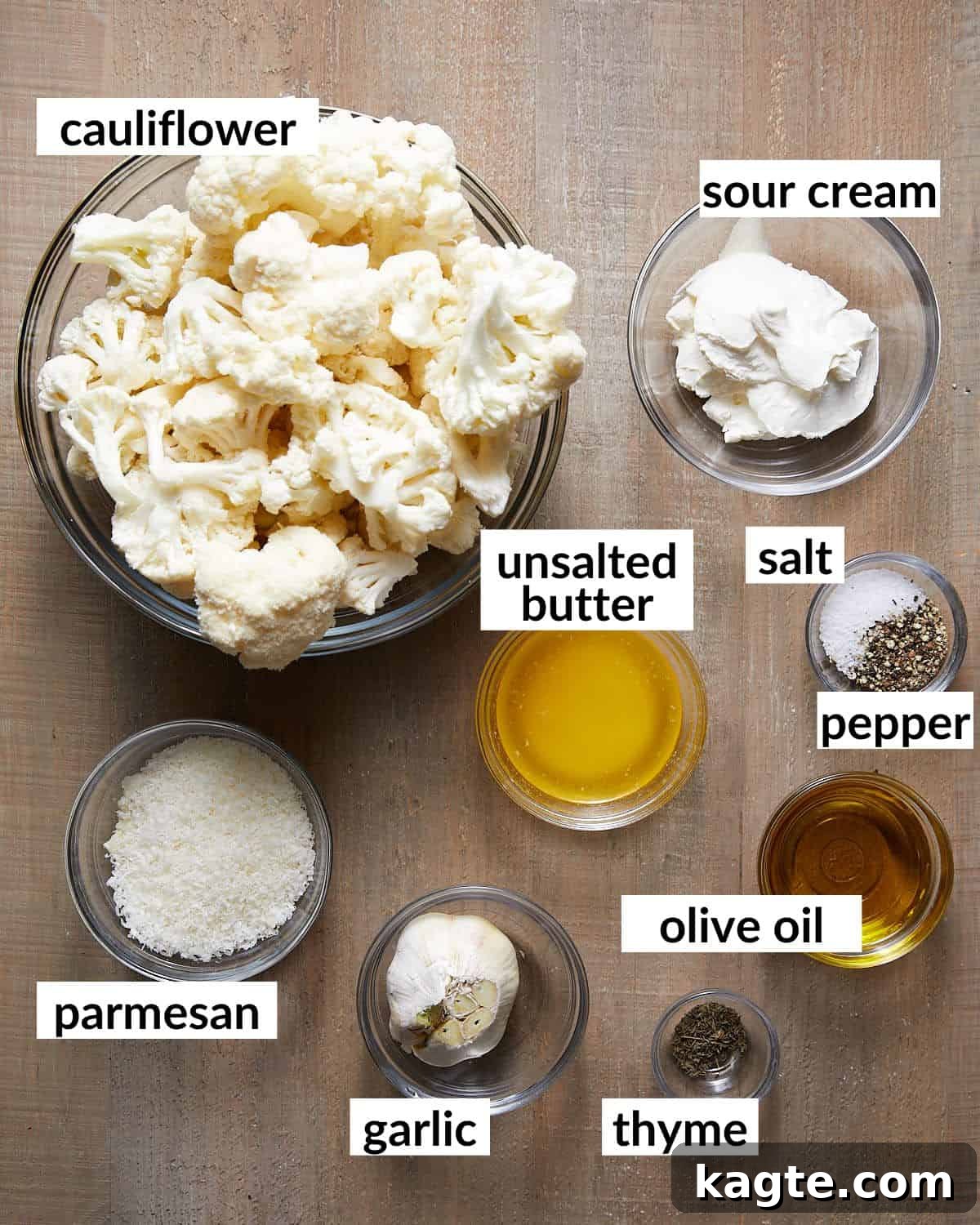
Crafting the perfect roasted mashed cauliflower begins with high-quality ingredients. Here’s a closer look at what you’ll need and how you can adapt the recipe:
- Cauliflower Florets: You’ll need about 36 ounces. While you can chop a whole head of cauliflower yourself, using pre-cut, washed, and dried florets saves significant time and effort, making this recipe even simpler.
- Olive Oil: Essential for roasting the cauliflower and garlic, it helps achieve that beautiful golden-brown caramelization and prevents sticking. Avocado oil or grapeseed oil can be used as alternatives.
- Kosher Salt: As a fundamental seasoning, kosher salt enhances all the flavors. All my recipes are developed using Morton kosher salt, known for its flakey texture and consistent flavor. If you’re using finer table salt, remember to reduce the quantity by about half, as it’s saltier by volume. I highly recommend investing in kosher salt for more controlled seasoning in your everyday cooking.
- Black Pepper: Freshly ground black pepper adds a subtle kick and complements the other flavors beautifully. Adjust to your preference.
- Small Head of Garlic: Roasting the entire head of garlic transforms its pungent raw flavor into a sweet, mellow, and spreadable paste. Don’t skip this step – it’s crucial for the dish’s depth. If fresh garlic isn’t available, you can use garlic powder in the mash, but the roasted flavor won’t be as profound.
- Melted Unsalted Butter: Butter is key to achieving that creamy texture and rich flavor. Unsalted butter allows you to control the overall saltiness of the dish. If using salted butter, reduce the added kosher salt accordingly.
- Sour Cream: This adds a lovely tang and contributes significantly to the smooth, creamy consistency. Full-fat Greek yogurt or cream cheese can be excellent substitutes, offering similar creaminess and a slight tartness.
- Parmigiano Reggiano: Freshly grated Parmesan cheese brings a salty, nutty, and umami depth that is irreplaceable. Avoid pre-grated varieties as they often contain anti-caking agents that can affect texture and flavor. Pecorino Romano could be a strong alternative if you prefer a sharper, saltier cheese.
- Dried Thyme: A classic herb that pairs wonderfully with garlic and cauliflower, adding an earthy, aromatic note. Other herbs like dried oregano, rosemary, or a blend of Italian herbs could also work well. Fresh thyme, finely chopped, would be even better (use about 1 tablespoon).
For a precise list of ingredients and their exact quantities, please refer to the complete recipe card below.
Step-by-Step: How to Make Roasted Mashed Cauliflower
Creating this rich and flavorful mashed cauliflower is incredibly straightforward. Here’s a quick overview of the process, followed by detailed instructions to guide you to perfection.
Quick Overview Roasted Mashed Cauliflower
- Roast cauliflower and garlic until tender and golden.
- Blend roasted veggies with creamy ingredients until smooth.
Detailed Step by Step Instructions
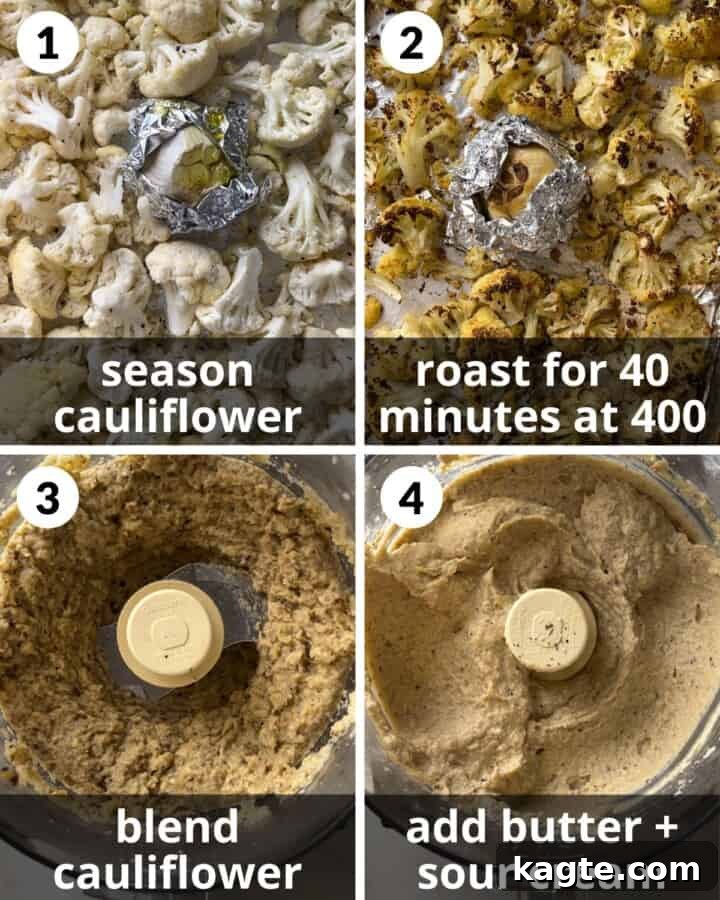
Step 1: Prepare for Roasting. Begin by preheating your oven to a hot 450 degrees Fahrenheit (230°C). Arrange your cauliflower florets in a single layer on a large baking sheet. Drizzle the majority of the olive oil over the cauliflower, then season generously with kosher salt and black pepper. Toss everything together until the florets are evenly coated. Next, take the head of garlic, remove any loose outer skins, and slice off the very top to expose the cloves. Wrap the garlic head tightly in aluminum foil and drizzle the remaining olive oil over the exposed cloves. Place the foil-wrapped garlic on the same baking sheet as the cauliflower.
Step 2: Roast to Perfection. Transfer the baking sheet to the preheated oven and roast for 35-40 minutes. The cauliflower should become beautifully tender, with caramelized, deeply browned edges, indicating enhanced flavor. The garlic, nestled in its foil packet, will soften and become sweet and aromatic. Roasting both at once infuses maximum flavor. The cauliflower should have a deep brown color and be fork tender.
Step 3: Begin Mashing. Once roasted, carefully remove the baking sheet from the oven. Allow the cauliflower and garlic to cool slightly so they are easier to handle. Squeeze 2-3 cloves of the softened roasted garlic out of their skins (you can add more later if desired) and place them into a large food processor along with the roasted cauliflower. Pulse the mixture until it reaches your desired consistency – smooth or with a bit of texture. For a truly silky mash, process until completely smooth.
Step 4: Incorporate Creamy Goodness. To the food processor, add the melted unsalted butter, sour cream, grated Parmesan cheese, and dried thyme. Pulse again until all the ingredients are thoroughly combined and the mixture is uniformly creamy. Taste the mashed cauliflower and adjust seasonings as needed. If you desire a stronger garlic presence, add another roasted garlic clove or two and pulse again. Serve warm and enjoy!
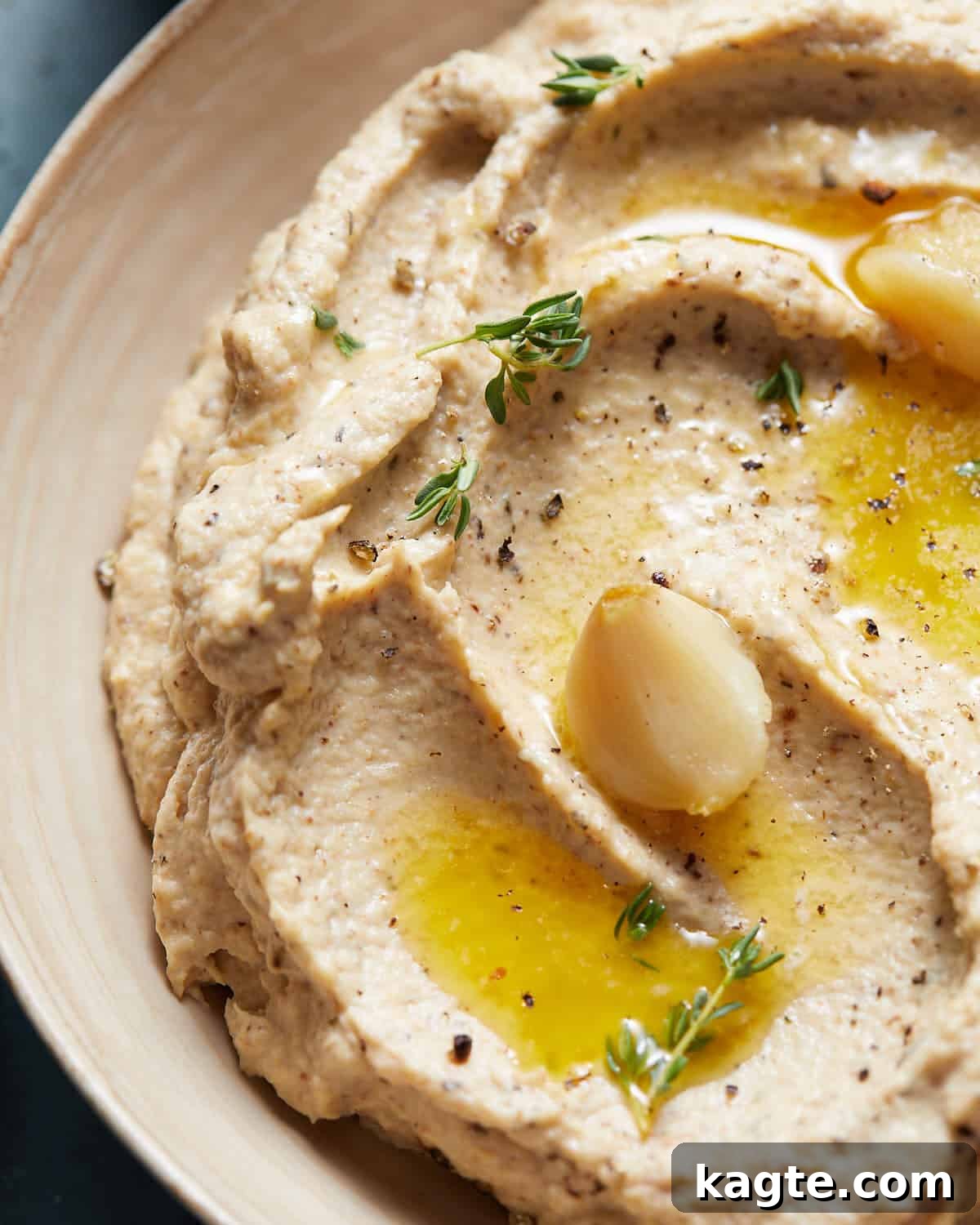
Achieving the perfect roast is key. Your cauliflower should have a deep brown color and be fork tender, signifying rich, caramelized flavor development.
Customizing the texture is easy. Pulse more for a velvety smooth mash, or pulse less for a more rustic texture with small lumps. You can also reserve a few roasted florets, finely chop them, and fold them into the puree for added bite.
Recipe Serving Suggestions
This garlic parmesan mashed cauliflower isn’t just a side; it’s a star player that can elevate any meal. Its rich, creamy texture and savory flavor make it the perfect accompaniment to a wide variety of proteins. Here are some of my absolute favorite main dishes that pair exquisitely with this delicious mash:
- Cheesy French Onion Chicken: The robust flavors of this chicken bake are beautifully balanced by the light, creamy cauliflower mash, offering a comforting and satisfying meal.
- Garlic Herb Dutch Oven Chicken Breasts: The herbaceous notes in the chicken complement the garlic in the mash, creating a harmonious and flavorful pairing.
- Simple Dutch Oven Beef Stew: Serve this hearty stew over a bed of mashed cauliflower to soak up all the rich gravy, providing a lighter base than traditional potatoes.
- Smothered Dutch Oven Pork Chops: The savory, tender pork chops smothered in their sauce find a perfect counterpoint in the smooth, flavorful cauliflower mash.
- Grilled Steak or Lamb Chops: The earthy flavors of the cauliflower mash provide an excellent balance to rich, grilled meats.
- Baked Salmon or Pan-Seared Scallops: For a lighter meal, the creamy texture of the mash perfectly complements delicate seafood, adding richness without heaviness.
- Roasted Vegetables: Pair it with other roasted greens like asparagus or broccoli for a vibrant, all-vegetarian meal.
Expert Tips & Creative Variations
Elevate your roasted mashed cauliflower with these insider tips and delightful variations:
- Embrace Pre-Cut Florets for Convenience. While cutting a whole head of cauliflower is always an option, to make this recipe truly effortless, I highly recommend opting for a few bags of pre-cut and pre-washed cauliflower florets. Just ensure they are thoroughly dried before roasting to promote better browning and prevent steaming.
- The Unrivaled Power of Roasting. This is perhaps the most crucial tip! Roasting the cauliflower (and garlic) rather than boiling or steaming is what sets this recipe apart. The high heat encourages the Maillard reaction, developing deep, nutty, and caramelized flavors that simply cannot be achieved with other cooking methods. This flavor foundation is what makes your mash so irresistibly delicious.
- Customize Your Mash Texture. Your food processor is your best friend for texture control. For a light and airy, perfectly smooth puree, process the mixture for a longer duration. If you prefer a more rustic, slightly chunky mash with some bite, pulse for less time. For an interesting textural contrast, you can even finely chop a small handful of roasted florets and gently fold them into the completed puree.
- Add More Herbs: Beyond thyme, experiment with other fresh or dried herbs. Rosemary, sage, chives, or parsley can add different aromatic profiles. Stir them in at the end for fresh herbs, or with the butter for dried ones.
- Spice It Up: A pinch of cayenne pepper or red pepper flakes can introduce a subtle warmth or kick. Smoked paprika can add a smoky depth, especially if serving with BBQ or grilled dishes.
- Cheese Variations: Don’t limit yourself to Parmesan! Consider adding a touch of cream cheese for extra tang and richness, or a sprinkle of shredded cheddar or Gruyère for a more robust, cheesy flavor. Nutritional yeast can also be added for a dairy-free cheesy note.
- “Loaded” Mash: Transform your mash into a hearty, loaded side dish. Stir in cooked bacon bits, finely chopped green onions, or even some caramelized onions for an extra layer of flavor and texture.
- Use a Potato Masher (if preferred): If you don’t have a food processor or prefer a coarser texture, a good old-fashioned potato masher can work. Just make sure your cauliflower is very tender after roasting for easier mashing.
How To Reheat Leftover Cauliflower Mash
Leftover roasted mashed cauliflower is just as delicious the next day! Store any unused portions in an airtight container in the refrigerator for 2-3 days. When you’re ready to enjoy it again, here are a few simple reheating methods:
- Microwave: For quick reheating, transfer the desired amount of mash to a microwave-safe dish. Heat in 30-second intervals, stirring in between, until heated through. If the mash appears dry or stiff, add a small splash of water, milk, or even a bit of vegetable broth to restore its creamy consistency.
- Stovetop: Place the mashed cauliflower in a saucepan over medium-low heat. Add a tablespoon or two of water, milk, or broth to prevent sticking and help rehydrate the mash. Stir frequently until it’s warmed through and smooth.
- Oven: For larger quantities or if you prefer a slightly crisper top, you can reheat in the oven. Transfer the mash to an oven-safe dish, cover it loosely with foil, and bake at 300°F (150°C) for 15-20 minutes, or until hot. Remove the foil for the last few minutes if you want a slightly browned top.
Always stir well before serving after reheating to ensure even temperature and smooth texture.
Recipe FAQs: Your Questions Answered
Unlike mashed potatoes, which often require added liquid like cream, milk, or half-and-half to achieve creaminess, cauliflower has a higher water content and doesn’t absorb liquids in the same way. To prevent a runny mash, focus on roasting the cauliflower well to evaporate moisture. When blending, I recommend sticking to just butter and sour cream, and avoiding additional liquids unless absolutely necessary and added sparingly. If you notice excess moisture, gently heating the puree on the stovetop can help evaporate some of the liquid, stiffening the mash.
If your mashed cauliflower turns out runnier than desired, don’t fret! The easiest way to stiffen it is to gently heat the puree in a saucepan over medium-low heat on the stove. Stir continuously to help evaporate any excess moisture. You can also mix in a tablespoon of cream cheese or a small amount of finely grated Parmesan (which will melt and thicken) to help bind it further.
Absolutely! This mashed cauliflower is a fantastic make-ahead dish, perfect for meal prep or entertaining. You can prepare it up to 2-3 days in advance and store it in an airtight container in the refrigerator. Reheat using one of the methods described above, adding a splash of liquid if needed to restore its creamy texture.
Yes, you can freeze it! Allow the mashed cauliflower to cool completely, then transfer it to a freezer-safe airtight container or heavy-duty freezer bags. It can be frozen for up to 3 months. Thaw overnight in the refrigerator before reheating. Note that the texture might be slightly softer after freezing and thawing, but it will still be delicious.
For the silkiest, smoothest mash, a food processor is your best tool. Ensure your roasted cauliflower is very tender before processing. You can also pass the mash through a fine-mesh sieve or a food mill after processing for an ultra-velvety consistency, though this is usually unnecessary with a powerful food processor.
Shop my Amazon Storefront for my favorite kitchen tools and ingredients!
More Delicious Side Dish Recipes
Looking for more amazing side dish inspiration to complete your meals? Explore these other fantastic recipes that are sure to become family favorites:
Explore Other Flavorful Sides
Side Dish
What To Serve with Chicken and Dumplings for Dinner (15 Best Sides)
Side Dish
What To Serve With Mashed Potatoes (25 Dinner Ideas)
Side Dish
What To Serve With Taco Soup For Dinner (Toppings & Sides)
Side Dish
Broccoli Mac and Cheese (Easy & Creamy)
If you try this incredible Roasted Mashed Cauliflower recipe, please leave a star rating in the recipe card below and/or a comment! Your feedback is invaluable and always appreciated. Stay connected and follow me on Pinterest, Facebook & Instagram for more delicious recipes and cooking inspiration.
Print Recipe
Save Recipe
Roasted Mashed Cauliflower (Creamy & Keto)
Equipment
-
Large Food Processor
-
Baking Sheets
Ingredients
- 36 ounces cauliflower florets
- 1/4 cup olive oil
- 2 teaspoons Morton kosher salt*
- 1 teaspoon black pepper
- 1 small head garlic, top removed
- 4 Tablespoons melted unsalted butter
- 1/2 cup sour cream
- 1/2 cup parmigiano reggiano
- 1/2 teaspoon dried thyme
Instructions
-
Preheat the oven to 450 degrees F (230°C). Arrange the cauliflower florets in a single layer on a large baking sheet. Drizzle with most of the olive oil and season with salt and pepper. Toss to coat evenly. Prepare the garlic by slicing off the top of the head to expose the cloves, wrap it in foil, and drizzle the remaining olive oil over it. Place the foil-wrapped garlic on the same baking sheet.
-
Roast for 35-40 minutes, or until the cauliflower is fork-tender and deeply browned at the edges, and the garlic is soft and aromatic.
-
Transfer the roasted cauliflower and 2-3 cloves of the softened roasted garlic (squeeze them out of their skins) into a large food processor. Pulse until the mixture is smooth and creamy.
-
Add the melted butter, sour cream, grated Parmesan, and dried thyme to the food processor. Pulse again until all ingredients are well combined and the mash is uniform. Taste and adjust seasoning, adding more roasted garlic or salt if desired. Serve warm.
Notes
- Kosher Salt: All of my recipes are tested with Morton kosher salt unless noted otherwise. It is the best salt for everyday cooking because of its size and flavor. If using table salt, the amount should be reduced. I highly recommend picking up some kosher next time you are at the store for more accurate seasoning!
- Convenient Pre-Cut Florets: While you can certainly prepare a whole head of cauliflower yourself, to keep this recipe super simple and quick, I often opt for a few bags of already cut and washed cauliflower florets. Just be sure they are thoroughly washed and dried before roasting to ensure proper browning and prevent excess moisture.
- The Magic of Roasting: Roasting the cauliflower is the secret to unlocking incredible depth and nutty flavor. This cooking method encourages the Maillard reaction, caramelizing the natural sugars in the cauliflower, which is a significant improvement over boiling or steaming. This depth of flavor truly elevates the mash.
- Achieve Your Desired Texture: You have full control over the final texture of your mashed cauliflower. For a smoother, velvety mixture, process the ingredients in your food processor for a longer duration. If you prefer a mash with more texture and small lumps, pulse less. For an even more varied texture, you can finely chop a handful of roasted florets and fold them into the puree after blending.
- Flavor Customization: Feel free to experiment with additional herbs like chives or rosemary, or a pinch of garlic powder for an extra kick if you love garlic. A dash of nutmeg can also add warmth and complexity.
Save this recipe!
Get this recipe sent directly to your inbox, plus receive new delicious recipes from us every week!
Nutrition
Nutrition information is automatically calculated and is an estimate only. It may vary based on specific ingredients and cooking methods.