
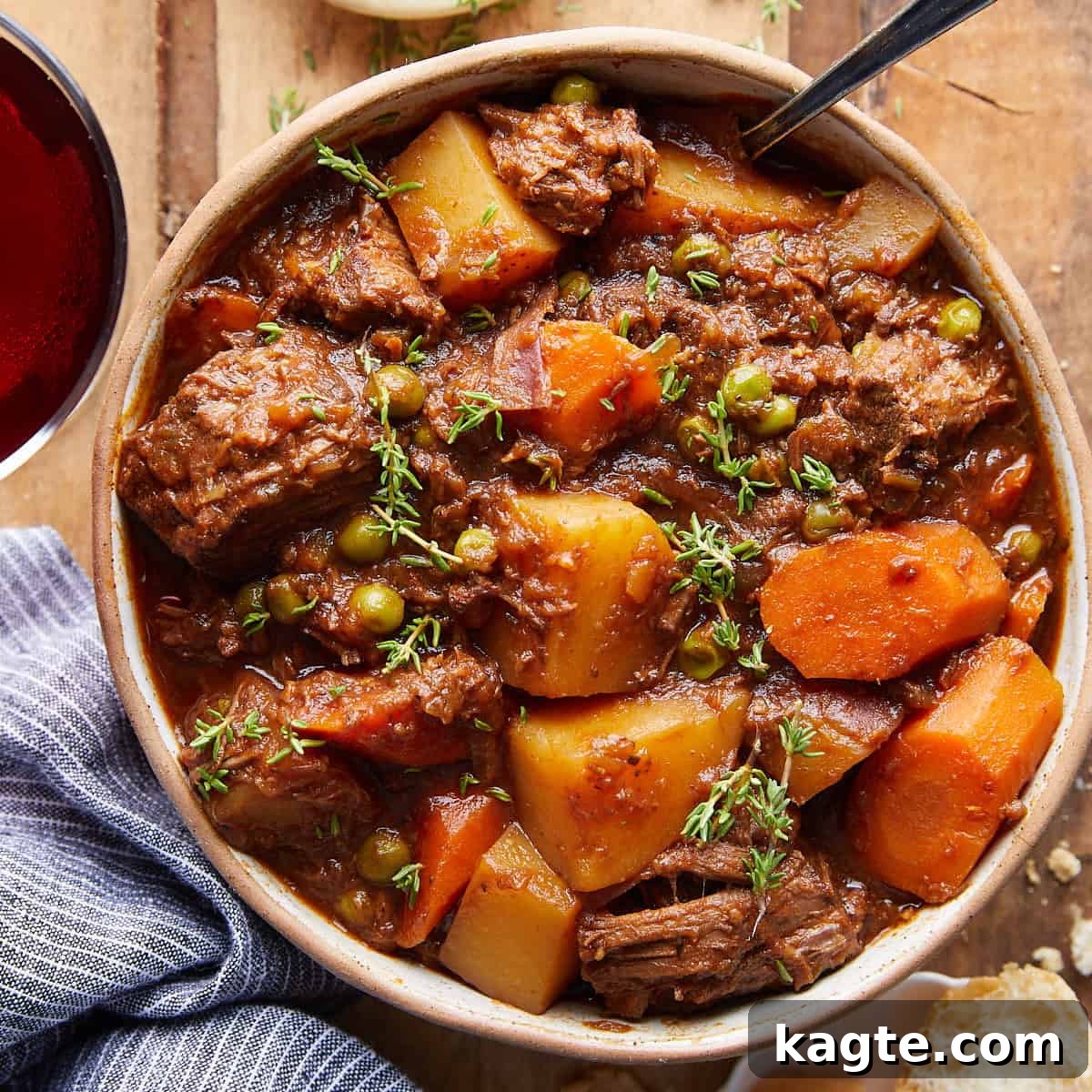
Welcome to the ultimate guide for crafting a truly exceptional Old Fashioned Beef Stew on the Stovetop. This timeless classic embodies comfort in a bowl, featuring succulent, fork-tender beef, an abundance of hearty vegetables, and a rich, deeply flavored broth. Designed to be cooked low and slow, this recipe guarantees a comforting meal perfect for chilly evenings, family gatherings, or nourishing meal prep throughout the week. Serve it with a crusty loaf of bread for dipping, and prepare to savor every spoonful of this traditional, satisfying dish.
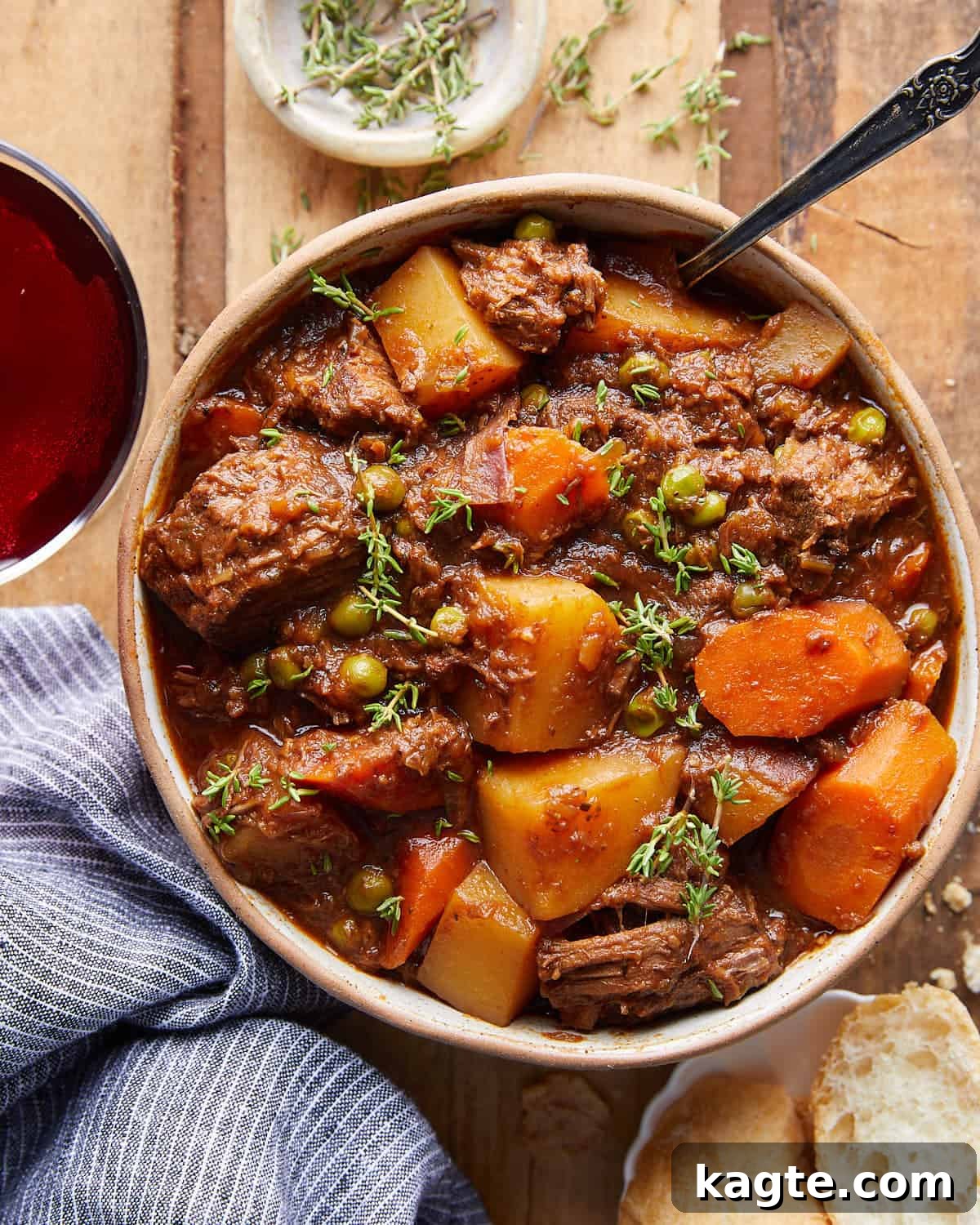
This old-fashioned beef stew recipe, prepared entirely on the stovetop, is the epitome of a hearty, soul-warming dish, ideal for when the weather cools. You’ll embark on a culinary journey, cooking this delightful recipe at a gentle simmer to develop a savory gravy, achieve unbelievably tender meat, ensure creamy potatoes, and perfectly cooked vegetables. As a one-pot meal, it’s not only simple to follow but also a dream for easy cleanup, making it a stress-free addition to your cooking repertoire.
If you find yourself craving more comforting beef dishes, be sure to explore these other delicious recipes: Beef Pot Pie with Puff Pastry or Healthy Beef Stroganoff.
Table of Contents
- Why This Stew Is a Must-Try
- Essential Ingredients & Clever Substitutions
- Mastering Stovetop Beef Stew: Step-by-Step
- Perfect Pairings: Serving Suggestions
- Expert Cooking Tips for the Best Beef Stew
- Customizing Your Stew: Additions & Variations
- Frequently Asked Questions About Beef Stew
- More Comforting Main Dish Recipes
- Old Fashioned Beef Stew on the Stovetop Recipe
Why This Stew Is a Must-Try
There are countless reasons to fall in love with this classic beef stew. It’s not just a meal; it’s an experience, bringing warmth and flavor to your kitchen.
- Adaptable to Your Liking – With or Without Wine: This Old Fashioned Beef Stew recipe offers complete flexibility. Whether you prefer to include dry red wine for its depth and tenderizing properties or opt for a non-alcoholic version, the results are equally delicious. Simply use an equal amount of robust beef stock as a 1:1 replacement for the wine, ensuring a rich and savory broth every time.
- Unforgettable Flavor Profile: The magic of this simple beef stew lies in its meticulously balanced ingredients. The combination of aromatic vegetables, savory seasonings, rich sauces, and fresh garlic cloves melds together beautifully over hours of simmering. Each component contributes to an utterly delicious and complex flavor that truly defines an old-fashioned stew.
- Hearty and Satisfying: Packed with generous chunks of tender beef, creamy potatoes, and sweet carrots, every serving of this stew is designed to be deliciously filling. It’s a complete meal in itself, providing sustained warmth and energy, making it perfect for hungry appetites.
- Ideal for Family Meals: This traditional beef stew recipe is wonderfully versatile and easy to scale. Whether you’re cooking for a small family or feeding a crowd, you can effortlessly double or triple the recipe to accommodate any size gathering. It’s a wholesome and universally loved dish that brings everyone to the table.
- Excellent for Meal Prepping: With a yield of approximately six generous servings, this classic beef stew is a fantastic option for meal preparation. Prepare a batch on the weekend, and enjoy flavorful, ready-to-eat lunches or dinners throughout the busy week. It reheats beautifully, often tasting even better the next day.
Essential Ingredients & Clever Substitutions
Crafting the perfect old-fashioned beef stew starts with selecting the right ingredients. Here’s a closer look at what you’ll need and how to make smart substitutions.
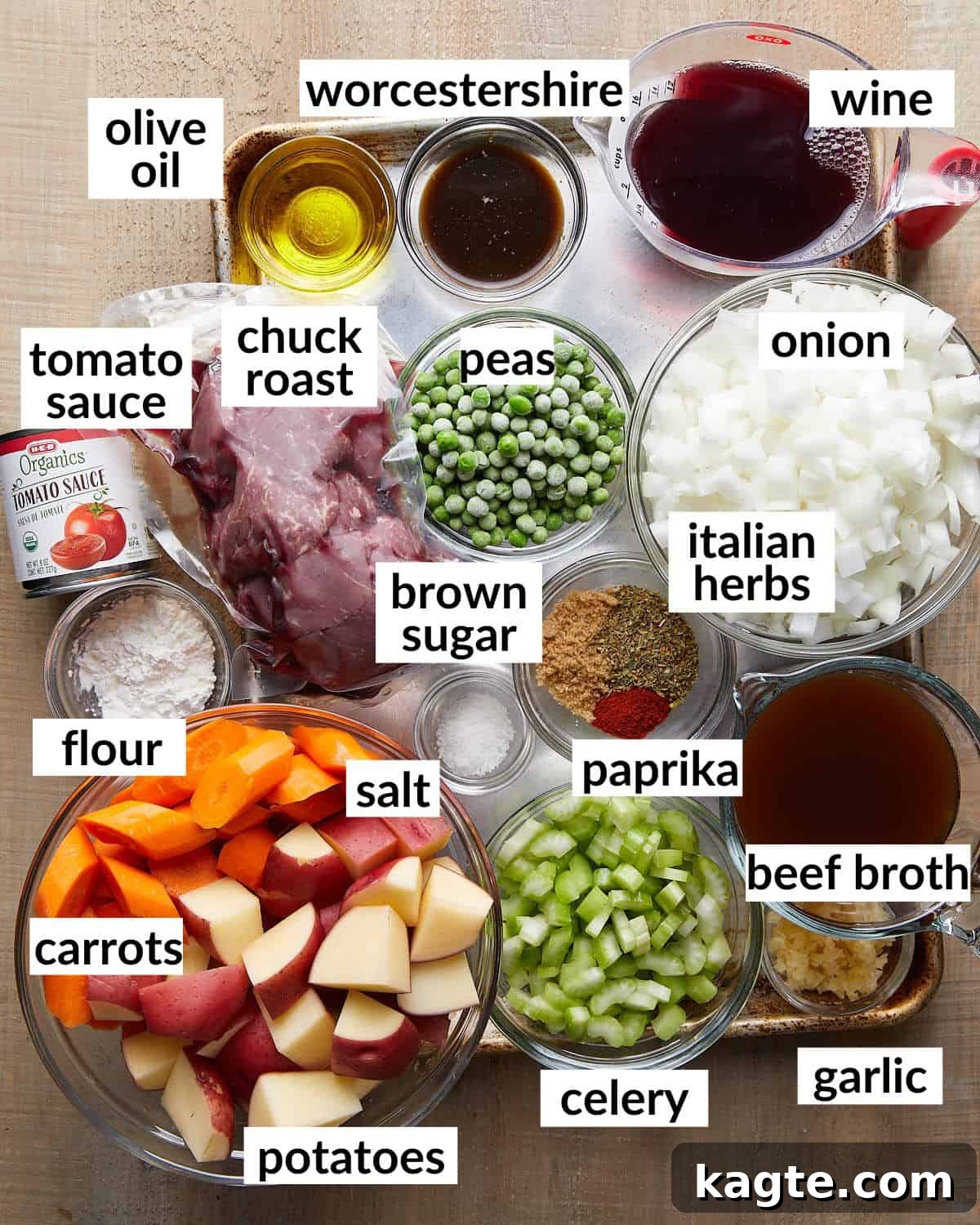
- Stew Meat: For this old-fashioned beef stew recipe, I highly recommend using cubed and trimmed beef chuck roast. Chuck roast is an ideal cut for slow cooking because it contains a good amount of collagen and marbling. As it cooks “low and slow” on the stovetop, the collagen breaks down into gelatin, resulting in incredibly tender, melt-in-your-mouth beef. If chuck roast is unavailable, beef round or brisket can also work, though they might require slightly longer cooking times to achieve the same tenderness.
- Kosher Salt: All my recipes are meticulously tested with Morton kosher salt unless otherwise specified. Its larger flake size and pure flavor make it superior for everyday cooking, allowing for better control over seasoning. If you are using fine table salt, remember to reduce the amount by about half, as it is much denser. I strongly encourage you to pick up some kosher salt on your next grocery trip to experience the difference it makes!
- Dry Red Wine: The secret to achieving truly tender meat and a deeply flavored broth in this stovetop beef stew recipe is dry red wine. The acidity in the wine helps to break down the tough fibers in the beef, contributing to its tender texture. Furthermore, the complex notes of the wine enrich the overall flavor profile of the stew. Excellent choices include Pinot Noir, Cabernet Sauvignon, and Merlot. If you prefer not to use wine, an equal amount of high-quality beef broth or a combination of beef broth and a splash of red wine vinegar will make a suitable non-alcoholic alternative, offering a similar tang and depth.
- Aromatics & Vegetables: Yellow onion and celery form the foundational aromatic base, while plenty of minced garlic provides a pungent warmth. Carrots and red potatoes add sweetness, starch, and essential nutrients. Make sure to cut them into similar-sized chunks (1-1.5 inches for potatoes, 2-inch bias cuts for carrots) for even cooking. Frozen peas, added at the very end, provide a pop of color and freshness without becoming mushy.
- Seasonings: Beyond salt and pepper, Italian seasoning, smoked paprika, and brown sugar contribute to the stew’s robust flavor. Italian seasoning adds a classic herb blend, smoked paprika brings a subtle smoky depth, and a touch of brown sugar balances the acidity from the tomato sauce and wine, adding a hint of sweetness.
- Liquids & Thickener: Beef broth forms the main liquid base, complemented by tomato sauce for richness and body, and water to achieve the right consistency. Worcestershire sauce adds umami depth. All-purpose flour is used to create a rich roux at the beginning, which helps to thicken the stew into a luxurious gravy.
A complete list of ingredients and precise amounts can be found on the recipe card below.
How to Make Old Fashioned Beef Stew on the Stovetop
Quick Overview
Here’s a snapshot of the cooking process for this delicious stovetop beef stew:
- Sear the beef for deep flavor.
- Sauté aromatic vegetables and seasonings.
- Add liquids and return the beef to the pot.
- Simmer gently to tenderize the beef.
- Incorporate potatoes and carrots.
- Continue cooking until vegetables are perfectly tender.
Step by Step Instructions
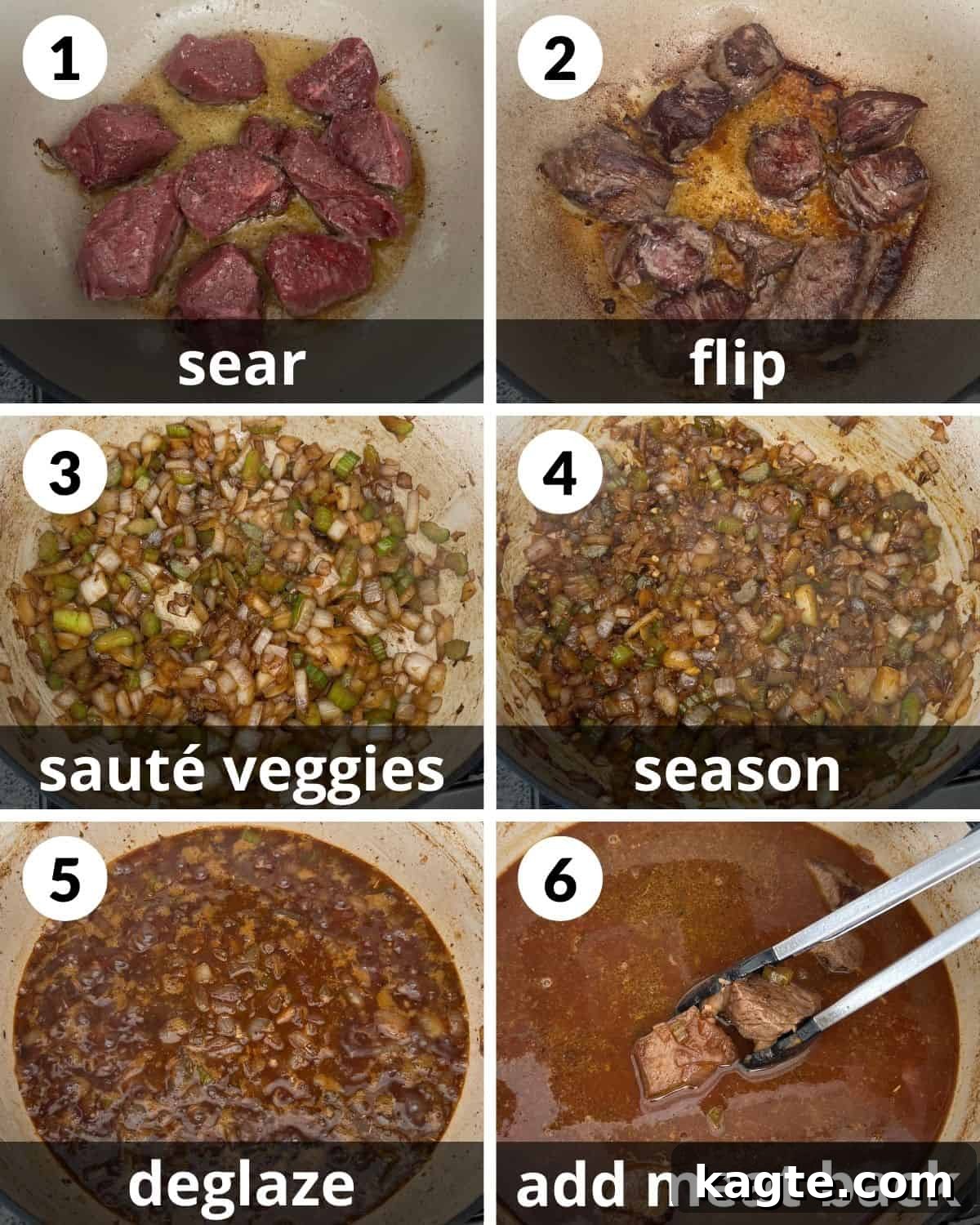
Tip: Always sear the beef in batches. This crucial step prevents overcrowding the pot, allowing the meat to brown beautifully and develop a richer, bolder flavor through the Maillard reaction.
Step 1: Begin by heating the olive oil in a 6-quart Dutch oven or a large, heavy-duty pot over medium-high heat until shimmering. Carefully add about half of your cubed stew meat to the hot oil. Season this batch with roughly half of the kosher salt and a generous grind of fresh black pepper. Allow the beef to sear undisturbed for approximately 5 minutes, forming a deep brown crust on one side.
Step 2: Using tongs, flip the beef chunks and repeat the searing process on all sides until each piece is uniformly browned. This caramelization is key to building complex flavor. Once browned, remove the seared beef from the pan and set it aside in a bowl, reserving any accumulated juices. Repeat this process with the remaining beef stew meat.
Step 3: Reduce the heat to medium-low. Do not drain any of the flavorful grease or wipe out the pot; these browned bits (fond) are essential for depth of flavor. Add the diced yellow onion and chopped celery to the pot. Sauté the vegetables for about 5 minutes, stirring occasionally, until they begin to soften and become translucent.
Step 4: Stir in the minced garlic, brown sugar, Italian seasoning, smoked paprika, and all-purpose flour. Continue to sauté for another 2-3 minutes, stirring constantly, until the mixture is wonderfully fragrant and the flour has cooked out, creating a rich roux that will thicken the stew.
Step 5: Increase the heat slightly and deglaze the pot with the dry red wine. Use a wooden spoon or spatula to vigorously scrape any flavorful brown bits (fond) off the bottom of the pot. Bring the wine to a gentle boil and allow it to reduce for 3-4 minutes, concentrating its flavor and letting some of the alcohol evaporate.
Step 6: Pour in the beef broth, tomato sauce, and an equal can of water (from the tomato sauce can is fine). Stir well to combine all the liquids and seasonings. Carefully return all the seared beef, along with any accumulated juices from the bowl, back into the pot.
Tip: For the best texture, always add delicate vegetables like peas in the final stages of cooking to ensure they remain vibrant and avoid becoming overly mushy.
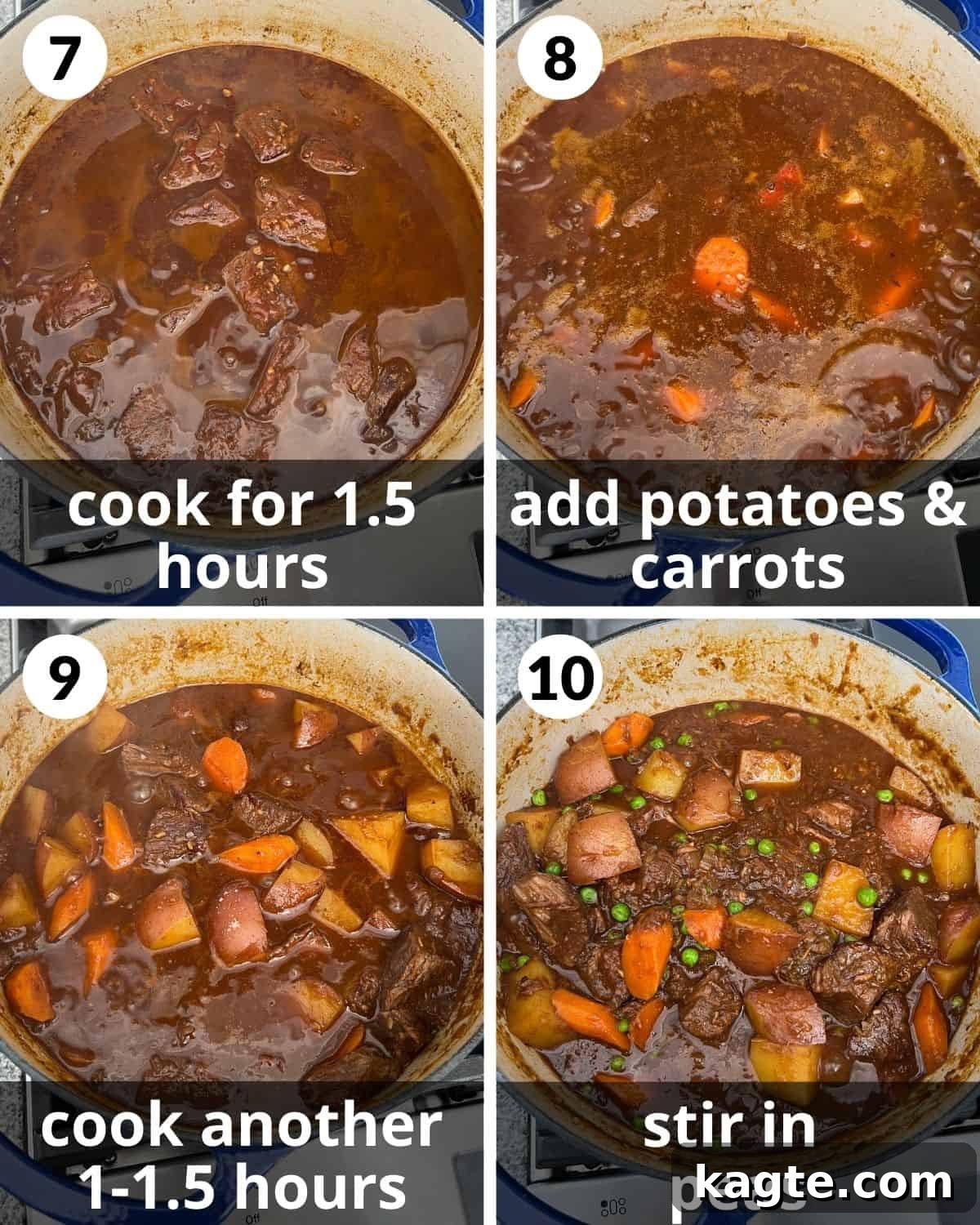
Step 7: Bring the stew to a boil over medium-high heat. Once boiling, reduce the heat to medium-low (or low, depending on your stovetop’s capabilities) and cover the pot securely. Allow the stew to simmer gently for 1.5 hours, allowing the beef to begin tenderizing and the flavors to deepen.
Step 8: After the initial simmering period, carefully uncover the pot and add the prepared carrots and potatoes. Stir them into the stew, ensuring they are mostly submerged in the liquid. Re-cover the pot.
Step 9: Continue to cook the stew, covered, for another 1 to 1.5 hours, or until both the carrots and potatoes are cooked through to your desired tenderness. The beef should be incredibly tender by this point, easily yielding to a fork.
Step 10: Finally, stir in the frozen peas (if using) and continue to cook for approximately 5 minutes, or until the peas are heated through and vibrant green. Taste and adjust seasoning with additional salt and pepper if needed. Serve hot and enjoy your homemade old-fashioned beef stew!
Recipe Serving Suggestions
This old-fashioned beef stew, prepared on the stovetop, is a wonderfully hearty and comforting dish that pairs beautifully with a variety of sides.
Before serving, consider garnishing your individual bowls of beef stew with fresh chopped parsley for a touch of color and fresh herb flavor, or add a dollop of creamy sour cream for an extra layer of richness.
Since this easy version of old-fashioned beef stew is incredibly filling on its own, I often like to serve it alongside cozy, carbohydrate-rich sides that are perfect for soaking up the delicious gravy. Here are a few ideas to complete your meal:
- Creamy Yukon Gold Mashed Potatoes: The velvety texture of mashed potatoes is a classic complement to hearty stew.
- Air Fryer Scalloped Potatoes: For a cheesy, comforting alternative to mashed potatoes.
- Easy Rustic Bread: Perfect for dipping into the rich broth and ensuring no drop of flavor goes to waste.
- Crispy Texas Toast Garlic Bread: The garlic and butter notes will enhance the stew’s savory profile.
- A simple green salad with a light vinaigrette can also offer a refreshing contrast to the richness of the stew.
Expert Cooking Tips for the Best Beef Stew
To elevate your old-fashioned beef stew from good to unforgettable, keep these expert tips in mind:
- Master the Beef Sear: Searing the beef is arguably the most critical step in creating a truly flavorful old-fashioned beef stew. This process isn’t just about browning; it’s about initiating the Maillard reaction, which creates hundreds of new flavor compounds. Ensure your pan is hot enough and avoid overcrowding the pot, searing in small batches if necessary. A rich, dark crust on the beef chunks will translate into a deeper, more complex taste throughout the entire stew. Don’t rush this step – it lays the foundation for all subsequent flavors.
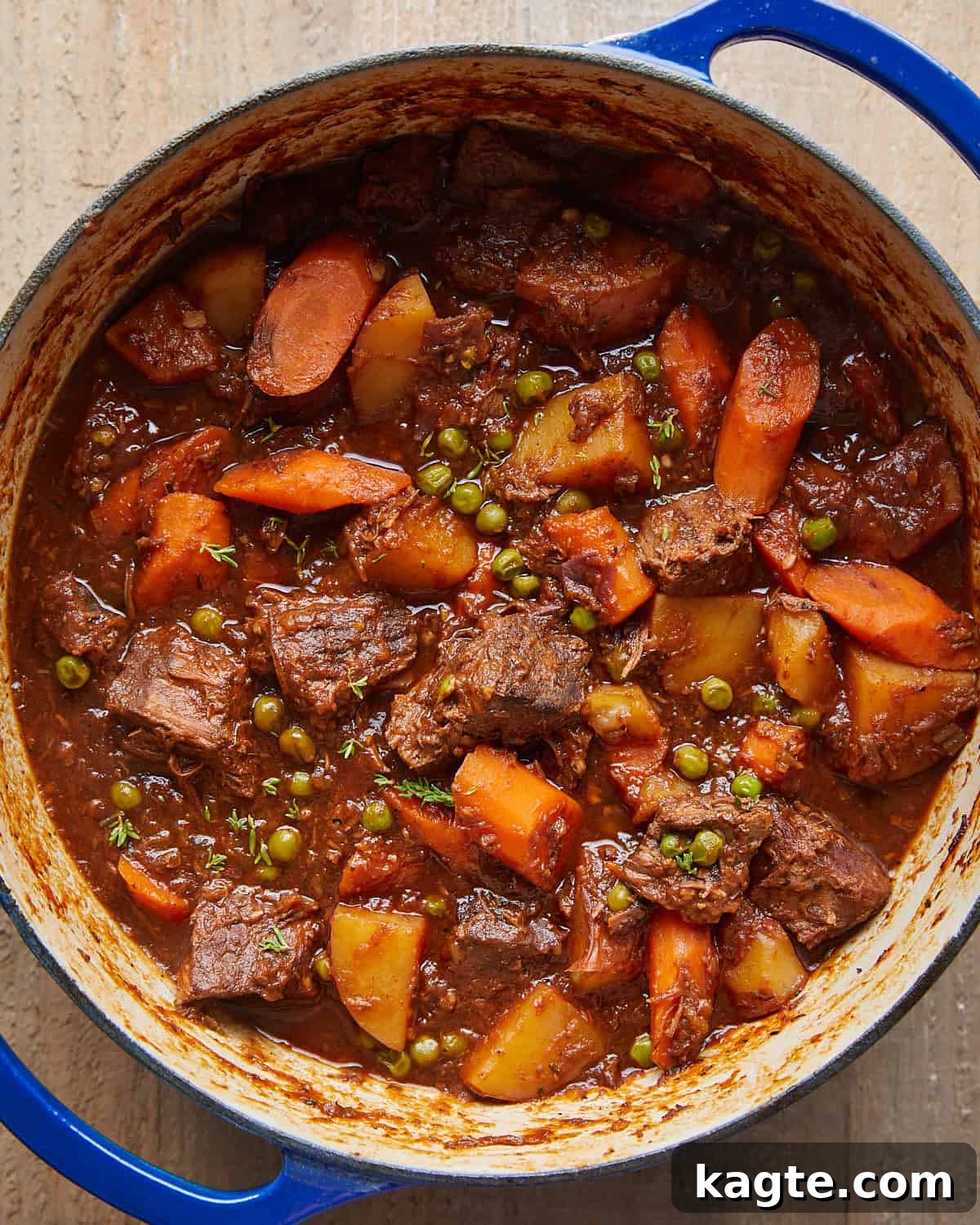
- Strategic Vegetable Timing: Timing is paramount when it comes to adding your potatoes and carrots. If added too early, they will become overly soft and mushy, disintegrating into the broth rather than holding their shape. By introducing them about halfway through the total cooking time, you ensure they cook to perfect tenderness while retaining their texture and integrity within the stew.
- Embrace the Slow Cook Time: Do not be tempted to rush this beef stew recipe. The “low and slow” cooking method is fundamental to achieving that signature juicy, tender, melt-in-your-mouth beef. Tough cuts like chuck roast require ample time for their connective tissues to break down and transform into succulent gelatin. A long, gentle simmer allows the flavors to meld beautifully and the meat to become unbelievably tender. Patience truly is a virtue for this old-fashioned stovetop beef stew.
- Perfect Potato and Carrot Prep: Cut your potatoes and carrots into roughly uniform, bite-sized pieces. This ensures that they cook evenly and are tender at the same time. Aim for 1 to 1.5-inch cubes for potatoes and 2-inch pieces (cut on a bias for aesthetic appeal) for carrots.
- Deglaze Thoroughly: After searing your beef and sautéing your aromatics, the bottom of your pot will have a layer of flavorful browned bits (fond). When you add the wine (or broth alternative), be sure to scrape up every last bit of this fond. This is where a huge amount of flavor resides, and incorporating it into your liquid base will add incredible depth to your stew.
- Season as You Go: While you’ll season the beef initially, taste the stew periodically during the simmering process, especially after the vegetables have been added. Salt levels can change as liquids reduce. Adjust with additional salt and pepper as needed to achieve your preferred flavor balance.
- Freeze for Future Comfort: This homemade beef stew recipe freezes exceptionally well, making it ideal for meal prepping or simply saving leftovers. Allow the stew to cool completely to room temperature before portioning it into airtight, freezer-safe containers or heavy-duty freezer bags. It will maintain its quality in the freezer for up to three months. To reheat, thaw overnight in the refrigerator and gently warm on the stovetop or in the microwave, adding a splash of broth or water if needed to adjust consistency.
Additions & Variations
This old-fashioned beef stew is incredibly versatile, allowing for easy customization to suit your preferences or what you have on hand.
- Cooking Without Wine: If you prefer to avoid alcohol or simply don’t have dry red wine on hand, you can confidently use beef stock as a 1:1 replacement in this old-fashioned beef stew recipe. While the flavor profile will be slightly different—perhaps less acidic and with a more straightforward beef taste—it will still yield a wonderfully delicious and comforting dish. For a touch of acidity to mimic the wine, you could add a tablespoon of red wine vinegar along with the beef stock.
- Incorporating More Vegetables: This recipe is perfect for increasing your vegetable intake. Feel free to include additional root vegetables that hold up well to longer cook times, such as rutabaga, parsnips, or turnips. You could also add sliced mushrooms when sautéing the onions for an earthy flavor, or a handful of fresh green beans or corn during the last 15-20 minutes of cooking. Just remember to add more delicate vegetables later in the cooking process to prevent them from becoming mushy.
- Herb & Spice Enhancements: Elevate the herb profile by adding a few sprigs of fresh thyme or a bay leaf during the simmering stage, removing them before serving. For a spicier kick, a pinch of cayenne pepper or a dash of hot sauce can be stirred in at the end. Different types of paprika (sweet, hot, or Hungarian) can also offer subtle variations in flavor.
- Adding Dumplings: For an even more substantial meal, consider dropping spoonfuls of your favorite dumpling dough directly into the simmering stew during the last 20-30 minutes of cooking. Cover the pot and allow them to steam until light and fluffy.
Frequently Asked Questions About Beef Stew
Here are some common questions and helpful answers regarding this delightful old-fashioned beef stew.
The ideal cooking time for stew meat to become wonderfully tender largely depends on the cut of beef used and the size of the pieces. Generally, for tough cuts like chuck roast, you’ll need to cook it on a low, gentle simmer for at least 2 to 3 hours on the stovetop. This slow cooking allows the connective tissues to break down, resulting in that desirable melt-in-your-mouth texture. Always cook until the meat can be easily shredded with a fork.
While it’s not strictly necessary to brown meat before making a stew like this Old Fashioned Beef Stew (Stove Top), it is highly recommended and makes a significant difference in flavor. Browning the meat through searing creates a rich, caramelized crust via the Maillard reaction. This process develops deep, savory notes that infuse into the stew, adding immense depth and complexity that you wouldn’t get if you skipped this crucial step. For the best results, always take the time to brown your meat thoroughly.
Both stovetop and oven methods can produce a delicious beef stew, and neither is inherently “better” – it often comes down to personal preference and convenience. The stovetop method, as detailed in this recipe, offers excellent control over the simmer and allows for easy deglazing. Oven-baked stews offer a very even, gentle heat, reducing the need for stirring. What’s most important for both methods is ensuring you cook it at a low temperature for a sufficient number of hours to tenderize the beef. Beef stew is also fantastic when prepared in a slow cooker for hands-off cooking.
For this old-fashioned beef stew recipe on the stovetop, you should expect a total cook time of approximately 2.5 to 3 hours of simmering. This includes an initial 1.5 hours for the beef to tenderize, followed by another 1 to 1.5 hours after adding the vegetables to ensure they cook through to your liking. The long, slow simmer is key to achieving fall-apart tender beef and a deeply flavored broth.
If your beef stew turns out thinner than desired, you have a few options. You can simply continue to simmer it uncovered for a bit longer, allowing some of the liquid to evaporate and the stew to naturally reduce and thicken. Alternatively, mix a tablespoon of cornstarch with an equal amount of cold water to create a slurry. Stir this into the simmering stew and cook for a few more minutes until it thickens. For a richer thickening, mash some of the cooked potatoes from the stew against the side of the pot.
A heavy-bottomed pot like a Dutch oven is ideal for making stovetop beef stew. Its even heat distribution prevents scorching and allows for consistent simmering. Cast iron or enameled cast iron Dutch ovens are excellent choices because they retain heat exceptionally well, which is crucial for the “low and slow” cooking method required for tender beef. A large, deep stockpot with a thick bottom will also work effectively.
More Comforting Main Dish Recipes
Discover More Hearty Meals
Chicken
Garlic Butter Chicken Thighs (Baked & Crispy)
Pasta
Baked Stuffed Shells with Meat Sauce
Fall
Hearty Dutch Oven Pot Roast
Soup & Chili
Flavorful Ground Chicken Chili with Beans
Shop my Amazon Storefront for kitchen essentials!
If you try this recipe, please leave a star rating in the recipe card below and/or a comment! I always appreciate your feedback. Follow me on Pinterest, Facebook & Instagram.
Old Fashioned Beef Stew on the Stovetop
5 from 37 votes
This mouthwatering Old Fashioned Beef Stew Recipe (Stove Top) is made low and slow, creating the most tender bits of beef. This beef stew is packed with veggies and a comforting broth, which is perfect for chilly weather days. Serve it with crusty bread for a truly cozy meal.
20 minutes
3 hours
3 hours 20 minutes
6
Equipment
-
6 Quart Dutch Oven
-
Stirring Spoon
Ingredients
- 2 1/2 Tablespoons olive oil
- 2 pounds beef stew meat (cubed and trimmed beef chuck roast recommended)*
- 1 1/2 teaspoons Morton kosher salt*
- fresh cracked black pepper (to taste)
- 1 large yellow onion, diced
- 3 ribs celery, chopped
- 10 cloves garlic, minced
- 1 Tablespoon brown sugar
- 1 Tablespoon Italian seasoning
- 1 teaspoon smoked paprika
- 1/4 cup all purpose flour
- 1 1/2 cups dry red wine (Pinot Noir, Cabernet Sauvignon, or Merlot recommended, or use more beef broth)*
- 2 1/2 cups beef broth or stock
- 1 (9 ounce) can tomato sauce, plus 1 can water
- 2 Tablespoons Worcestershire sauce
- 1 1/2 pounds red potatoes, cut into 1-1.5 inch cubes
- 4 carrots, peeled & cut on a bias into 2 inch pieces
- 1 cup frozen peas, optional
Instructions
- Heat the olive oil in a 6-quart Dutch oven or a large heavy-duty pot over medium-high heat. Add about half of the stew meat. Season with about half of the salt and some pepper. Allow it to sear undisturbed for about 5 minutes until a deep brown crust forms.
- Flip the beef and repeat the searing process on all sides until uniformly browned. Remove from the pan and set aside, reserving any juices. Repeat with the remaining beef.
- Reduce the heat to medium-low. Do not drain any grease or wipe out the pot. Add the diced onion and chopped celery. Sauté for about 5 minutes, stirring occasionally, until softened.
- Add the minced garlic, brown sugar, Italian seasoning, smoked paprika, and all-purpose flour. Sauté for 2-3 minutes, stirring constantly, until fragrant and the flour is cooked out.
- Deglaze the pot with the dry red wine, scraping any browned bits (fond) off the bottom with a wooden spoon. Bring the wine to a boil and reduce for 3-4 minutes.
- Pour in the beef broth, tomato sauce, water, and Worcestershire sauce. Return all of the seared beef and any juices back to the pot.
- Bring the stew to a boil, then cover the pot and reduce the heat to medium-low (or low, depending on your stove). Cook covered for 1.5 hours.
- Add the cubed carrots and potatoes to the pot. Stir to combine and re-cover.
- Cook covered for another 1-1.5 hours, or until the vegetables are cooked to your liking and the beef is fork-tender.
- Stir in the frozen peas (if using) and cook for about 5 minutes, or until they are heated through and vibrant. Taste and adjust seasoning as needed. Serve hot.
Did you make this recipe?
Leave a comment below and a star rating in the recipe card!
Notes
- Stew Meat: I recommend using cubed and trimmed beef chuck roast for this old-fashioned beef stew recipe stove-top dish. This cut of beef tenderizes and melts as it cooks, providing incredibly tender beef.
- Kosher Salt: All recipes are tested with Morton kosher salt. It is the best salt for everyday cooking due to its size and flavor. If using table salt, reduce the amount by half.
- Dry Red Wine: Dry red wine enhances meat tenderness and adds flavor. Pinot noir, cabernet sauvignon, and merlot are great options. For a non-alcoholic alternative, use beef stock.
- Searing the Beef: Searing is a major step that helps create deep flavor for this old-fashioned beef stew. It caramelizes the beef chunks, creating a rich, complex taste. Do not overcrowd the pot; sear in batches.
- Adding Potatoes and Carrots: Timing is everything for stew. Ensure you add the potatoes and carrots about halfway through the cook time so they do not get mushy.
- Cook for the Full Time: Do not rush this beef stew recipe. The long, slow cook time is essential for juicy, tender meat.
- Freezing Leftovers: This homemade beef stew freezes well. Allow it to cool, then pack into airtight containers. It will keep in the freezer for up to three months. Thaw and reheat gently.
Nutrition
Calories: 481kcal
|
Carbohydrates: 37g
|
Protein: 41g
|
Fat: 14g
|
Saturated Fat: 4g
|
Polyunsaturated Fat: 1g
|
Monounsaturated Fat: 8g
|
Cholesterol: 94mg
|
Sodium: 1215mg
|
Fiber: 6g
|
Sugar: 10g
Nutrition information is automatically calculated, so should only be used as an approximation.