
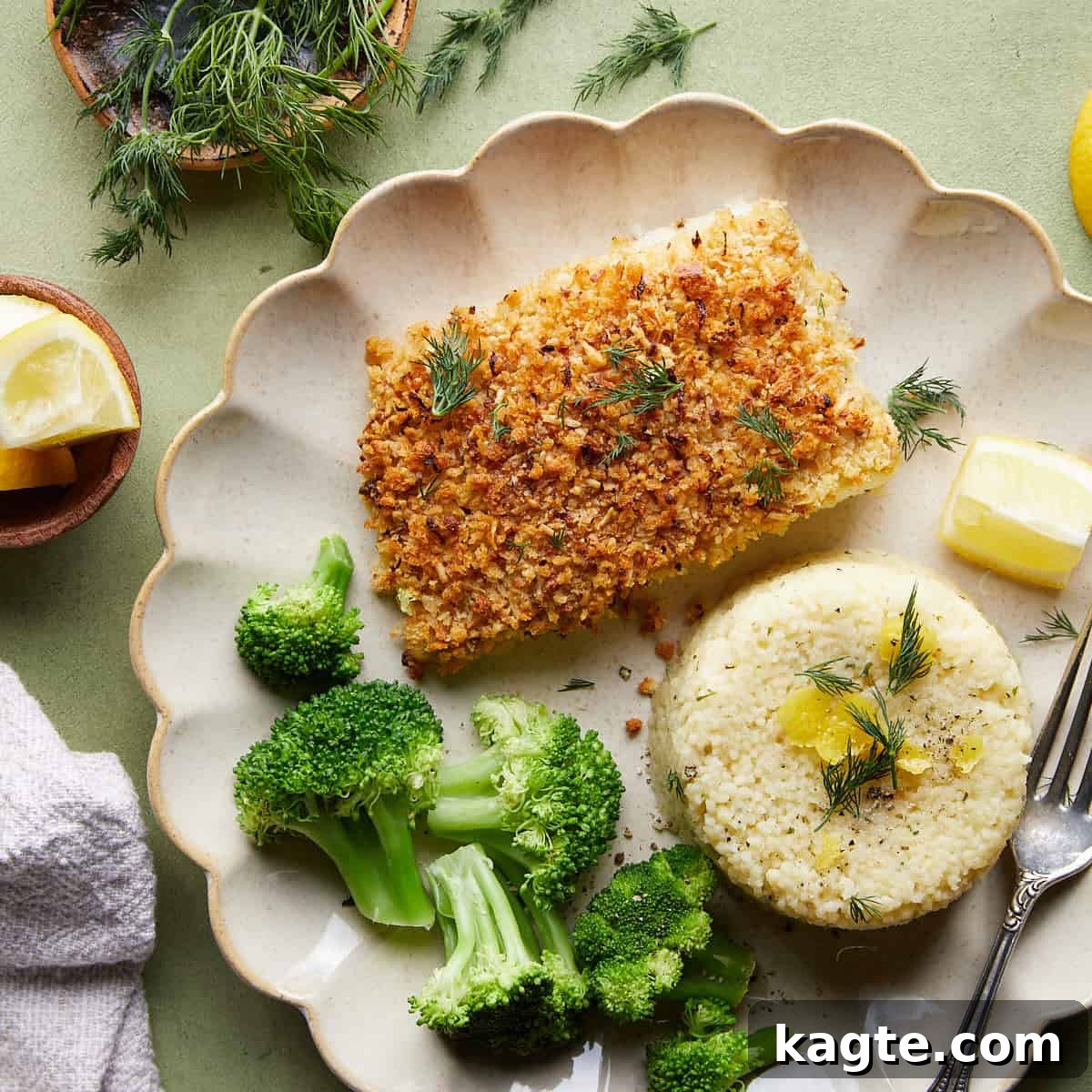
Baked Halibut with Lemon Parmesan Panko: A Quick & Flavorful Seafood Delight
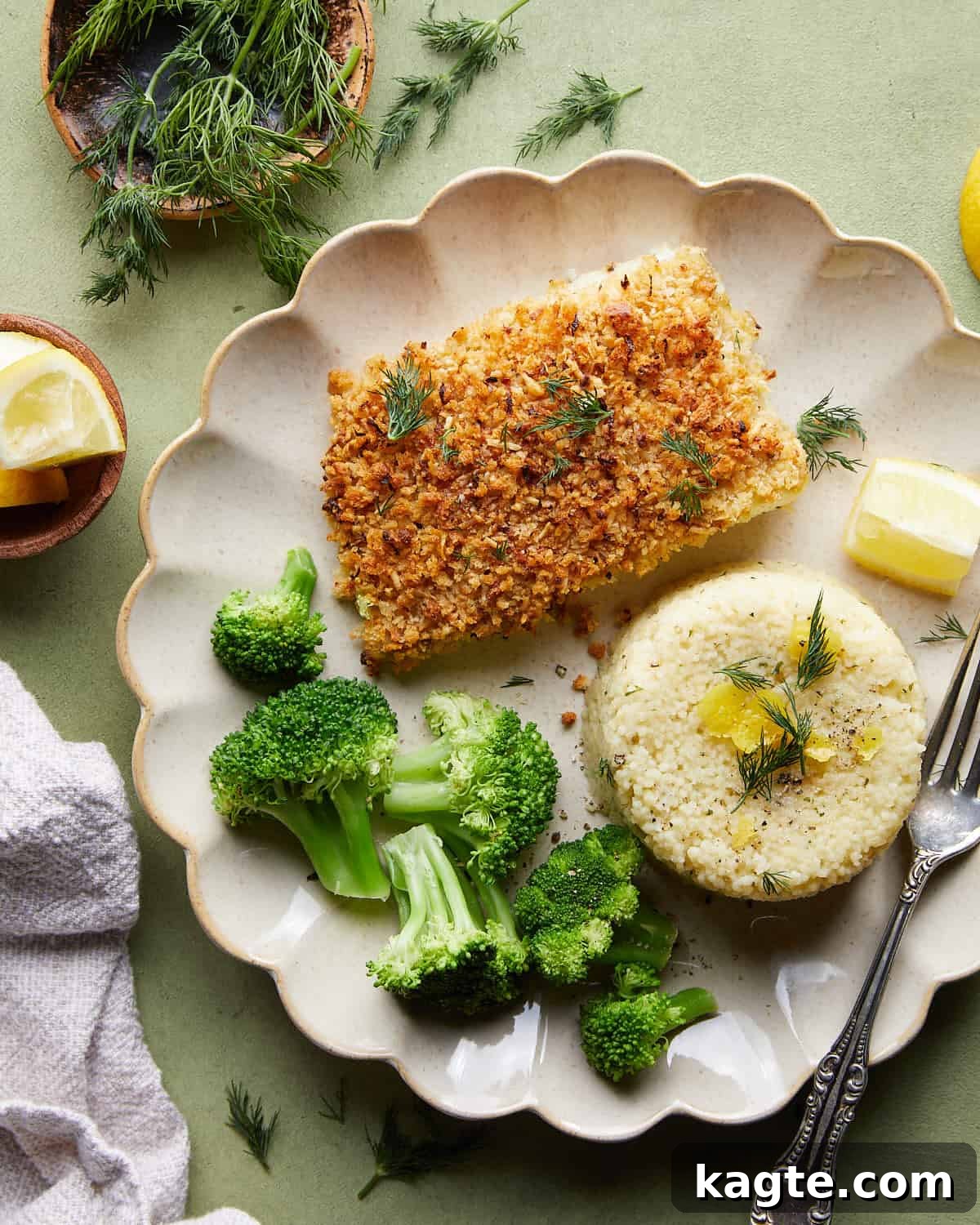
This exquisite Baked Halibut recipe features a perfectly crispy panko crust, complemented by a vibrant blend of tangy citrus, savory cheese, and aromatic seasonings. Crafted in less than 30 minutes, this dish is an ideal solution for a quick yet elegant weeknight dinner or a sophisticated addition to any gathering. Pair it with your favorite roasted vegetables and creamy mashed potatoes for a truly satisfying and balanced meal.
Effortlessly delicious, this baked halibut comes together in approximately 20 minutes, including all prep time, making it a standout choice for those busy evenings. Despite relying primarily on readily available pantry staples, the outcome is a remarkably flavorful, flaky fish, cooked to absolute perfection. It’s a testament to how simple ingredients can yield extraordinary results.
If this delightful baked halibut ignites your passion for seafood, explore other fantastic fish-centric dishes this week: Pan Seared Chilean Sea Bass for a luxurious experience or Fish Tacos with Mango Salsa for a refreshing, vibrant twist.
Why You’ll Adore This Baked Halibut with Lemon Parmesan Panko
This baked halibut recipe isn’t just another dish; it’s a culinary revelation designed to impress with minimal effort. Here’s why it’s destined to become a staple in your kitchen:
- Unbelievably Quick: From start to finish, this recipe requires only about 20 minutes, including your prep time. Imagine a gourmet-quality meal on your table faster than ordering takeout – perfect for those demanding weeknights when time is a precious commodity.
- Effortlessly Easy: Whether you’re a seasoned chef or a kitchen novice, this easy baked halibut recipe is incredibly straightforward. With just a few simple steps and common ingredients, you can achieve professional-level results without any stress or complicated techniques. It’s truly a recipe for all skill levels.
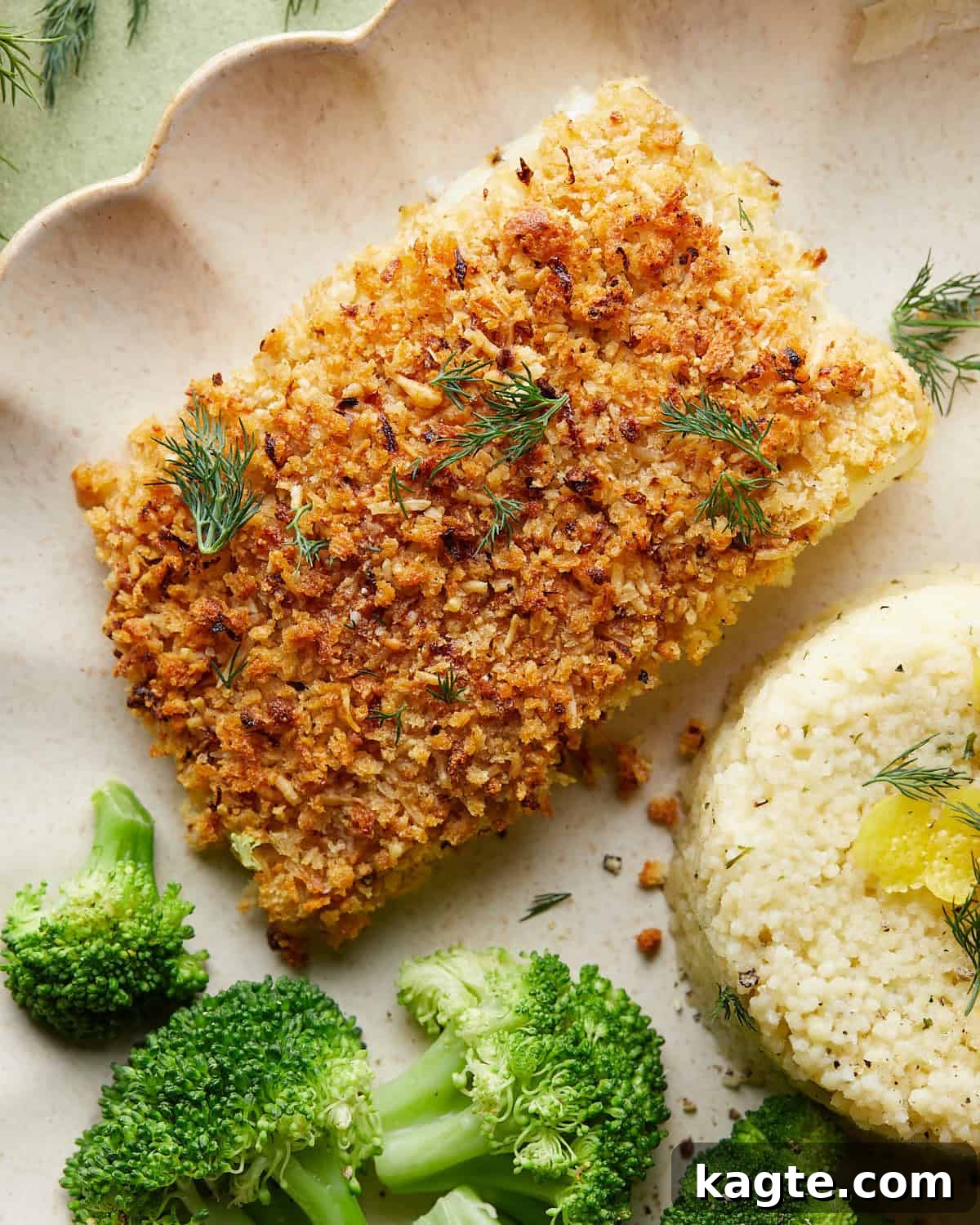
- Bursting with Flavor: Prepare for a symphony of tastes! The rich tang of Dijon mustard, the nutty sharpness of Parmesan cheese, the pungent kick of garlic, and the bright zest of fresh lemon all meld beautifully with the delicate fish. Encased in a crispy panko breadcrumb crust, every bite offers a delightful texture and an explosion of delicious flavor that will tantalize your taste buds.
- Wholesomely Healthy: Halibut is a powerhouse of nutrition. As an excellent source of lean protein, it provides essential amino acids vital for muscle repair and growth. It’s also rich in beneficial omega-3 fatty acids, known for their heart-healthy properties and ability to reduce inflammation. Furthermore, halibut contains essential nutrients like selenium, magnesium, and B vitamins, making this recipe a fantastic choice for a nutrient-dense and health-conscious meal.
- Perfect for Any Occasion, Especially Summer: While this dish is wonderful year-round, its light and refreshing profile makes it particularly ideal for summer gatherings. Halibut is a leaner fish, so this recipe feels light and satisfying even in warmer weather, ensuring your guests feel delighted, not heavy. It’s elegant enough for entertaining but simple enough for a casual family dinner.
Understanding Halibut: The Star of Our Dish
Halibut is a highly prized white fish, known for its firm texture, delicate flavor, and impressive nutritional profile. It’s a versatile fish that holds up well to various cooking methods, and baking is one of the best ways to highlight its natural attributes.
Choosing the Best Halibut
When selecting halibut, look for fillets that are bright white and translucent, with no signs of discoloration or strong fishy odor. Fresh halibut should feel firm to the touch. If purchasing frozen, ensure the packaging is intact and there are no signs of freezer burn. Opt for wild-caught halibut whenever possible for superior flavor and sustainability.
Nutritional Powerhouse
Beyond its delicious taste, halibut offers significant health benefits:
- High-Quality Protein: Essential for building and repairing tissues, and for feeling full and satisfied.
- Omega-3 Fatty Acids: Crucial for brain health, reducing inflammation, and supporting cardiovascular well-being.
- Vitamins and Minerals: A good source of B vitamins (especially B12 and Niacin), phosphorus, and selenium, which play vital roles in energy metabolism and antioxidant defense.
Incorporating halibut into your diet is a fantastic way to enjoy a lean, healthy, and incredibly flavorful protein source.
Essential Ingredients & Smart Substitutions for Perfect Halibut
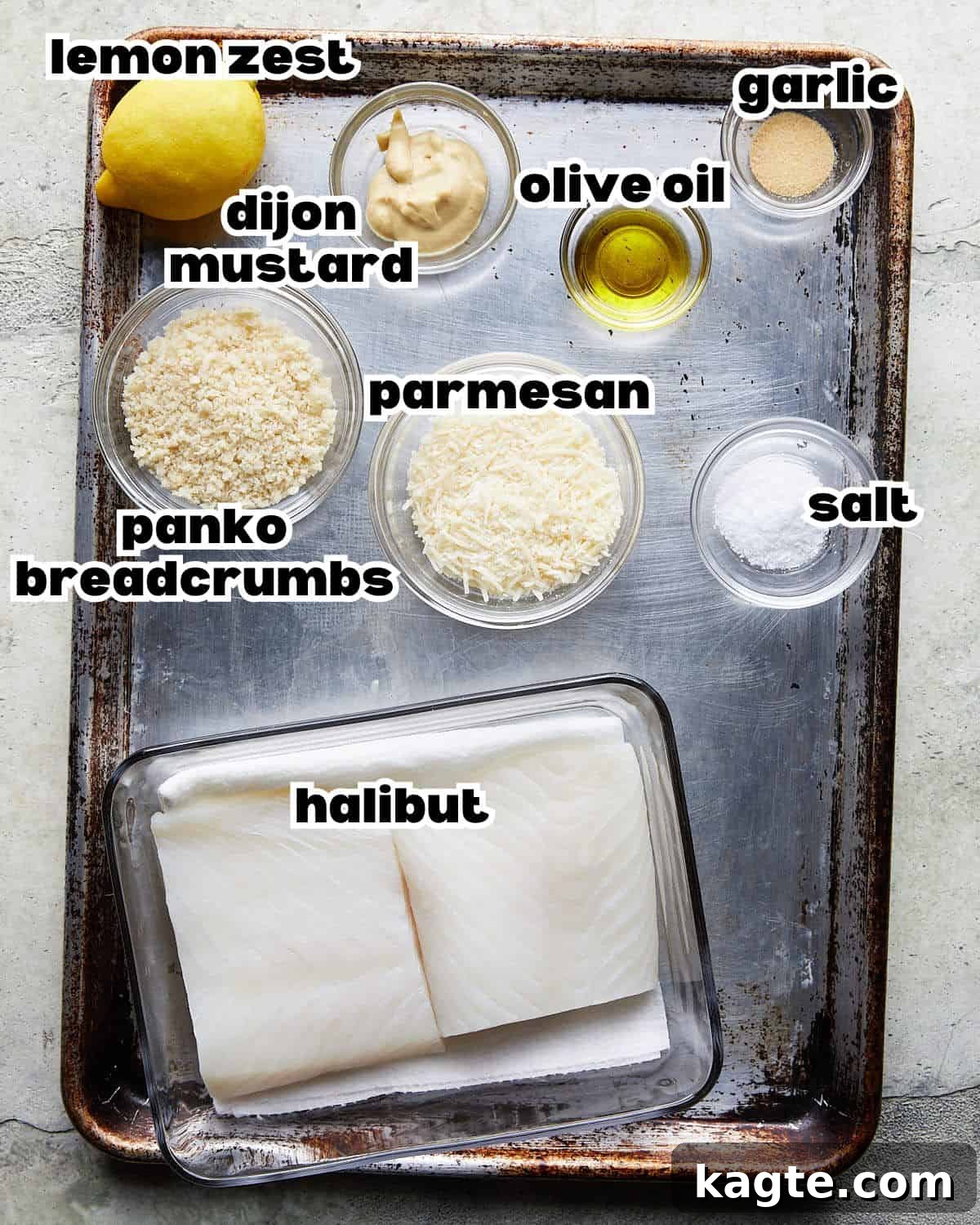
The beauty of this recipe lies in its simplicity and the powerful flavor each ingredient brings to the table. Here’s a closer look at what you’ll need and potential substitutions:
- Halibut Fillets: The star of the show! Aim for two 6-ounce fillets, thawed if frozen. Its firm, flaky texture is perfect for baking.
- Panko Breadcrumbs: These Japanese-style breadcrumbs are key to achieving that incredibly crispy, light crust. Their irregular shape allows for better air circulation and less oil absorption compared to traditional breadcrumbs.
- Shredded Parmesan Cheese: Adds a savory, umami-rich depth and helps create a golden-brown, cheesy crust. Freshly grated Parmesan will always offer the best flavor.
- Fresh Lemon Zest: Don’t underestimate the power of lemon zest! It provides a bright, aromatic citrus note that cuts through the richness and truly elevates the flavor profile without adding excess moisture.
- Granulated Garlic: A convenient way to infuse garlic flavor evenly throughout the panko crust.
- Morton Kosher Salt: All my recipes are meticulously tested with Morton kosher salt unless explicitly stated otherwise. Its coarser texture and purer flavor make it superior for everyday cooking. If you’re using table salt, reduce the amount by about half, as it’s finer and denser. I highly recommend investing in kosher salt for your pantry.
- Freshly Ground Black Pepper: For a subtle warmth and aroma that complements the other seasonings.
- Dijon Mustard: This acts as a fantastic binder for the panko crust, ensuring it adheres beautifully to the fish. Beyond its functional role, it contributes a tangy, slightly spicy, and sophisticated flavor that pairs exceptionally well with halibut and lemon.
- Olive Oil: A touch of extra virgin olive oil in the mustard mixture helps tenderize the fish, adds moisture, and contributes to the golden crispness of the topping.
For a complete list of ingredients and precise measurements, please refer to the recipe card below.
How to Master Baked Halibut with Lemon Parmesan Panko
Quick Overview: Your Path to Perfect Fish
Mastering this delicious halibut dish is incredibly straightforward. Here’s a quick glimpse at the simple steps involved:
- Prepare the vibrant, crispy topping.
- Season the delicate halibut fillets.
- Apply the flavorful crust generously.
- Bake to golden perfection.
Step-by-Step Instructions: Achieve Culinary Excellence
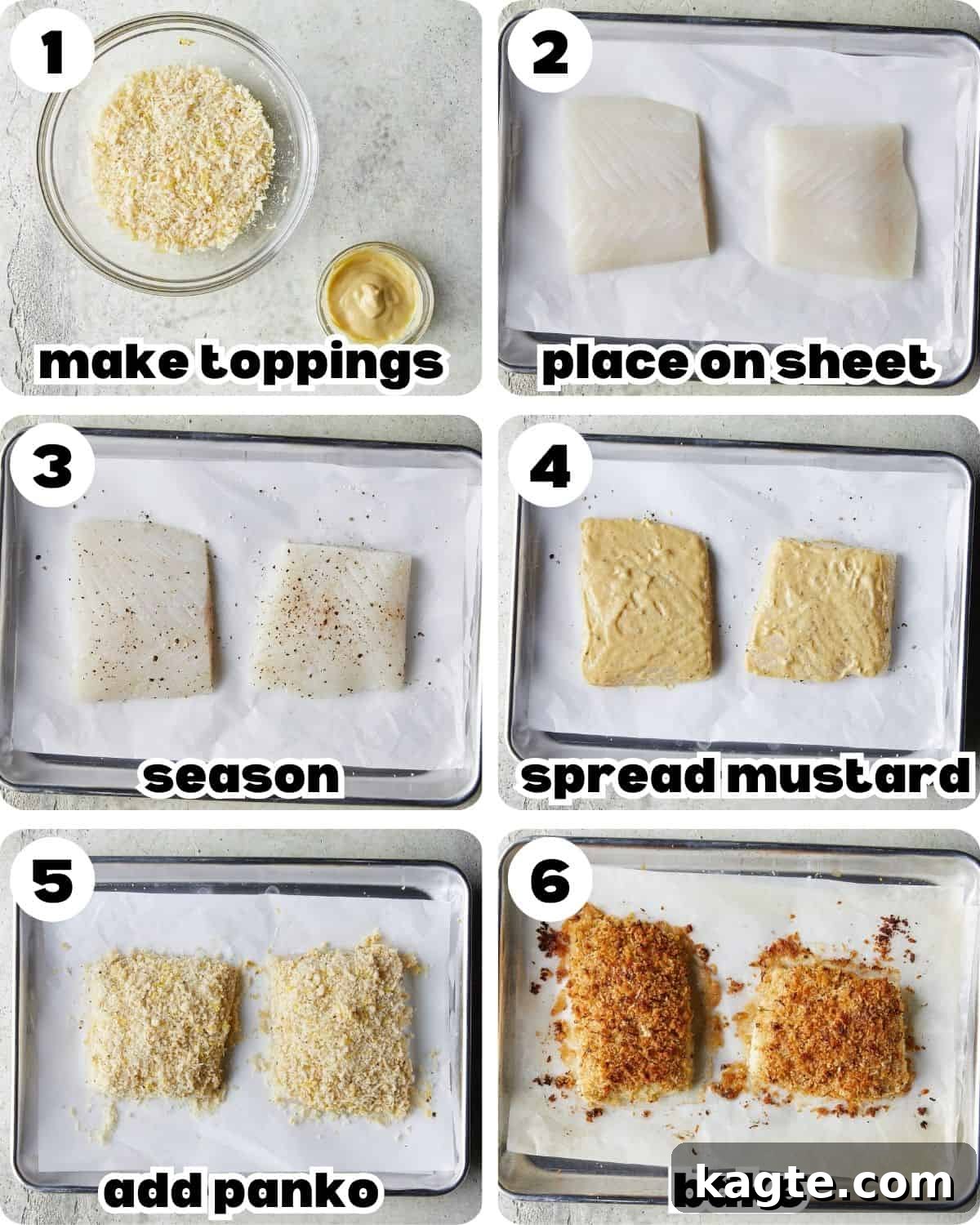
Chef’s Tip: Always pat your fish fillets thoroughly dry before seasoning. This crucial step ensures that your delicious panko crust adheres perfectly and crisps up beautifully, preventing any sogginess.
Chef’s Tip: For precise cooking and to avoid overcooking, use an internal thermometer to verify the baked halibut’s doneness. This guarantees a perfectly flaky and moist result every time.
- Prepare Your Oven and Topping: Preheat your oven to a precise 400°F (200°C). In a medium-sized bowl, combine the panko breadcrumbs, shredded Parmesan cheese, fresh lemon zest, granulated garlic, half of the kosher salt, and a generous grind of black pepper. Mix these ingredients thoroughly to create your vibrant panko topping. In a separate, smaller bowl, whisk together the Dijon mustard and olive oil until well combined. Set both mixtures aside.
- Prepare the Halibut for Baking: Line a baking sheet with parchment paper. This prevents sticking and makes for easy cleanup. Carefully place the halibut fillets on the prepared baking sheet, ensuring there’s ample space between them. Using paper towels, gently but thoroughly pat each side of the halibut fillets dry. This step is critical for a crispy crust.
- Season the Fillets: Generously season both sides of the dried halibut fillets with the remaining kosher salt and freshly ground black pepper. This foundational seasoning enhances the fish’s natural flavors.
- Apply the Mustard Base: Using the back of a spoon or a pastry brush, evenly spread the Dijon mustard and olive oil mixture over the top and down the sides of each halibut fillet. This sticky layer acts as the perfect adhesive for your panko crust.
- Form the Crispy Crust: Firmly press the prepared panko mixture onto the mustard-coated tops of the halibut fillets. Ensure you create a thick, even layer that covers the entire top surface. Don’t be shy – packing it on generously is key to a truly crispy and flavorful crust.
- Bake to Perfection: Transfer the baking sheet to your preheated oven. Bake for approximately 10-12 minutes. The fish is done when it reaches an internal temperature of 145°F (63°C) as measured with a meat thermometer, and the panko topping is beautifully golden brown and crispy.
Expert Tips for Flawless Baked Halibut
Achieving perfectly baked halibut is simple with these insider tips:
- Mastering Frozen Halibut Thawing: If you’re using frozen halibut fillets, proper thawing is paramount to prevent dryness and ensure optimal texture. My preferred method is to remove the frozen fillets from their vacuum-sealed packaging the night before cooking and place them on a plate in the refrigerator to thaw slowly overnight. When you’re ready to cook, take the thawed fillets out of the refrigerator and generously sprinkle salt on both sides. Let them rest at room temperature for about 15-20 minutes while you gather your other ingredients. This crucial resting period helps draw out excess moisture. After resting, thoroughly rinse each fillet under cold running water to remove the excess salt, then place them on a clean, paper towel-lined plate and pat them impeccably dry.
- The Golden Rule of Drying Fillets: Before applying any seasoning or the delicious panko topping to your halibut, it is absolutely essential to pat the fillets thoroughly dry with paper towels. This step serves multiple vital purposes: Firstly, it creates a surface that allows the seasoning and topping to adhere much better, preventing it from slipping off. Secondly, and equally important, it prevents the topping from becoming soggy during baking, ensuring that coveted crispy crust.
- Don’t Skimp on the Topping: It might seem like a lot of panko mixture as you’re preparing it, but resist the urge to use less! The secret to achieving an incredibly crispy, flavor-packed crust that extends through every bite is to generously pack on the topping. A thick, even layer will create a delicious barrier that locks in moisture while providing a satisfying crunch. Trust the process – a well-coated fillet yields the most delicious results.
- Avoid Overcooking at All Costs: Halibut is a lean fish, which means it can dry out quickly if overcooked. Keep a close eye on the cooking time, and always rely on a meat thermometer. Once the internal temperature reaches 145°F (63°C) at its thickest point, remove the fish from the oven immediately. Even a minute or two can make a significant difference between moist, flaky fish and dry, tough fish.
- Preheat Your Baking Sheet: For an even crispier bottom crust, consider placing your parchment-lined baking sheet in the oven during the preheating phase. A hot baking sheet will immediately start to crisp the bottom of the fish, contributing to an all-around golden-brown texture.
Creative Additions & Flavor Variations for Your Halibut
This baked halibut recipe is wonderfully versatile, allowing for easy customization to suit your preferences or what you have on hand:
- Experiment with Other White Fish: The delicious seasoning and crispy topping work incredibly well with various other firm white fish. Don’t hesitate to try this recipe with cod, grouper, or redfish if you have them in your freezer or prefer their flavor profile. Simply thaw your chosen fish, then follow the recipe instructions as noted above for equally delicious results.
- Swap in Regular Breadcrumbs: If panko breadcrumbs aren’t readily available or you simply prefer another option, regular breadcrumbs can be used as a substitute. You can opt for unseasoned breadcrumbs to let the other flavors shine, or use seasoned breadcrumbs for an extra layer of herbal or garlicky flavor. Keep in mind that regular breadcrumbs might yield a slightly less crispy crust than panko, but they will still create a delightful texture.
- Explore Different Seasonings: The beauty of halibut is its mild flavor, which makes it a fantastic canvas for various seasonings. If you have a favorite fish rub or seasoning blend, feel free to swap it in! I particularly love adding zesty lemon garlic seasoning, a touch of smoky and spicy Creole seasoning for a kick, or fresh, aromatic herbs like rosemary, thyme, or oregano to this recipe. Consider a blend of smoked paprika and cumin for a Mediterranean twist.
- Make it Gluten-Free: Adapting this recipe for gluten-free diets is remarkably simple, as most of the ingredients are already naturally gluten-free. Your only necessary substitution will be to replace the traditional panko breadcrumbs with a high-quality gluten-free panko option. Many brands now offer excellent gluten-free panko that will still deliver that desired crispy topping for your fish, ensuring everyone can enjoy this flavorful dish.
- Add a Spicy Kick: For those who love a bit of heat, sprinkle a pinch of red pepper flakes into the panko mixture or over the finished dish. A dash of cayenne pepper can also be incorporated into the seasoning blend for a warmer spice.
- Herb-Infused Crust: Enhance the aromatic profile by finely chopping fresh herbs like parsley, chives, or dill and mixing them directly into the panko topping. This adds a beautiful pop of color and fresh flavor.
- Citrus Medley: Instead of just lemon, consider adding a touch of orange or lime zest to the panko mixture for a more complex citrus aroma.
Delightful Serving Suggestions for Baked Halibut
Garnish your beautifully baked halibut with a sprinkle of fresh dill, a light dusting of red pepper flakes for a hint of warmth, and a fresh lemon slice or a squeeze of vibrant lemon juice to brighten every bite. This baked halibut recipe, with its crispy panko crust, pairs wonderfully with lighter sides, especially during the warmer months. Here are some fantastic ideas to complete your meal:
Light and Refreshing Sides:
- Goat Cheese Salad with Arugula: The peppery arugula and creamy goat cheese offer a lovely contrast to the rich fish.
- Spicy Cucumber Salad: A cool, crisp, and slightly spicy salad that provides a refreshing palate cleanser.
- Steamed Asparagus or Green Beans: Simply steamed with a squeeze of lemon and a knob of butter, these vegetables complement the fish without overpowering it.
- Roasted Cherry Tomatoes: Sweet and juicy, roasted tomatoes add a burst of flavor and a beautiful color.
Heartier Pairings:
- Creamy Mashed Potatoes: A classic comfort side that works perfectly with the flaky fish.
- Garlic Herb Roasted Potatoes: Crispy and flavorful, these are always a crowd-pleaser.
- Quinoa or Couscous: Light yet filling, these grains can be tossed with fresh herbs and a lemon vinaigrette.
- Rice Pilaf: A savory rice dish that absorbs the flavors beautifully.
Unexpected but Delicious Combinations:
- Turkey Lentil Soup: While a soup might seem unconventional, a light, brothy soup can be a surprisingly comforting starter before the main course.
- Dutch Oven Chicken Noodle Soup: Similar to the lentil soup, a smaller portion could serve as a unique and hearty appetizer.
Choose sides that offer a balance of flavors and textures to truly enhance your baked halibut experience.
Frequently Asked Questions About Baked Halibut
I highly recommend baking halibut at 400°F (200°C). This higher temperature is crucial for two reasons: it ensures the fish cooks quickly and evenly, preventing it from drying out, and it helps crisp up the panko topping beautifully, giving you that golden, irresistible crust.
The most common culprit for dry halibut is overcooking. Halibut is a very lean fish, which means it has less fat to keep it moist compared to fattier fish. To ensure your halibut remains perfectly flaky and tender, aim to cook it for only about 10-12 minutes. Always use a reliable meat thermometer to check for doneness; remove the baked halibut from the oven as soon as it reaches an internal temperature of 145°F (63°C). Additionally, incorporating extra virgin olive oil into your topping mixture, as done in this recipe, helps create a protective barrier that locks in moisture during baking.
Generally, if you are using fresh halibut, rinsing the fillets is not necessary and can even introduce excess moisture, which we want to avoid for a crispy crust. However, because I often use frozen halibut for this recipe, I do recommend rinsing it after the thawing process and especially after salting (as detailed in the “Expert Tips” section). This rinse helps remove any excess salt that was used to draw out moisture. If you’re starting with fresh halibut and not pre-salting, you can skip this step and just pat it dry very well.
While fresh is always best for fish, you can prepare the panko topping and Dijon mustard mixture a few hours in advance and store them separately in the refrigerator. However, I recommend assembling the fish with the topping just before baking to ensure the panko remains as crispy as possible. Fish cooks quickly, so it’s a dish best enjoyed fresh from the oven!
Store any leftover baked halibut in an airtight container in the refrigerator for up to 2 days. To reheat, gently warm in an oven preheated to 300°F (150°C) for 8-10 minutes, or until just heated through. Be careful not to overheat, as this can dry out the fish. The crust may not be as crispy as fresh, but the flavor will still be delicious.
More Irresistible Main Dish Recipes to Explore
If you loved this baked halibut, you’re sure to find new favorites among these delightful main dish recipes, perfect for any night of the week:
Chicken
Garlic Butter Chicken Thighs (Baked & Crispy)
Pasta
Baked Stuffed Shells with Meat Sauce
Fall
Dutch Oven Pot Roast
Soup & Chili
Ground Chicken Chili with Beans
Shop my Amazon Storefront for my favorite kitchen tools and ingredients!
If you try this recipe, please leave a star rating in the recipe card below and/or comment! I always appreciate your feedback. Follow me on Pinterest, Facebook & Instagram.
Baked Halibut with Lemon Parmesan Panko
By Brianna May
5 from 27 votes
This delicious Baked Halibut features a crispy panko crust and a zesty, cheesy, citrusy seasoning blend. It’s a quick recipe that comes together in less than 30 minutes, perfect for a fulfilling meal when paired with roasted vegetables and mashed potatoes.
Prep Time: 10 minutes
Cook Time: 10 minutes
Total Time: 20 minutes
Servings: 2
Save (via email newsletter)
Equipment
- Meat Thermometer
- Baking Sheets
- Microplane Grater
Ingredients
- 1/3 cup panko breadcrumbs
- 1/3 cup shredded Parmesan cheese
- 1/2 lemon, zested
- 1/2 teaspoon granulated garlic
- 1 teaspoon Morton kosher salt, divided*
- Freshly ground black pepper, to taste
- 1 heaping Tablespoon Dijon mustard
- 1 teaspoon olive oil
- 2 (6-ounce) halibut fillets, thawed
Instructions
- Preheat your oven to 400°F (200°C). Prepare the panko topping: In a medium bowl, combine the panko breadcrumbs, Parmesan cheese, lemon zest, granulated garlic, half of the salt, and black pepper. Prepare the mustard mixture: In a separate small bowl, whisk together the Dijon mustard and olive oil. Set aside.
- Line a baking sheet with parchment paper. Place the halibut fillets on the prepared baking sheet. Pat each side dry with a paper towel to remove excess moisture.
- Season both sides of the halibut fillets with the remaining salt and black pepper.
- Using the back of a spoon, spread the Dijon mustard mixture evenly on the top and down the sides of each fillet.
- Firmly press the panko mixture onto the mustard-coated tops of the halibut fillets, creating a thick, even layer.
- Bake in the preheated oven for 10-12 minutes, or until the fish reaches an internal temperature of 145°F (63°C) and the topping is golden and crispy.
Notes
- Kosher Salt: All of my recipes are tested with Morton kosher salt unless noted otherwise. It is the best salt for everyday cooking because of its size and flavor. If using table salt, the amount should be reduced. I highly recommend picking up some kosher next time you are at the store!
- Thaw Frozen Halibut Fillets Properly: Here is how I like to thaw frozen fish: The night before cooking, remove the frozen halibut fillets from their vacuum-sealed packaging and place them on a plate in the refrigerator to thaw overnight. When you’re ready to bake the fish, take the thawed fillets out of the refrigerator and generously sprinkle salt on both sides. Allow them to rest at room temperature for 15-20 minutes while you gather the other ingredients. This waiting period helps draw out excess moisture. After the fillets have rested with salt, thoroughly rinse each under cold water. Then, place them on a clean paper towel-lined plate and pat them dry well.
- Dry the Fillets Well: Before adding the salt and pepper/toppings to the baked halibut, it’s necessary to pat it dry well with paper towels first. This helps the seasoning and topping stick to the fish better and keeps the topping from getting soggy.
- Pack on the Topping: The key to getting a crispy topping (and ensuring every bite is full of flavor) is by packing on the topping generously. It may seem like a lot at the time, but it will help you create delicious fillets in the end.
- Try with Other Fish: The seasoning/topping for this baked halibut recipe also works well with other firm white fish like cod, grouper, or redfish. Follow the same instructions after thawing your fish of choice.
- Use Regular Breadcrumbs: If you don’t have panko on hand or can’t find it at the store, you can also use regular breadcrumbs. Feel free to use unseasoned or seasoned breadcrumbs, depending on your flavor preference. Seasoned breadcrumbs will create bolder-tasting halibut fillets.
- Swap Out the Seasoning: If you prefer other seasoning on your halibut fillets, feel free to use that instead. I love adding seasonings like lemon garlic, Creole, or fresh herbs like rosemary to this recipe.
- Make it Gluten-Free: Most of the ingredients for this recipe are already gluten-free. So, you’ll only need to swap out the panko breadcrumbs for a gluten-free option. It should still create a crispy topping for the fish.
Did you make this recipe? Leave a comment below!
Nutrition Information (Approximate)
Calories: 236kcal | Carbohydrates: 11g | Protein: 29g | Fat: 8g | Saturated Fat: 3g | Polyunsaturated Fat: 1g | Monounsaturated Fat: 3g | Cholesterol: 67mg | Sodium: 1587mg | Fiber: 1g | Sugar: 1g
Nutrition information is automatically calculated and should only be used as an approximation. Actual values may vary based on ingredients and preparation methods.
Save This Recipe & Get More!
Enter your email to receive this recipe directly in your inbox, plus get new delicious recipes from us every week!