
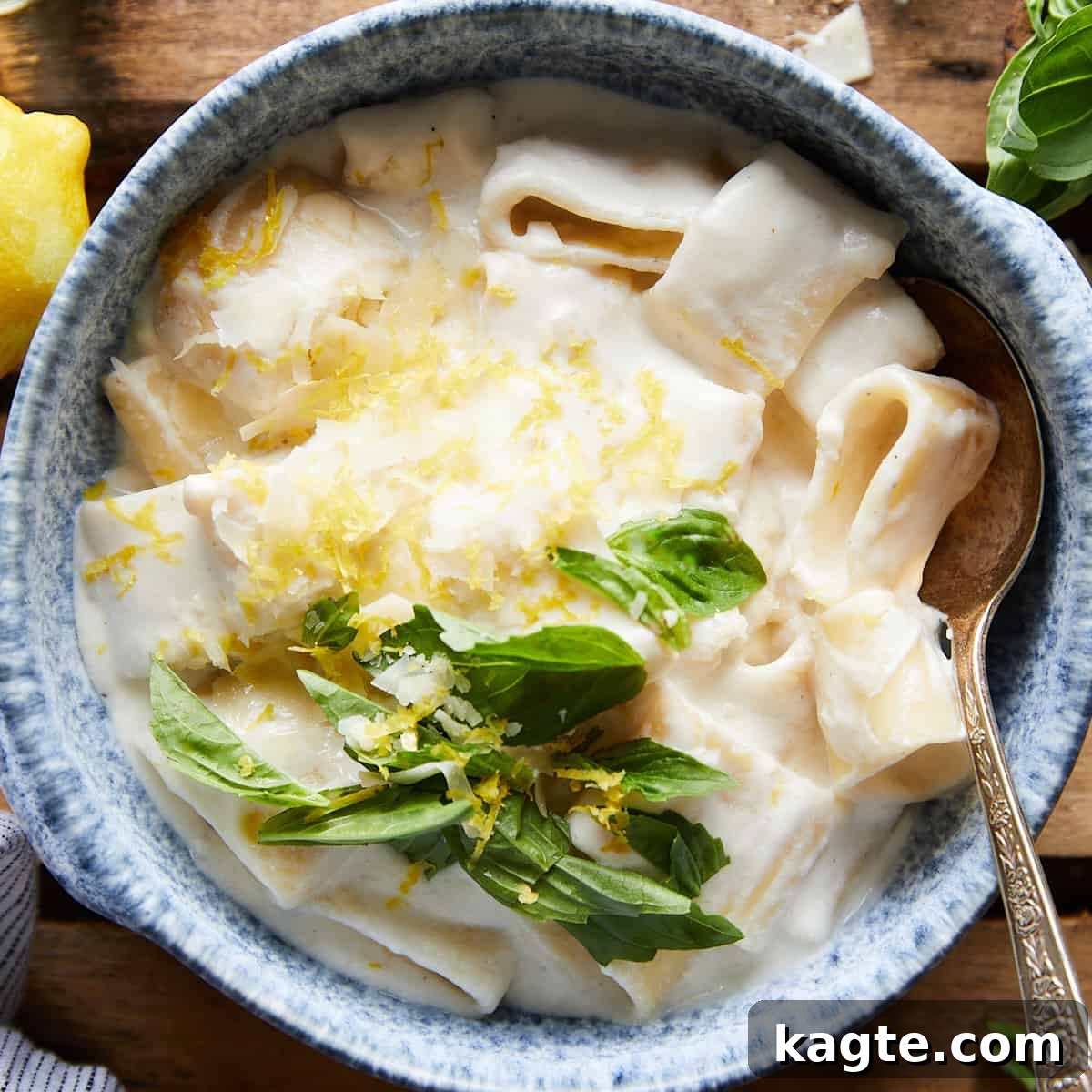
Welcome to the ultimate guide for creating the most delightful and effortlessly elegant Lemon Ricotta Pasta. This vibrant, one-pot dish is a true celebration of fresh flavors, making it an ideal choice for a quick weeknight dinner or a relaxed weekend meal, especially as spring blooms and summer approaches. Imagine al dente pasta coated in a lusciously creamy, yet surprisingly light, lemon-infused ricotta sauce, all ready in under 20 minutes from start to finish. It’s a culinary masterpiece that combines comfort with bright, zesty notes, promising to become a staple in your recipe repertoire.
Pasta is a year-round favorite, but this Lemon Ricotta Pasta truly shines during the warmer months, offering a refreshing departure from heavier sauces. Its simplicity and speed are unmatched, making it a perfect alternative to dishes like Simple Salmon Pasta without Cream or the rich Cheesy Baked Tortellini Alfredo. For those who enjoy seafood, our Shrimp Scampi without Wine also offers a delightful, quick option that complements a light meal perfectly.
This exquisite Lemon Ricotta Pasta is not just a main course; it’s a versatile foundation for a complete meal. It pairs beautifully with a crisp, refreshing side salad, such as a vibrant Kale Crunch Salad or a homemade Panera Copycat Greek Salad, to balance the creamy texture with fresh greens and tangy dressings. For those who enjoy variety, it also works wonderfully alongside roasted asparagus, grilled chicken, or even a light bruschetta.
If you’re constantly seeking creamy, comforting, yet easy one-pot pasta recipes, you’re in for a treat. This dish joins the ranks of other favorites like the indulgent Instant Pot Fettuccine Alfredo. For a heartier, tomato-based option, consider the robust Sausage & Peppers Pasta or the luxurious Creamy Lobster Ravioli Sauce. Each offers a unique flavor profile but maintains the goal of delivering maximum flavor with minimal fuss.
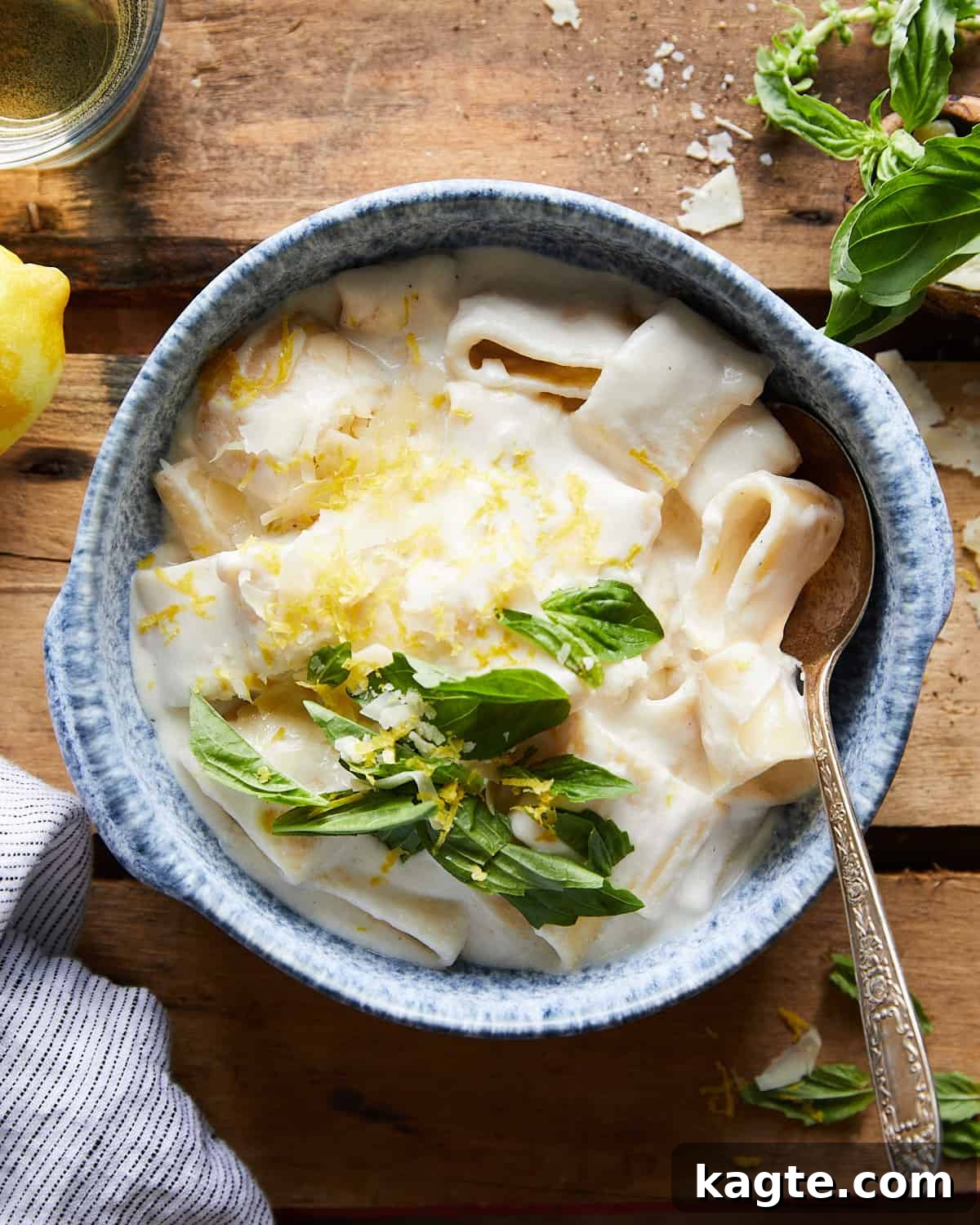
Table of Contents
- Why You’ll Love This Recipe
- Ingredient Notes & Substitutions
- How to Make Lemon Ricotta Pasta
- Make Ahead & Storage
- Expert Tips for Perfection
- Recipe Notes
- Creative Variations
- Frequently Asked Questions
- Related Recipes You’ll Adore
- One Pot Lemon Ricotta Pasta Recipe Card
Why You’ll Absolutely Love This Lemon Ricotta Pasta Recipe
There are countless reasons why this One Pot Lemon Ricotta Pasta will quickly become a cherished recipe in your kitchen. From its incredible speed to its sophisticated flavor profile, every aspect is designed to make your cooking experience enjoyable and your meal unforgettable.
- Effortless One-Pot Wonder: The true magic of this dish lies in its “one-pot” method. This means your pasta and sauce cook simultaneously in a single pot, significantly reducing cleanup time. No more juggling multiple pans or draining pasta water separately. It’s the ultimate convenience for busy weeknights.
- Perfectly Creamy Sauce, No Heavy Cream Needed: The base of our luscious ricotta sauce is ingeniously crafted from starchy pasta water and half-and-half. As the pasta cooks, it releases starches that naturally thicken the liquid, creating a velvety, rich sauce without the need for heavy cream. This makes for a lighter, yet incredibly satisfying, creamy texture.
- Bright & Zesty Lemon Flavor: Fresh lemon juice and zest are the stars, infusing the creamy ricotta sauce with a vibrant, refreshing tang. This brightness cuts through the richness of the cheese, creating a perfectly balanced flavor that feels light and invigorating, making it ideal for spring and summer dining.
- Depth of Flavor from Aromatics: The humble shallot and garlic play a crucial role, providing a savory foundation and depth to the sauce. Sautéed until fragrant, they build a complex aromatic layer that elevates the entire dish beyond simple pasta.
- White Wine for Sophistication: A splash of dry white wine adds a subtle acidity and complexity, enhancing the brightness of the lemon and deglazing the pan to capture all those delicious browned bits, deepening the overall flavor profile. (Don’t worry, a non-alcoholic substitute is easy if preferred!)
- Rapid Weeknight Delight: From start to finish, this dish is on your table in approximately 20 minutes. It’s faster than ordering takeout and infinitely more satisfying, proving that gourmet flavors don’t require hours in the kitchen.
- Incredibly Versatile & Customizable: This recipe isn’t just delicious as is; it’s a fantastic canvas for customization. Learn how to easily adapt it for dietary preferences, such as a lemon ricotta pasta without parmesan, or how to incorporate your favorite proteins or green vegetables for a more substantial meal.
- Master Essential Cooking Techniques: While simple, this recipe teaches valuable skills like browning butter for nuanced flavor, deglazing a pan to maximize taste, and managing liquid ratios for perfect pasta texture in a one-pot setting.
Essential Ingredient Notes & Smart Substitutions
While this recipe is straightforward, choosing quality ingredients and understanding potential substitutions can significantly impact the final dish. Here’s what you need to know to make your Lemon Ricotta Pasta truly exceptional.
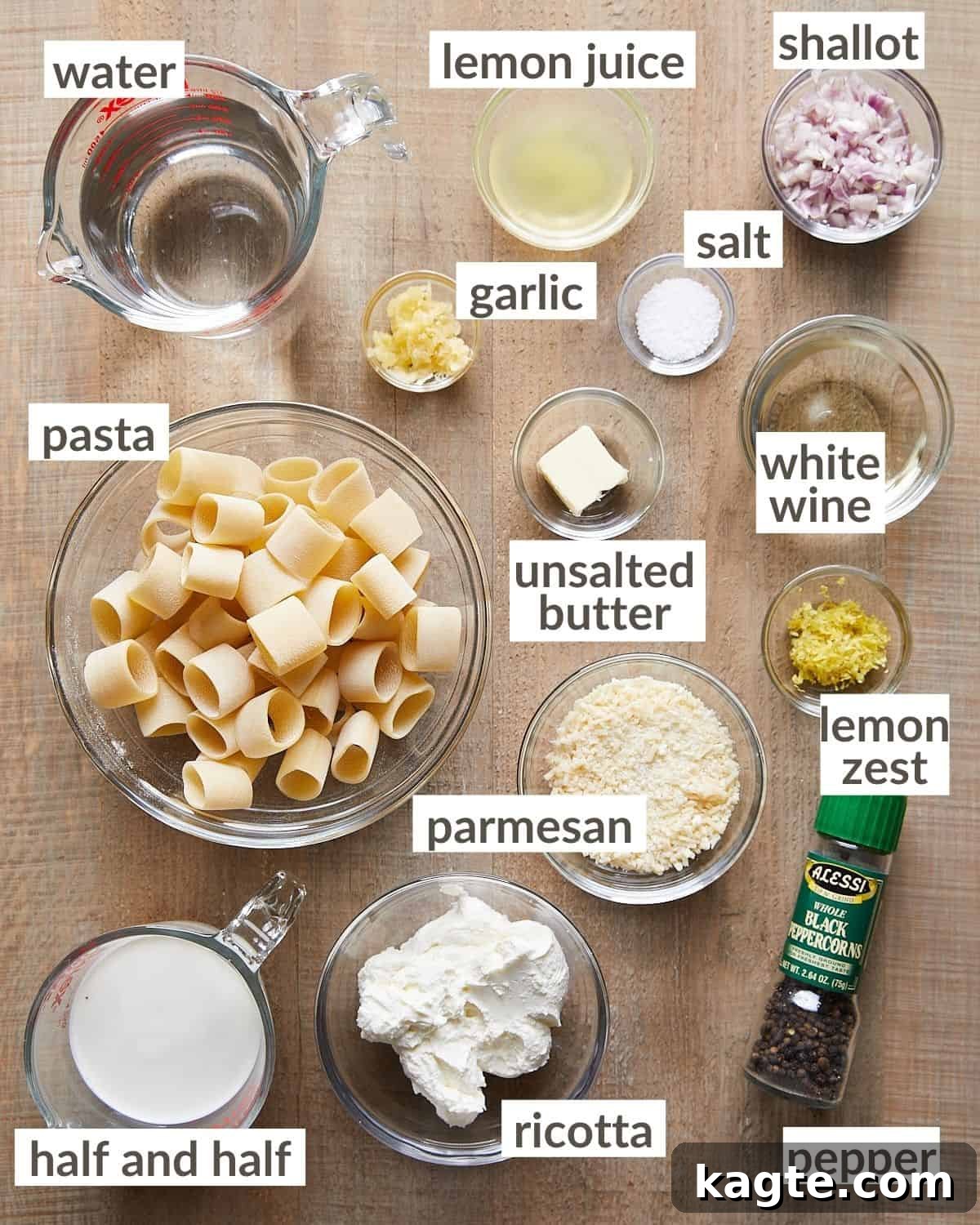
- Unsalted Butter: Butter forms the flavorful base of our sauce. Using unsalted butter allows you to control the overall saltiness of the dish. For a dairy-free or lighter alternative, good quality olive oil can be used, though it will change the flavor profile slightly as you won’t get the nutty notes of browned butter.
- Shallot: Shallots offer a milder, sweeter, and more delicate onion flavor compared to regular onions, making them perfect for this bright sauce. If a shallot isn’t available, you can substitute with about ¼ cup of finely diced red or yellow onion. Ensure it’s very finely minced so it melts into the sauce.
- Garlic: We use a generous amount (5-6 cloves) because garlic provides crucial depth and aromatic complexity. Freshly pressed or minced garlic is key here; pre-minced garlic often lacks the pungency and fresh flavor.
- Dry White Wine: A dry white wine like Sauvignon Blanc, Pinot Grigio, or Chardonnay (unoaked) adds acidity and helps deglaze the pan, unlocking caramelized flavors. If you prefer not to use wine, an equal amount of vegetable broth is an excellent non-alcoholic substitute, or you can simply omit it, adding a splash more water or broth if needed to deglaze.
- Water or Vegetable Broth: This is the primary liquid for cooking the pasta and forming the sauce. Using vegetable broth will add an extra layer of savory flavor. If using water, ensure you season it well with salt.
- Half and Half: This dairy product provides the perfect balance of richness and lightness for our creamy sauce. It’s less heavy than heavy cream but richer than milk, contributing to that velvety texture without making the dish overly indulgent. Whole milk can also be used, but the sauce might be slightly less creamy.
- Salt & Freshly Cracked Black Pepper: Essential for seasoning. Always taste and adjust, especially after the cheeses are added. Freshly cracked pepper provides a much more robust flavor than pre-ground.
- Short Cut Pasta: The beauty of a one-pot pasta lies in using shapes that cook evenly and absorb the sauce well. I’ve used calamarata, but rigatoni, penne, fusilli, orecchiette, or bow tie pasta (farfalle) are all fantastic choices. Avoid long, delicate pasta like spaghetti or linguine for this one-pot method, as they tend to clump.
- Fresh Lemon (Juiced & Zested): This is the heart of the dish’s flavor! Always use fresh lemons for both the juice and zest. The zest contains aromatic oils that provide a much more intense lemon flavor than juice alone. Have an extra lemon on hand for garnishing.
- Whole Milk Ricotta: For the ultimate creamy texture, opt for good quality, whole milk ricotta cheese. Brands like Liuzzi are excellent. Part-skim ricotta can be used, but it may result in a slightly less rich and creamy sauce.
- Grated Parmesan Cheese: Freshly grated Parmesan Reggiano makes a significant difference. Its sharp, nutty, and salty notes enhance the sauce beautifully. Pre-grated parmesan can often contain anti-caking agents that affect melt and flavor. Save some for serving!
- Fresh Basil: A garnish of fresh basil at the end adds a burst of herbaceous freshness and a lovely aroma, perfectly complementing the lemon.
A complete list of ingredients with exact amounts is located on the recipe card below.
How to Craft Your One-Pot Lemon Ricotta Pasta
Creating this delicious Lemon Ricotta Pasta is a simple and rewarding process. Follow these detailed steps to achieve a perfectly creamy, zesty, and satisfying dish in record time.
Quick Overview:
- Brown butter, sauté shallots and garlic.
- Deglaze with wine, then add water/half & half.
- Stir in pasta and simmer until al dente.
- Finish with fresh lemon, ricotta, and parmesan.
Step-by-Step Instructions:
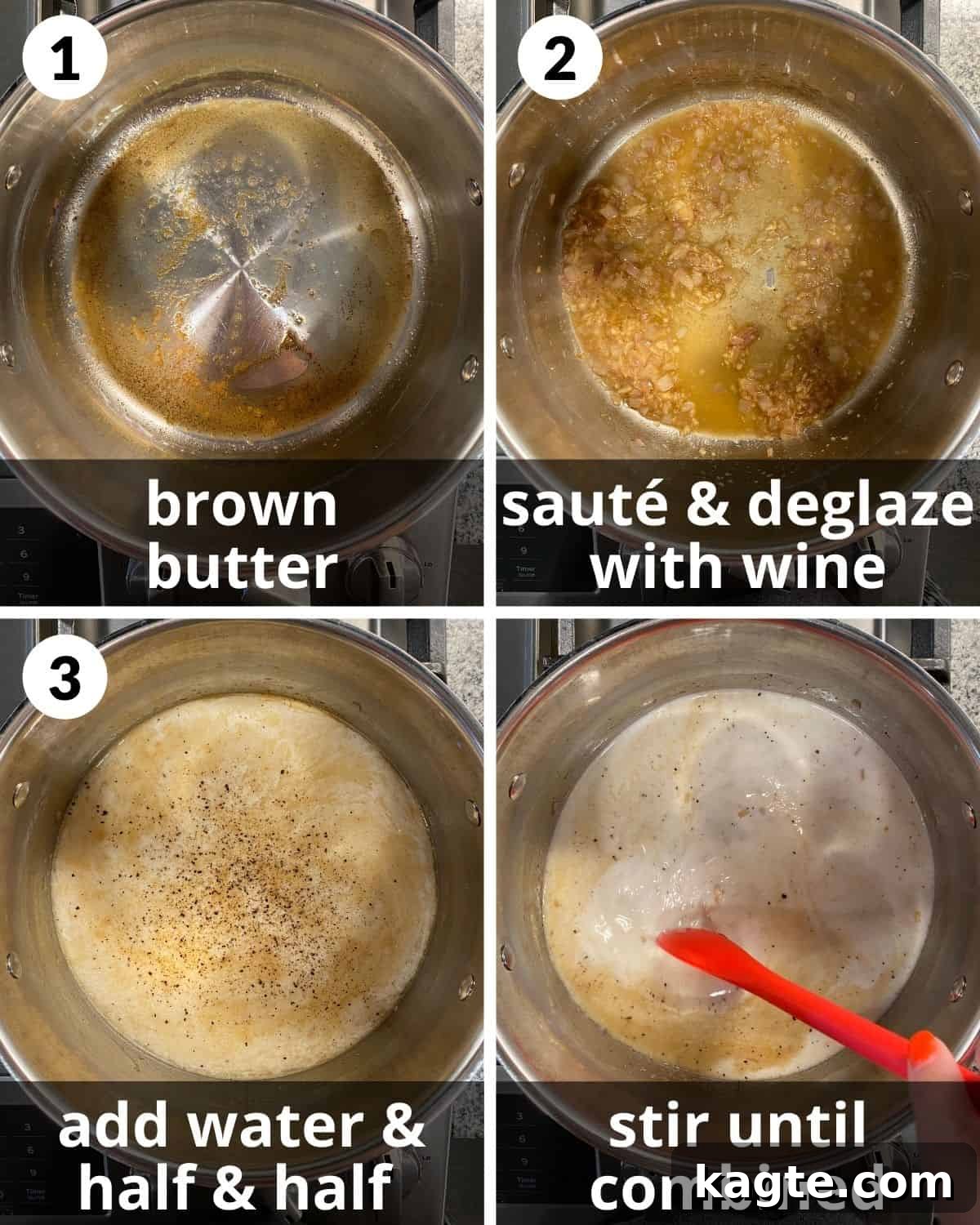
Step 1: Begin by melting 1 tablespoon of unsalted butter in a large, deep pot or Dutch oven over medium-high heat. Allow the butter to cook gently, swirling occasionally, until it begins to bubble and then turns a golden-brown color and smells nutty. This browning process adds an incredible depth of flavor to the entire dish, known as “beurre noisette.” Be careful not to burn it.
Step 2: Reduce the heat to medium. Add the finely diced shallot and minced garlic to the browned butter. Sauté for 2-3 minutes, stirring frequently, until the shallot softens and the garlic becomes fragrant. Be cautious not to burn the garlic, as it can turn bitter. Next, pour in the 1/3 cup of dry white wine (or vegetable broth). Use a wooden spoon to scrape up any browned bits stuck to the bottom of the pan – this crucial step, called deglazing, unlocks a wealth of flavor.
Step 3: Add 2 cups of water (or vegetable broth), 1 cup of half and half, 1 teaspoon of salt, and a generous amount of fresh cracked black pepper to the pot. Stir everything together until well combined. This liquid mixture will be the base for your creamy sauce and the cooking medium for your pasta.
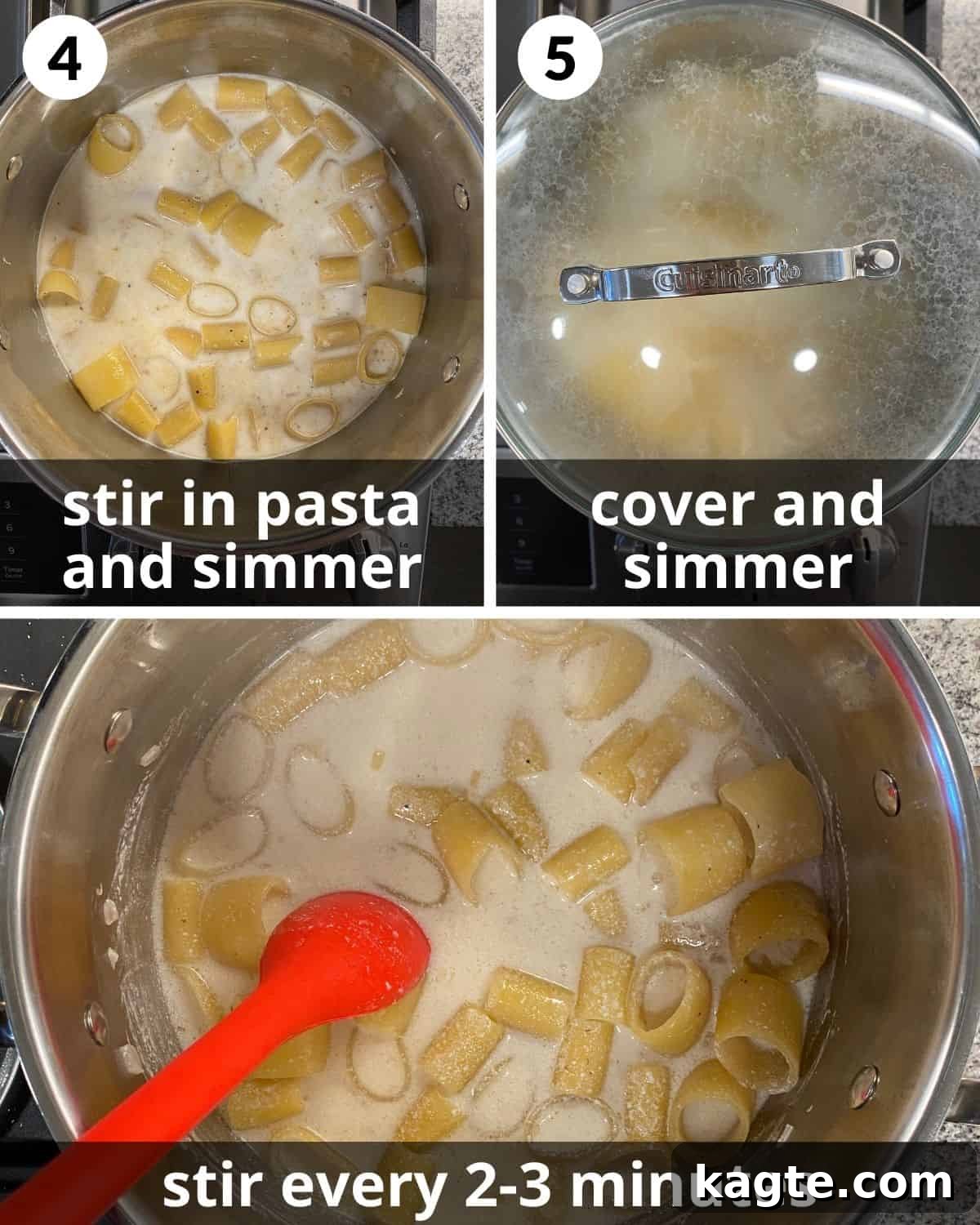
Step 4: Carefully stir in the 8 ounces of dried short-cut pasta. Ensure the pasta is submerged in the liquid as much as possible. Bring the mixture to a gentle simmer over medium heat.
Step 5: Once simmering, reduce the heat to medium-low, cover the pot with a lid, and cook for 10-12 minutes, or according to the pasta package directions for al dente, until the pasta is tender but still has a slight bite. It’s incredibly important to stir the pasta every 2-3 minutes during this cooking process. This prevents the pasta from sticking to the bottom of the pot and ensures even cooking as it absorbs the flavorful liquid.
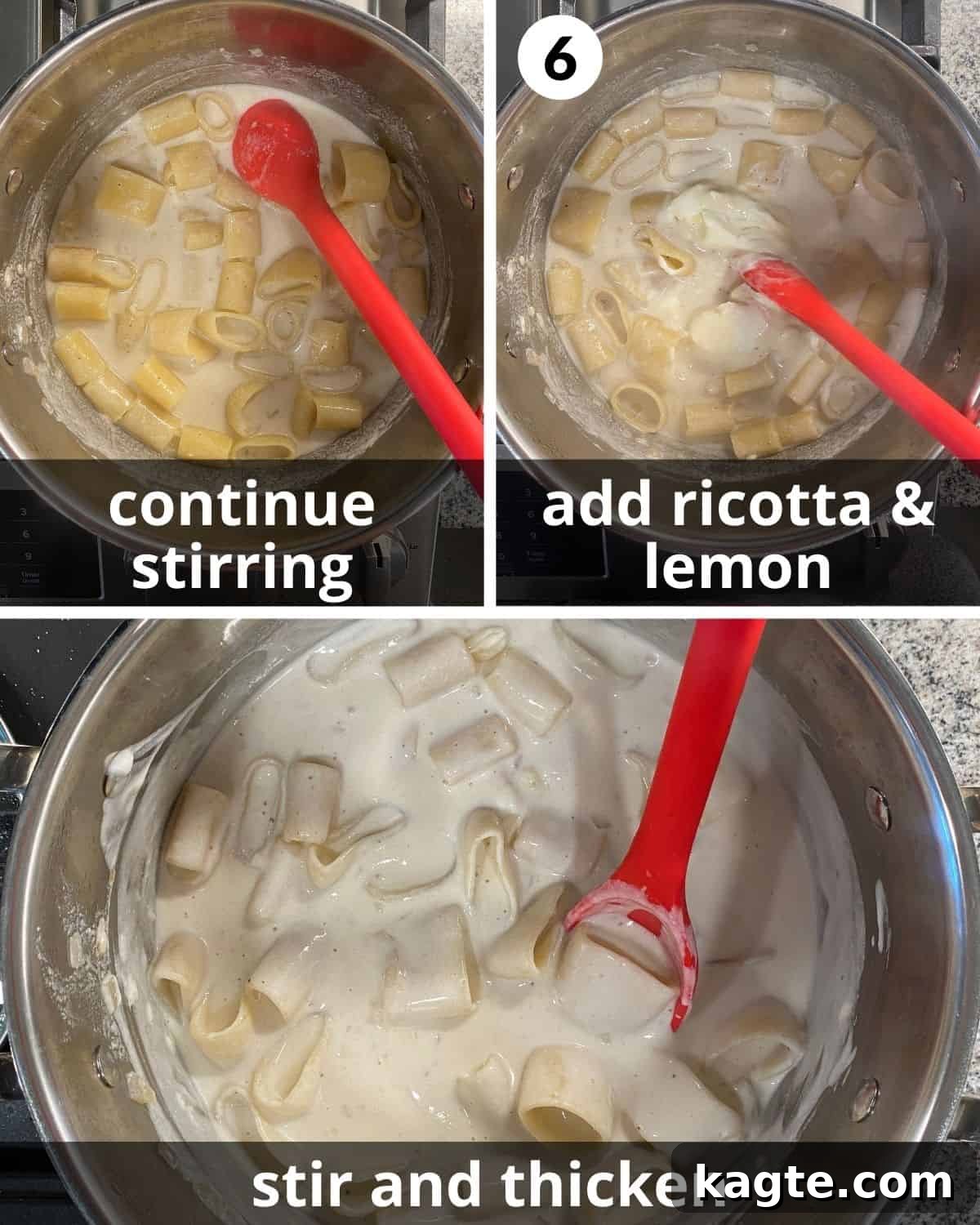
Step 6: Once the pasta is al dente and most of the liquid has been absorbed, turn off the heat. Immediately stir in the fresh lemon juice and zest from one lemon, 1 cup of whole milk ricotta, and ½ cup of grated parmesan cheese. Mix vigorously until all ingredients are well combined and the ricotta has created a smooth, creamy sauce coating every strand of pasta. The residual heat will melt the cheese and fully incorporate the ricotta. Let the pasta stand, uncovered, for 5 minutes. This brief resting period allows the sauce to thicken further to a perfect consistency.
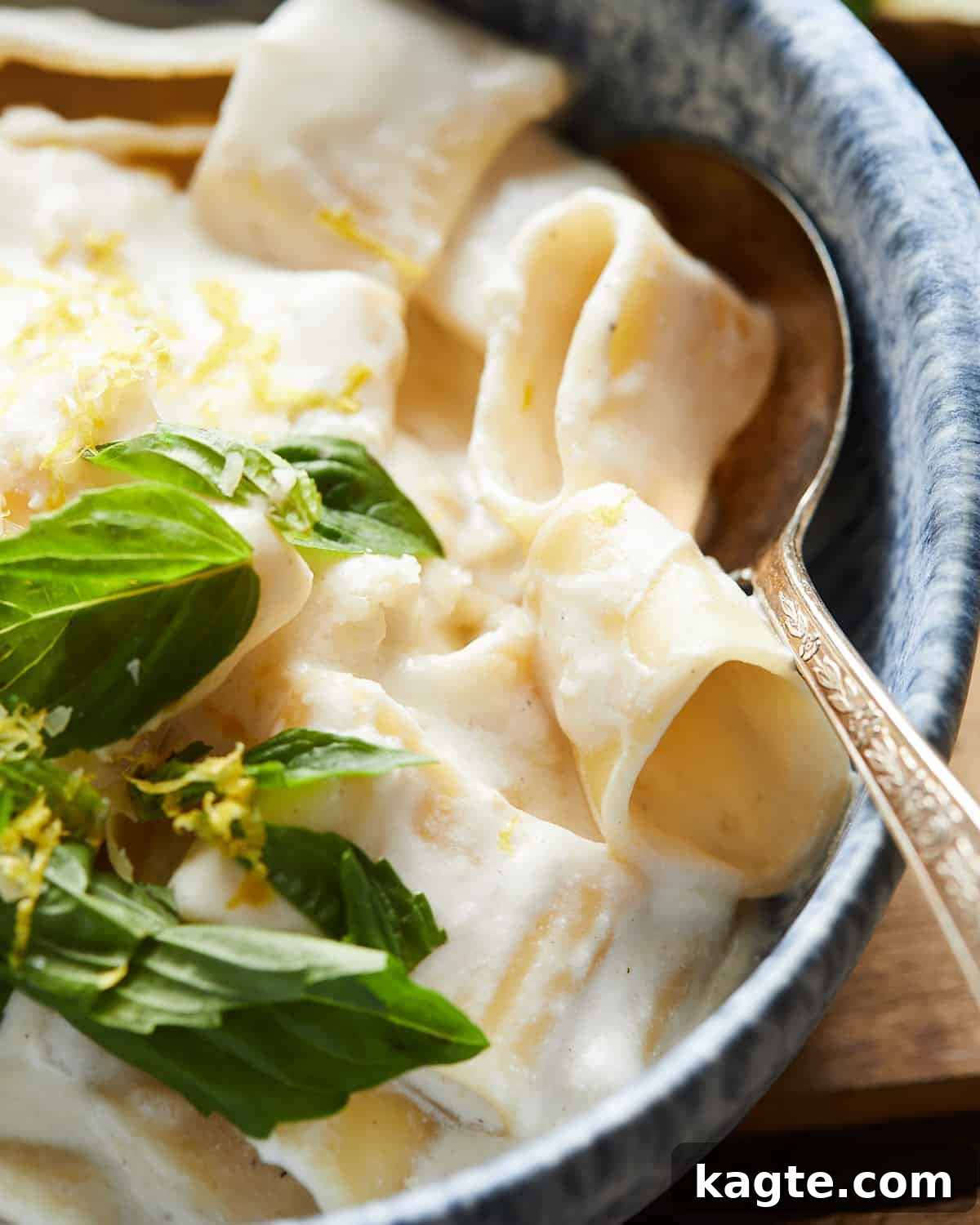
Serve your Lemon Ricotta Pasta immediately, garnished with extra lemon zest, fresh basil leaves, and a sprinkle of additional parmesan cheese. Don’t forget to have some crusty bread for soaking up every last drop of that amazing sauce, and a bottle of crisp white wine if you’re feeling celebratory!
Make Ahead & Storage Tips for Leftovers
While this Lemon Ricotta Pasta is best enjoyed fresh, you can certainly prepare it in advance or store leftovers to savor later. Follow these guidelines to keep your pasta delicious.
- Refrigerator Storage: Store any leftover Lemon Ricotta Pasta in an airtight container in the refrigerator for up to 3-4 days. The sauce will thicken considerably as it cools, and the pasta will absorb more of the sauce.
- Reheating Instructions:
- Microwave: For a quick reheat, place your desired portion in a microwave-safe dish. Heat in 30-second increments, stirring occasionally, until thoroughly warmed through. To restore some of the creamy texture, you might want to add a tablespoon or two of water, milk, or half-and-half before reheating, stirring it in to loosen the sauce.
- Stovetop: For best results, reheat the lemon pasta on the stove over medium-low heat in a non-stick pan. Add a splash of water, milk, or vegetable broth (1-3 tablespoons) to help loosen the sauce and prevent sticking. Stir frequently until heated through. This method helps maintain a better texture than microwaving.
- Freezing: Freezing is generally not recommended for this dish, particularly because of the ricotta cheese. Ricotta can become grainy and separate when frozen and thawed, significantly impacting the sauce’s smooth, creamy texture.
Expert Tips for Crafting the Perfect Lemon Ricotta Pasta
Elevate your Lemon Ricotta Pasta from good to absolutely extraordinary with these essential expert tips. Mastering these techniques will ensure your dish is consistently flavorful, creamy, and perfectly cooked every time.
- Invest in Quality Cheese: This is paramount for flavor. I highly recommend using freshly grated Parmesan Reggiano rather than pre-grated varieties, which often contain anti-caking agents that can affect texture and flavor. Similarly, opt for whole milk ricotta for the best creaminess. I’ve found brands like Liuzzi offer exceptional quality. The difference in taste and texture is truly noticeable.
- Don’t Skip Browning the Butter: This simple step transforms ordinary butter into “beurre noisette” – a nutty, aromatic brown butter. Once the butter melts, continue heating it over medium-high heat until it bubbles, then develops a golden-brown hue and a distinct nutty aroma. This process adds an incredible layer of complex flavor that forms the foundation of your sauce.
- Always Deglaze the Pan: After sautéing your shallots and garlic, add your white wine (or broth) and use a wooden spoon to scrape up all the flavorful browned bits from the bottom of the pan. These “fond” bits are packed with concentrated flavor and will significantly deepen the taste of your sauce.
- Stir Frequently During Cooking: As the pasta simmers in the sauce, it’s crucial to stir it every 2-3 minutes. This prevents the pasta from sticking together, ensures even cooking, and helps release starches into the liquid, which is essential for thickening the sauce.
- Cover the Pot for Even Cooking: While the pasta is simmering, keep the pot covered. The steam that builds up underneath the lid helps to cook the pasta more efficiently and ensures it absorbs the flavorful liquid evenly, especially since the pasta might not be fully submerged.
- Allow the Pasta to Stand: After stirring in the ricotta and parmesan, let the pasta rest off the heat, uncovered, for 5 minutes. This standing time is critical as it allows the sauce to continue thickening to a perfect, luscious consistency. Don’t rush this step!
- Taste and Adjust Seasoning: Always taste your sauce before serving. You may find it needs a little more salt, pepper, or an extra squeeze of lemon juice to achieve perfect balance. The amount of salt in your pasta water and cheese can vary, so adjust to your preference.
- Garnish with Freshness: A final flourish of fresh lemon zest and torn basil leaves isn’t just for looks. The vibrant aromas and fresh flavors brighten up the dish, adding an essential layer of taste and a beautiful presentation.
- Cook Pasta to Al Dente: For the best texture, ensure your pasta is cooked al dente – tender yet firm to the bite. Since it finishes cooking in the sauce, it will continue to soften slightly after the heat is off.
Important Recipe Notes for Success
Keep these specific details in mind to ensure your Lemon Ricotta Pasta turns out exactly as intended, tailored to your preferences.
- Sauce Consistency: This recipe is designed to be quite saucy, which many find delightful with the creamy ricotta. If you prefer a less saucy pasta, you can easily adjust the liquid and ricotta. Reduce the whole milk ricotta to ¾ cup and the water (or vegetable broth) to 1¾ cups. This will yield a slightly drier, yet still wonderfully flavored, dish.
- Doubling the Recipe: This recipe is easily doubled to serve a larger crowd or for meal prepping. To do so, use a full pound package (16 ounces) of short-cut pasta and double all other ingredients accordingly. When doubling, ensure you use a very large pot or Dutch oven to accommodate all the ingredients and allow for proper stirring and even cooking. You may also need to increase the cooking time by a few minutes, so keep an eye on the pasta’s doneness and the sauce’s consistency.
- Fresh Herbs are Best: While dried basil can be used in a pinch, fresh basil adds an unparalleled brightness and aromatic quality that significantly elevates this dish. For the best flavor, always opt for fresh herbs, especially for garnishing.
- Choosing Your Lemons: Look for firm, bright yellow lemons that feel heavy for their size. These typically contain more juice and have flavorful zest. Organic lemons are often preferred since you’ll be using the zest.
Creative Variations for Your Lemon Ricotta Pasta
One of the best things about this Lemon Ricotta Pasta is its adaptability. Feel free to get creative and customize it to your taste or what you have on hand. Here are some delicious variations to inspire you:
- Baked Lemon Ricotta Pasta: For a comforting, cheesy casserole-style dish, transform this into a baked pasta. Undercook the pasta slightly (reduce the cook time by about 2-3 minutes in Step 5). Prepare the sauce as directed. In a separate bowl, toss about ⅔ cup of panko breadcrumbs with 2 tablespoons of melted salted butter until evenly coated. Pour the finished pasta into a lightly greased oven-safe baking dish, spread evenly, and top with the buttery breadcrumbs. Bake at 425°F (220°C) for 10-15 minutes, or until the breadcrumbs are golden brown and crispy, and the pasta is bubbling.
- No Parmesan Option: If you prefer to omit parmesan cheese due to dietary restrictions or personal taste, you have a couple of options. You can simply leave it out, though you might want to add a pinch more salt to compensate for the missing savory notes. Alternatively, swap parmesan for another light, salty cheese that melts well, such as grated mozzarella or a mild provolone, or even a dairy-free Parmesan alternative.
- Add a Protein Boost: Make this dish a complete meal by incorporating your favorite protein.
- Shrimp: Sauté shrimp separately and stir them in during the final step.
- Grilled or Shredded Chicken: Add pre-cooked, sliced, or shredded chicken breast or thigh along with the ricotta and parmesan.
- Flaked Salmon: Gently flake cooked salmon into the pasta at the very end.
- Sausage: Brown Italian sausage (mild or spicy) and crumble it into the sauce during Step 2, before adding the wine.
- Incorporate More Veggies: This pasta is a fantastic vehicle for adding more vegetables.
- Leafy Greens: Once the pasta is almost finished cooking (around the 8-minute mark), stir in a big handful of fresh spinach or chopped kale. Cover the pot and let it wilt into the sauce for the remaining cook time.
- Sautéed Vegetables: Sauté sliced mushrooms, bell peppers, zucchini, or asparagus spears separately and stir them into the finished pasta.
- Frozen Peas: Stir in a cup of frozen peas during the last 2 minutes of cooking the pasta for a burst of sweetness and color.
- Roasted Cherry Tomatoes: Roast cherry tomatoes until bursting, then add them to the finished pasta for a sweet, tangy element.
- Make it Spicy: For those who enjoy a little heat, add a pinch of red pepper flakes (or more, to taste) along with the salt and pepper in Step 3. This will infuse the sauce with a lovely warmth that complements the lemon beautifully.
- Herb Variations: While basil is traditional, consider other fresh herbs. Fresh parsley, chives, or a hint of thyme can also pair wonderfully with the lemon and ricotta, offering different aromatic dimensions.
Frequently Asked Questions About Lemon Ricotta Pasta
Here are answers to some common questions about making and enjoying this delicious Lemon Ricotta Pasta, ensuring you have all the information you need for a successful meal.
Ricotta cheese behaves differently from hard or semi-hard cheeses like cheddar or mozzarella when heated. It doesn’t melt into a gooey, stringy consistency. Instead, fresh whole milk ricotta will incorporate beautifully into the sauce, creating a smooth, creamy emulsion that coats the pasta. It becomes part of the sauce’s body, adding richness and a velvety texture without losing its distinct, delicate flavor. It’s similar in this regard to other fresh cheeses like goat cheese, queso blanco, or mascarpone, which soften and blend rather than completely liquefy.
While you can use heavy cream, half-and-half is recommended for this recipe to achieve a rich yet light sauce that allows the lemon to shine without feeling overly heavy. If you opt for heavy cream, the sauce will be denser and richer, which might overpower the delicate lemon and basil notes. You could dilute heavy cream with a bit of water or milk to approximate the fat content of half-and-half if you only have heavy cream on hand.
The beauty of one-pot pasta is how the starch from the pasta thickens the sauce, but sometimes adjustments are needed.
- Too Thin: If your sauce is too thin after the resting period, you can gently simmer it uncovered for a few more minutes, stirring frequently, to allow more liquid to evaporate. The starch will continue to thicken it.
- Too Thick: If your sauce becomes too thick, especially after resting or reheating, simply stir in a splash (1-3 tablespoons) of warm water, milk, or vegetable broth until it reaches your desired consistency. Ricotta and parmesan can absorb a lot of liquid.
Absolutely! To make this Lemon Ricotta Pasta gluten-free, simply substitute the regular short-cut pasta with your favorite gluten-free pasta alternative. Many brands offer excellent gluten-free penne, fusilli, or rigatoni that hold up well in one-pot dishes. Follow the package directions for cooking time, as gluten-free pasta can sometimes cook faster or require slight adjustments to liquid absorption.
For the best results, use a dry white wine that you would enjoy drinking. Good options include Sauvignon Blanc, Pinot Grigio, or an unoaked Chardonnay. Avoid sweet wines, as they will alter the flavor profile of the savory sauce. The alcohol cooks out, leaving behind a nuanced depth of flavor that complements the lemon and herbs beautifully.
More Delightful Pasta & Meal Ideas You’ll Adore
If you’ve fallen in love with the ease and flavor of this Lemon Ricotta Pasta, you’ll be thrilled to discover more delicious recipes from our collection that celebrate comfort, convenience, and incredible taste. Expand your culinary repertoire with these fantastic dishes:
Discover More Deliciousness
Pasta
Baked Stuffed Shells with Meat Sauce
Pasta
What To Serve With Penne Alla Vodka (Side Dishes & Proteins)
30 Minute Meals
One Pan Shrimp Orzo with Lemon Recipe
Side Dish
What To Serve With Pasta Salad: 30 Ideas for Lunch or Dinner
One Pot Lemon Ricotta Pasta
By Brianna May
Rating: 5 out of 5 stars from 6 votes
This zesty one pot Lemon Ricotta Pasta is the perfect pasta dish for spring and it can be ready in only 20 minutes. The fresh lemon and basil lighten up the rich ricotta cream sauce. Don’t forget a bottle of white wine and some fresh bread!
5 minutes
12 minutes
17 minutes
3 people
Ingredients
- 1 Tablespoon unsalted butter*
- 1 small shallot, diced finely*
- 5-6 cloves garlic, pressed or minced finely
- 1/3 cup dry white wine*
- 2 cups water or vegetable broth
- 1 cup half and half
- 1 teaspoon salt
- Fresh cracked black pepper, to taste
- 8 ounces dried short cut pasta*
- 1 lemon, juiced and zested (plus more for serving)
- 1 cup whole milk ricotta
- 1/2 cup grated parmesan cheese (plus more for serving)
- Fresh basil for serving
Instructions
- Melt butter over medium-high heat until it begins to brown and smells nutty.
- Turn the heat down to medium. Add shallot and garlic. Sauté for 2-3 minutes. Deglaze the pan with the wine, scraping any brown bits off the bottom of the pan.
- Add in the water, half and half, salt, and pepper. Stir until combined.
- Stir in the pasta. Bring the mixture to a simmer.
- Lightly boil for 10-12 minutes covered, or until the pasta is al dente, stirring every 2-3 minutes to prevent sticking.
- Turn the heat off. Add lemon juice, zest, ricotta, and parmesan cheese. Stir until well combined. Let stand for 5 minutes to thicken.
Notes
- Unsalted Butter: Swap for olive oil if preferred, though the flavor will differ slightly.
- Shallot: Can be substituted with ¼ cup of finely diced red or yellow onion.
- White Wine: Vegetable broth is an excellent non-alcoholic substitute, or you can omit it entirely.
- Short Cut Pasta: Rigatoni, penne, fusilli, or bow tie pasta also work beautifully in this recipe.
- Storage: Store leftovers in an airtight container in the fridge for 3-4 days. Reheat on the stovetop or microwave, adding a splash of liquid to restore creaminess.
- Sauce Preference: For less sauce, reduce ricotta to ¾ cup and water to 1¾ cups.
- Quality Cheese: Use fresh, whole milk ricotta and freshly grated Parmesan Reggiano for the best flavor and texture.
- Brown the butter: Don’t skip this step! It adds a deep, nutty flavor.
- Deglaze: Scraping the browned bits from the pan after adding wine enhances flavor significantly.
- Stir frequently: Crucial for even cooking and to prevent pasta from sticking.
- Cover the pot: Helps pasta cook evenly by trapping steam.
- Let stand: Allows the sauce to thicken to the perfect consistency.
- Garnish: Fresh lemon zest and basil brighten the dish’s flavor and appearance.
Nutrition
Carbohydrates: 68g |
Protein: 27g |
Fat: 30g |
Saturated Fat: 18g |
Polyunsaturated Fat: 2g |
Monounsaturated Fat: 8g |
Trans Fat: 1g |
Cholesterol: 95mg |
Sodium: 1193mg |
Fiber: 3g |
Sugar: 7g
Nutrition information is automatically calculated, so should only be used as an approximation.