

Welcome to your new favorite weeknight meal: a sensational Coconut Curry Shrimp dish that promises to transport your taste buds straight to a gourmet restaurant, all from the comfort of your home kitchen. Imagine succulent shrimp enveloped in a rich, creamy, and vibrantly spiced sauce—a symphony of sweet, savory, and perfectly piquant notes. This recipe isn’t just delicious; it’s an experience, crafted to be utterly addictive and incredibly satisfying for the whole family.

Curry is a staple in many cultures worldwide, celebrated for its complex layers of flavor derived from aromatic spices. While often associated with intricate preparation, this particular coconut curry shrimp recipe is designed for ease, making it perfect for both culinary beginners and seasoned home cooks alike. We’ve captured the delightful essence of traditional Indian-inspired curry—its savory depth, a hint of sweetness, and a warming spice—in a way that’s accessible and incredibly rewarding.
I confidently call this the best shrimp curry recipe because of its remarkable balance of simplicity and profound taste. It’s a versatile dish that encourages personalization: adjust the heat level to suit your preference, incorporate your favorite vegetables for added nutrition and texture, or even swap out the protein. This adaptability ensures it perfectly fits your family’s needs and dietary considerations. Plus, any leftover coconut curry shrimp can be stored in the refrigerator for up to four days, making it an excellent option for meal prep!
If you’re looking to create an entire Indian-inspired feast, this shrimp curry pairs wonderfully with other dishes. Consider complementing it with my Healthy Chicken Tikka Masala for a chicken option, or serve it alongside a comforting pasta dish like my Butter Chicken Pasta. And for the perfect bed for your curry, whip up some fluffy Instant Pot Basmati Rice.
This recipe utilizes avocado oil for its high smoke point and neutral flavor, which allows the spices to truly shine. However, if avocado oil isn’t your preference or you have an allergy, don’t worry! I’ve put together a comprehensive guide on The 10 Best Substitutes for Avocado Oil to ensure you can still enjoy this incredible dish.
Table of Contents
- Why You’ll Love This Recipe
- Ingredients & Substitutions
- How to Make Coconut Curry Shrimp
- Recipe Serving Suggestions
- Expert Cooking Tips
- Additions & Variations
- Recipe FAQs
- More Main Dish Recipes
- Coconut Curry Shrimp Recipe Card
Why You’ll Love This Recipe
This Coconut Curry Shrimp isn’t just another meal; it’s a culinary journey that delivers on multiple fronts:
- Decadently Creamy – The magic begins with full-fat coconut milk, which is the secret to achieving a luxurious, velvety sauce. Unlike heavy creams, coconut milk provides a rich consistency without overwhelming the dish, offering a delightful lightness that makes every spoonful utterly enjoyable. Its natural sweetness also perfectly balances the robust spices.
- Perfectly Spicy – A touch of cayenne pepper introduces a delicious warmth that awakens the palate. This recipe offers a fantastic baseline for spice, but it’s incredibly adaptable. Whether you prefer a gentle hum of heat or a fiery kick, you can easily adjust the amount of cayenne to match your personal preference, ensuring a perfectly personalized spicy experience every time.
- Bursting with Flavor – Like all great curries, this dish boasts an incredibly bold and complex flavor profile. It’s not just one spice, but a thoughtful blend of aromatic garam masala, earthy cumin, vibrant turmeric, and fragrant coriander that creates a deep, layered taste. Each ingredient plays a crucial role, contributing to a symphony of flavors that is both intriguing and satisfying.
- Restaurant-Worthy Quality – Forget expensive takeout; this recipe empowers you to create a dish that rivals your favorite Indian restaurant. Key techniques, such as pan-frying the spices before building the sauce, unlock their full aromatic potential, resulting in a depth of flavor that will impress even the most discerning diners. Prepare to receive compliments!
- Harmoniously Savory – Beyond the creaminess and spice, this curry is masterfully balanced. The umami notes from the shrimp and the savory depth of the spices are perfectly complemented by a subtle sweetness and a mild tang from the tomatoes, creating a well-rounded and deeply satisfying savory profile that keeps you coming back for more.
- Subtly Sweet Notes – The natural sweetness of full-fat coconut milk combined with the warm, sometimes slightly sweet notes of garam masala (which often includes cinnamon and cloves) contributes a delicate sweetness to the dish. This subtle hint of sweetness is crucial for balancing the spicier and savory elements, making the overall flavor profile incredibly harmonious and inviting.
- Ideal for Cozy Days – There’s something inherently comforting about a warm, creamy curry, especially on cooler or gloomy days. The warming spices, fiery kick, and rich sauce make this shrimp curry an excellent choice to brighten spirits and warm you from the inside out. It’s the perfect antidote to chilly weather, providing a comforting embrace with every bite.
Ingredients & Substitutions
Understanding your ingredients is key to culinary success. Here’s a closer look at the stars of our Coconut Curry Shrimp:
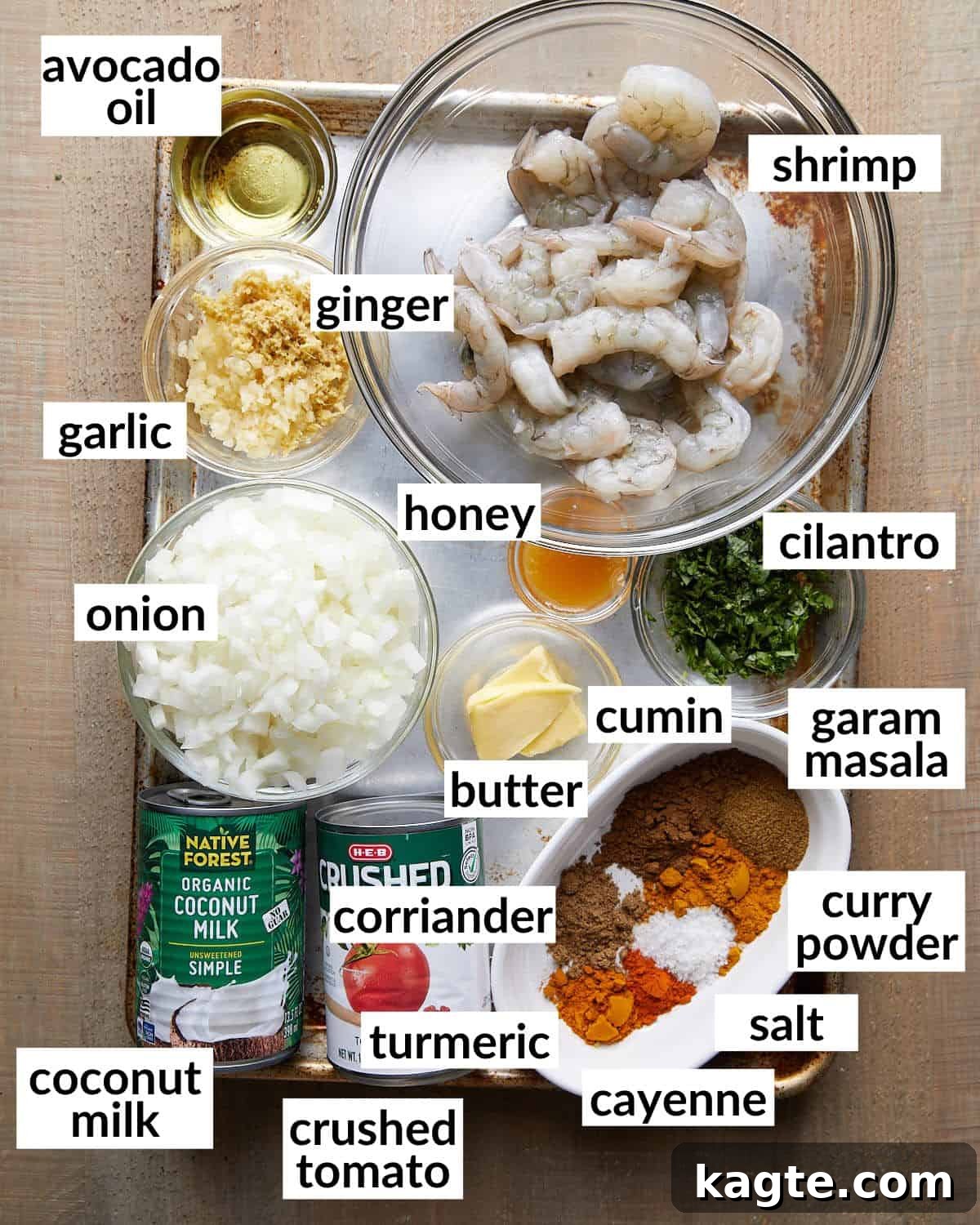
- Garam Masala: This essential spice blend is the heart of many Indian dishes. It’s a “warming spice” mixture, often featuring cinnamon, cloves, cardamom, and black pepper, though specific compositions can vary by brand and region. You’ll typically find it in the international aisle of your grocery store, often near other Indian ingredients. Its aromatic complexity is irreplaceable for achieving authentic curry flavor.
- Curry Powder & Cumin: These two spices are foundational, providing deep, earthy, and aromatic notes that are characteristic of many curry dishes. While Garam Masala provides warmth, curry powder and cumin offer a robust backbone to the sauce. Ensure your spices are fresh for the most vibrant flavor.
- Turmeric & Coriander: Turmeric gives the curry its beautiful golden hue and adds a subtle earthy bitterness, while ground coriander introduces a bright, citrusy, and slightly sweet undertone, rounding out the spice blend beautifully.
- Cayenne Pepper: This is where the heat comes from! If you are sensitive to spice, feel free to reduce the amount of cayenne powder, or even omit it for a milder version. For those who crave more fire, increase it to your liking. Alternatively, for a different kind of heat and depth, you can substitute some or all of the cayenne powder with a teaspoon or two of a good quality red curry paste, which often contains chilies and other aromatics.
- Morton Kosher Salt: All my recipes are developed using Morton kosher salt, which I highly recommend for its consistent granularity and pure flavor. If you’re using table salt, remember that it’s finer and more concentrated, so you’ll need to reduce the amount by about one-third to avoid over-salting.
- Shrimp: One pound of peeled and deveined shrimp, with tails on or off according to your preference. It’s crucial to pat the shrimp thoroughly dry before seasoning and searing. This step ensures a beautiful sear and prevents them from steaming in the pan, which can lead to a rubbery texture. Use fresh shrimp if possible, or high-quality frozen shrimp that has been properly thawed.
- Avocado Oil: Chosen for its high smoke point and neutral flavor, it’s ideal for searing and sautéing without imparting unwanted tastes. Good alternatives include grapeseed oil or vegetable oil.
- Unsalted Butter: A couple of tablespoons of butter add richness and a lovely silky texture to the sauce base. Using unsalted butter allows you to control the overall saltiness of the dish more precisely.
- Garlic & Fresh Ginger: The dynamic duo of Indian cuisine! Freshly minced garlic and ginger are non-negotiable for an authentic and aromatic curry base. Their pungent, spicy, and earthy notes create an essential foundation of flavor. Don’t be tempted to use powdered versions here; fresh makes all the difference.
- Yellow Onion: Finely diced, the onion provides a sweet, savory base as it caramelizes, deepening the flavor of the sauce.
- Honey: Just a touch of honey enhances the natural sweetness of the coconut milk and balances the acidity of the tomatoes and the heat of the spices. Maple syrup or agave nectar can be used as vegan substitutes.
- Crushed Tomatoes: A 15-ounce can of crushed tomatoes adds a vital tang and body to the curry sauce, contributing to its rich color and balanced flavor. Diced tomatoes can also be used, but crushed tomatoes create a smoother sauce.
- Full-Fat Coconut Milk: This is absolutely essential for our creamy curry sauce. You must use full-fat coconut milk from a can (typically found in the Asian or international aisle of your grocery store). Coconut milk from a carton (often labeled “beverage” coconut milk) or a non-fat version will result in an overly watery and thin sauce, lacking the luxurious texture we desire. Give the can a good shake before opening to ensure the cream and liquid are well combined.
- Fresh Cilantro: A generous amount of freshly chopped cilantro added at the end brightens the entire dish with its fresh, herbaceous notes. It’s also perfect for garnishing. If you’re not a fan of cilantro, fresh parsley or even a few torn mint leaves can offer a similar fresh finish.
A complete list of ingredients and their exact amounts is located on the recipe card below for your convenience.
How to Make Coconut Curry Shrimp
Creating this stunning Coconut Curry Shrimp is simpler than you might think. Follow these straightforward steps to achieve a restaurant-quality meal at home.
Quick Overview
- Combine all dry seasonings for the curry base.
- Lightly toss the shrimp with a portion of the spice blend.
- Heat oil in a skillet and quickly sear the seasoned shrimp.
- Remove shrimp and set aside to prevent overcooking.
- Sauté the remaining spices with aromatics like garlic and ginger.
- Add honey and onions, cooking until softened and fragrant.
- Stir in crushed tomatoes and creamy coconut milk.
- Simmer until the sauce thickens to perfection.
- Return the seared shrimp and fresh cilantro to the sauce.
- Gently cook for a few more minutes until the shrimp are heated through.
Step by Step Instructions
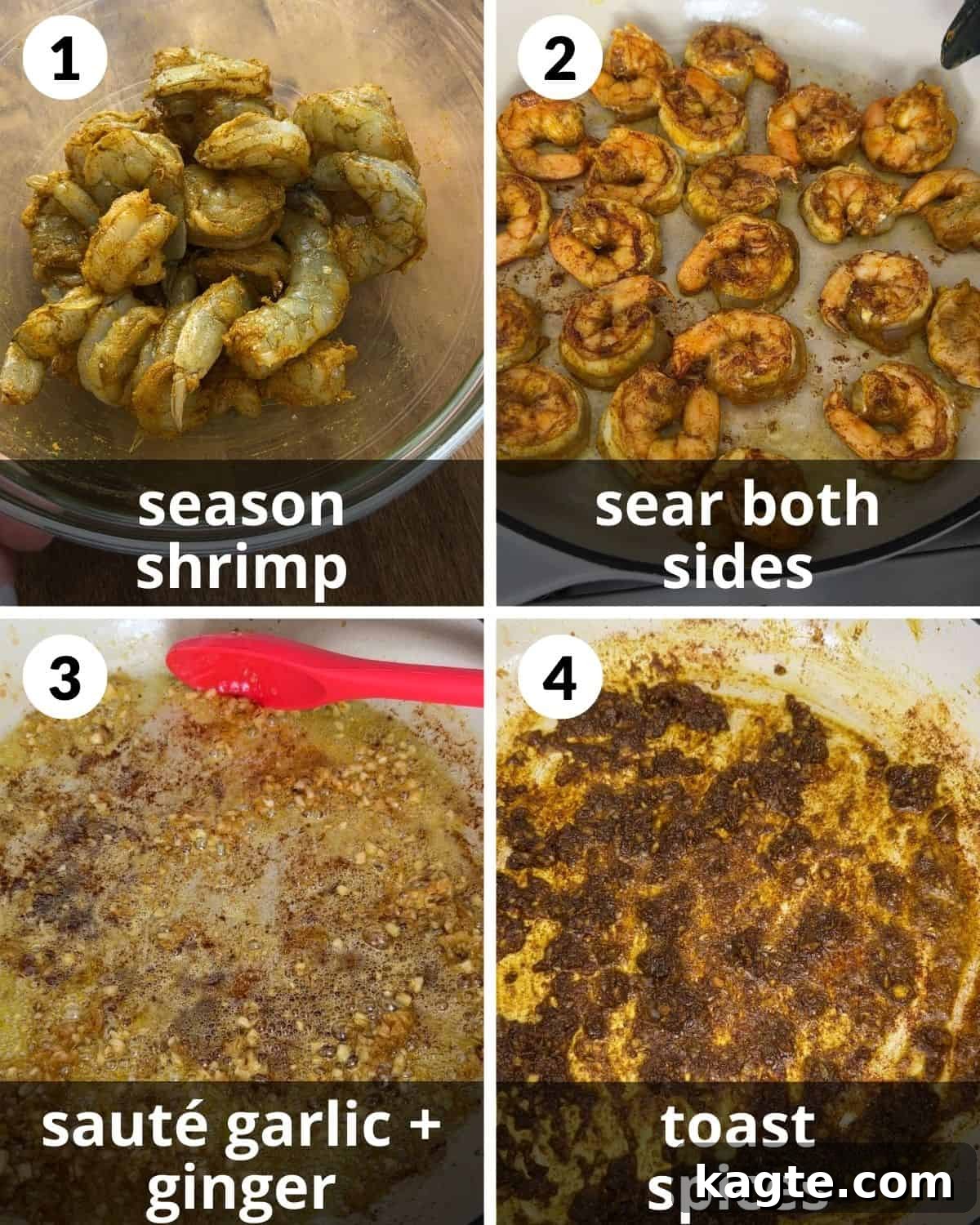
Pro Tip: Always pat dry your shrimp thoroughly before seasoning to remove any excess moisture. This ensures a beautiful sear and prevents the shrimp from steaming instead of browning.
Step 1: In a small mixing bowl, combine the garam masala, curry powder, cumin, kosher salt, ground turmeric, ground coriander, and cayenne pepper. Stir until all the spices are uniformly blended. Take 1 tablespoon of this fragrant spice mixture and toss it together with your pat-dried shrimp until each piece is evenly coated. Set the remaining spice mixture aside; it will be used for the sauce base.
Step 2: Heat the avocado oil in a large skillet or Dutch oven over medium-high heat. Once the oil shimmers, add the seasoned shrimp in a single layer, being careful not to overcrowd the pan. Sear the shrimp for approximately 2-3 minutes per side, just until they turn pink and slightly opaque. They will not be fully cooked at this stage, but we want to build flavor and achieve a nice exterior.
Step 3: Carefully remove the seared shrimp from the skillet and transfer them to a clean plate. Set them aside for later. Reduce the heat to medium-low. Without wiping out the pan (those browned bits are flavor!), melt the unsalted butter in the skillet. Add the finely minced garlic and fresh ginger. Sauté gently for 4-5 minutes, stirring frequently, until they become incredibly fragrant and slightly golden. Be careful not to burn the garlic.
Step 4: Add the remaining spice mixture (garam masala, curry powder, cumin, salt, turmeric, coriander, and cayenne pepper) to the skillet with the garlic and ginger. Sauté for just 1-2 minutes, stirring constantly. This crucial step, known as “blooming” the spices, enhances their aroma and deepens their flavor significantly, forming the aromatic heart of your curry.
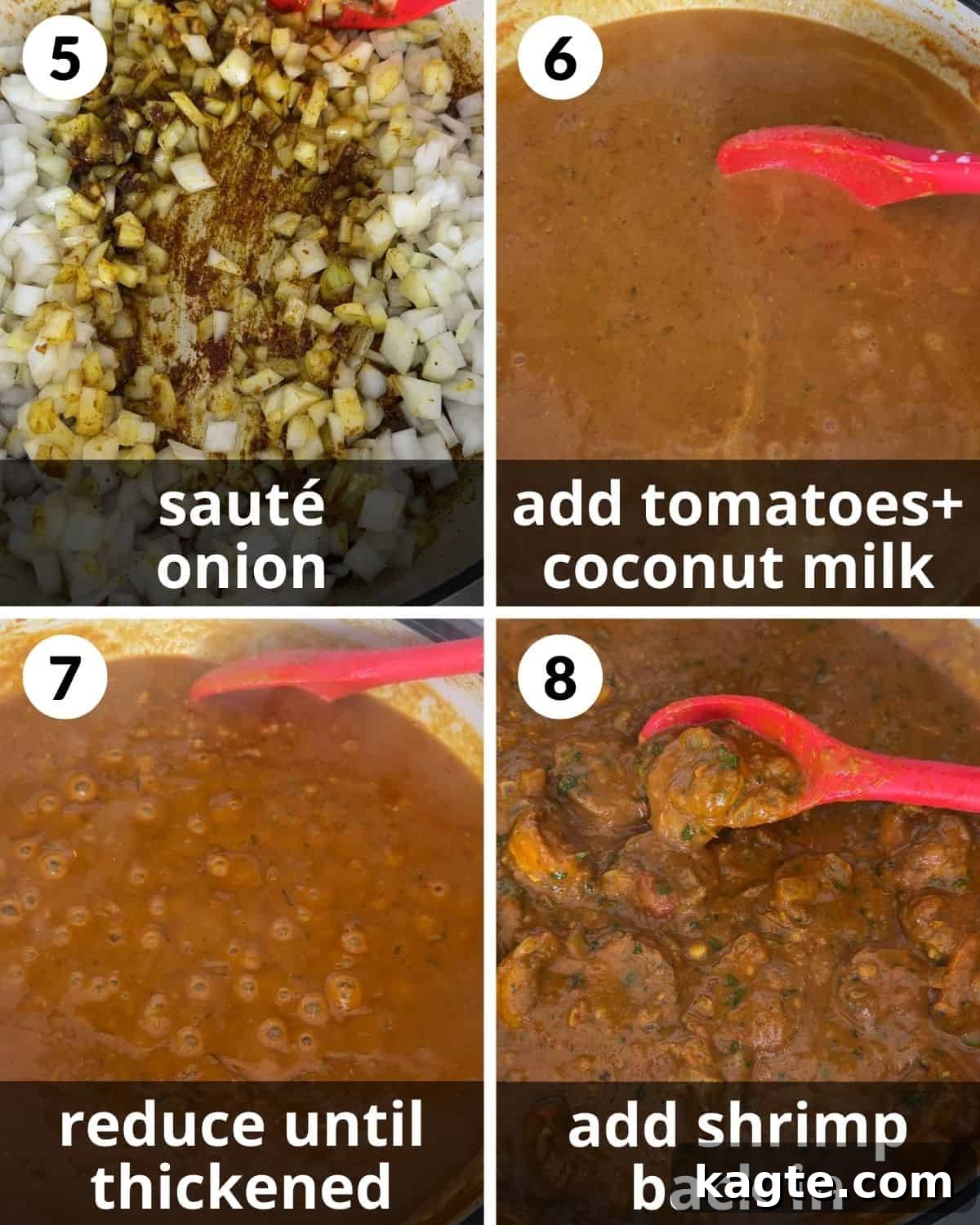
Crucial Reminder: Be mindful not to overcook the shrimp in either the initial sear or the final simmer. Overcooked shrimp will become tough and rubbery, losing its delicate texture.
Step 5: Add the finely diced yellow onion and honey to the skillet. Continue to sauté for 8-9 minutes over medium-low heat, stirring occasionally. Cook until the onions have softened considerably and become translucent and lightly caramelized, developing a sweet depth of flavor that is vital for the curry sauce.
Step 6: Pour in the 15-ounce can of crushed tomatoes and the 13.5-ounce can of full-fat coconut milk (remember to shake the can well before opening!). Stir everything together thoroughly until the sauce is well combined. Increase the heat slightly and bring the mixture to a gentle boil.
Step 7: Once boiling, reduce the heat to a simmer and cook for 10-12 minutes, stirring continuously to prevent sticking and ensure even thickening. The sauce should visibly thicken and deepen in color, with the flavors melding beautifully. It should coat the back of a spoon.
Step 8: Return the previously seared shrimp and the chopped fresh cilantro to the simmering sauce. Stir gently to incorporate. Continue to cook for an additional 3-4 minutes, just long enough for the shrimp to finish cooking through and become heated again, absorbing the wonderful flavors of the curry sauce. The shrimp should be opaque and plump. Serve immediately and enjoy!
Recipe Serving Suggestions
This Coconut Curry Shrimp is a star on its own, but pairing it with the right accompaniments elevates the entire dining experience. Garnish your finished dish generously with fresh cilantro, a sprinkle of vibrant green onions, and if you dare, a tiny dash of extra cayenne powder for an artistic flourish and an additional hint of heat. Here are some of my favorite ways to serve this authentic shrimp curry:
- Fluffy Basmati Rice: The classic pairing. Basmati rice, with its long grains and aromatic qualities, is perfect for soaking up every drop of that irresistible creamy curry sauce. Jasmine rice is another excellent option for a slightly softer texture and delicate fragrance.
- Warm Naan Bread: For a truly authentic Indian-inspired experience, serve with warm, pillowy naan bread. Its soft texture is ideal for scooping up the rich sauce. Garlic naan or butter naan would be particularly delightful.
- Crusty Bread: If naan isn’t available, any good quality crusty bread or even warm pita bread will do the trick to mop up the delectable curry.
- Fresh Salad: A simple, crisp green salad dressed with a light vinaigrette can provide a refreshing counterpoint to the richness of the curry.
- Roasted Vegetables: For an extra boost of nutrients and a complementary texture, consider serving alongside roasted cauliflower, broccoli, or asparagus.
- Here are a few more specific ideas for side dishes that pair wonderfully:
- Easy Rustic Bread
- Parmesan Rosemary Bread
- Yukon Gold Mashed Potatoes (a surprisingly comforting pairing!)
- Air Fryer Sweet Potato Cubes for a touch of sweetness and earthiness.
Expert Cooking Tips for Perfect Curry
Achieving a truly outstanding coconut curry shrimp involves a few key techniques. These expert tips will help ensure your dish is flavorful, perfectly cooked, and a delight to eat:
- Properly Season the Shrimp First: Do not skip seasoning the shrimp before searing! Tossing the shrimp directly into the pan without seasoning results in bland protein. The initial seasoning helps to enhance the shrimp’s natural sweetness and provides a foundational layer of flavor, ensuring every bite of shrimp is delicious on its own, not just when coated in sauce. It also helps in achieving a better sear.
- Bloom Your Spices for Maximum Flavor: Frying the ground spices (garam masala, curry powder, cumin, etc.) in oil and butter before adding liquids is absolutely critical for a flavorful coconut curry shrimp. This process, often called “blooming” or “tempering,” gently cooks the spices, releasing their essential oils and intensifying their aroma and taste. It transforms a simple blend of powders into a rich, complex flavor base that permeates the entire dish. Sauté them until they are fragrant, usually 1-2 minutes, but be careful not to burn them.
- Don’t Overcrowd the Pan When Searing Shrimp: When searing the shrimp, work in batches if necessary to avoid overcrowding the skillet. Overcrowding lowers the pan’s temperature, causing the shrimp to steam rather than sear. This results in soft, gray, and often rubbery shrimp instead of beautifully browned, succulent pieces. Give each shrimp enough space to make contact with the hot pan for that perfect crust.
- Master the Art of Simmering the Sauce: Once you’ve added the tomatoes and coconut milk, a gentle simmer is crucial. Keep the heat at medium-low and stir continuously, especially at the bottom of the pan, to prevent the coconut milk from scorching. Simmering allows the flavors to meld and deepen, and the sauce to thicken to that luxurious, creamy consistency. Patience during this step pays off immensely.
- Pre-cook Any Additional Vegetables: If you plan to incorporate extra vegetables like cauliflower florets, bell peppers, or green beans, it’s best to sauté or roast them separately until they are tender-crisp before adding them to the curry sauce. This ensures they are perfectly cooked and maintain their texture without making the sauce watery or ending up undercooked/crunchy. Add them towards the end, just before the shrimp, allowing them to warm through.
Additions & Variations to Personalize Your Curry
This coconut curry shrimp recipe is wonderfully adaptable, inviting you to experiment and make it truly your own. Don’t hesitate to get creative with these delicious variations:
- Boost with More Veggies – Increase the nutritional value and heartiness of your curry by adding a variety of vegetables. Many options complement the flavors beautifully. Try adding cauliflower florets, diced bell peppers (red, yellow, or orange for sweetness), green beans, or even some chickpeas for extra protein and fiber. Spinach or kale can be wilted into the sauce at the very end. Sauté harder vegetables like cauliflower or bell peppers lightly before adding them to the sauce to ensure they cook through evenly and retain a pleasant texture.
- Swap or Add Chicken – If you’re not a fan of seafood or simply want a different protein, boneless, skinless chicken breast or thighs can be a fantastic substitute for shrimp. Cut the chicken into 1-inch pieces and sear them in the skillet before beginning the sauce, much like the shrimp. Then, add them back to the sauce to finish cooking. You can also include chicken alongside the shrimp to create a surf-and-turf curry, boosting the protein content and offering variety.
- Explore Other Seafood Options – Beyond shrimp, this creamy curry base works beautifully with other types of seafood. Consider firm white fish like cod, snapper, or halibut cut into chunks. Scallops or mussels could also be a delicious addition. Just remember to adjust cooking times accordingly, as different seafood cooks at different rates.
- Make it Vegan – Transform this recipe into a delicious vegan meal by replacing the shrimp with pan-fried tofu or tempeh. Press extra-firm tofu to remove excess water, then cut it into cubes and pan-fry until golden and slightly crispy before setting aside. For the sauce, use maple syrup or agave syrup instead of honey. All other ingredients are naturally vegan, making this a simple and satisfying plant-based alternative.
- Vary the Spices: While the core spice blend is perfect, feel free to adjust. A pinch of cinnamon, a bay leaf during simmering, or a few whole green cardamom pods can add intriguing nuances.

Recipe FAQs
Curious about coconut curry? Here are answers to some frequently asked questions:
Yes, many popular Thai curry recipes, such as Green Curry, Red Curry, and Massaman Curry, famously use coconut milk as a primary base ingredient. Coconut milk contributes to their characteristic creamy texture and slightly sweet, rich flavor profile, distinguishing them from other types of curries that might use dairy or other thickening agents.
Coconut milk curry typically offers a harmonious blend of flavors. You can expect a delightful balance of slightly sweet notes from the coconut milk, often complemented by a subtle nuttiness. This sweetness beautifully contrasts with the spicy kick from chili or cayenne, and the deep, complex savory flavors derived from a mix of aromatic spices like cumin, coriander, turmeric, and garam masala. The overall experience is creamy, warming, and incredibly satisfying.
Coconut milk is added to curries for several key reasons. Firstly, it creates an incredibly creamy and luxurious sauce without the heaviness of dairy cream. Secondly, it imparts a unique, delicate sweetness and a subtle nutty flavor that perfectly complements the robust spices. Additionally, coconut milk helps to temper and balance the heat from the chilies and other pungent spices, creating a well-rounded and mellow curry that is rich in flavor but not overwhelmingly spicy. It’s a foundational ingredient for achieving that signature velvety texture and balanced taste in many Asian-inspired curries, including our coconut curry shrimp.
While you technically can, it’s highly recommended to use full-fat coconut milk for this recipe. Light coconut milk has a higher water content and will result in a thinner, less creamy sauce with less flavor depth. For that rich, restaurant-quality consistency, full-fat is the way to go.
Leftover coconut curry shrimp can be stored in an airtight container in the refrigerator for up to 3-4 days. To reheat, gently warm it on the stovetop over medium-low heat, stirring occasionally, until heated through. You may need to add a splash of water or extra coconut milk if the sauce has thickened too much.
More Main Dish Recipes
Looking for more delicious dinner ideas? Explore these other fantastic main dish recipes that are sure to become family favorites:
Chicken
Garlic Butter Chicken Thighs (Baked & Crispy)
Pasta
Baked Stuffed Shells with Meat Sauce
Fall
Hearty Dutch Oven Pot Roast
Soup & Chili
Ground Chicken Chili with Beans
Shop my Amazon Storefront for my favorite kitchen tools and ingredients!
If you try this delightful recipe, please leave a star rating in the recipe card below and/or a comment! Your feedback is always greatly appreciated and helps others discover this recipe. Follow me on Pinterest, Facebook & Instagram for more culinary inspiration and daily updates.

Print Recipe
Coconut Curry Shrimp
Equipment
-
Microplane Grater
-
Tongs
-
Shallow Dutch Oven or Large Skillet
Ingredients
- 2 teaspoons EACH garam masala, curry powder, & cumin
- 1 1/2 teaspoons Morton kosher salt
- 1 teaspoon ground turmeric
- 1/2 teaspoon EACH ground coriander & cayenne pepper
- 1 pound shrimp, peeled & deveined, pat dry
- 1 Tablespoon avocado oil
- 2 Tablespoons unsalted butter
- 7-8 cloves garlic, finely minced
- 1 Tablespoon minced fresh ginger
- 1 yellow onion, finely diced
- 2 teaspoons honey
- 1 15-ounce can crushed tomatoes
- 1 13.5-ounce can full-fat coconut milk
- 1/4 cup chopped cilantro, plus more for serving
Instructions
-
In a small bowl, stir together the garam masala, curry powder, cumin, salt, turmeric, coriander, and cayenne pepper. Toss together 1 Tablespoon of the spice mixture and the shrimp until they are well coated.
-
Heat the avocado oil in a large skillet over medium-high heat. Sear the shrimp on both sides for about 2-3 minutes.
-
Remove the shrimp from the skillet and transfer to a clean plate. Set aside. Reduce the heat to medium-low and melt the butter in the skillet. Do not wipe out the pan. Add the garlic and ginger. Sauté for 4-5 minutes.
-
Add the remaining spice mixture. Sauté for 1-2 minutes or until fragrant.
-
Add the onion and honey. Sauté for 8-9 minutes or until softened.
-
Pour in the tomatoes and coconut milk. Bring to a boil.
-
Cook for 10-12 minutes or thickened, stirring continuously.
-
Add the shrimp and the cilantro back into the sauce. Cook for an additional 3-4 minutes or until the shrimp are heated through again.
Notes
- Garam Masala: This seasoning is essential and provides a warming, aromatic flavor (cinnamon, cloves, etc.).
- Cayenne: Adjust cayenne pepper to your heat preference. Reduce for mild, increase for spicy.
- Kosher Salt: Morton kosher salt is recommended. If using table salt, reduce the amount.
- Coconut Milk: Use full-fat coconut milk from a can for a creamy, rich sauce. Carton or non-fat versions will be too thin.
- Shrimp Preparation: Always pat shrimp dry before seasoning and cooking for a better sear and texture.
- Blooming Spices: Frying the spices in oil first helps to release their essential oils, intensifying the flavor and aroma of the curry.
- Adding Veggies: If adding extra vegetables, sauté them separately until tender-crisp before incorporating into the sauce.
Nutrition
Nutrition information is automatically calculated, so should only be used as an approximation.