
January 2022 Blogging Recap: A Deep Dive into Food Blog Growth, SEO, and Monetization
As the vibrant energy of a new year sweeps in, it’s hard to believe January has already come and gone, setting a swift pace for what promises to be an eventful year. My resolve for 2022 is firm: to meticulously document the intricate journey of my food blog. This endeavor serves not only as a personal chronicle for reflection but also as a transparent resource, offering insights and actionable strategies for fellow bloggers navigating their own paths. I warmly invite you to engage; feel free to post any questions in the comments section below, or connect with me directly on Instagram for a more personal chat.
This monthly recap is designed to be a comprehensive overview of the key metrics, strategies, and lessons learned throughout the month. Below, you’ll find a detailed table of contents guiding you through the various sections, from analytical summaries to financial insights and future goals. My aim is to provide a candid look into the realities of food blogging, fostering a community of growth and shared learning. Let’s delve into the journey of January!
Table of Contents
- Google Analytics Summary
- Ahrefs Summary
- Income Overview
- Operational Expenses
- January Strategic Focus
- Key Takeaways and Insights
- Future Goals and Outlook
- Frequently Asked Questions
Google Analytics Summary: Unpacking Our Audience Engagement
Understanding your audience and how they interact with your content is paramount for any blogger, especially when aiming for monetization through ad networks like Mediavine. Google Analytics provides an invaluable window into these interactions, offering crucial data points that guide our content and SEO strategies. Here’s a detailed look at January’s performance.
Performance Overview: Key Metrics Defined
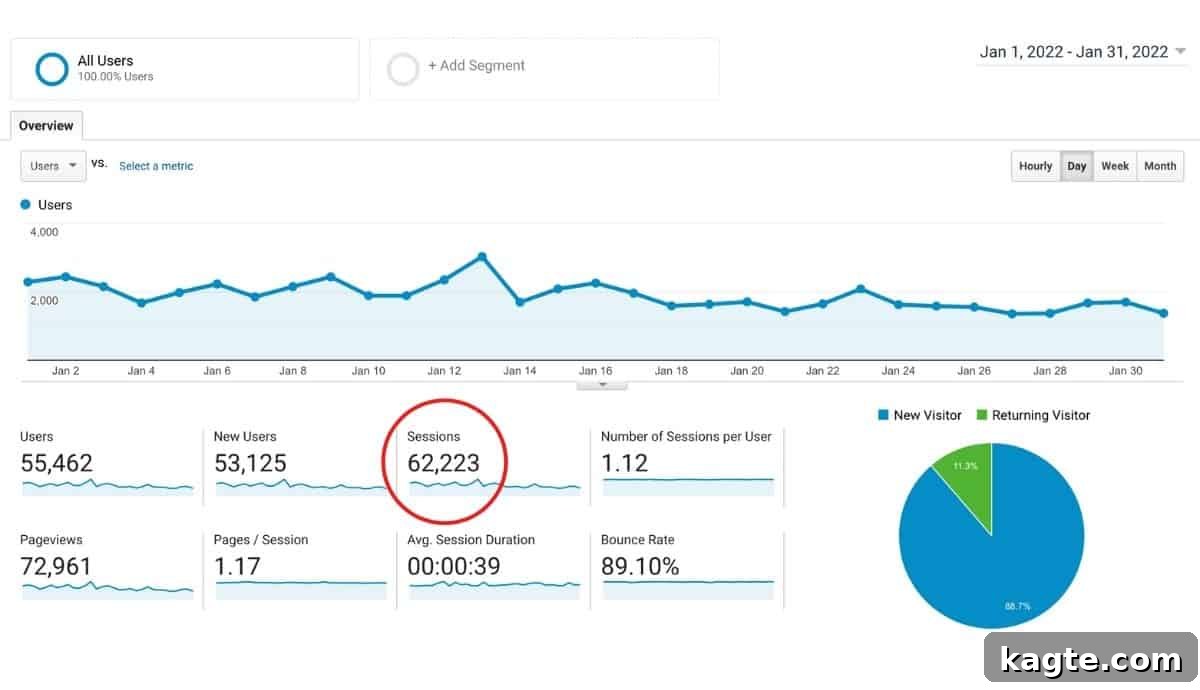
January saw a robust level of engagement across the blog, reflecting the continued growth and reach of our content. These metrics are more than just numbers; they tell a story about user behavior and content resonance.
- Sessions: 62,223
- Sessions represent a group of user interactions with your website that occur within a defined time frame. This metric is particularly significant for ad networks such as Mediavine, which often use session counts as a primary criterion for eligibility and revenue calculation. A higher number of sessions indicates a healthy, engaged audience consistently returning to and exploring the site. For food blogs, this often means users are finding multiple recipes or returning for beloved favorites, signaling strong content appeal.
- Pageviews: 72,961
- Pageviews indicate the total number of pages viewed by users. It’s a key indicator of content consumption and user interest. When pageviews exceed sessions, as they do here, it suggests that users are navigating deeper into the site, exploring more than just their initial landing page. This depth of engagement is excellent for reducing bounce rates and increasing ad impressions, directly impacting revenue potential.
- Users: 55,462
- Users refer to the number of unique individuals who visited the blog during the reporting period. This metric provides insight into the size of our distinct audience base. A high user count signifies broad appeal and effective reach, demonstrating that the blog is attracting a diverse and expanding readership. Growing your unique user base is crucial for long-term sustainability and brand building.
Traffic Acquisition: Where Our Audience Comes From
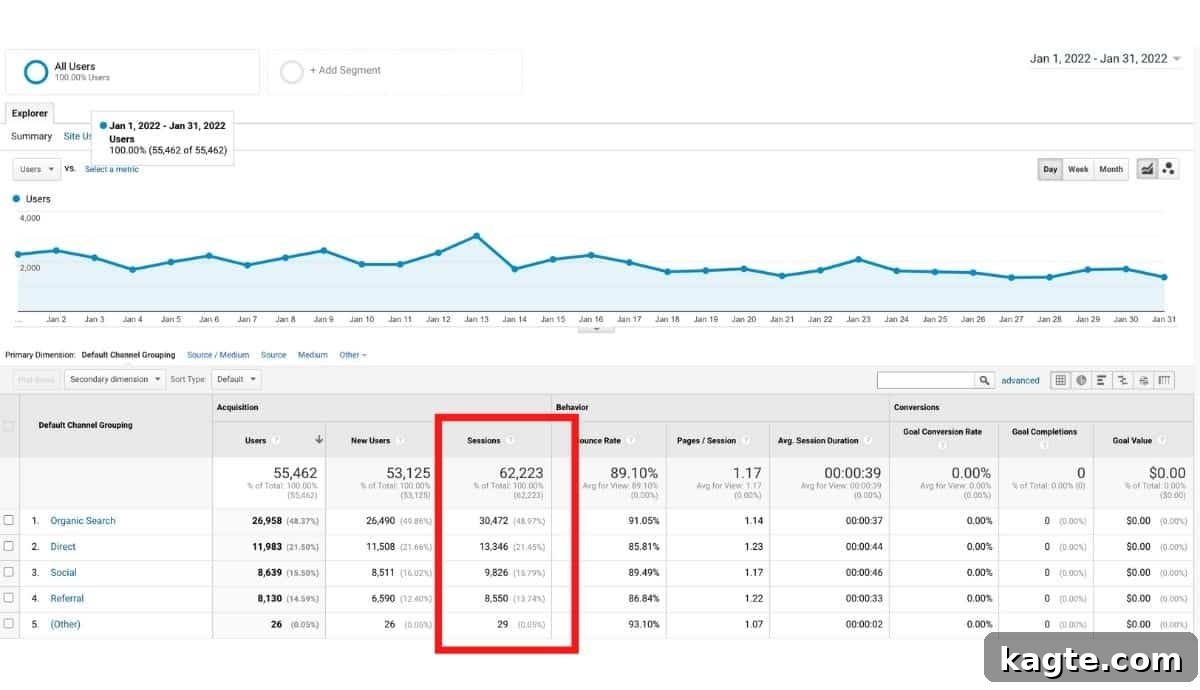
Understanding the source of your traffic is vital for optimizing marketing efforts and content distribution. By analyzing acquisition channels, we can identify which strategies are most effective and where to allocate future resources. January’s data reveals a diversified traffic portfolio:
- Organic Search: 30,472
- Organic search remains the backbone of sustainable blog traffic. These users discover the blog through search engines like Google, indicating the effectiveness of our keyword research and SEO strategies. Achieving high organic traffic means your content is well-optimized, authoritative, and directly answering user queries, making it a highly valuable and reliable traffic source. Continuous investment in SEO, including technical optimization, on-page content, and quality backlinks, is crucial for maintaining and growing this channel.
- Direct: 13,346
- Direct traffic comprises users who type your URL directly into their browser, use a bookmark, or arrive from sources Google can’t identify. While a precise breakdown is challenging, a significant portion of this traffic can originate from branded searches, Pinterest Stories, Google Web Stories, or direct links from email newsletters. A strong direct traffic number suggests a loyal readership and effective off-platform promotion that encourages direct visits.
- Social: 9,826
- Social media platforms are powerful tools for audience engagement and traffic generation. Our social strategy focuses on diverse platforms to maximize reach:
- Pinterest: 6,971 – Pinterest continues to be a dominant platform for food bloggers, acting more as a visual search engine than a traditional social network. Its high conversion rate to website traffic makes it an indispensable tool for recipe discovery.
- Facebook: 2,803 – Facebook drives consistent traffic, often through shared posts, groups, and direct links. It’s excellent for fostering community and direct interaction with followers.
- Instagram & Instagram Stories: 36 – While Instagram is fantastic for brand building and visual appeal, its direct referral traffic to blogs can be lower due to the “link in bio” limitation, which doesn’t include tap.bio clicks in this specific metric.
- Social media platforms are powerful tools for audience engagement and traffic generation. Our social strategy focuses on diverse platforms to maximize reach:
- Referral: 8,550
- Referral traffic comes from other websites linking to your blog. This indicates valuable external endorsements and content sharing.
- biteswithbri-com.cdn.ampproject.org: 4,046 (Web Stories) – Google Web Stories have been a significant driver of referral traffic, especially for fast-loading, engaging visual content on mobile devices.
- tap.bio: 368 – Tap.bio provides a consolidated link hub for Instagram, effectively channeling followers to various destinations on the blog.
- Referral traffic comes from other websites linking to your blog. This indicates valuable external endorsements and content sharing.
- Other: 29 – This category captures miscellaneous traffic sources not falling into the main classifications.
Ahrefs Summary: Boosting Our SEO Authority
Beyond Google Analytics, SEO tools like Ahrefs provide critical insights into our website’s search engine performance and competitive landscape. These metrics are vital for tracking progress in domain authority and keyword visibility, directly impacting organic traffic potential.
- Domain Rating (DR): 28 (+2 from Dec.)
- Domain Rating is a proprietary Ahrefs metric that shows the strength of a website’s backlink profile on a 100-point scale. An increase in DR signifies that the blog is accumulating more high-quality backlinks from authoritative sources, which is a key factor in improving search engine rankings. A growth of +2 points in a single month is a strong indicator of successful link-building efforts and increasing trust from search engines.
- Total Keywords: 16,927 (+1,261 from Dec.)
- This metric represents the total number of keywords for which the blog ranks in the top 100 search results. A substantial increase of over 1,200 keywords in one month indicates that new content is ranking effectively and existing content is gaining visibility for a broader range of search terms. This expansion in keyword footprint is directly correlated with potential organic traffic growth and increased brand visibility within the competitive food blogging niche.
These Ahrefs metrics underscore the continuous efforts in SEO, demonstrating that the blog is not only attracting more users but also building a stronger foundation for long-term organic growth and search engine dominance.
Income Overview: Monetization Milestones
The monetization aspect of blogging is a significant motivator for many, transforming passion into a sustainable business. January’s income report highlights the progress made through various revenue streams, particularly through ad revenue and affiliate marketing. It’s important to remember that blogging income often has a delayed payout structure, and early reinvestment is key for accelerated growth.
Total Gross Income for January: $1,535.56
Mediavine Ad Revenue: A Premium Partnership
Mediavine is a premium ad management platform renowned for its high RPMs (Revenue Per Mille/Thousand impressions) and excellent publisher support. Being accepted into their network is a significant milestone for any blogger, signaling a level of established traffic and content quality.
- Ads: $1,430.21
- This figure represents the primary income stream from displaying advertisements on the blog. Mediavine’s sophisticated ad optimization ensures that ads are relevant and deliver strong returns for the traffic generated.
- RPM (Revenue Per Mille/Thousand Sessions): $22.99 – This metric indicates how much revenue is earned per 1,000 sessions. An RPM of nearly $23 is exceptionally strong, especially for January, which is typically a lower-earning month compared to the lucrative Q4 (October-December). This high RPM reflects quality traffic and effective ad placement.
- Page RPM (Revenue Per Mille/Thousand Pageviews): $19.60 – Similar to RPM, this metric measures revenue per 1,000 pageviews. While slightly lower than session RPM, it still demonstrates robust earnings per view, confirming the value of each page interaction.
It’s crucial to acknowledge that Mediavine operates on a Net 65 payment schedule, meaning that revenue earned in January will be paid out approximately 65 days later. This delay necessitates careful financial planning but assures a stable income once established.
Other Income Streams: Diversifying for Stability
Beyond display ads, diversifying income streams is a smart strategy for long-term financial stability in blogging.
- Amazon Affiliates: $105.35
- Affiliate marketing involves earning a commission by promoting other companies’ products. For a food blog, this often includes linking to kitchen gadgets, ingredients, or cookbooks on platforms like Amazon. While the January amount is modest, it represents a consistent, passive revenue stream that can grow significantly with strategic content integration and product recommendations.
A core philosophy for 2022 is the full reinvestment of all generated income back into the business. This strategic decision aims to accelerate the blog’s growth, allowing for investments in tools, services, and content creation that will ultimately lead to higher passive income and potentially a six-figure salary in subsequent years. This approach prioritizes long-term exponential growth over immediate personal payouts.
Operational Expenses: Strategic Investments for Growth
Every successful business, including a blog, requires strategic investments to grow and maintain operations. January’s expenses reflect key decisions made to professionalize the blog’s infrastructure and delegate specific tasks, aiming for increased efficiency and expertise.
- Accountant: $300.00
- Hiring an accountant, especially for setting up a new LLC in Texas, is a crucial step towards professionalizing the business. Proper legal and financial structures ensure compliance, optimize tax situations, and provide a clear distinction between personal and business finances. This investment lays a solid foundation for future scalability.
- Pinterest VA: $325.00
- A Pinterest Virtual Assistant (VA) is a strategic hire designed to outsource the demanding task of Pinterest management. Given Pinterest’s role as a visual search engine and a significant traffic driver for food blogs, investing in a VA allows for consistent pinning, optimization, and strategy implementation, freeing up the blogger’s time to focus on content creation and other high-impact tasks.
A significant ongoing process involves transitioning all recurring blog expenses to a dedicated business checking account. This move ensures clearer financial tracking and better separation of business and personal finances. Upcoming expenses that will also be routed through the business account include web hosting (e.g., Bigscoots), image optimization services (like ShortPixel), and even groceries used for recipe development. This financial organization is crucial for accurate business accounting and future growth planning.
January Strategic Focus: Pillars of Progress
January was a month of strategic realignments and concerted efforts across several key areas. These initiatives were designed to not only improve operational efficiency but also to enhance content quality, expand reach, and build a stronger foundation for sustained growth throughout the year.
- Accounting & Financial Structure. The primary focus was on formalizing the financial aspect of the blog. This involved hiring a dedicated accountant to navigate the complexities of business formation and taxes, culminating in the establishment of a new LLC in Texas. Concurrently, a separate bank account was opened specifically for the blog, ensuring a clear distinction between personal and business finances. This step is fundamental for professionalizing the operation and streamlining financial management.
- Video Content Creation. A significant pivot was made towards incorporating longer-form video content for all new recipes. This comprehensive footage serves multiple purposes: it’s used to create detailed recipe demonstrations for the blog and YouTube, and then expertly cut down into shorter, engaging clips for social media platforms such as Instagram Reels, YouTube Shorts, and TikTok. This multi-platform video strategy aims to capture diverse audiences, enhance user experience, and capitalize on the growing importance of video in search and social algorithms.
- Keyword Volume Emphasis. The approach to keyword research underwent a strategic shift, prioritizing keywords with higher search volume. While long-tail keywords remain valuable, placing a greater emphasis on higher-volume terms allows for the potential to capture a larger share of organic traffic. This strategy aims to broaden the blog’s reach and increase the number of users discovering content through search engines.
- Social Media Consistency. A renewed commitment to daily posting on both Instagram and Facebook was implemented. Consistency on social media platforms is crucial for maintaining audience engagement, growing follower counts, and ensuring that content reaches a wider audience. Regular interaction keeps the brand top-of-mind and fosters a loyal community around the blog.
Key Takeaways and Insights: Lessons from January
Every month in blogging offers valuable lessons, and January was no exception. Reflecting on performance and market trends provides crucial insights that inform future strategies. These takeaways are particularly pertinent for food bloggers navigating seasonal fluctuations and evolving digital landscapes.
- Seasonal Fluctuations in RPMs & Traffic. January, post-holiday season (Q4), often sees a natural dip in ad RPMs and overall traffic for many niches, especially food blogs. The robust performance of Web Stories in November and December, which rapidly propelled the blog to the Mediavine threshold, significantly slowed down in January. This highlights that Q4 is unequivocally the peak season for food blogging revenue and traffic due to holiday-related searches and increased advertiser spending. Bloggers must be prepared for this seasonality and adjust expectations and strategies accordingly for Q1.
- The Critical Importance of Video Content. The decision to fully embrace video content, despite initial intimidation, has proven to be a pivotal move. Utilizing readily available tools – primarily a smartphone for filming and Davinci Resolve (a free editing software) – has made the process manageable. The strategy is to keep video production simple and efficient, ensuring it doesn’t detract from the core goal of publishing 3-4 new recipes per week. Video is not just a social media booster; it significantly enhances SEO for recipe posts, improves user engagement, and is expected to attract more client work as the blog’s capabilities expand. It’s a non-negotiable component for future growth.
Future Goals and Outlook: Charting the Path Ahead
With the insights gained from January, the focus now shifts to setting ambitious yet achievable goals for the coming months. These objectives are designed to build upon the established foundation, diversify revenue, and solidify the blog’s position as a leading resource in the food niche.
- Expand Client Portfolio. While passive income from the blog remains the priority, strategically landing more client work is a key goal. I aim to be selective with client projects, ensuring they align with my expertise, offer fair compensation, and don’t divert excessive resources from the blog’s core growth. Securing one promising client in January was a great start, demonstrating the potential for valuable collaborations.
- Accelerate Organic Traffic Growth. A primary quantitative goal is to achieve a consistent 15-20% increase in organic search traffic month-over-month. This will be accomplished through a multi-faceted SEO strategy that includes continuous keyword research, publishing high-quality, SEO-optimized new content, regularly updating and optimizing existing posts, and actively pursuing relevant backlinks.
- Elevate Pinterest Presence. Recognizing Pinterest’s immense potential for food blogs, a significant investment was made in hiring a dedicated Pinterest Virtual Assistant. The goal is to see substantial growth in Pinterest traffic and engagement within the next 3-4 months. This includes optimizing pins, implementing strategic scheduling, and leveraging trending content to maximize visibility.
- Grow Email Subscriber List. Building a robust email list is crucial for direct audience engagement and reducing reliance on third-party platforms. Future efforts will focus on implementing effective lead magnets and call-to-actions to encourage sign-ups, providing exclusive content, and nurturing a loyal community.
- Explore New Monetization Avenues. While ads and affiliate marketing are strong, the long-term goal is to explore and implement additional income streams such as digital products (e-cookbooks, meal plans), sponsored content (carefully selected), or even online courses. This diversification will provide greater financial resilience and growth potential.
Frequently Asked Questions: Your Blogging Journey Explained
To provide further value and transparency, here are answers to some common questions about my blogging journey, offering context and practical insights for those just starting or looking to grow their own blogs.
- When did you start blogging and how did you achieve Mediavine?
- I launched my blog in October 2020. For the initial months, specifically through March 2021, blog traffic was virtually non-existent, a common experience for new bloggers. The turning point came in April 2021 when I started intensely focusing on keyword research and SEO, which led to approximately 600 sessions that month. This strategic shift quickly paid off. I officially applied for Mediavine on November 23rd of the same year, having reached a significant milestone of 50,189 sessions. My ads were successfully launched and began serving on December 18th. This rapid ascent demonstrates the power of consistent, strategic SEO implementation.
- What camera and lenses do you use for your food photography?
- For all my food photography, I rely on the Canon EOS 5D Mark IV, a professional-grade full-frame DSLR known for its exceptional image quality and performance. My go-to lenses, which I utilize for every single photoshoot to capture diverse perspectives and details, are:
- The Canon EF 24-70mm f/2.8L II USM: This versatile zoom lens is perfect for capturing a wide range of shots, from broader scene-setting images to tighter compositions, offering flexibility in various shooting environments.
- The Canon EF 100mm f/2.8L Macro IS USM: This dedicated macro lens is indispensable for food photography, allowing me to capture incredibly detailed close-ups of textures, ingredients, and garnishes, truly making the food pop on screen.
- For all my food photography, I rely on the Canon EOS 5D Mark IV, a professional-grade full-frame DSLR known for its exceptional image quality and performance. My go-to lenses, which I utilize for every single photoshoot to capture diverse perspectives and details, are:
- What SEO tools do you recommend for new bloggers?
- For beginners, I highly recommend starting with free tools like Google Keyword Planner for keyword research, Google Search Console for tracking performance and identifying issues, and Google Analytics for understanding audience behavior. As you grow, investing in a tool like Rank IQ or Keysearch for more in-depth keyword analysis can be extremely beneficial before committing to higher-tier platforms like Ahrefs or SEMrush.
- How do you stay motivated during slow periods?
- Staying motivated is crucial. During slow periods, I focus on behind-the-scenes work: updating old posts, learning new skills (like video editing), and planning content calendars. Connecting with other bloggers for support and remembering my “why” – the passion for food and helping others – also helps immensely. It’s a marathon, not a sprint!