

Welcome to the ultimate guide for preparing Baked Butternut Squash! This incredibly easy, delicious, and highly customizable recipe requires minimal prep and ingredients, making it a perfect addition to weeknight dinners or festive holiday spreads. Whether you’re aiming for a comforting side dish, a vibrant salad topper, or a rich soup base, roasted butternut squash is a versatile ingredient that truly shines. Discover how to effortlessly transform this humble winter squash into a culinary delight.
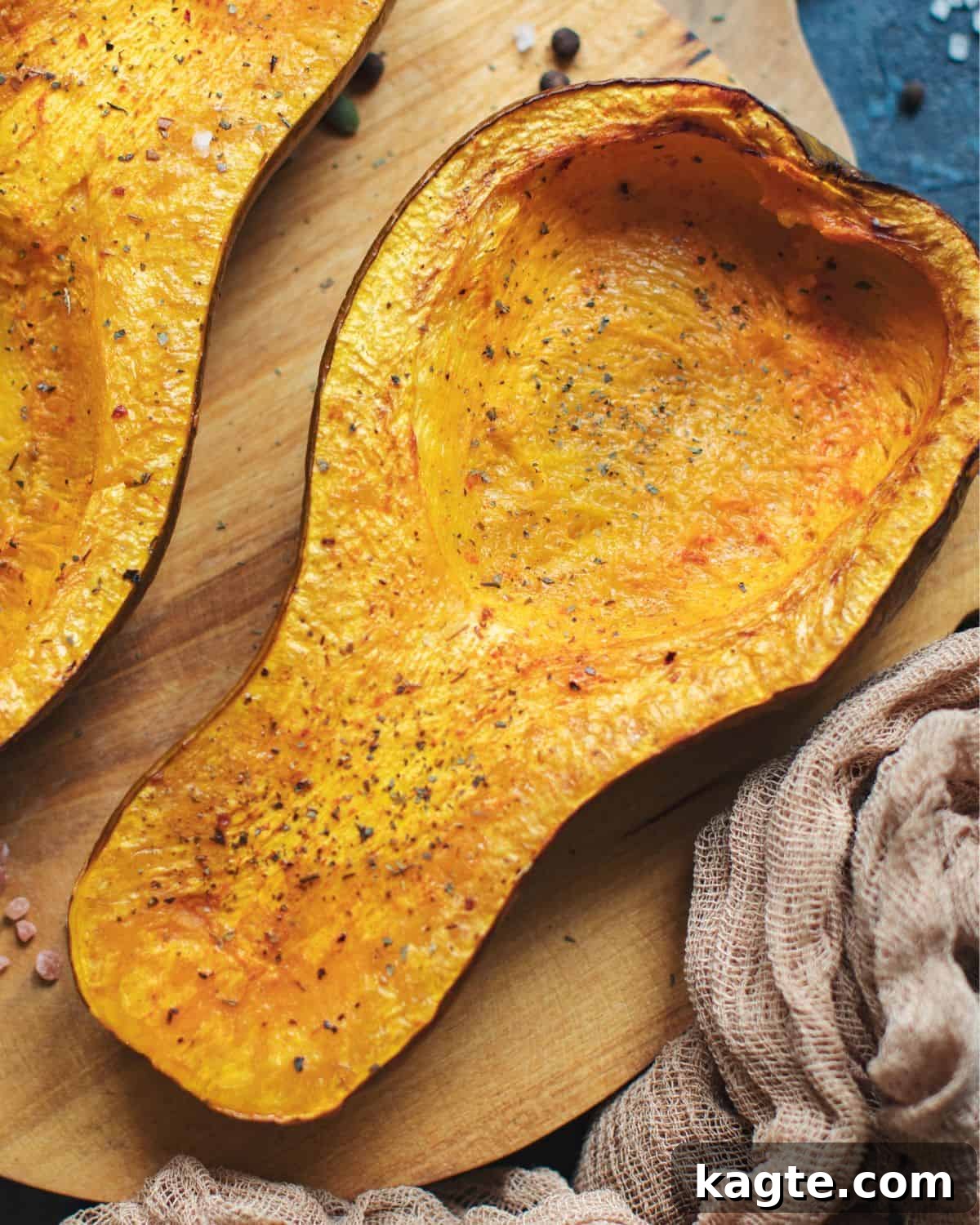
Butternut squash, a beloved staple of autumn and winter, boasts a naturally sweet and nutty flavor that intensifies beautifully when baked. This recipe focuses on bringing out its best with simple seasonings, allowing its inherent deliciousness to take center stage. From a straightforward side dish to a foundational ingredient for more complex meals, learn how to master oven-baked butternut squash and elevate your cooking with ease.
For those looking to explore other ways to enjoy this incredible vegetable, consider trying Butternut Squash Ravioli Sauce for a decadent pasta dish or Air Fryer Butternut Squash for a quicker, crispier alternative.
Why You’ll Adore This Baked Butternut Squash Recipe
There are countless reasons why this simple Baked Butternut Squash recipe will become a cherished staple in your kitchen. It’s more than just a dish; it’s a testament to how effortlessly delicious and healthy eating can be.
- Effortlessly Easy: With only about 10 minutes of active prep time, this recipe is perfect for busy weeknights or when you need a quick, impressive side dish. Minimal fuss, maximum flavor!
- Surprisingly Simple: You don’t need a pantry full of exotic ingredients or specialized kitchen gadgets. A sharp knife, a baking sheet, and a few basic seasonings are all it takes to create culinary magic.
- Naturally Delicious: By keeping the seasoning straightforward, the inherent sweet, nutty, and earthy flavors of the butternut squash truly shine. Roasting caramelizes its natural sugars, creating an irresistible depth of taste.
- Incredibly Versatile: This oven-roasted butternut squash serves as a blank canvas for a multitude of meals. Adapt the seasonings to create a sweet treat, a savory accompaniment, or a spicy kick, depending on your culinary vision.
- Holiday Season Favorite: While butternut squash is often associated with autumn, its warming flavors and comforting texture make it an ideal side dish for any winter holiday gathering, from Thanksgiving feasts to Christmas dinners. It’s a healthy, crowd-pleasing alternative to heavier sides.
- Healthy & Nutritious: Packed with vitamins, minerals, and fiber, butternut squash is a powerhouse of nutrition. Roasting it brings out its best without compromising its health benefits, making it a guilt-free indulgence.
Butternut Squash 101: Selection, Storage & Nutrition
Before diving into the recipe, let’s get acquainted with our star ingredient: butternut squash. Understanding how to choose, store, and appreciate its nutritional value will enhance your cooking experience.
What is Butternut Squash?
Butternut squash is a type of winter squash known for its distinctive bell-like shape, pale yellow-orange skin, and bright orange, sweet flesh. It belongs to the same family as pumpkins and gourds, harvested typically from early fall through winter. Its smooth texture and rich flavor make it a popular choice for everything from soups to roasted dishes.
Choosing the Best Butternut Squash
When selecting a butternut squash at the grocery store or farmer’s market, look for one that feels heavy for its size. The skin should be uniformly dull, hard, and free of soft spots, blemishes, or deep cuts. A shiny skin indicates it might have been picked too early. The stem should also be intact if possible, as this helps with storage.
Storing Butternut Squash
Uncut butternut squash can be stored for an impressively long time, typically 1 to 3 months, in a cool, dark, and dry place (like a pantry or cellar). Avoid refrigerating whole squash as it can actually shorten its shelf life. Once cut, wrap any unused portions tightly in plastic wrap and refrigerate for up to 3-5 days. Cooked butternut squash can be stored in an airtight container in the refrigerator for up to 4 days or frozen for up to 3 months.
Nutritional Powerhouse
Butternut squash is not only delicious but also incredibly healthy. It’s an excellent source of vitamins A and C, providing a significant boost to your immune system and vision health. It also contains good amounts of dietary fiber, which aids digestion, as well as potassium, magnesium, and other essential minerals. Its natural sweetness means you don’t need much added sugar to enjoy its delightful taste.
Essential Ingredients & Smart Substitutions
This recipe celebrates simplicity, utilizing a handful of basic ingredients to bring out the best in the butternut squash. Here’s a breakdown of what you’ll need and any helpful substitution notes.
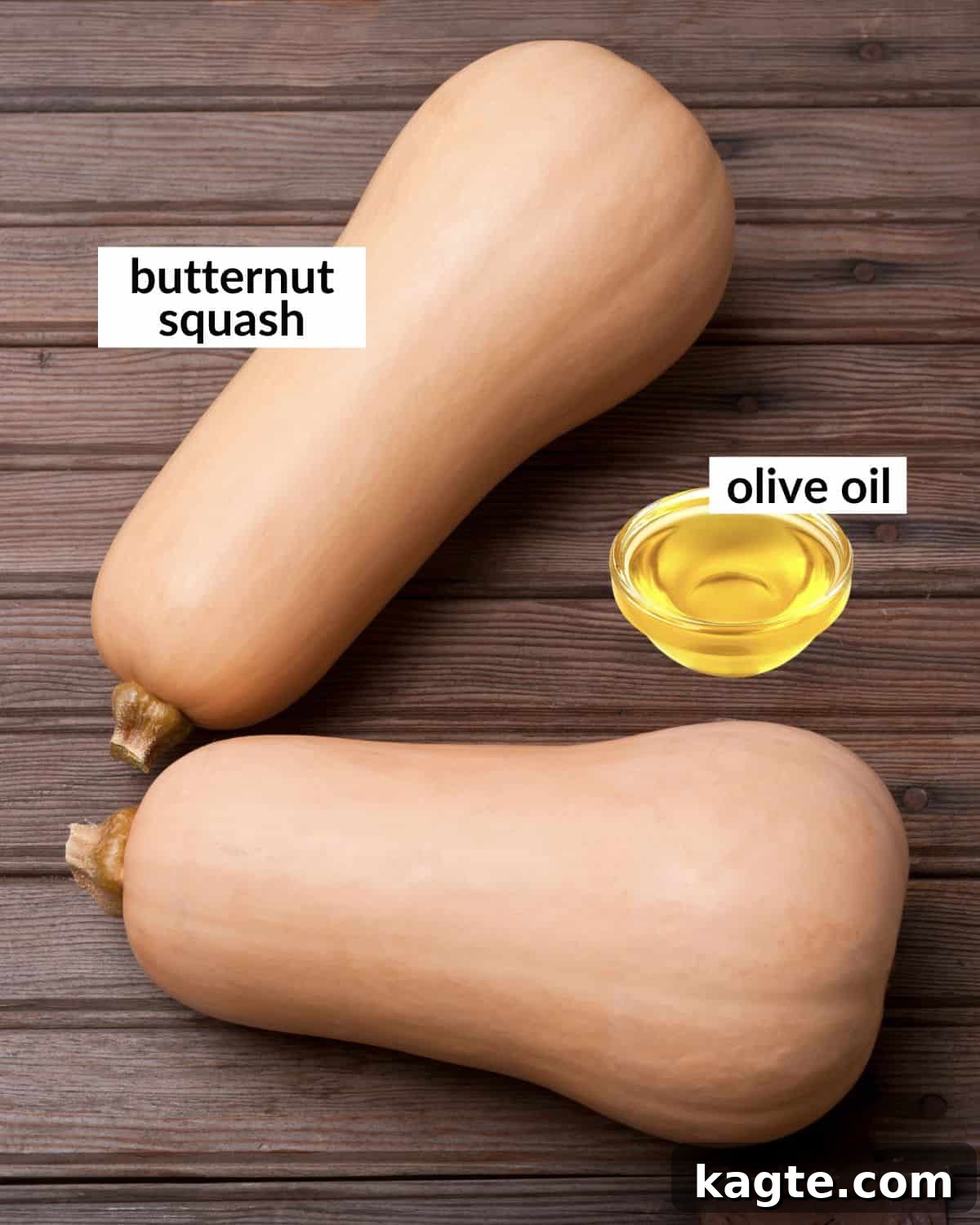
- Butternut Squash: Opt for a large, firm squash. Its size will dictate the cooking time, so keep that in mind. Ensure it’s washed thoroughly before cutting.
- Olive Oil: A good quality olive oil is essential here. It helps the squash caramelize beautifully and ensures the seasonings adhere. Extra virgin olive oil offers the best flavor. You can substitute with avocado oil, grapeseed oil, or melted butter for a richer flavor. Use a 1:1 ratio for any of these swaps.
- Kosher Salt: All my recipes are developed and tested using Morton kosher salt due to its consistent grain size and flavor profile, which makes it ideal for everyday cooking. If you’re using table salt, which is finer and saltier by volume, you’ll need to reduce the amount by about half to prevent over-salting. I highly recommend investing in kosher salt for more reliable results in your cooking.
- Freshly Ground Black Pepper: Freshly ground pepper adds a depth of flavor that pre-ground pepper often lacks. Adjust the amount to your preference.
A complete list of exact ingredient quantities can be found on the recipe card below.
Step-by-Step: How to Bake Butternut Squash in the Oven
Baking butternut squash to tender perfection is a straightforward process. Follow these simple steps for a consistently delicious result.
Quick Overview:
- Preheat your oven to the optimal temperature.
- Carefully cut the squash in half and clean out the seeds.
- Season generously.
- Roast until tender and slightly caramelized.
Detailed Step-by-Step Instructions:
Safety First: Always use a sharp, sturdy knife to cut the squash in half. This minimizes the risk of the knife slipping and causing injury, making the task much easier and safer.
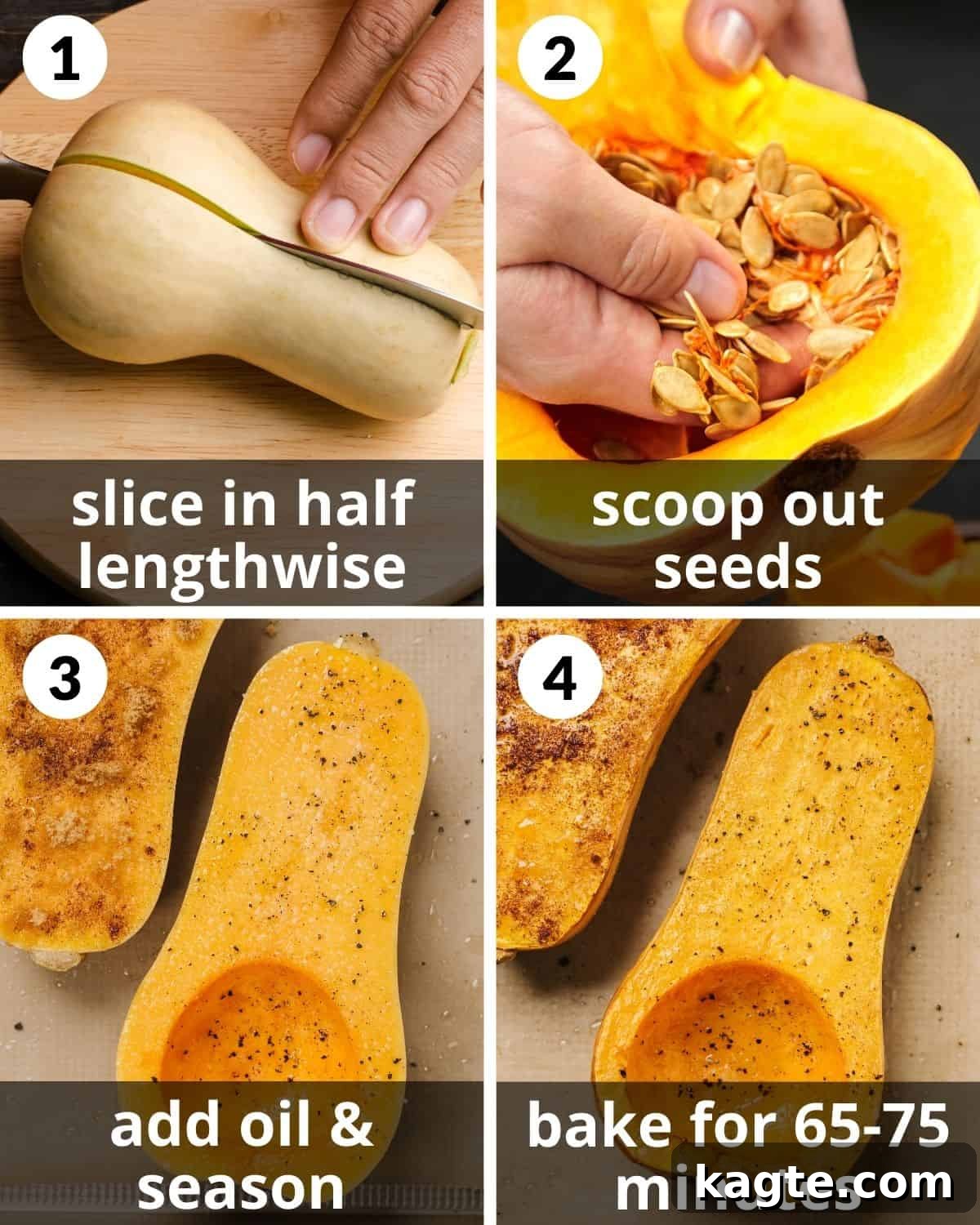
- Step 1: Preheat Oven & Prepare Squash. Preheat your oven to 375°F (190°C). While the oven heats, carefully cut the butternut squash in half lengthwise. A sturdy chef’s knife is ideal for this. If the squash is difficult to cut, you can microwave it for 1-2 minutes to soften the skin slightly.
- Step 2: Deseed the Squash. Using a spoon (an ice cream scoop works wonderfully), scoop out all the fibrous strings and seeds from both halves. You can discard the seeds or clean and roast them separately for a crunchy snack!
- Step 3: Season for Flavor. Place the squash halves, cut-side up, on a baking sheet lined with parchment paper. Parchment paper is highly recommended for easy cleanup and to prevent sticking. Brush the cut surfaces generously with olive oil. Be sure to coat evenly, as the oil helps the seasonings adhere and promotes beautiful caramelization. Season liberally with kosher salt and freshly ground black pepper.
- Step 4: Bake to Perfection. Transfer the baking sheet to the preheated oven. Bake for 65-75 minutes, or until the flesh is easily pierced with a fork (fork-tender). The exact baking time will depend on the size of your squash. Larger squash will require more time, while smaller ones may cook faster. Keep an eye on it towards the end of the baking time to ensure it doesn’t overcook.
Tip for Adhesion: Always apply the olive oil first before adding any dry seasonings. This ensures that the salt, pepper, and any other spices stick well to the squash rather than just falling off.
Unleash the Flavor: Creative Seasoning Ideas
While salt, pepper, and olive oil create a fantastic foundation, baked butternut squash is incredibly versatile and welcomes a variety of additional seasonings. Experiment with these ideas to match your meal or mood!
- Sweet & Warming: For a delightful, healthier dessert or a sweet side, skip the savory spices. Instead, sprinkle the squash generously with cinnamon, nutmeg, a pinch of ginger, or a pumpkin pie spice blend. Add a tablespoon or two of brown sugar or a drizzle of maple syrup to each squash half before baking.
- Aromatic Herbs: Butternut squash pairs wonderfully with many fresh or dried herbs. Consider adding chopped fresh rosemary, thyme, sage, or a blend like Herbes de Provence. Garlic powder or roasted garlic cloves tucked into the cavity before baking also add incredible depth.
- Spicy Kick: If you enjoy a touch of heat, sprinkle a dash of cayenne pepper, smoked paprika, or chili powder over the squash before baking. Adjust the amount to your desired spice level.
- Decadently Buttery: For an extra rich and comforting dish, replace olive oil with melted unsalted butter. The butter will impart a deeper, more luxurious flavor, perfect for a special occasion side. Use a 1:1 ratio for this swap. You can also mix in some grated Parmesan cheese during the last 15 minutes of baking for a savory, cheesy crust.
- Mediterranean Flair: Drizzle with olive oil, then season with dried oregano, a pinch of red pepper flakes, and a squeeze of lemon juice after baking for a bright finish.
Beyond the Side Dish: How to Use Roasted Butternut Squash
One of the best qualities of baked butternut squash is its incredible versatility. Once you’ve mastered the basic roasting technique, a world of culinary possibilities opens up. Don’t limit yourself to serving it merely as a side; integrate it into a variety of dishes to add flavor, texture, and nutrition.
- Elevate Your Salads: Cut the roasted squash into cubes and add it warm or cold to your favorite green salads. Its sweetness and tender texture complement bitter greens, nuts, and cheeses beautifully. Try it with spinach, feta, pecans, and a balsamic vinaigrette.
- Creamy, Comforting Soups: Scoop out the roasted flesh and blend it with vegetable broth, a touch of cream (or coconut milk for dairy-free), and spices like ginger or curry powder to create a velvety, rich butternut squash soup.
- Wholesome Harvest Bowls: Combine roasted butternut squash cubes with quinoa or farro, roasted Brussels sprouts, cranberries, and a protein source like chicken or chickpeas for a complete and satisfying meal.
- Healthy Pasta Sauce: Puree the roasted squash with a splash of pasta water, a little cream or nutritional yeast, and parmesan cheese for a surprisingly creamy and flavorful pasta sauce. It’s a fantastic way to sneak in extra vegetables.
- Savory Pies & Tarts: Add mashed or cubed roasted butternut squash to savory tarts, quiches, or even shepherd’s pie for a unique twist and added nutritional value.
- Healthy Sweet Treats: Lightly mash the roasted squash and use it in muffins, quick breads, or even as a base for a healthier “pie” filling, seasoned with cinnamon and nutmeg.
- Stuffed Squash: For a complete meal, stuff the roasted butternut squash halves with a savory mixture of grains, vegetables, and protein (like sausage or lentils) and bake until heated through.
Expert Tips for Perfectly Roasted Squash Every Time
Achieving perfectly roasted butternut squash is simple, but a few expert tips can make all the difference, ensuring safety, optimal flavor, and ideal texture.
- Invest in a Sharp Knife: Butternut squash can be quite tough to cut through due to its thick skin and dense flesh. Using a sharp, heavy chef’s knife is crucial not only for ease but, more importantly, for safety. A dull knife is more likely to slip and cause injury. If you struggle, carefully pierce the squash a few times with a fork and microwave it for 1-2 minutes to soften it slightly before cutting.
- Adjust Cook Time Based on Size: Butternut squash comes in various sizes, and this will directly impact your baking time. While 65-75 minutes is a good guideline for a large squash, smaller ones might be fork-tender in as little as 45-50 minutes. Conversely, an exceptionally large squash may need up to 90 minutes. Always check for doneness by easily piercing the thickest part of the flesh with a fork.
- Effortless Skin Removal: While butternut squash skin is technically edible and contains nutrients, it can be quite chewy and tough. Most people prefer to remove it before serving. The easiest way to do this is *after* roasting. Once the squash has cooled slightly, simply use a fork or a spoon to gently peel or scrape the skin away from the soft flesh. It should come off very easily.
- Don’t Overcrowd the Pan: When roasting vegetables, ensure there’s enough space between the squash halves (or cubes if you’re making those). Overcrowding a baking sheet can steam the vegetables instead of roasting them, leading to a less desirable soft and watery texture rather than a beautifully caramelized exterior. If necessary, use two baking sheets.
- Batch Cook for Meal Prep: Baked butternut squash is excellent for meal prepping. Roast a large batch at the beginning of the week, and you’ll have a healthy, versatile ingredient ready to add to salads, stir-fries, or blend into soups throughout the week.
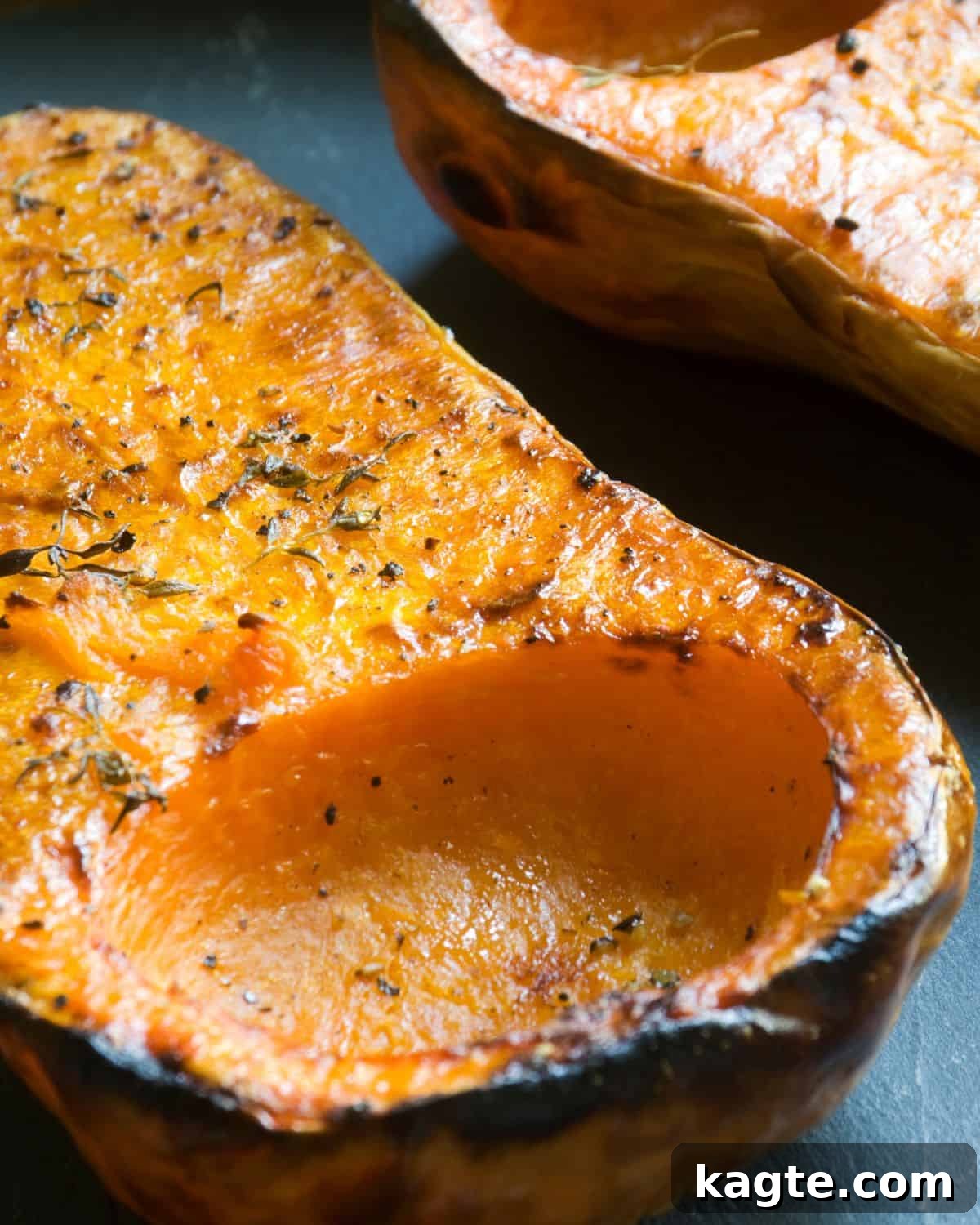
- Caramelization is Key: Don’t be afraid of a little browning on the edges. That rich, golden-brown color indicates delicious caramelization, where the natural sugars in the squash have transformed into deeper, more complex flavors.
Exciting Additions & Recipe Variations
This recipe provides a fantastic base, but don’t hesitate to get creative! Here are some popular and delicious ways to vary your baked butternut squash.
- Baked Butternut Squash Cubes: If you prefer smaller, bite-sized pieces perfect for salads or quick additions to stir-fries, cube your squash. To do this, first peel the entire squash (a sturdy vegetable peeler works best, or carefully use a knife). Then, deseed it and cut the flesh into uniform 1-inch (2.5 cm) squares. Toss the cubes with 2-3 tablespoons of olive oil and your desired seasonings. Preheat the oven to 400°F (200°C) and bake for approximately 25-30 minutes, stirring halfway through, until tender and caramelized.
- Cheesy Butternut Squash: For a wonderfully savory and comforting side, transform your baked butternut squash with cheese. During the last 15-20 minutes of baking, sprinkle your favorite shredded cheese directly onto the squash halves (or cubes). Parmesan, cheddar, Gruyère, or a blend of Italian cheeses all work beautifully. Bake until the cheese is melted, bubbly, and slightly golden.
- Sweet & Spicy Roast: Combine the best of both worlds! After coating with olive oil, sprinkle with a mix of brown sugar (or maple syrup), a warming spice like cinnamon or nutmeg, and a tiny pinch of cayenne pepper for a subtle, intriguing heat that balances the sweetness. This makes for an exceptional autumn or winter side dish.
- Maple Pecan Butternut Squash: Drizzle with maple syrup and sprinkle with chopped pecans during the last 15 minutes of baking for a delightful sweet and crunchy texture.
- Garlic Herb Roasted Squash: Before roasting, mince several cloves of garlic and mix them with your olive oil. Brush this garlic-infused oil over the squash, then add fresh or dried herbs like rosemary and thyme.
Frequently Asked Questions About Baking Butternut Squash
Roasting or baking is widely considered the best method for cooking butternut squash. The dry heat of the oven helps to caramelize its natural sugars, enhancing its inherent sweetness and developing a richer, more complex flavor. Whether you roast it in halves or cubes, this method consistently yields tender, flavorful results.
Generally, no, you should not cover butternut squash when baking it in the oven. Leaving it uncovered allows for proper air circulation, which is essential for achieving that desirable caramelization and tender texture. Covering it would trap steam, leading to a softer, more boiled-like texture rather than a roasted one. Ensure you cook the squash cut-side up (or skin-side down, depending on how you arrange it) for best results.
While technically edible and containing some nutrients, the skin of a butternut squash tends to be quite tough and fibrous, even after baking. Most recipes, including this one, recommend removing the skin before eating or serving the squash for a more pleasant texture. As mentioned in our expert tips, it’s easiest to remove the skin once the squash has been baked and allowed to cool slightly.
Allow the baked butternut squash to cool completely. Then, scoop the flesh out of the skin (if you haven’t already) and transfer it to an airtight container. It can be stored in the refrigerator for up to 3-4 days. For longer storage, you can freeze the cooked squash. Simply place the cooled flesh in freezer-safe bags or containers and freeze for up to 3 months.
Yes, absolutely! You can prep the butternut squash a day or two in advance. Cut it in half, scoop out the seeds, and then store the halves tightly wrapped in plastic wrap in the refrigerator. When you’re ready to bake, simply proceed with the oil and seasoning steps. This is a great time-saver for holiday meals.
More Delightful Side Dish Recipes
Looking for more inspiration to complete your meal? Explore these other fantastic side dish recipes that are sure to impress.
Side Dish
What To Serve with Chicken and Dumplings for Dinner (15 Best Sides)
Side Dish
What To Serve With Mashed Potatoes (25 Dinner Ideas)
Side Dish
What To Serve With Taco Soup For Dinner (Toppings & Sides)
Side Dish
Broccoli Mac and Cheese (Easy & Creamy)
Discover more kitchen essentials and culinary inspiration in my Amazon Storefront!
If you try this delightful Baked Butternut Squash recipe, please consider leaving a star rating in the recipe card below and/or a comment. Your feedback is invaluable to me! For more delicious recipes and cooking tips, follow me on Pinterest, Facebook, and Instagram.

Print Recipe
Baked Butternut Squash Recipe
By Brianna May
★★★★★ (5 out of 5 stars based on 1 rating)
This Baked Butternut Squash recipe offers an effortless and delicious way to enjoy the sweet, earthy flavors of winter squash. Perfect as a customizable side dish for any meal or holiday gathering, it requires minimal ingredients and prep, making it a healthy and versatile addition to your culinary repertoire.
Prep Time: 10 minutes
Cook Time: 1 hour 5 minutes
Total Time: 1 hour 15 minutes
Servings: 4
Equipment
- Baking Sheets
- Basting Brush
- 8 inch Chef’s Knife
Ingredients
- 1 large butternut squash, washed
- 2-3 Tablespoons olive oil
- Salt & pepper, to taste
Instructions
- Preheat the oven to 375°F (190°C). Carefully cut the butternut squash in half lengthwise.
- Using your hands and a spoon, scoop out all of the fibrous strings and seeds.
- Place the squash halves, cut-side up, on a baking sheet lined with parchment paper. Brush generously and evenly with olive oil. Season liberally with salt and pepper.
- Bake for 65-75 minutes, or until the flesh is fork-tender. Cooking time may vary based on squash size.
Did you make this recipe? Leave a comment and star rating below!
Notes
- Kosher Salt: All recipes are tested with Morton kosher salt. If using table salt, reduce the amount by half.
- Use a sharp knife: Butternut squash is dense. A sharp knife ensures easier and safer cutting.
- Adjust the cook time: Squash size varies. Smaller squash may take 45-50 minutes, larger ones up to 90 minutes. Always check for fork-tenderness.
- Remove the skin with a fork: After baking and cooling slightly, the skin can be easily peeled off with a fork for a more enjoyable texture.
- Storage: Store cooked squash in an airtight container in the refrigerator for up to 3-4 days, or freeze for up to 3 months.
Nutrition
Calories: 146kcal | Carbohydrates: 22g | Protein: 2g | Fat: 7g | Saturated Fat: 1g | Polyunsaturated Fat: 1g | Monounsaturated Fat: 5g | Sodium: 8mg | Fiber: 4g | Sugar: 4g
Nutrition information is automatically calculated and should only be used as an approximation.