
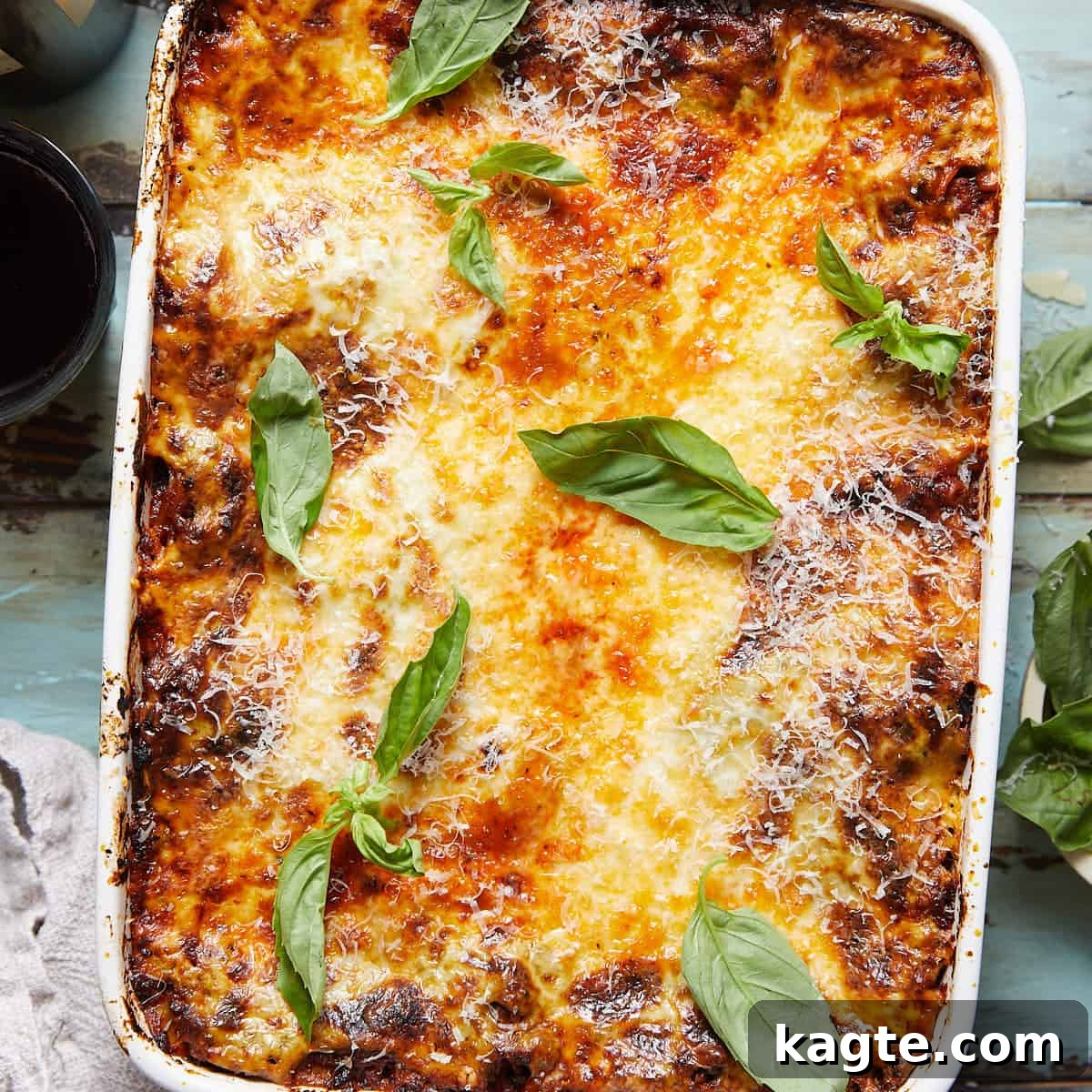
Welcome to the ultimate guide to crafting an authentic Italian Lasagna with Béchamel – a truly classic dish that embodies comfort, richness, and culinary tradition. This isn’t just any lasagna; it’s a meticulously developed recipe featuring layers of a deeply flavorful bolognese, perfectly tender pasta, an abundance of premium cheeses, and, crucially, a silky, luxurious pesto and parmesan béchamel sauce. Say goodbye to ricotta in your lasagna and embrace the traditional, elegant creaminess that béchamel brings. This dish is designed to be a total crowd-pleaser, a hearty masterpiece that will have everyone asking for seconds and yearning for more of its profound flavors.
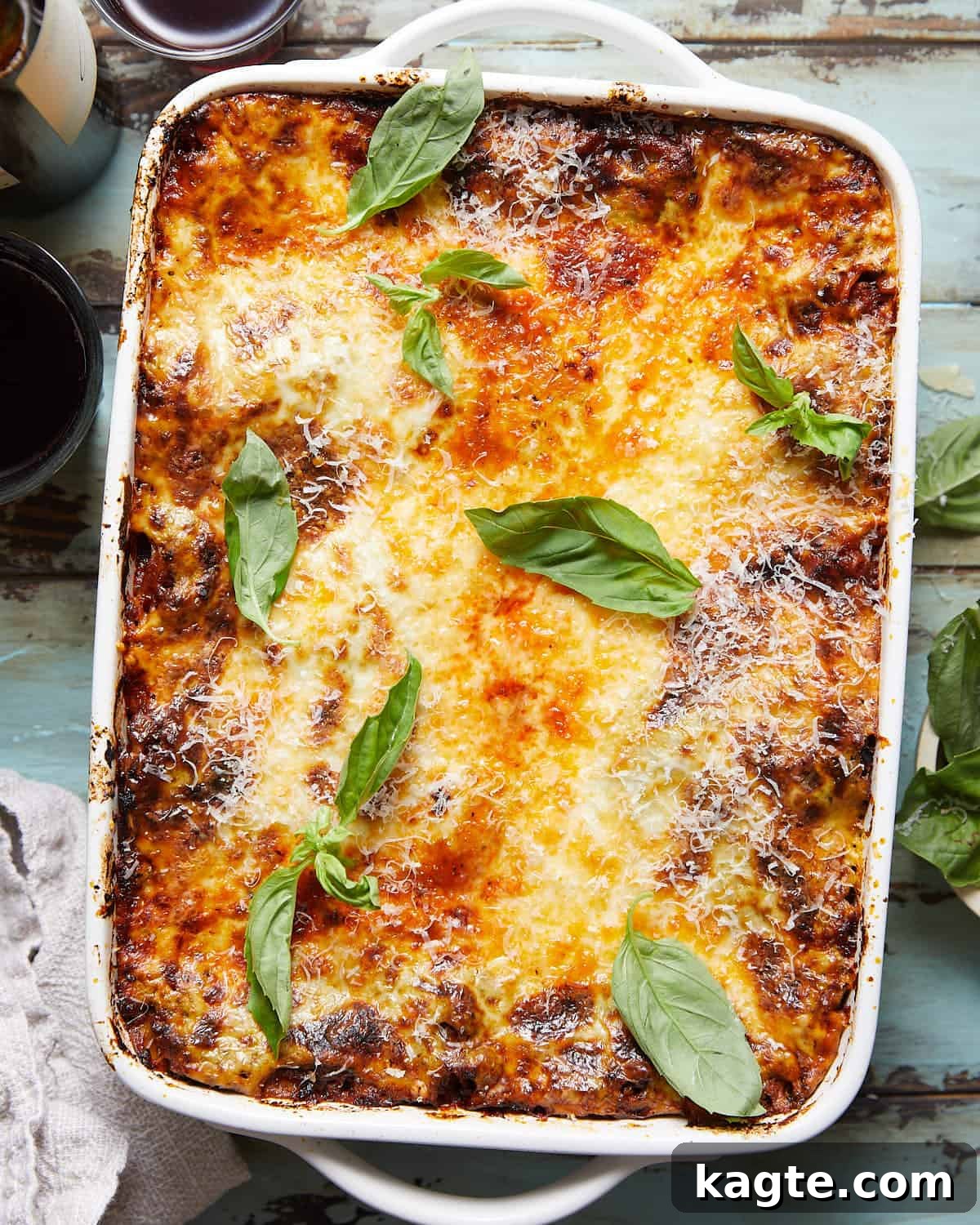
Over the past few months, I’ve poured my passion into perfecting this homemade lasagna recipe, driven by countless requests from enthusiastic home cooks like you. My goal was to ensure every element was flawless, creating a recipe that stands out not just for its authenticity but also for its sheer deliciousness and ease of execution.
While the core structure of this lasagna follows time-honored Italian methods, my rendition elevates it with a generous hand on the cheese, meticulously balanced seasonings, and a vibrant twist: the infusion of rich pesto directly into the béchamel sauce. This subtle yet impactful addition jazzes things up, bringing an herbaceous depth that complements the robust meat sauce beautifully.
If you’re captivated by the luscious meat sauce featured in this recipe but prefer a quicker meal without the layering commitment, you’ll adore my Creamy Bolognese Recipe. It captures the same slow-simmered perfection. For those seeking similar Italian-inspired comfort with less fuss, explore my Sausage Gnocchi with Spinach or the incredibly satisfying Cheesy Baked Spaghetti with Meat Sauce.
Table of Contents
- What Is Béchamel Sauce?
- Why Use Béchamel in Lasagna?
- Why You’ll Adore This Lasagna
- Essential Ingredients & Clever Substitutions
- Step-by-Step Guide: How to Make Lasagna with Béchamel Sauce
- Perfect Pairings & Serving Suggestions
- Pro Tips & Delicious Variations
- Frequently Asked Questions
- Explore More Italian Recipes
- Lasagna with Béchamel Sauce Recipe
What Is Béchamel Sauce? A Culinary Staple Explained
Béchamel sauce, often revered as one of the five “mother sauces” of French cuisine, is a fundamental creamy white sauce that forms the backbone of countless classic dishes. Its elegance lies in its simplicity: it’s crafted from just two core components – a roux and milk. A roux is a paste created by cooking equal parts butter and flour, typically over low to medium heat, until a smooth mixture forms. This roux then acts as the thickening agent for the milk, which is gradually whisked in.
The sauce is gently cooked until it transforms into a wonderfully silky-smooth, thickened consistency, often described as “nappe” – thick enough to coat the back of a spoon. Traditional béchamel is subtly seasoned with a hint of nutmeg, alongside salt and pepper, which enhances its delicate, dairy-rich flavor without overpowering it. This versatile white sauce isn’t just for lasagna; it serves as a creamy base for various other culinary creations, from the comforting filling of my Chicken Pot Pie with Puff Pastry to the rich foundation of my Homemade Mac and Cheese Sauce. Understanding béchamel is key to unlocking a world of creamy, savory possibilities in your kitchen.
Why Use Béchamel in Lasagna? The Authentic Italian Touch
The choice of a creamy layer in lasagna often sparks debate, but in authentic Northern Italian traditions, béchamel reigns supreme. While many American lasagna recipes feature a creamy layer of seasoned ricotta or cottage cheese, béchamel offers a distinct and superior experience that is both richer in flavor and more refined in texture.
This velvety white sauce serves multiple crucial roles in a classic lasagna. Firstly, it provides an exquisite creaminess and sauciness that beautifully contrasts with the deep, robust flavors of the bolognese meat sauce. Beyond texture, béchamel imparts a subtle nutty and buttery depth that simply cannot be replicated by ricotta. It helps bind the layers together without making the dish heavy or watery, ensuring each forkful is moist, cohesive, and utterly decadent.
From my perspective, béchamel is unequivocally the preferred choice for several compelling reasons. Its rich, nuanced flavor profile elevates the entire dish, creating a more sophisticated and deeply satisfying taste. It contributes to a wonderfully moist and unctuous lasagna, preventing the pasta sheets from drying out during baking. Most importantly, using béchamel aligns with the traditional preparation of lasagna, particularly in regions like Emilia-Romagna, making this recipe a truly authentic Italian culinary journey.
Why You’ll Adore This Lasagna: Unpacking the Delights
This Lasagna with Béchamel isn’t just a recipe; it’s an experience designed to delight your senses and satisfy your deepest comfort food cravings. Here’s why you’ll fall in love with every layer:
- Slow-Simmered Bolognese Perfection – The heart of any great lasagna is its meat sauce, and ours is truly exceptional. We start with a rich blend of three different meats, slowly simmered with robust red wine and an aromatic medley of herbs. This patient process allows the flavors to meld and deepen, creating a complex, savory foundation that is simply unparalleled. The result is a sauce so rich and authentic, it could stand alone as a meal.
- Luxurious Pesto Béchamel Sauce – Stepping away from the common ricotta, this recipe champions a silky, creamy béchamel, elevated with a vibrant burst of pesto and a touch of parmesan. This unique addition transforms the traditional white sauce, adding an herbaceous freshness and nutty depth that beautifully complements the bolognese. It’s richer, more moist, and utterly sophisticated.
- Unapologetically Cheesy – Prepare for a cheese lover’s dream! This lasagna boasts over one pound of carefully selected cheeses, ensuring every bite is loaded with gooey, melted deliciousness. The combination creates a perfect balance of savory notes and incredible texture.
- Pure Decadence in Every Forkful – More than just a meal, this dish is the epitome of Italian comfort food. Each layer builds upon the next to create a harmonious symphony of flavors and textures – hearty, creamy, savory, and utterly satisfying. It’s the kind of dish you crave on a cozy evening or to celebrate a special occasion.
- Effortless No-Boil Pasta – To simplify your cooking process without compromising on quality, we utilize convenient no-boil lasagna sheets. These innovative pasta sheets are not only easier to work with but also save valuable prep time, allowing you to focus on developing those incredible sauce flavors. They absorb moisture beautifully, baking up perfectly tender every time.
- Conveniently Prepped in Advance – Life is busy, and this recipe understands that. You have the flexibility to prepare components like the bolognese and béchamel ahead of time, or even assemble the entire dish the day before. This makes it an ideal option for entertaining or for enjoying a homemade meal during a busy week.
- Feeds a Hungry Crowd – Designed to serve 10 generous portions, this impressive lasagna stands four layers tall, making it perfect for family gatherings, dinner parties, or any event where you need to feed many happy guests. It’s a true centerpiece dish that guarantees satisfaction.
- Even Better as Leftovers – Don’t have 10 people to feed? No problem! This lasagna reheats wonderfully in the microwave, often tasting even better the next day as the flavors continue to meld and deepen. It’s perfect for meal prepping or enjoying a gourmet lunch.
Essential Ingredients & Clever Substitutions
Crafting an exceptional lasagna begins with high-quality ingredients. Here’s what you’ll need and some valuable tips for optimal flavor:
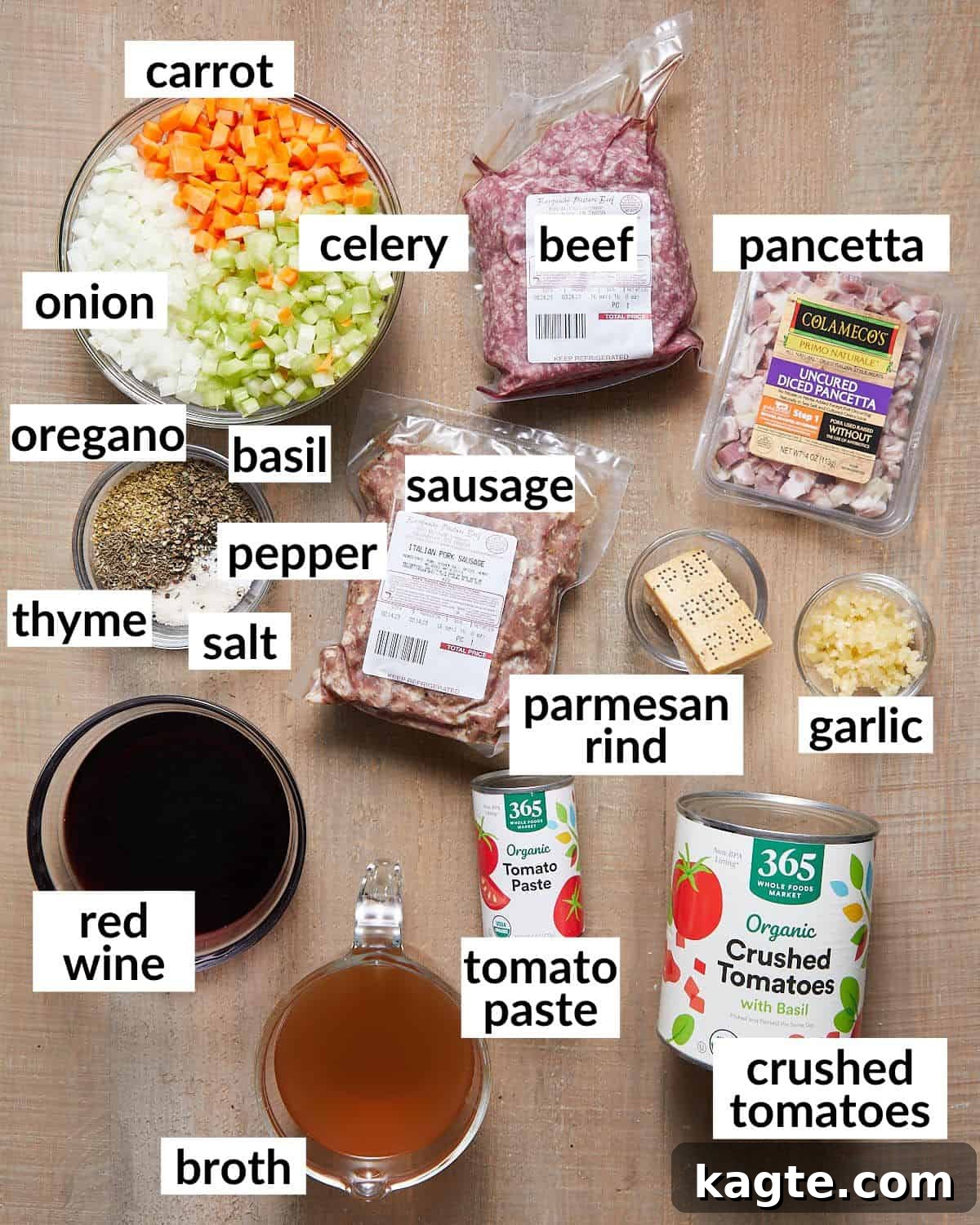
Bolognese Ingredients
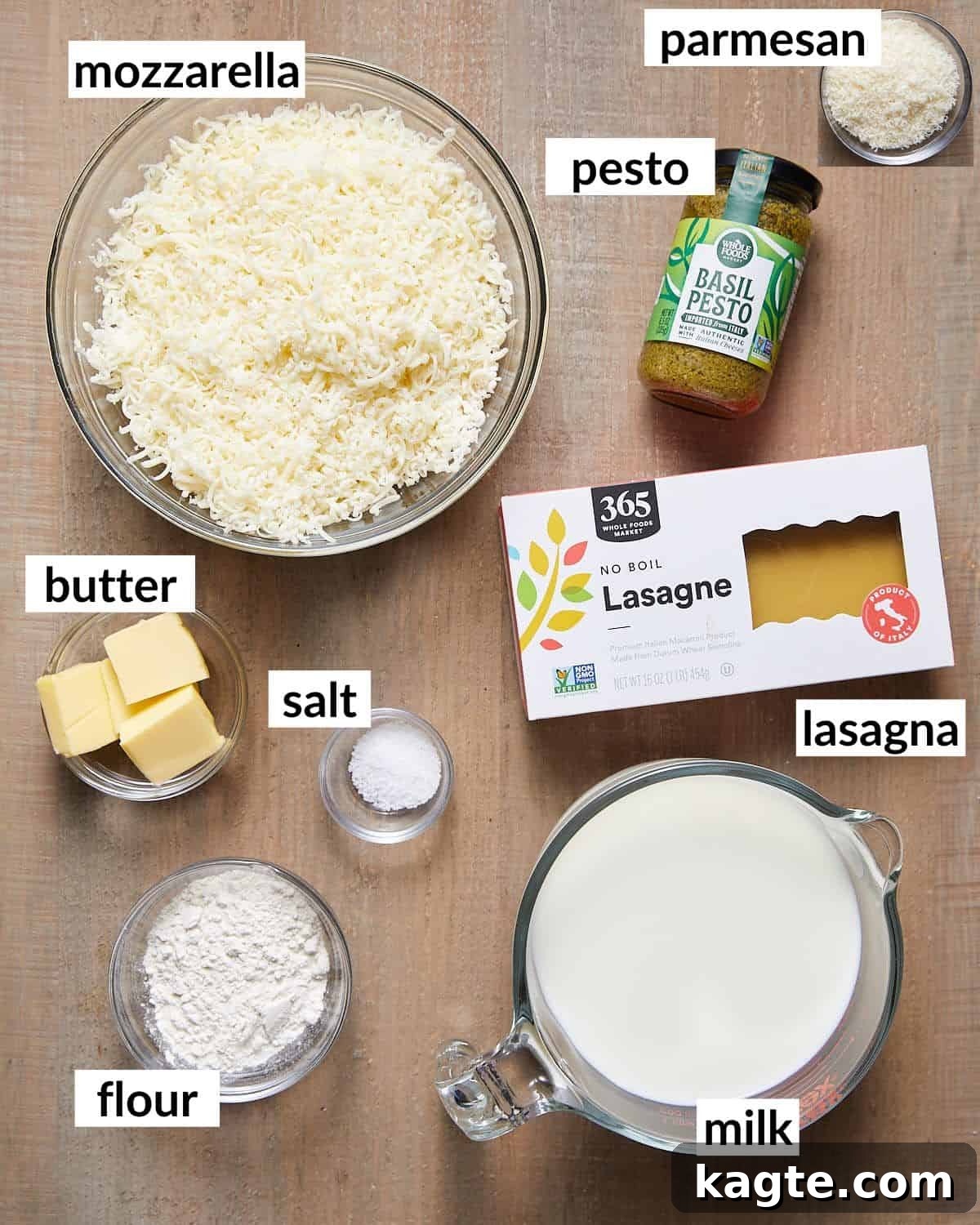
Béchamel Ingredients
- Kosher Salt: For consistent and balanced seasoning, all my recipes, including this one, are developed using Morton kosher salt unless specified otherwise. Its crystal size and clean flavor make it ideal for everyday cooking. If you’re using table salt, remember to reduce the quantity as it is finer and saltier by volume. I highly recommend investing in a box of kosher salt on your next grocery trip!
- Dry Red Wine: The red wine is crucial for deglazing and adding profound depth to the bolognese. I recommend using a dry red wine such as Pinot Noir, Merlot, or Cabernet Sauvignon. There’s no need to splurge on an expensive bottle; an inexpensive yet drinkable option will work perfectly. For an alcohol-free alternative, you can substitute the wine with a mixture of 3 tablespoons of good quality balsamic vinegar combined with ½ cup of beef broth.
- Pesto: The pesto is the secret weapon that elevates our béchamel. My personal favorite is Seggiano’s Fresh Basil Pesto, which I often find at Whole Foods, though availability can vary. Look for high-quality pesto in the refrigerated section of your grocery store, as these are typically superior to shelf-stable varieties. Of course, if you have homemade pesto on hand, that would be an absolute dream!
- Lasagna Sheets: This recipe is designed for convenience using oven-ready or “no-boil” lasagna sheets. Any brand will work effectively. You won’t use an entire 16-ounce package; typically, about 10-12 ounces are sufficient to create our four delightful layers.
Should you find yourself without celery or simply not a fan, discover the 12 Best Substitutes for Celery to ensure your bolognese remains flavorful.
A complete list of ingredients with precise amounts can be found on the recipe card below.
Step-by-Step Guide: How to Make Lasagna with Béchamel Sauce
Quick Overview
- Prepare the rich bolognese sauce.
- Whip up the creamy pesto béchamel.
- Masterfully assemble the lasagna layers.
- Bake to golden perfection and allow to rest.
Step by Step Instructions for a Flawless Lasagna
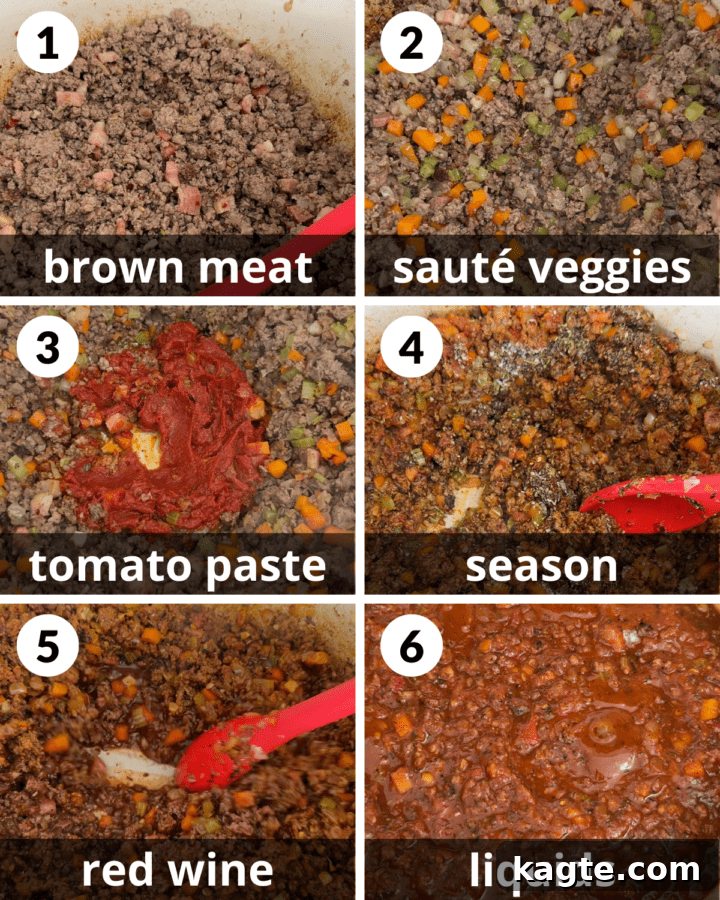
Pro Tip for Bolognese: Simmer the sauce for at least an hour to allow its complex flavors to truly develop and meld together. Patience is key for an exceptional bolognese.
Step 1: In a large Dutch oven or a heavy-bottomed pot, brown the ground beef, Italian sausage, and pancetta over medium-high heat. Break up the meat with a spoon as it cooks, ensuring an even sear for maximum flavor. Drain off any excess fat if necessary.
Step 2: Once the meat is nearly cooked through, add the finely diced onion, carrot, and celery (the “soffritto”). Reduce the heat to medium and sauté for approximately 8 minutes, or until the vegetables have softened and become aromatic, releasing their sweet essence into the meat.
Step 3: Create a clear space in the center of the pot by pushing the meat and vegetables up the sides. Add the tomato paste to the cleared spot and caramelize it for about 3 minutes, stirring it occasionally. This crucial step deepens the tomato flavor and adds richness to the sauce.
Step 4: Incorporate the finely minced garlic, dried oregano, dried basil, dried thyme, granulated sugar, salt, and black pepper. Stir vigorously until all the seasonings are well combined with the meat and vegetable mixture. Sauté for an additional 2 minutes, allowing the aromatics to bloom and infuse the sauce base.
Step 5: Pour in the dry red wine to deglaze the pot. Use a wooden spoon to scrape any flavorful brown bits (“fond”) from the bottom of the pot. Allow the wine to reduce for 2-3 minutes, letting its alcohol cook off and its concentrated flavor become part of the sauce.
Step 6: Stir in 2 cups of the beef broth, the crushed tomatoes, and, if using, the small parmigiano reggiano rind. Bring the entire mixture to a light boil, ensuring everything is thoroughly mixed.
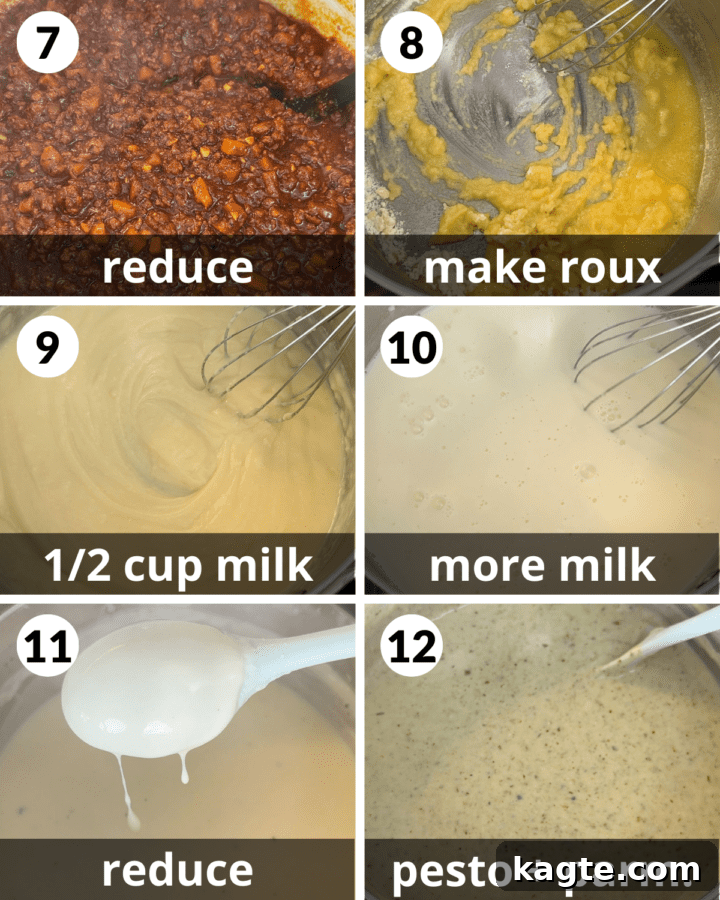
Béchamel Secret: To achieve a perfectly smooth, lump-free béchamel, always add the milk gradually, about ½ cup at a time, while continuously whisking until each addition is fully incorporated before adding more.
Step 7: Cover the pot, reduce the heat to low, and let the bolognese simmer for a minimum of 1 hour, and ideally up to 4 hours for the deepest flavor. Stir occasionally to prevent sticking. If simmering for longer than an hour, monitor the sauce’s thickness and add the additional ½ cup of beef broth if it appears too thick. Once simmering is complete, taste and adjust the salt and pepper as needed.
Step 8: As the bolognese nears the end of its simmering time, begin preparing the béchamel. In a medium saucepan, melt the unsalted butter over medium heat. Once melted, whisk in the all-purpose flour to form a smooth roux. Cook the roux for 1-2 minutes, stirring constantly, to cook out the raw flour taste.
Step 9: Begin adding the whole milk very slowly, starting with about ½ cup, while whisking continuously and vigorously. It’s crucial not to add more milk until the previous addition has been completely incorporated and the mixture is smooth and thick.
Step 10: Continue this process, adding the remaining milk about ½ cup at a time, whisking thoroughly after each addition until all the milk has been integrated and you have a smooth, creamy sauce.
Step 11: Stir in the salt and freshly ground pepper. Reduce the béchamel sauce over medium-low heat, stirring constantly, until it thickens sufficiently to coat the back of a spoon. Be mindful not to let it boil vigorously.
Step 12: Remove the béchamel from the heat. Stir in the high-quality basil pesto and grated parmesan until well combined and melted. Remove the bolognese from the heat as well, and discard the parmesan rind if used.
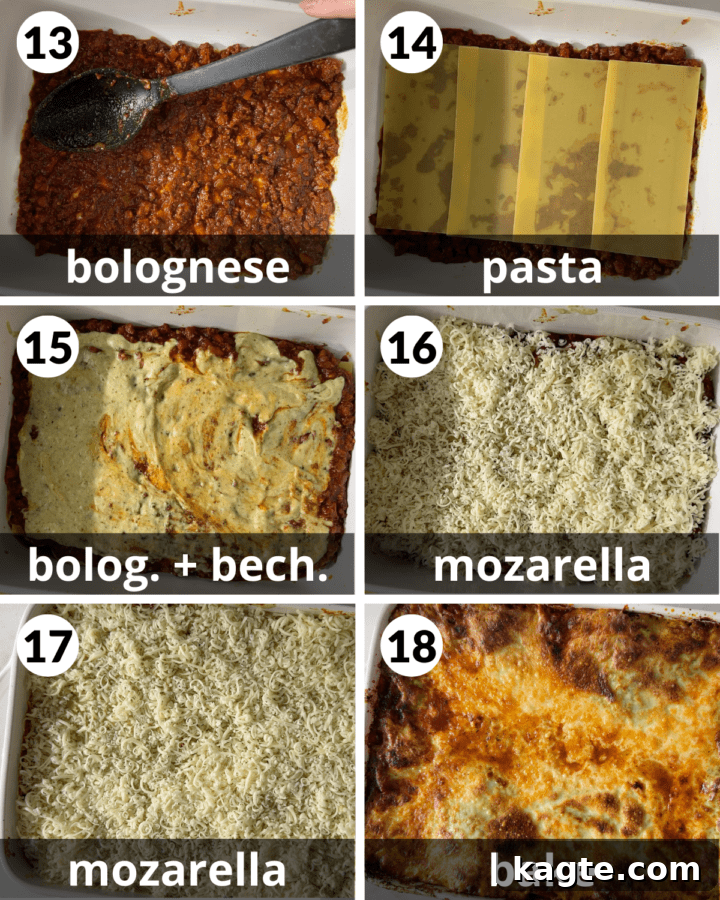
Golden Finish: For an extra brown, bubbly, and irresistible top layer, broil the lasagna for 2-3 minutes at the very end of baking, but watch it carefully to prevent burning.
Step 13: Preheat your oven to 375°F (190°C). Select a deep 9 x 13 x 3.5 inch baking dish – it needs to be deep enough to comfortably accommodate four layers of lasagna.
Step 14: Ladle a thin, even layer of bolognese sauce onto the bottom of the baking dish, just enough to cover it lightly. This prevents the pasta from sticking and provides a flavorful base.
Step 15: Arrange a single layer of no-boil lasagna pasta sheets over the bolognese. Break the sheets as needed to ensure they fit snugly and cover the entire surface without too much overlap.
Step 16: Add another generous layer of bolognese (approximately 2 ½ cups) on top of the pasta, followed by a layer of the pesto béchamel (about ¾ cup). Use an offset spatula or the back of a spoon to gently spread the sauces without mixing them, creating distinct, delicious layers.
Step 17: Repeat the layering: pasta, bolognese, and béchamel to create the second layer. Now, sprinkle about half of the shredded low-moisture mozzarella over the béchamel. (Note: Mozzarella is added only to the second and fourth layers for optimal melt and cheese distribution).
Step 18: Continue building the third layer with pasta, bolognese, and béchamel. Then, for the fourth and final layer, add pasta, bolognese, and the last of the béchamel. On top of this final béchamel layer, generously sprinkle the remaining mozzarella cheese.
Step 19: Lightly spray one side of a large piece of aluminum foil with cooking spray. Tightly cover the baking dish with the foil, ensuring the greased side is facing down and touching the cheese (this prevents the cheese from sticking to the foil). Bake covered for 40-45 minutes. Then, remove the foil and bake for an additional 10-15 minutes, or until the cheese is bubbly and golden. For an extra browned and irresistible top, broil for 2-3 minutes, watching carefully to prevent burning. Once out of the oven, it is crucial to let the lasagna stand for 10-15 minutes before cutting and serving. This allows the layers to set and prevents it from falling apart.
Perfect Pairings & Serving Suggestions
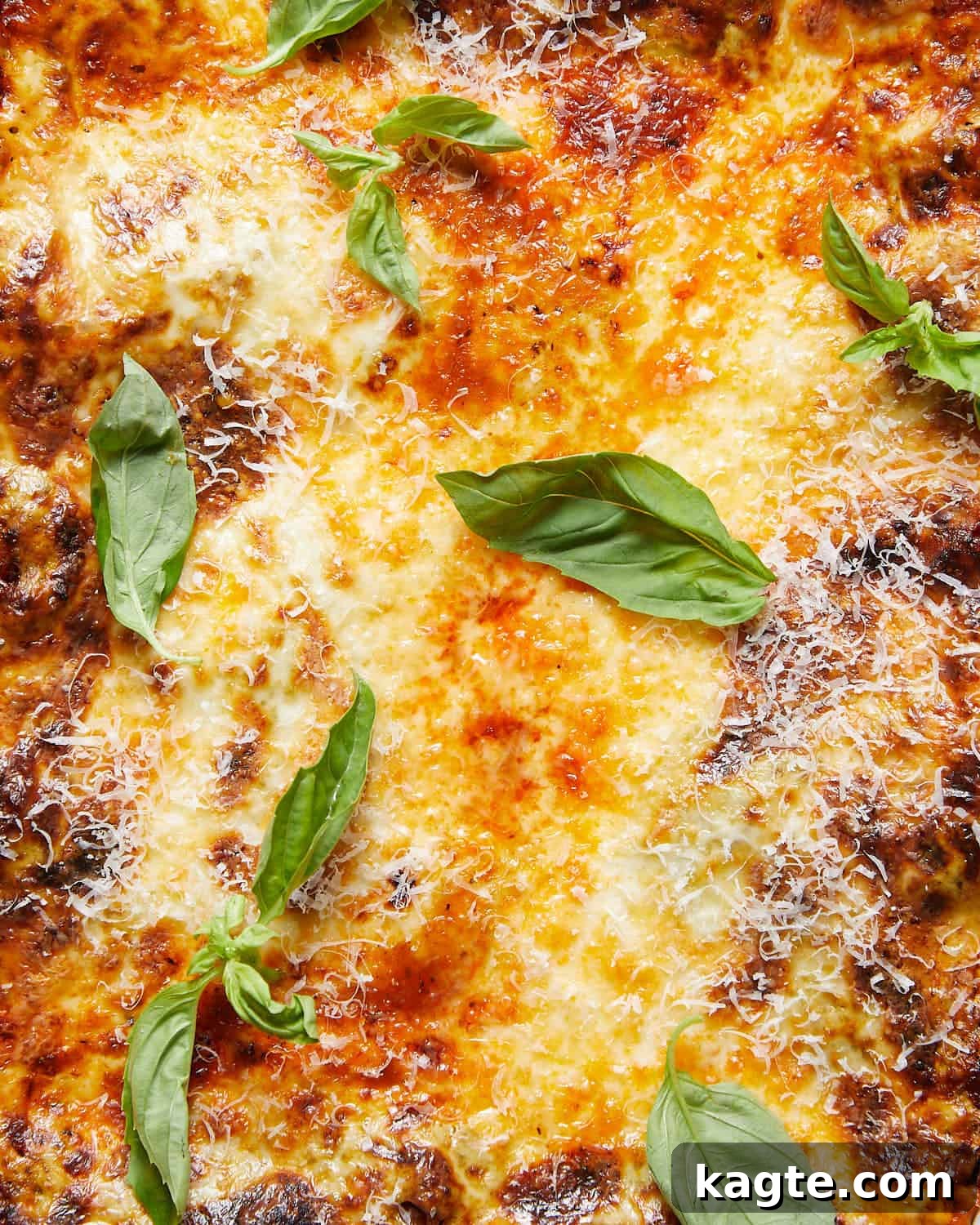
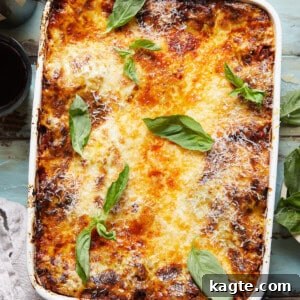
Once your magnificent lasagna has rested, garnish it with a scattering of fresh basil leaves for a burst of color and herbaceous aroma. A glass of the same dry red wine used in the bolognese would be a superb accompaniment. To complete this quintessential Italian meal, consider these delightful sides:
- A crusty Baguette or French Bread, slathered with homemade Garlic Bread Spread, perfect for soaking up every last bit of sauce.
- Warm slices of Easy Rustic Bread, offering a simple yet satisfying textural contrast.
- Chewy and aromatic Parmesan and Rosemary Bread for an extra savory kick.
- A refreshing Simple Caesar Salad, prepared without egg or anchovies for a lighter, crisp counterpoint to the richness of the lasagna.
For even more inspiring ideas, dive into 14 More Sides To Serve With Lasagna.
Pro Tips & Delicious Variations
Achieving lasagna perfection often comes down to these expert insights:
- Prioritize High-Quality Ingredients. Given that lasagna is built from seemingly simple components – meats, cheese, pasta, and pantry staples – the quality of each ingredient profoundly impacts the final flavor. This is not the time to cut corners. Splurge on genuine Parmigiano Reggiano, good quality crushed tomatoes, and fresh herbs; your taste buds will thank you.
- Always Shred Your Cheese Fresh. Resist the urge to use pre-shredded mozzarella or parmesan. These often contain anti-caking agents like cellulose, which prevent the cheese from melting as smoothly and can impart a slightly waxy texture. Buy blocks of cheese and shred them at home for superior melt, flavor, and texture.
- Embrace the Slow Simmer for Bolognese. This recipe is a labor of love, and the bolognese sauce simply cannot be rushed. A long, slow simmer on low heat, ideally for at least 1-2 hours (or even up to 4), is absolutely essential. This extended cooking time allows the myriad of flavors from the meats, vegetables, wine, and herbs to fully develop, meld, and deepen, creating a complex, well-rounded sauce that is the true soul of the lasagna.
- Master the Art of a Smooth Béchamel. If you’ve struggled with lumpy béchamel in the past, the secret lies in gradually adding the milk to the roux. Instead of pouring all the milk in at once, add it in small increments (about ½ cup at a time) while continuously whisking. This method ensures that the milk is fully incorporated into the thick roux, preventing lumps and resulting in a gloriously smooth, creamy sauce every single time. Take your time with this step, and your béchamel will be flawless.
Frequently Asked Questions About Lasagna with Béchamel
Absolutely! From extensive culinary research and traditional practices, béchamel sauce is indeed a classic and traditional component in many authentic Italian lasagna recipes, particularly those originating from Northern Italy, such as Lasagna alla Bolognese. It is often seen as the more authentic choice compared to ricotta, which is more prevalent in some Southern Italian and Italian-American versions.
While it depends on regional preferences and personal taste, incorporating béchamel sauce into your lasagna significantly enhances its flavor and texture. It provides a luxurious creaminess, a delicate richness, and helps bind the layers without becoming watery, contributing to a more refined and moist lasagna. For a truly authentic and decadent experience, béchamel is highly recommended.
Typically, traditional Italian lasagna recipes use either béchamel OR a ricotta-based filling, but not usually both together. Using both could result in an overly heavy or rich dish. This recipe opts for the classic béchamel to maintain authenticity and achieve a specific creamy texture and flavor profile.
Yes, this lasagna is an excellent make-ahead dish! You can prepare both the bolognese and béchamel sauces a day or two in advance and store them separately in the refrigerator. You can also assemble the entire lasagna a day before baking. Cover it tightly with plastic wrap and refrigerate. When ready to bake, let it sit at room temperature for 30 minutes while the oven preheats, then bake as directed, potentially adding an extra 10-15 minutes to the covered baking time.
Absolutely! Lasagna freezes beautifully. For best results, bake the lasagna completely, let it cool, then cut it into individual portions or leave it whole. Wrap tightly in plastic wrap, then foil, and freeze for up to 3 months. Thaw overnight in the refrigerator and reheat in the oven (covered with foil) until heated through, then uncover for the last few minutes to crisp the top.
If your béchamel is too thick, gradually whisk in a little warm milk until it reaches your desired consistency. If it’s too thin, you can continue to simmer it gently over low heat, whisking constantly, to allow it to reduce and thicken. Alternatively, you can make a small slurry of cornstarch and cold water, then slowly whisk it into the simmering béchamel until it thickens to your liking.
Explore More Italian Recipes
Pasta
Baked Stuffed Shells with Meat Sauce
Soup & Chili
Creamy White Lasagna Soup with Italian Sausage
30 Minute Meals
One Pan Shrimp Orzo with Lemon Recipe
Sauce
Basil Pesto without Pine Nuts
Shop my Amazon Storefront for recommended kitchen tools!
If you try this exceptional lasagna recipe, please consider leaving a star rating in the recipe card below and a comment sharing your experience! Your feedback is invaluable and always appreciated. Stay connected and follow me on Pinterest, Facebook & Instagram for more delicious inspiration.
SaveSaved
Lasagna with Béchamel Sauce
Equipment
-
9 x 13 x 3.5 in. Baking Dish
-
6 Quart Dutch Oven
-
Cheese Grater with Handle
Ingredients
Bolognese
- 1 pound ground 90/10 beef
- 1 pound mild or spicy italian sausage
- 4 ounces diced pancetta or bacon
- 1 large yellow onion, finely diced
- 1 cup finely diced carrot
- 1 cup finely diced celery
- 1 6 ounce can tomato paste
- 8-10 cloves garlic, finely minced
- 2 Tablespoons dried oregano
- 1 Tablespoon EACH dried basil, thyme, & granulated sugar
- 3/4 teaspoon Morton kosher salt*
- 1/2 teaspoon black pepper
- 3/4 cup dry red wine*
- 1 28 ounce can crushed tomatoes
- 2 – 2 1/2 cups beef broth or stock
- 1 small parmigiano reggiano rind, optional
Béchamel
- 4 Tablespoons unsalted butter
- 1/3 cup all purpose flour
- 3 1/2 cups whole milk
- 1/2 teaspoon Morton Kosher salt
- 1/4 teaspoon freshly ground cracked pepper
- 1 7 ounce jar high quality basil pesto*
- 1 cup (3 ounces) è grated parmigiano reggiano
For Assembling
- 1 16 ounce package no boil lasagna sheets*
- 1 pound (4 cups) low moisture mozzarella, shredded
Instructions
-
In a large dutch oven or heavy bottom pot, brown the beef, sausage, and pancetta over medium high heat.
-
Once the meat is almost cooked through, add the onion, carrot, and celery. Reduce the heat to medium. Sauté for 8 minutes.
-
Push the meat/veggies up the sides of the pot to create some space in the center. Add the tomato paste and caramelize for 3 minutes, stirring occasionally.
-
Add the garlic, oregano, basil, thyme, sugar, salt, and pepper. Stir until the mixture is all combined and sauté for 2 minutes.
-
Deglaze the pot with the red wine, scraping any brown bits off the bottom. Reduce for 2-3 minutes.
-
Stir in 2 cups of the beef broth, crushed tomatoes, and the parmesan rind. Bring to a light boil.
-
Cover and reduce the heat to low. Simmer for at least 1 hour and for up to 4, stirring occasionally. If simmering for more than 1 hour, add the additional 1/2 cup of broth if the sauce looks too thick. After simmering, taste and add more salt if needed.
-
When the sauce has almost finished simmering, make the béchamel. Melt the butter in a medium saucepan over medium heat and whisk in the flour.
-
Slowly add in about 1/2 cup of the milk while whisking continuously. Do not add anymore until the milk has been completely incorporated and the mixture is smooth.
-
Repeat until you have whisked in all of the milk.
-
Stir in the salt and pepper. Reduce the béchamel, until it is just thick enough to coat the back of a spoon, stirring consciously.
-
Remove the béchamel from the heat and stir in the pesto and parmesan. Remove the bolognese from the heat as well.
-
Preheat the oven to 375 degrees. In a 9 x 13 x 3.5 inch baking dish (deep enough to hold 4 layers), ladle a thin layer of bolognese to cover the bottom.
-
Arrange a single layer of pasta on top of the bolognese, breaking the sheets if needed to fit.
-
Add another layer of bolognese (about 2 1/2 cups) and a layer of béchamel (about 3/4 cup). Use an offset spatula or butter knife to spread the sauces gently without mixing them.
-
Layer the pasta, bolognese, and béchamel again to create the second layer. Sprinkle about half of the mozzarella on top of the béchamel. (Note: The mozzarella is only for the second and fourth layer.)
-
Layer the pasta, bolognese, and béchamel again to create the third and the fourth layer. On top of the last layer of béchamel, sprinkle on the remaining mozzarella.
-
Spray a large piece of foil with some cooking spray and cover the baking dish tightly so the greased side is touching the cheese (this prevents it from sticking). Bake covered for 40-45 minutes. Uncover and bake for an additional 10-15 minutes. Broil for 2-3 minutes to brown the top, watching carefully so it does not burn. Let stand for 10-15 minutes before cutting.
Notes
- Kosher Salt: All of my recipes are tested with Morton kosher salt unless noted otherwise. It is the best salt for everyday cooking because of its size and flavor. If using table salt, the amount should be reduced. I highly recommend picking up some kosher next time you are at the store!
- Red Wine: I recommend a dry red wine like Pinot Noir, Merlot, or Cabernet Sauvignon. An inexpensive bottle will do. I highly recommend using wine, but for an alcohol free substitute mix 3 Tablespoons of balsamic vinegar with 1/2 cup of beef broth.
- Pesto: My absolute favorite brand is Seggiano’s Fresh Basil Pesto. I usually can find this at Whole Foods, but unfortunately they do not always have it. You can also find pesto in the refrigerated section that is better quality than most shelf stable options. Homemade pesto is also great if you have that on hand.
- Lasagna Sheets: Any brand of oven-ready or no boil lasagna will work. You will not use the entire 16 ounce package. I probably used 10-12 ounces to create four layers.
- Use high quality ingredients. Since lasagna is made of mostly simple meats, cheese, and pantry staples, it is important to use high quality ones for the best flavor. I recommend splurging for real parmigiano reggiano.
- Shred the cheese fresh. Do not use pre-shredded mozzarella or parmesan. It will not melt as well or have as much flavor because it is coated in anti-caking agents. Buy blocks of cheese and shred it at home.
- Simmer the bolognese. This recipe can’t be rushed. It is a labor of love, but so worth it. The sauce needs to simmer on low so the flavors can develop and meld together.
- Add the milk slowly to the roux. If your béchamels never come out smooth, it is likely that you dump all of the milk into the roux at once. I have found that if you add only about 1/2 cup at a time, and slowly go from a thick paste to a sauce, it will be creamy and lump free every time.
Nutrition
Nutrition information is automatically calculated, so should only be used as an approximation.