
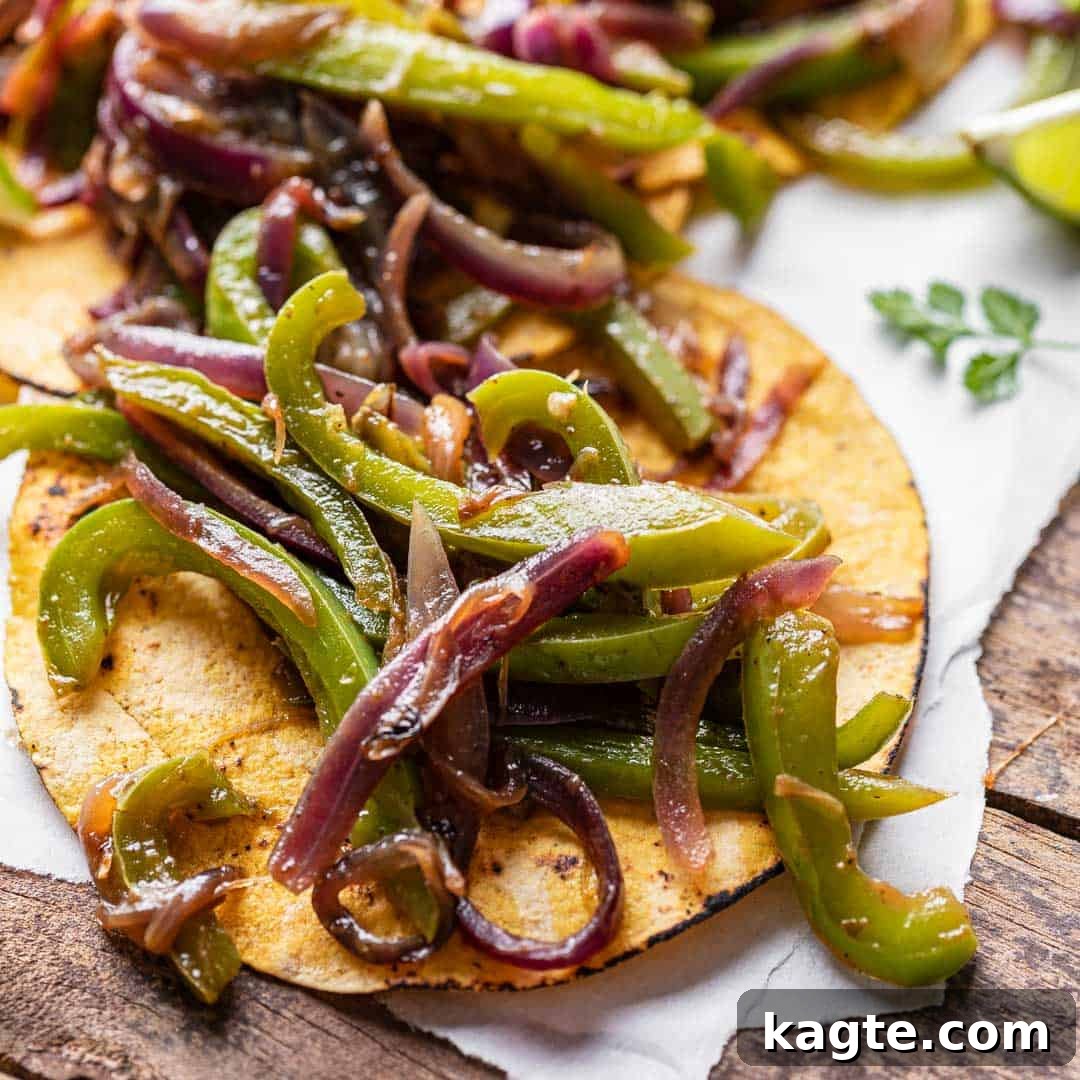
Master the art of making perfect Chipotle Style Fajita Veggies right in your own kitchen! This incredibly simple yet flavorful recipe accurately recreates the beloved sautéed vegetables served at Chipotle Mexican Grill, using just a few core ingredients. Whether you’re seeking a healthy and vibrant topping for your homemade tacos, a versatile addition to your burrito bowls, or a delicious vegetarian/vegan filling, these copycat Chipotle fajita veggies are guaranteed to impress. They offer a fresh, tender-crisp texture and a subtle, earthy flavor that elevates any Mexican-inspired meal, making them a staple for your healthy eating routine.
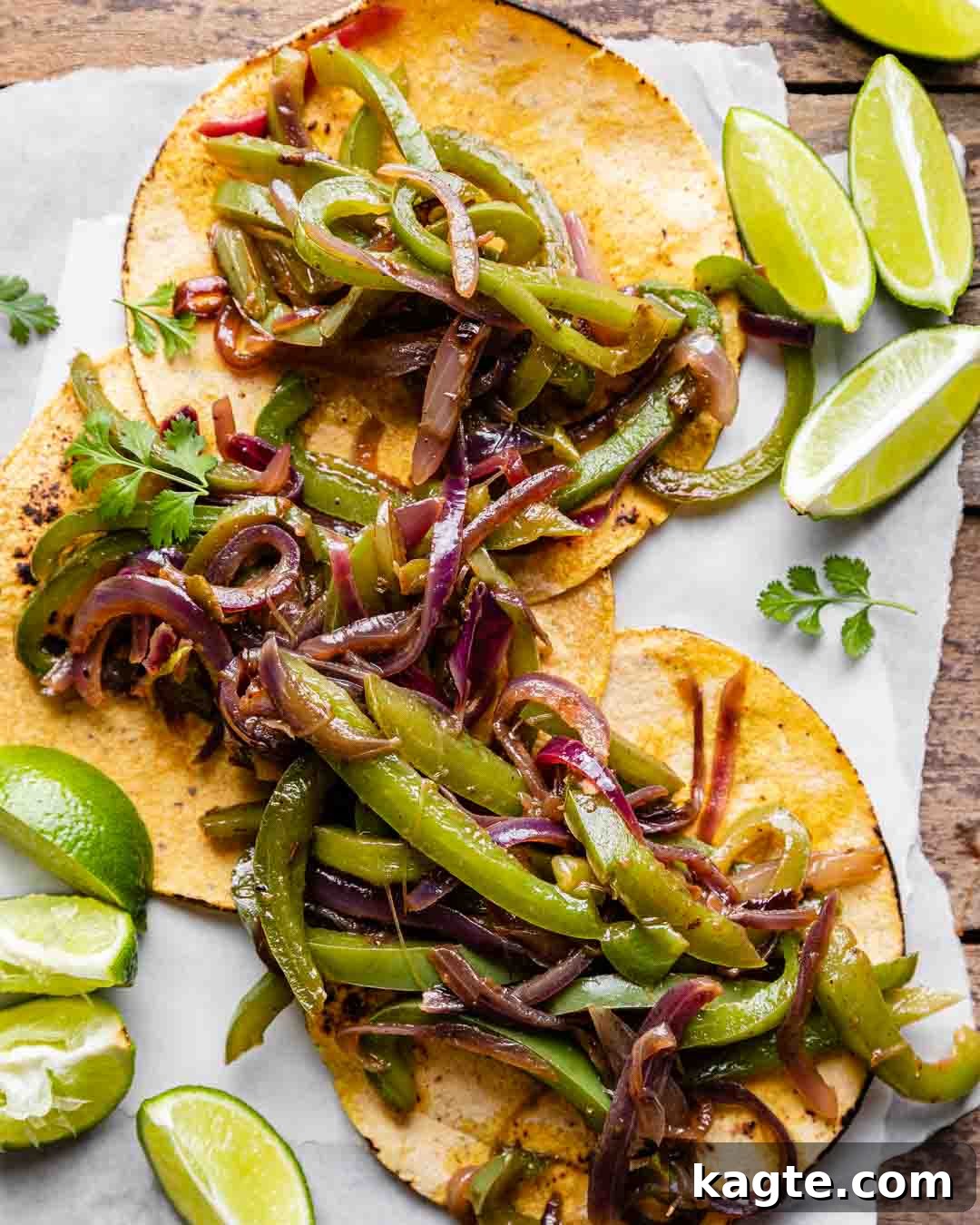
Chipotle Mexican Grill has long been celebrated for its commitment to fresh, quality ingredients, and their fajita vegetables are a shining example of this philosophy. These perfectly sautéed bell peppers and onions are a popular choice, serving as both a vibrant topping and a satisfying vegetarian or vegan filling for their signature burritos, tacos, bowls, and salads. The magic of these vegetables lies in their straightforward preparation and authentic, earthy flavor, making them an indispensable component for any Mexican-inspired meal.
The beauty of this recipe is its direct adherence to Chipotle’s original method. According to the official Chipotle website, the secret to their famous fajita veggies is surprisingly simple: a harmonious blend of bell peppers, Mexican oregano, red onions, salt, and sunflower oil. This minimalist approach proves that you don’t need a complex array of spices to achieve incredible, crave-worthy flavor. Our recipe precisely follows this ingredient list, ensuring you can replicate their iconic taste and tender-crisp texture directly from your home kitchen. Much like our popular Chipotle copycat corn salsa, these fajita vegetables are not only astonishingly easy to master but will quickly become a go-to for healthy, homemade Mexican cuisine.
Elevate your next taco night, power up your meal prep, or simply enjoy a nutritious side with these vibrant, quick-cooking veggies. Looking to expand your repertoire of fantastic taco toppings and sides? Don’t miss my Easy Mango Habanero Salsa Recipe for a sweet and spicy kick, or explore our collection of complementary dishes to complete your ultimate Mexican feast!
Table of Contents
- Highlights of This Chipotle Fajita Veggies Recipe
- Essential Ingredient Notes for Authentic Flavor
- Helpful Equipment & Tools for Sautéing Perfection
- Step-by-Step Instructions to Make Fajita Veggies
- Make Ahead & Storage Tips
- Expert Tips for the Best Chipotle Fajita Veggies
- Important Recipe Notes and Considerations
- Flavorful Variations to Customize Your Veggies
- Frequently Asked Questions About Fajita Veggies
- Related Recipes You’ll Love
- Watch the How-To Video
- Chipotle Style Fajita Veggies Recipe Card
Highlights of This Chipotle Fajita Veggies Recipe
These homemade fajita vegetables are more than just a side dish; they’re a versatile and delicious component designed to elevate your meals. Here’s why this recipe stands out:
- Authentic Chipotle Copycat Recipe – This isn’t just an “inspired by” dish; it’s a true replication of Chipotle’s beloved fajita veggies. We meticulously follow their minimalist ingredient list – bell peppers, red onions, Mexican oregano, salt, and oil – to deliver an incredibly similar taste and texture that will transport you straight to your favorite burrito bar. The magic lies in the simplicity and quality of each component, creating a flavor profile that is both familiar and satisfying.
- Incredibly Healthy & Easy – With a mere six basic ingredients (including salt and black pepper), this recipe is remarkably healthy and straightforward to prepare. It’s bursting with essential vitamins, minerals, and dietary fiber from the fresh vegetables, making it a perfectly guilt-free addition to any meal. Its ease of preparation makes it an ideal solution for busy weeknights when you crave a nutritious and flavorful dish without spending hours in the kitchen.
- Remarkably Versatile – The adaptability of these fajita vegetables is one of their greatest strengths. They shine as a flavorful and satisfying main filling for vegetarian or vegan tacos, burritos, and burrito bowls. Beyond that, they make an outstanding healthy topping for any protein-packed salad, a vibrant addition to scrambled eggs, or even a delicious stand-alone side dish. Their mild yet distinct flavor pairs well with almost anything.
- Perfectly Vegetarian & Vegan – For those adhering to a plant-based diet, these Chipotle-style fajita veggies are an absolute game-changer. They offer a satisfyingly hearty texture and rich flavor, making them an ideal and substantial meat-free option that doesn’t compromise on taste or culinary experience. They provide excellent bulk and nutritional value, ensuring a well-rounded meal.
- Lightning-Fast Preparation – From the moment you start prepping to the time they hit your plate, this recipe takes approximately 10-15 minutes. This makes it an excellent choice for a quick and wholesome lunch, a speedy side dish for dinner, or efficient meal prepping for the week ahead. Minimal cooking time means more time to savor your delicious, homemade creations!
Essential Ingredient Notes for Authentic Flavor
Achieving that signature Chipotle flavor profile comes down to using the right ingredients and understanding their unique roles. Here’s a closer look at what you’ll need and why each component is important:
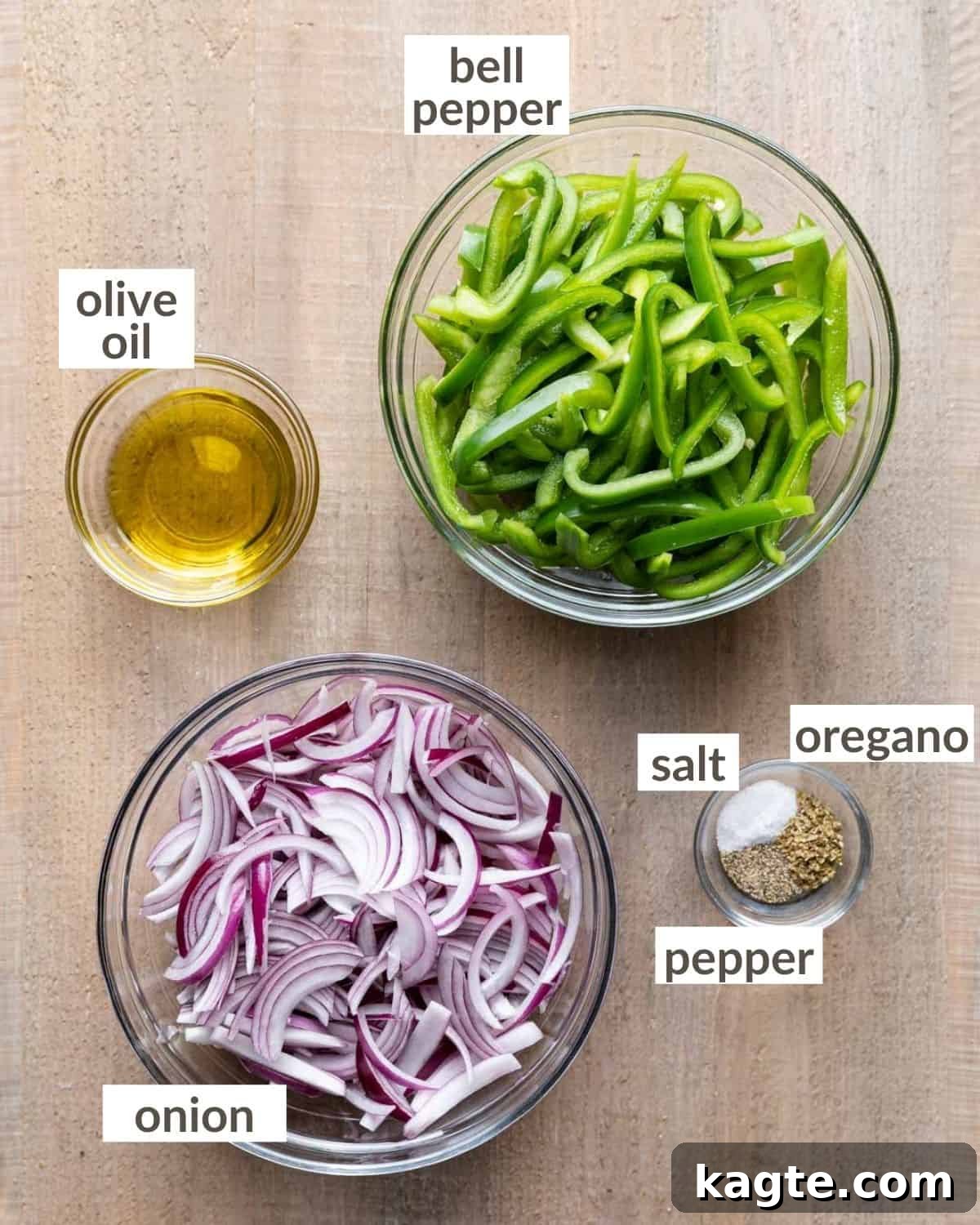
- Olive Oil: While Chipotle traditionally opts for sunflower oil, high-quality olive oil works beautifully and is a common pantry staple. Its mild, slightly fruity flavor complements the vegetables without overpowering them. You can easily substitute it with any other neutral, high-smoke-point oil such as canola oil, vegetable oil, avocado oil, or even grapeseed oil. The key is to use enough oil to ensure proper sautéing and browning.
- Green Bell Peppers: To maintain the true Chipotle copycat style, green bell peppers are absolutely essential. They offer a distinct, slightly bitter, and earthy flavor that sets them apart from the sweeter red, yellow, or orange varieties. This subtle bitterness is characteristic of the authentic Chipotle taste. However, if you prefer a sweeter profile or wish to add more visual vibrancy, feel free to incorporate a mix of different colored bell peppers.
- Red Onions: Chipotle’s recipe specifically calls for red onions, which contribute a beautiful pop of color and a sharper, slightly spicier edge when raw. When sautéed, red onions mellow considerably, transforming into a delightfully sweet and caramelized flavor that is crucial for this dish. If red onions are unavailable, white or yellow onions can be used as a substitute, but be aware that the final flavor profile may be marginally different.
- Mexican Oregano: This is a critically important ingredient for authentic Chipotle flavor! Mexican oregano is a distinct herb, scientifically known as Lippia graveolens, and differs significantly from common Mediterranean (Italian) oregano. It boasts a more robust, earthy, citrusy, and slightly peppery note, often with subtle hints of anise. In contrast, Mediterranean oregano (Origanum vulgare) tends to have a mintier, sweeter, and sometimes more floral undertone. Using genuine Mexican oregano will bring your fajita veggies closest to the true Chipotle experience. If absolutely unavailable, a good quality dried oregano can be used, but the flavor won’t be identical.
- Salt and Black Pepper: These are simple, yet absolutely fundamental seasonings. They don’t just add flavor; they enhance and bring out the natural sweetness and savory notes of all the other ingredients without overpowering them. Always season to taste, and remember you can adjust the salt and pepper levels at the end of cooking to perfectly suit your preference.
The complete list of ingredients with precise amounts, along with detailed nutritional information, is located on the recipe card below.
Helpful Equipment & Tools for Sautéing Perfection
Having the right kitchen tools can significantly enhance your cooking experience and help you achieve perfectly cooked fajita vegetables every time. Here’s what you’ll need to make this recipe a breeze:
- Large Nonstick Skillet or Cast Iron Pan: A generously sized skillet is absolutely essential to prevent overcrowding your vegetables, which is a common mistake that leads to steaming rather than true sautéing. A high-quality nonstick surface ensures easy cleanup, while a heavy-bottomed pan, such as a Calphalon Classic Hard-Anodized or a well-seasoned cast iron skillet (recommended pan link), provides superior heat distribution and retention. This is crucial for achieving that desirable tender-crisp texture with beautifully caramelized edges that define excellent fajita veggies.
- Heat-Resistant Kitchen Tongs: These are an indispensable tool for efficiently tossing and stirring the vegetables evenly in the hot pan. Tongs allow you to get good contact with the pan, ensuring every piece gets properly cooked and caramelized without crushing the delicate vegetable strips. Opt for tongs with silicone tips to protect the surface of your nonstick cookware.
- Sharp Chef’s Knife: A high-quality, sharp knife, such as the Mac Knife Professional 8-Inch Hollow Edge Chef Knife, is paramount for safely and efficiently slicing your bell peppers and onions into uniform strips. Evenly cut vegetables are key to ensuring that all pieces cook at roughly the same rate, preventing some from becoming mushy while others remain raw or undercooked.
- Large Cutting Board: A sturdy and spacious cutting board will provide a stable and safe surface for all your slicing and dicing tasks. A good-sized board allows you to spread out your vegetables, making prep work more organized and efficient.
Step-by-Step Instructions to Make Fajita Veggies
Creating these delicious Chipotle-style fajita veggies is incredibly simple and quick. Follow these straightforward steps for perfect results every time:
Overview
- Begin by meticulously preparing and slicing all your fresh vegetables.
- Heat your chosen oil in a large, heavy-bottomed skillet until it shimmers.
- Sauté the seasoned vegetables, stirring occasionally, until they reach a tender-crisp texture and develop light caramelization.
- Serve immediately and enjoy!
Step by Step Guide
Step 1: Prepare the Vegetables
Thoroughly wash your green bell peppers and red onions. For the bell peppers, slice off the top and bottom, then halve them lengthwise. Remove the seeds and any white membrane. Lay the halves flat and slice them into uniform strips, ideally about 1/4 to 1/2 inch thick. For the red onions, trim the ends and peel the outer layer. Halve them through the root, then slice lengthwise into strips of similar thickness as your peppers. Consistency in size is crucial for even cooking.
Step 2: Heat the Oil
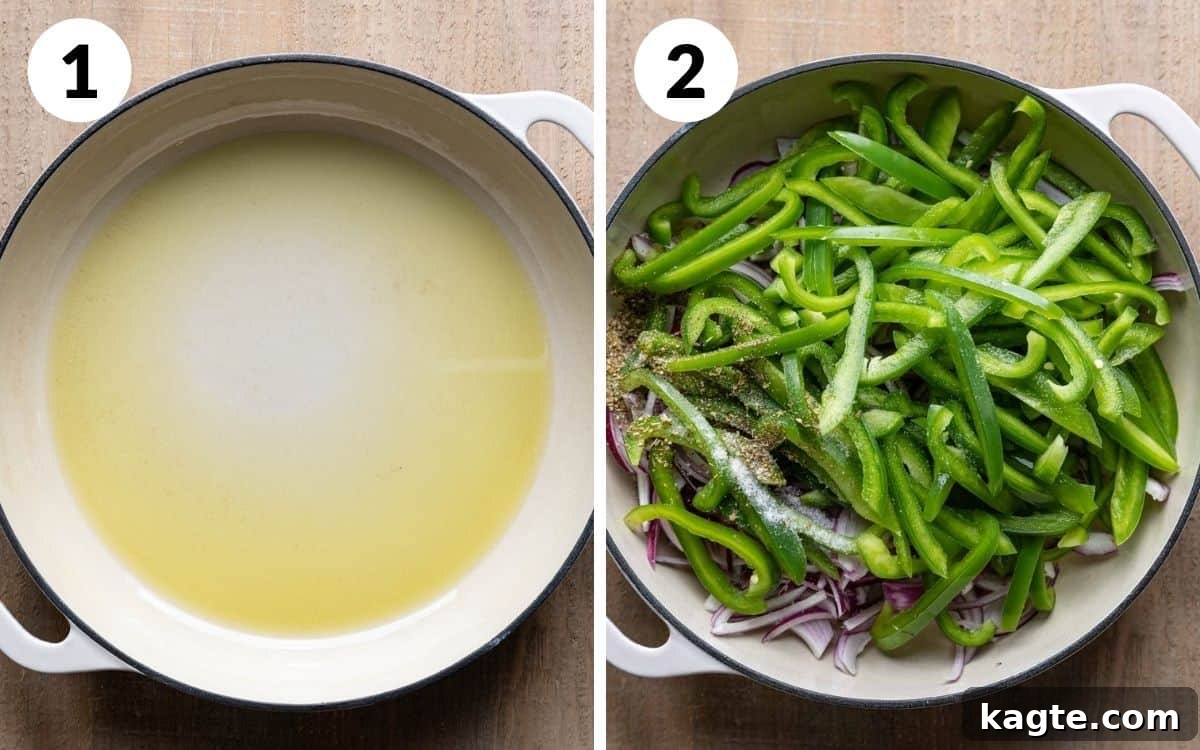
Place a large skillet or griddle over medium-high heat. Add the olive oil (or your preferred neutral, high-smoke-point oil). Allow the oil to heat up sufficiently. You’ll know it’s ready when it begins to shimmer slightly or when a small piece of vegetable dropped into it sizzles immediately. Adequate heat ensures proper sautéing and browning.
Step 3: Add and Season Vegetables
Carefully add all the sliced bell peppers and red onions to the hot skillet. Immediately sprinkle them evenly with the salt, dried Mexican oregano, and black pepper. Using your heat-resistant tongs, toss everything gently but thoroughly to ensure the vegetables are uniformly coated with the oil and seasonings. This step ensures every bite is bursting with flavor.
Step 4: Sauté to Perfection
Continue to sauté the vegetables for 8-10 minutes, stirring them occasionally. The key is to cook them until they are slightly tender-crisp, meaning they are cooked through but still retain a pleasant bite and some firmness. Look for beautiful, lightly caramelized edges on the peppers and onions, indicating proper browning and flavor development. It’s important to avoid overcooking, as they can quickly become soft and mushy.
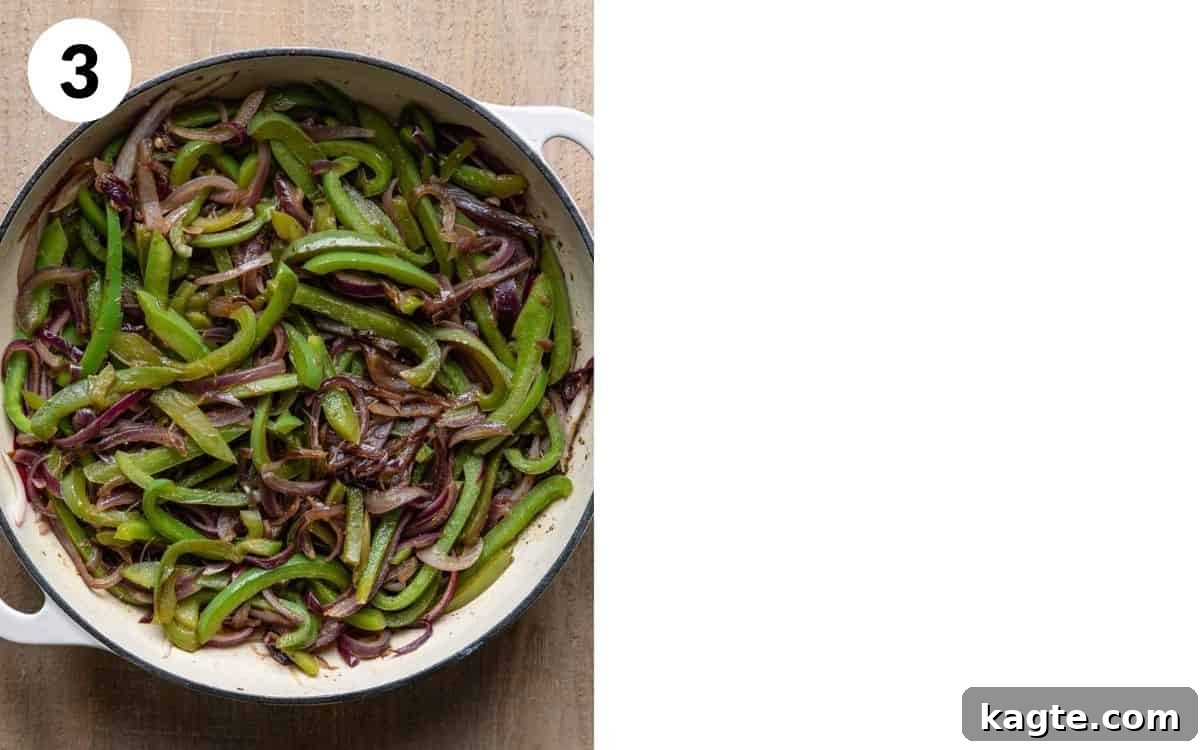
PRO TIP – While it’s important to stir the vegetables occasionally for even cooking, resist the urge to stir constantly. Allowing them to sit undisturbed on the hot pan surface for a minute or two at a time will help them develop those delicious, coveted caramelized spots and richer flavors. Then, toss and repeat!
PRO TIP – Keep a close eye on your veggies, especially towards the end of the cooking time! Overcooking is the quickest way to ruin their appeal, resulting in a soft, mushy texture that lacks the desirable tender-crisp bite that makes Chipotle’s fajita veggies so popular. Cook just until they reach your desired level of doneness.
Make Ahead & Storage Tips
While these fajita veggies are at their absolute best when served fresh from the hot pan, you can certainly do some preparation in advance. Leftovers also store well, making them great for meal prep.
- Make Ahead: For optimal texture and flavor, we strongly recommend sautéing the vegetables right before you plan to serve them. However, you can significantly reduce your cooking time by preparing your ingredients in advance. All the onions and bell peppers can be meticulously sliced the day before. Store these sliced vegetables in separate airtight containers or zip-top bags in the refrigerator until you are ready to cook. This simple step can shave precious minutes off your dinner prep.
- Refrigerator: Store any leftover copycat Chipotle fajita veggies in an airtight container in the refrigerator. They will maintain their quality, flavor, and much of their texture for a good 3-4 days. This makes them an excellent component for healthy meal prepping throughout the week, easily added to salads, bowls, or wraps.
- Freezer: Freezing is generally not recommended for these fajita veggies. Bell peppers and onions have a high water content, and upon thawing and subsequent reheating, they tend to become excessively soggy, losing their appealing tender-crisp texture and vibrancy. While they would still be safe to eat, the culinary quality will be significantly diminished. It’s best to enjoy these fresh or refrigerated.
- Reheating: For the best reheating results, transfer leftover fajita veggies to a skillet and warm them over medium heat with a tiny bit of fresh oil. Sautéing them again helps to restore some of their crispness and prevents them from becoming too soft. Microwaving is an option for convenience, but it typically results in a softer texture and may not bring back the same caramelized notes.
Expert Tips for the Best Chipotle Fajita Veggies
To truly achieve Chipotle-level perfection with your homemade fajita vegetables, pay attention to these nuanced expert cooking tips. They make all the difference!
- Slice Your Veggies Uniformly: This is arguably the most crucial tip for consistently delicious results. Ensure that your bell peppers and onions are sliced into pieces of similar size and thickness. Bell peppers generally take slightly longer to soften than onions. If you prefer your peppers softer, you might cut them marginally thinner than the onions, or vice versa. Consistent cuts mean all vegetables will cook at approximately the same rate, preventing some pieces from becoming mushy while others are still undercooked.
- Don’t Skimp on the Oil: The oil serves multiple critical purposes beyond just preventing sticking; it’s absolutely vital for achieving proper caramelization and infusing rich flavor into the vegetables. Using enough oil ensures that the vegetables develop that coveted beautiful char and tender texture. Avoid dry-sautéing or attempting to cook them with just water or broth, as this will essentially steam the vegetables rather than sauté them, preventing the desired browning and deep flavor development.
- Use a Generously Sized Pan or Griddle: Overcrowding the pan is the nemesis of perfectly sautéed vegetables. If your pan is too full, the vegetables will release their moisture and steam instead of browning, resulting in limp, pale, and unappetizing veggies. Always use a large skillet or a griddle to give the vegetables ample space to breathe and make direct contact with the hot surface. This promotes consistent caramelization and ensures every piece cooks beautifully.
- Avoid Overcooking: The ideal texture for fajita veggies is tender-crisp – cooked through yet still retaining a slight, satisfying bite and firmness. Overcooking will quickly render them soft, watery, and mushy, losing their appealing texture entirely. Begin checking for doneness around the 8-minute mark and remove them from the heat as soon as they reach your preferred level of tenderness. The window between perfectly cooked and overcooked can be surprisingly short.
- Stir Strategically: While regular stirring is necessary to ensure even cooking and prevent burning, don’t stir constantly. To develop those delicious caramelized spots and deepen the flavors, allow the vegetables to sit undisturbed on the hot surface for a minute or two at a time. This direct contact with the heat allows the natural sugars to caramelize. Then, toss them gently and repeat the process until they are uniformly cooked and browned.
- High Heat is Your Friend (Initially): Sautéing techniques rely on relatively high heat to achieve quick cooking and desirable browning. Make certain your pan is properly preheated over medium-high heat before you introduce the vegetables. This initial blast of heat helps to sear the outside quickly, locking in juices and starting the caramelization process effectively.
- Taste and Adjust Seasoning: While the recipe provides an excellent starting point for salt and pepper, always make it a habit to taste your vegetables at the very end of cooking. The intensity of flavors can vary based on the freshness of ingredients and your personal palate. A final sprinkle of salt or a crack of fresh pepper can brighten everything up and bring the flavors into perfect balance.
Important Recipe Notes and Considerations
To ensure you have the best possible experience with your homemade Chipotle fajita veggies, keep these additional points in mind:
- This Recipe is Easily Doubled (or Tripled!): This recipe scales up wonderfully, making it perfect if you’re feeding a larger crowd, preparing for a party, or simply want to make a big batch for efficient meal prepping. However, if you double or triple the ingredients, it is crucial to use two large skillets or work in separate batches. Overcrowding a single pan will lower the temperature, cause the vegetables to steam rather than sauté, and result in a less desirable soft and watery texture. You might also need to add a couple of minutes to the overall cook time when increasing the volume.
- Seasoned Simply, True to Chipotle Style: It is important to emphasize that these fajita veggies are seasoned with the minimalist approach characteristic of Chipotle – primarily salt and authentic Mexican oregano. This gives them a distinct, subtle, and earthy flavor profile that sets them apart from more heavily spiced, traditional fajita seasoning blends, which often include ingredients like cumin, chili powder, and garlic powder. If you are expecting a more robust, heavily spiced flavor, you might want to refer to the “Variations” section to customize with additional spices. However, for a true Chipotle copycat, simplicity is the key to authenticity.
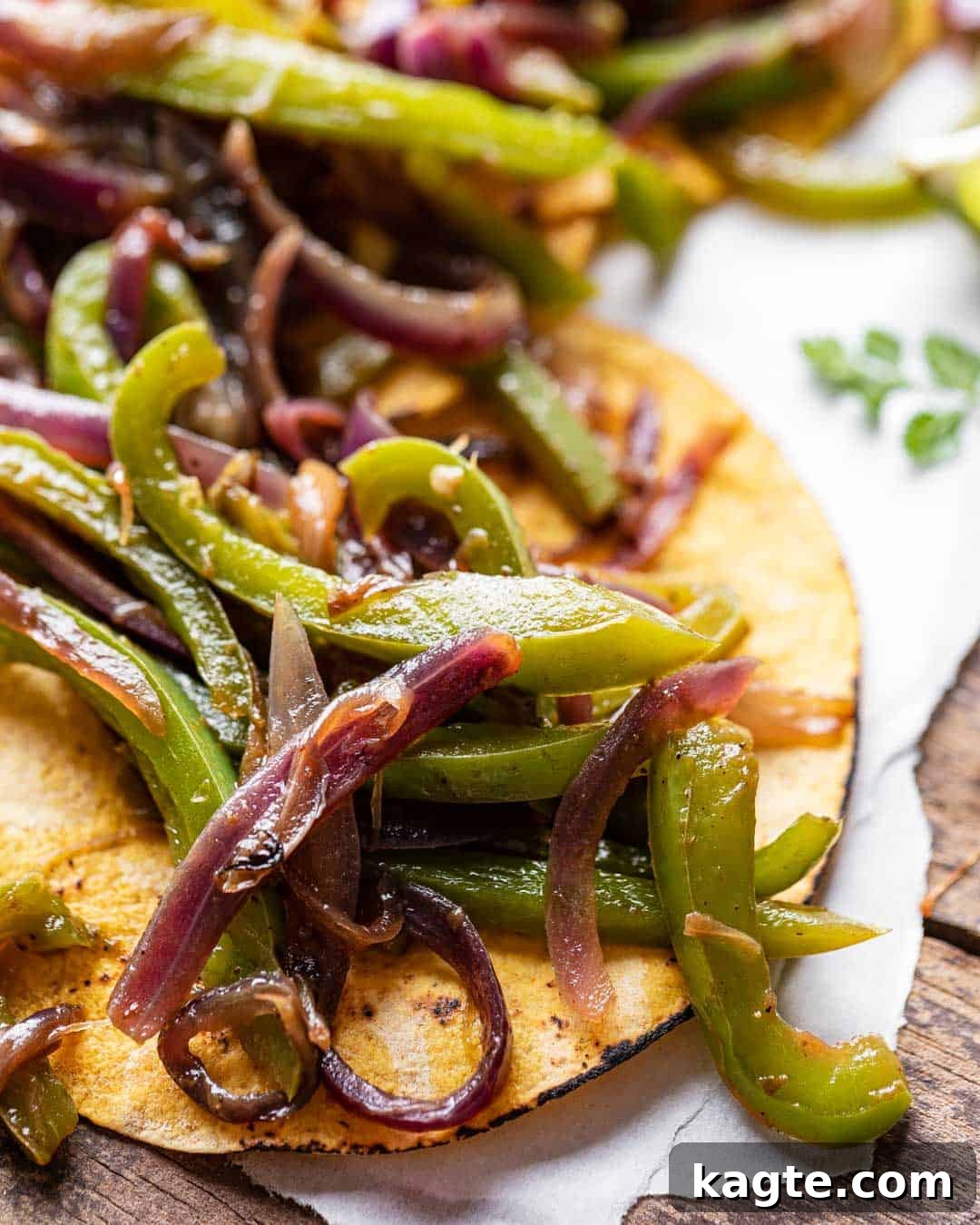
- Understanding the Flavor Profile: The true beauty of these fajita veggies lies in their balanced, understated flavor. The natural sweetness of the caramelized red onions perfectly complements the slight bitterness and earthy notes of the green bell peppers, all beautifully elevated by the unique, peppery essence of Mexican oregano. It’s a clean, fresh, and savory taste that perfectly accompanies a wide range of Mexican dishes without ever overpowering them.
Flavorful Variations to Customize Your Veggies
While this recipe excels at recreating the authentic Chipotle experience with its simple ingredient list, these fajita veggies are wonderfully adaptable. Feel free to experiment with these variations to perfectly suit your taste preferences, dietary needs, or simply what you have available in your pantry:
- Add Other Vegetables: Expand the nutritional value, texture, and flavor complexity by incorporating other vegetables. Sliced mushrooms (which add umami), zucchini, corn kernels (for sweetness), broccoli florets, or even thinly sliced carrots can be fantastic additions. Keep in mind that harder vegetables like carrots or broccoli might benefit from being blanched briefly before sautéing to ensure they cook evenly and reach your desired tenderness alongside the peppers and onions. Mushrooms will release moisture, so cook them until the water evaporates and they begin to brown.
- Boost the Spices: If you prefer a more robust or a more traditional “fajita seasoning” flavor that goes beyond the minimalist Chipotle copycat profile, consider adding an extra 1/2 to 1 teaspoon of ground cumin, chili powder, garlic powder, onion powder, or smoked paprika along with the Mexican oregano. These spices will add layers of warmth and complexity. For a touch of heat, a pinch of cayenne pepper or a finely minced fresh jalapeño (added at the beginning with the other veggies) would be excellent additions.
- Fresh Herbs for Garnish: A generous sprinkle of fresh cilantro, roughly chopped, added right before serving, will bring a burst of vibrant freshness, a beautiful aroma, and a pop of color that perfectly complements the earthy flavors of the vegetables.
- A Squeeze of Citrus: A final squeeze of fresh lime juice over the finished vegetables adds a bright, zesty, and tangy note that can miraculously enhance and make all the other flavors sing. This touch of acidity is often a cherished secret weapon in authentic Mexican cuisine. Lemon juice can be used as an alternative.
- Add a Spicy Kick: For those who truly love heat, a pinch of red pepper flakes added with the seasonings or a dash of your favorite hot sauce drizzled over the cooked veggies will provide a delightful fiery element.
Frequently Asked Questions About Fajita Veggies
For bell peppers, begin by slicing off the top and bottom ends to create flat surfaces. Stand the pepper upright and cut it in half lengthwise. Remove the core, seeds, and any white membrane. Lay the halves flat on your cutting board and slice them into uniform strips, typically 1/4 to 1/2 inch thick. For onions, trim the ends and cut the onion in half through the root. Peel off the outer papery layers. Place the flat side down and slice lengthwise into strips of similar thickness as your peppers. Uniform cuts are crucial for ensuring all vegetables cook evenly at the same rate.
These incredibly versatile veggies can be incorporated into many delicious dishes:
- As a Main Filling: They make an excellent, hearty, and satisfying plant-based filling for vegetarian/vegan tacos, burritos, burrito bowls, or fresh salads.
- As a Topping: Add them as a flavorful, healthy, and colorful topping to dishes that already include other proteins like chicken, steak, carnitas, or barbacoa. They provide extra texture, volume, and nutrition.
- As a Side Dish: Serve them on their own as a simple, vibrant, and healthy side dish for any Mexican-themed meal, grilled meats, or even as part of a breakfast scramble.
- In Wraps & Sandwiches: Incorporate them into various wraps, quesadillas, or even use them as a delicious and healthy addition to grilled cheese sandwiches or paninis.
The fajita vegetables at Chipotle Mexican Grill are kept remarkably simple, featuring just green bell peppers, red onions, salt, authentic Mexican oregano, and sunflower oil. This minimalist ingredient list is precisely what gives them their distinct, earthy, fresh, and slightly sweet flavor profile that loyal customers love.
Absolutely! Despite their simple ingredient list, they are incredibly tasty and a highly popular menu item. The sautéing process beautifully brings out the natural sweetness of the onions and the earthy notes of the peppers, while the Mexican oregano adds a subtle, authentic depth. They contribute fantastic texture, freshness, and a wholesome element to any meal.
No, the fajita veggies at Chipotle are not spicy at all. They are seasoned solely with salt and Mexican oregano, and bell peppers themselves are an extremely mild variety of pepper. If you desire a spicy kick, you can easily add ingredients like chili powder, cayenne pepper, or fresh jalapeños to your homemade version during the cooking process.
Indeed, they are! Fajita veggies are essentially just sautéed bell peppers and onions, which are excellent sources of dietary fiber, essential vitamins (especially Vitamin C from bell peppers), and various beneficial micronutrients. When cooked in a moderate amount of healthy oil, they make a fantastic, nutrient-dense, and low-calorie addition to almost any diet, supporting overall wellness.
Typically, no. At Chipotle, fajita vegetables can usually be added as a topping or an additional filling without incurring an extra charge. This holds true even if you’ve already selected another protein for your main filling, making them a popular and cost-effective choice for adding volume, flavor, and nutrition to your order.
Mexican oregano (Lippia graveolens) is a distinct plant species separate from common Mediterranean oregano (Origanum vulgare), which is more often used in Italian or Greek cuisine. Mexican oregano possesses a more robust, earthy, citrusy, and slightly peppery flavor profile, often with subtle notes of anise. In contrast, Mediterranean oregano tends to be mintier and has sweeter, sometimes more floral notes. For achieving the authentic flavor profile of Chipotle’s dishes, Mexican oregano is the preferred and correct choice.
Yes, absolutely! This recipe, utilizing only fresh vegetables, oil, salt, black pepper, and Mexican oregano, is naturally gluten-free and dairy-free. This makes it a fantastic and inclusive option suitable for a wide range of dietary needs, preferences, and allergies. However, if you have severe allergies, always double-check the labels of your specific oil and seasoning brands for any hidden ingredients or cross-contamination warnings.
Related Recipes You’ll Love
If you’ve enjoyed making these simple yet flavorful Chipotle-style fajita veggies, you’re in for a treat with these other complementary recipes that are perfect for building a complete and delicious Mexican-inspired meal:
Side Dish
What To Serve With Taco Soup For Dinner (Toppings & Sides)
30 Minute Meals
Easy Homemade Ground Beef Soft Tacos
Mexican
Easy Homemade Flour Tortillas Recipe
Side Dish
What To Serve With Fajitas (Besides Rice & Beans)
Watch the How-To Video
See exactly how easy it is to create these delicious and authentic Chipotle-style fajita veggies right at home by watching our step-by-step video guide below! This visual tutorial will help ensure you achieve perfect results every time.
Print Recipe
Save Recipe
Fajita Veggies (Chipotle Style)
These Fajita Veggies (Chipotle style) are perfectly sautéed with just a few simple ingredients, capturing the authentic taste and tender-crisp texture of those served at Chipotle Mexican Grill. They are a fantastic healthy topping for tacos and salads, and an equally delicious and hearty vegetarian/vegan filling for any Mexican-inspired dish. Quick, easy, and flavorful!
Equipment
- Large Nonstick Skillet or Cast Iron Pan
- Heat-Resistant Kitchen Tongs
- Sharp Chef’s Knife & Cutting Board
Ingredients
- 3 Tablespoons olive oil*
- 3 green bell peppers*, sliced into uniform strips
- 2 medium red onions*, sliced into uniform strips
- 1 teaspoon salt
- 1 teaspoon dried Mexican oregano
- 1/2 teaspoon black pepper
*See “Ingredient Notes” section above for substitution ideas and more details on choosing the best ingredients.
Instructions
- Prepare Ingredients: Wash and uniformly slice the green bell peppers and red onions into thin strips (about 1/4 to 1/2 inch thick). Consistent sizing ensures even cooking.
- Heat Oil: In a large skillet or griddle, heat 3 tablespoons of olive oil over medium-high heat until the oil begins to shimmer, indicating it’s hot enough.
- Add Vegetables & Seasonings: Carefully add all the sliced bell peppers and red onions to the hot pan. Immediately sprinkle with 1 teaspoon of salt, 1 teaspoon of dried Mexican oregano, and 1/2 teaspoon of black pepper. Toss with tongs to coat evenly.
- Sauté: Sauté the vegetables for 8-10 minutes, stirring occasionally. Cook until they are tender-crisp with some lightly caramelized edges, ensuring they are not mushy.
- Serve: Remove from heat and serve immediately as a delicious topping, versatile filling, or flavorful side dish.
Did you make this recipe?
Leave a comment below!
Video
Notes
Olive Oil: Feel free to swap olive oil for any other neutral, high-smoke-point oil such as canola, vegetable, sunflower, or avocado oil based on your preference or pantry availability.
Green Bell Peppers: While green bell peppers are used in this recipe for their authentic Chipotle flavor profile, you can certainly use any color bell pepper (red, yellow, orange) you prefer. A mix can add extra sweetness and visual appeal.
Red Onions: Chipotle specifically uses red onions for their distinct flavor and color. However, if red onions are not available, white or yellow onions can be substituted, though they will offer a slightly different taste when cooked.
Save this recipe!
Get this recipe sent directly to your inbox, plus receive new delicious recipes, cooking tips, and exclusive content from us every week!
Nutrition Information
Carbohydrates: 4g |
Protein: 1g |
Fat: 4g |
Saturated Fat: 1g |
Polyunsaturated Fat: 1g |
Monounsaturated Fat: 3g |
Sodium: 235mg |
Fiber: 1g |
Sugar: 2g
*Nutrition information is an estimate calculated automatically and should be used as an approximation only. Individual results may vary based on exact ingredients and preparation methods.