
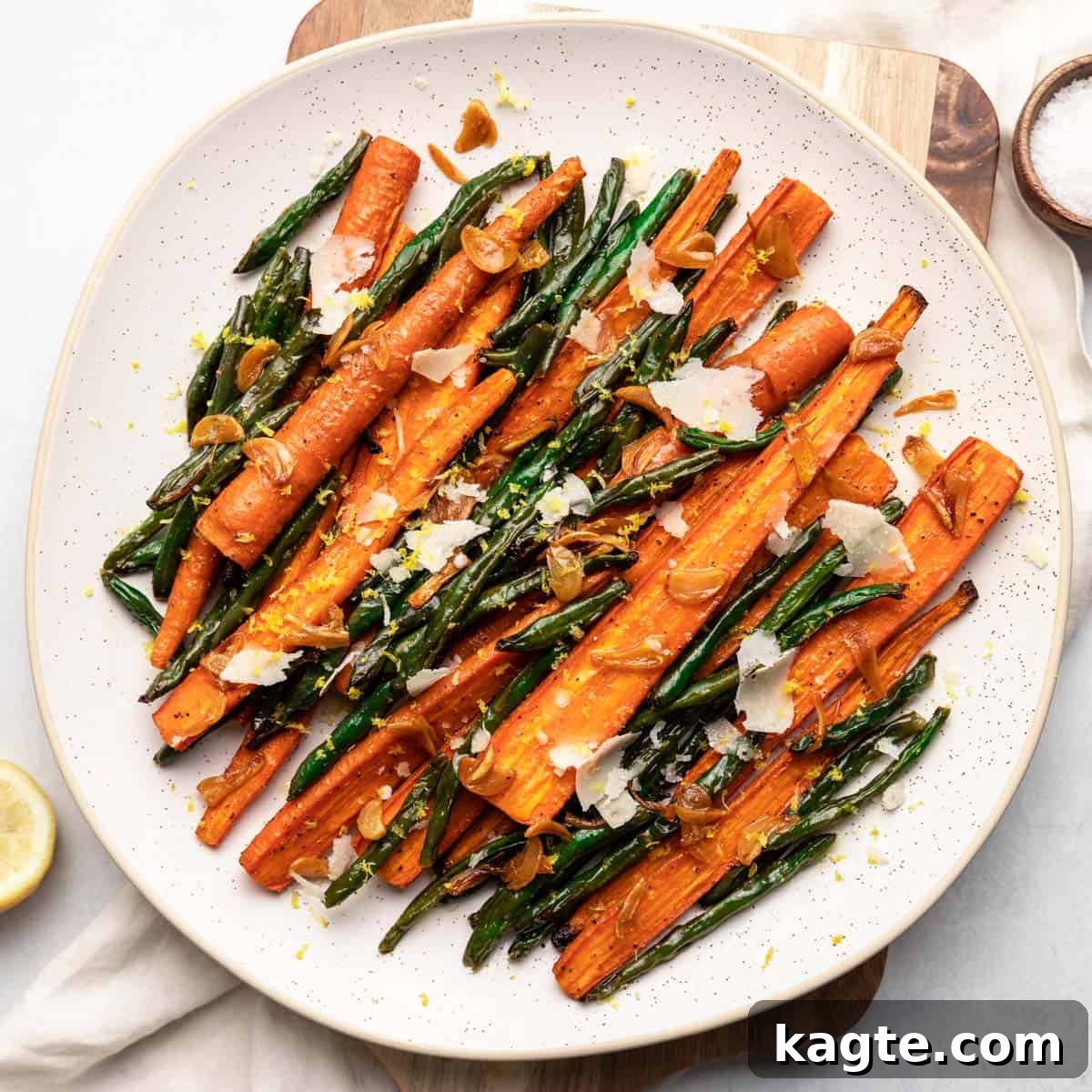
Welcome to a side dish that promises to elevate any meal! These Roasted Green Beans and Carrots are a far cry from your average, bland vegetable offering. Through the magic of roasting, carrots become beautifully caramelized and sweet, while green beans achieve a tender-crisp perfection. The secret to their irresistible flavor lies in a luscious garlic brown butter finish, complemented by the bright zest of fresh lemon and a generous sprinkle of salty Parmesan cheese. Prepare to fall in love with vegetables all over again!
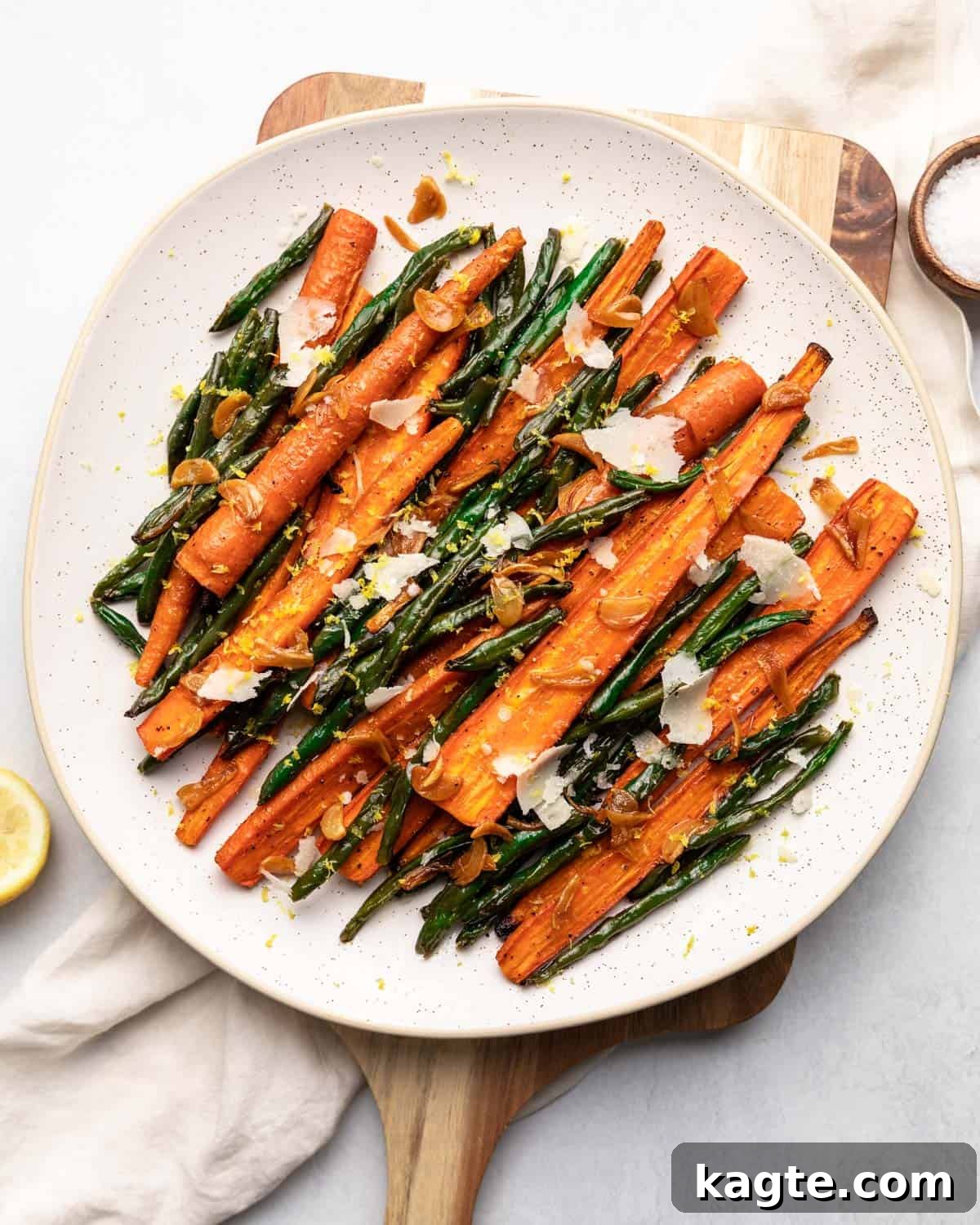
Roasting is undeniably my favorite method for cooking vegetables. The high heat of the oven transforms humble ingredients, drawing out their natural sugars and creating a beautiful caramelization that enhances both flavor and texture. It’s a simple technique that yields incredible results, making vegetables the star of the plate, not just an afterthought.
If you’re as passionate about perfectly roasted vegetables as I am, you’ll want to explore some of my other popular recipes. Each one brings out the best in fresh produce, transforming everyday ingredients into something truly special. Consider trying these delightful dishes: Sweet Glazed Stovetop Carrots, Flavorful Balsamic Glazed Brussel Sprouts, Crispy Air Fryer Baby Carrots, Hearty Instant Pot Southern Style Green Beans, or Decadent Brown Sugar Honey Glazed Carrots. Each recipe offers a unique way to enjoy your greens and root vegetables.
For those looking for a comforting, substantial side, my homemade Green Bean Casserole with Bacon is an absolute must-try. It’s a classic with a delicious twist that truly hits the spot!
And if you find yourself with an abundance of carrots and a craving for something sweet, don’t miss my incredibly moist and easy Simple Carrot Snack Cake with Cream Cheese Frosting. It’s the perfect treat for any occasion.
Table of Contents
- Why You’ll Love This Recipe
- Ingredients & Smart Substitutions
- How To Master Roasted Green Beans and Carrots
- Recipe Serving Suggestions
- Expert Tips & Flavor Variations
- How To Store and Reheat
- Frequently Asked Questions
- More Delightful Side Dish Recipes
- Complete Roasted Green Beans and Carrots Recipe
Why You’ll Love This Recipe
- Simple, Wholesome Ingredients: This recipe calls for fresh, readily available ingredients that combine to create an explosion of flavor. You don’t need exotic items to make something extraordinary.
- Effortlessly Easy & Hands-Off: Roasting is one of the easiest cooking methods. After a quick toss, the oven does most of the work, freeing you up to focus on your main course or simply relax.
- Rich, Nutty Brown Butter: Brown butter, also known as beurre noisette, adds an incredible depth of nutty, toasted flavor that perfectly complements the sweetness of the vegetables. It’s a simple step that makes a huge difference.
- Bright, Tangy Lemon Zest and Juice: A squeeze of fresh lemon juice and a sprinkle of zest provide a burst of acidity and brightness, cutting through the richness of the butter and awakening all the flavors.
- Perfectly Caramelized Carrots: Roasting brings out the natural sweetness in carrots, creating tender interiors and beautifully browned, slightly crisp edges that are simply irresistible.
- Tender-Crisp Green Beans: Say goodbye to soggy green beans! Roasting ensures they are cooked through but retain a pleasant bite, offering a satisfying texture.
- Versatile Side Dish: These roasted vegetables pair wonderfully with almost any main course, from weeknight chicken to a holiday roast. They’re impressive enough for guests yet simple enough for family dinner.
Ingredients & Smart Substitutions
Crafting the perfect roasted vegetable dish starts with quality ingredients. Here’s what you’ll need and some flexible substitutions to suit your pantry and preferences:
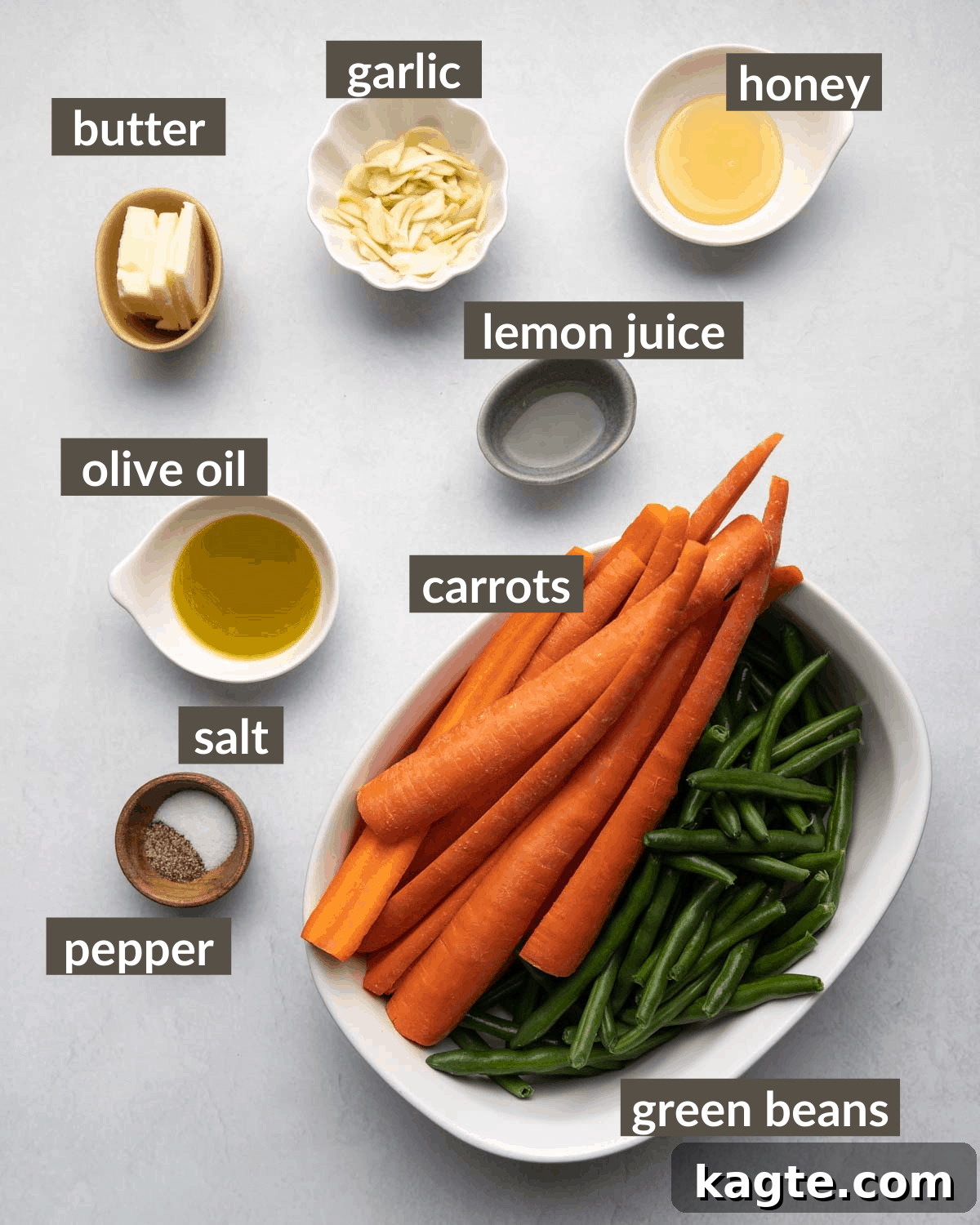
- Carrots: Look for firm, bright orange carrots. While whole carrots sliced in half work beautifully, you can also use baby carrots for convenience, or even replace them with other robust root vegetables like parsnips, sweet potatoes (cut into similar sizes for even cooking), or even peeled and diced butternut squash.
- Green Beans: Fresh green beans are key for that perfect snap. Ensure they are vibrant green and firm. If green beans aren’t available, or you fancy a change, broccoli florets or cauliflower florets are excellent alternatives that roast equally well and absorb flavors beautifully.
- Honey: This ingredient adds a touch of sweetness that helps with the caramelization of the carrots. If you don’t have honey, feel free to use an equal amount of brown sugar for a richer, molasses-like sweetness, or granulated sugar for a more neutral sweet note. Maple syrup is another fantastic option for a different flavor profile.
- Olive Oil: Essential for coating the vegetables and promoting even browning. A good quality extra virgin olive oil enhances the flavor.
- Salt & Pepper: Simple seasonings that are crucial for bringing out the best in your vegetables. Always adjust to your taste!
- Butter: Unsalted butter is preferred, as it gives you control over the final saltiness, especially when browning. This is a crucial element for creating the rich garlic brown butter sauce.
- Garlic: Fresh garlic, thinly sliced, will infuse the brown butter with an aromatic depth. Don’t skimp on the garlic – the more, the merrier!
- Lemon Juice & Zest: Freshly squeezed lemon juice brightens the dish and cuts through the richness, while the zest adds an intense citrus aroma.
- Parmesan Cheese (Optional): Freshly grated Parmesan adds a salty, umami finish that makes these vegetables truly special. Pecorino Romano or even a nutritional yeast for a dairy-free option can also work.
A complete list of ingredients and their exact amounts can be found on the recipe card below.
How To Master Roasted Green Beans and Carrots
Quick Overview
- Prepare and toss your fresh veggies with a simple seasoning.
- Roast them to perfection in a hot oven until tender and caramelized.
- Finish with a glorious homemade garlic brown butter sauce.
Step by Step Instructions
Step 1: Begin by preheating your oven to a robust 425°F (220°C). This high temperature is crucial for achieving that desirable caramelization and tender interior. While the oven heats, prepare a large baking sheet by lining it with parchment paper. Parchment paper not only prevents sticking but also makes cleanup a breeze. Set this prepared sheet aside.
Step 2: In a generously sized mixing bowl, combine your prepared carrots and green beans. Add the olive oil, honey, salt, and pepper. Use your hands or a large spoon to toss the vegetables thoroughly until every piece is evenly coated. This ensures that each bite is infused with flavor and promotes even browning.
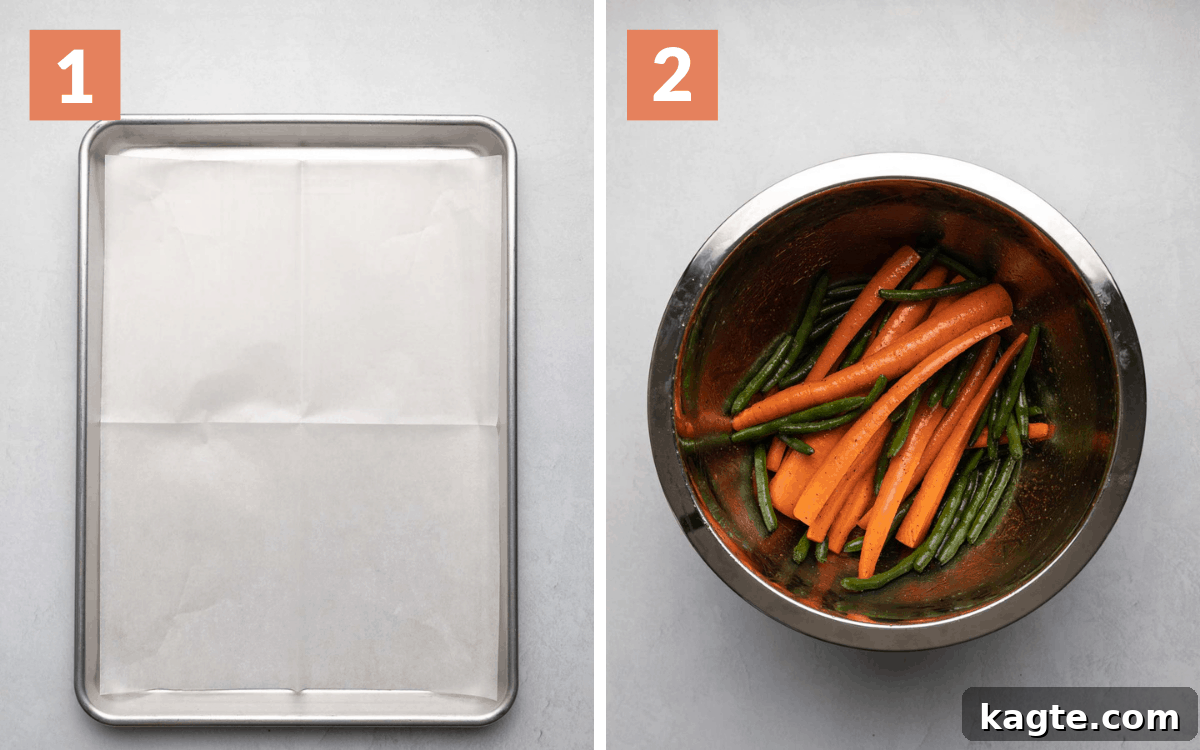
PRO TIP – Don’t underestimate the importance of a good toss! Make sure the vegetables are completely coated with the oil and seasonings. This creates the perfect environment for caramelization and ensures every piece is seasoned evenly.
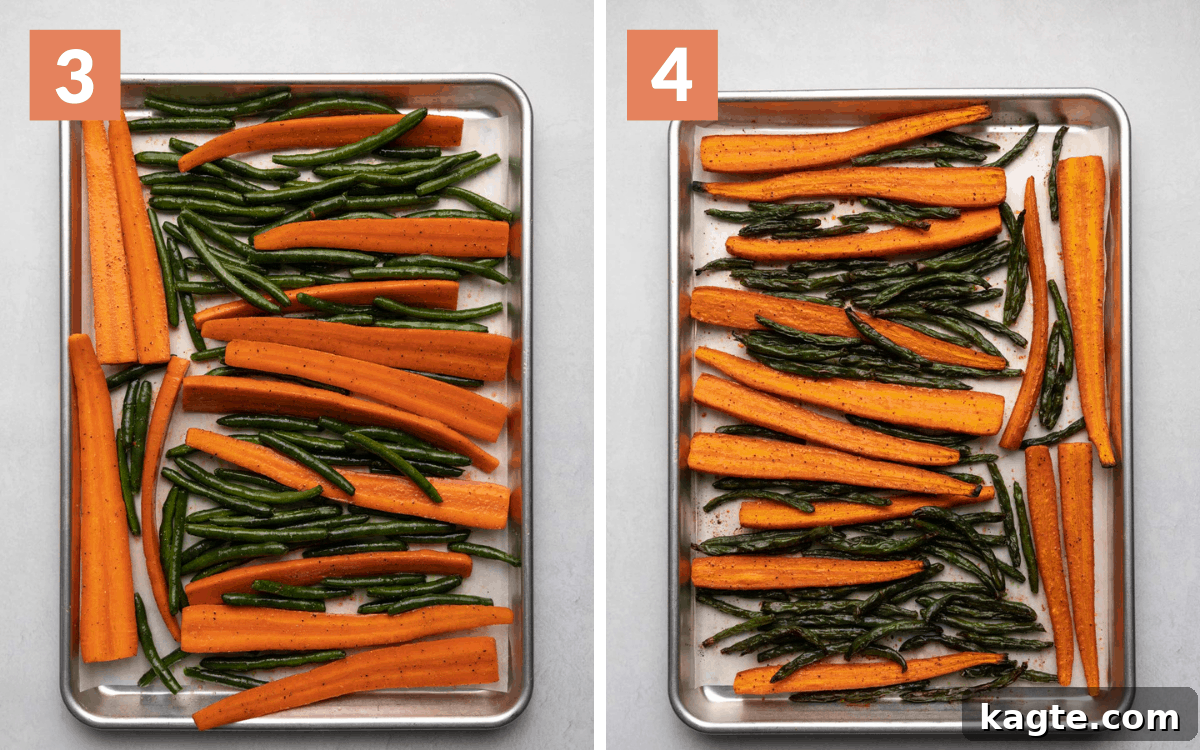
Step 3: Carefully pour the seasoned vegetables onto the prepared baking sheet. Spread them out into a single, even layer. It’s critical that the vegetables are not overcrowded. If they are piled on top of each other, they will steam instead of roast, preventing them from browning and becoming tender-crisp. If necessary, use two baking sheets to ensure adequate spacing.
Step 4: Transfer the baking sheet to your preheated oven and roast for 30-35 minutes. Around the 20-minute mark, you might want to give the vegetables a gentle stir to promote even cooking and browning. To check for doneness, carefully pierce a carrot with a fork – it should be tender but still have a slight resistance. The green beans should be vibrant green and tender-crisp. Remove the vegetables from the oven once they have reached your desired level of tenderness and caramelization.
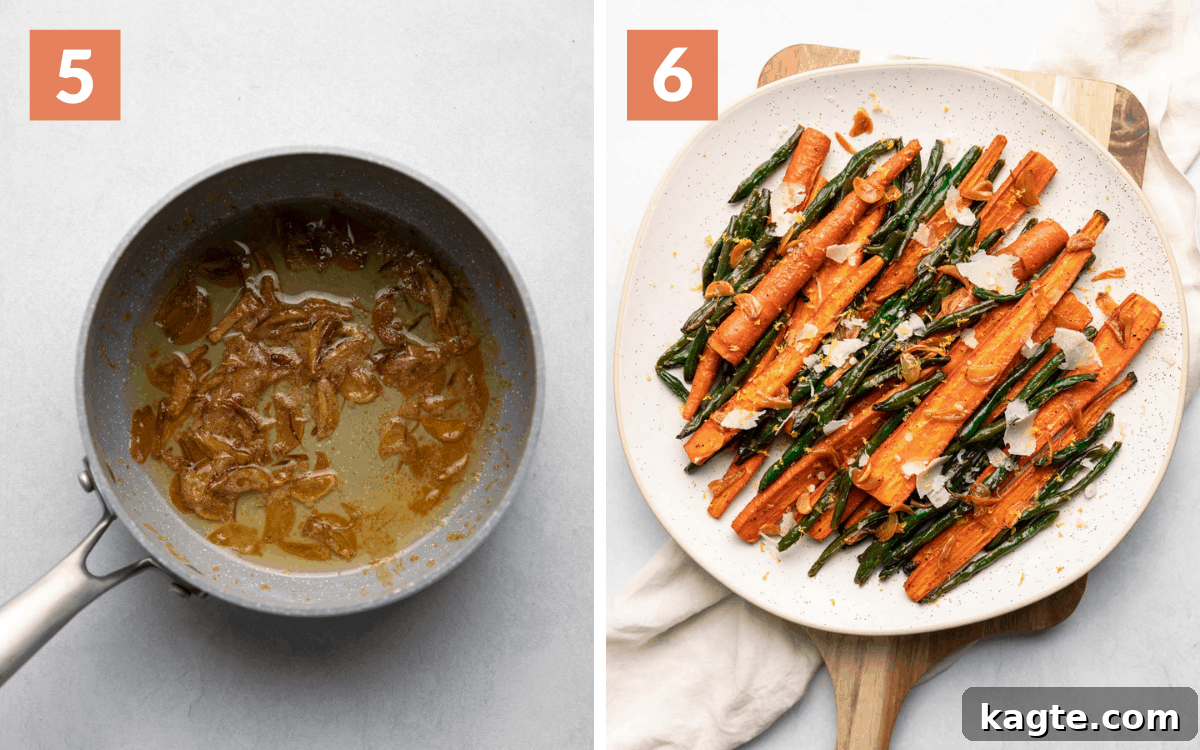
Step 5: While your vegetables are roasting, it’s time to prepare the star of the show: the garlic brown butter. In a small, light-colored saucepan (a light-colored pan helps you see the butter change color), melt the butter over low heat. Once the butter has melted, add all of the thinly sliced garlic. Continue to cook the butter on low to medium-low heat for approximately 5-10 minutes, stirring occasionally. The key here is patience. Browning the butter slowly allows the garlic to gently cook and release its aromatic oils without burning. You’ll notice the butter will become foamy, then small brown bits will start to form at the bottom of the pan, and a rich, nutty aroma will fill your kitchen. The garlic slices will also turn a beautiful golden brown. As soon as those tempting brown bits appear and the aroma is distinct, immediately remove the pan from the heat to prevent the butter from burning. Stir in the fresh lemon juice – this will stop the cooking process and add a burst of tang.
Step 6: As soon as the roasted carrots and green beans come out of the oven, transfer them to a serving dish. Drizzle generously with your freshly made garlic brown butter. For the final flourish, sprinkle with fresh lemon zest and a shower of freshly grated Parmesan cheese. Serve immediately and enjoy the symphony of flavors!
BROWN BUTTER SECRET – Patience is a virtue when browning butter. Resist the urge to turn up the heat too high, as this can cause the butter to burn quickly and unevenly. A slow, steady cook is what develops that deep, nutty flavor without bitterness.
Recipe Serving Suggestions
These garlic brown butter roasted green beans and carrots are incredibly versatile and make a fantastic side dish for a wide variety of main courses. Their vibrant flavors and appealing textures complement both light and hearty meals. Here are some of my favorite pairings:
- For a Mediterranean Flair: Serve alongside tender Greek Yogurt Chicken. The tangy marinade of the chicken and the bright vegetables create a balanced and flavorful meal.
- Elegant and Easy: Pair with a perfectly cooked Pork Tenderloin. The sweetness of the carrots and richness of the brown butter are a delightful match for lean pork.
- Weeknight Comfort: Accompany a juicy Cast Iron Skillet Chicken Breast. The simplicity of the chicken allows the vegetables to truly shine.
- For the Steak Lovers: These vegetables are a sublime partner to a flavorful Bavette Steak. The earthy flavors of the beef and the bright, buttery vegetables create a gourmet experience.
- Holiday Feasts: They make an excellent addition to any holiday table, standing out from traditional sides with their fresh, elevated taste.
- Vegetarian Main Course: Serve alongside quinoa or farro with some toasted nuts for a complete and satisfying vegetarian meal.
Expert Tips & Flavor Variations
Achieving perfectly roasted vegetables is an art, and these tips will help you master it every time. Plus, discover exciting variations to keep things fresh and exciting!
- Uniform Carrot Cuts are Key: For even cooking, it’s crucial that your carrots are cut into similar sizes. When using whole carrots, try to pick ones that are roughly the same thickness. Then, use a sharp, large knife to carefully slice them down the center lengthwise. This technique helps ensure that all the carrot pieces become tender at the same rate, avoiding some being mushy while others are still hard.
- Avoid Overcrowding the Pan: This is perhaps the most important rule for successful roasting. If your baking sheet or roasting pan is too full, the vegetables will release moisture and essentially steam rather than roast. This results in soft, pale vegetables instead of beautifully caramelized and slightly crisp ones. If you have a large batch, don’t hesitate to divide the vegetables between two baking sheets, ensuring a single layer with plenty of space around each piece.
- Embrace the Brown Butter: This isn’t just an optional step; it’s a flavor enhancer! The nutty, complex notes of brown butter transform these simple vegetables into something truly special. Take your time with it (as detailed in Step 5); it’s worth every moment.
- Monitor Roasting Time for Desired Texture: Different people prefer different levels of doneness for their vegetables. Start checking your vegetables around the 25-minute mark. If you love a firmer, crunchier texture, they might be ready then. For those who prefer their vegetables more tender and meltingly soft, allow them to roast for an additional 5 minutes or until they reach your preferred consistency.
- Achieve Extra Char (Optional): For a beautiful, smoky char that adds another layer of flavor, consider broiling the vegetables for 1-3 minutes at the very end of the roasting process. Place the baking sheet on the top rack of your oven under the broiler on HIGH. Watch them extremely closely, as they can go from perfectly charred to burnt in a matter of seconds!
- Seasoning Variations:
- Herbal Twist: Add fresh or dried thyme, rosemary, or oregano to the vegetables when tossing them with olive oil for an aromatic boost.
- Spicy Kick: A pinch of red pepper flakes or a dash of cayenne pepper can add a subtle heat to the dish.
- Sweet & Savory: Beyond honey, a touch of maple syrup can enhance the sweetness and provide a different flavor profile.
- Vegetable Swaps: While this recipe highlights green beans and carrots, don’t be afraid to experiment with other vegetables. Asparagus, bell peppers, zucchini, or even Brussels sprouts can be roasted in a similar manner, though cooking times may vary slightly.
- Washing and Drying: Always wash and thoroughly pat dry your vegetables before tossing them with oil. Excess moisture will lead to steaming, not roasting. A salad spinner works wonders for green beans, and paper towels for carrots.
How To Store and Reheat
Planning ahead or have leftovers? These roasted green beans and carrots store beautifully, making them perfect for meal prep or enjoying a second serving. Allow any leftover roasted vegetables to cool completely to room temperature before storing. Transfer them to an airtight container and refrigerate for up to 3-4 days. This ensures they maintain their freshness and prevents bacterial growth.
When you’re ready to reheat, you have a few options:
- Microwave: For a quick reheat, place the vegetables in a microwave-safe dish and heat on high in 30-second intervals, stirring in between, until warmed through. Be aware that the microwave might soften their texture slightly.
- Oven: To best retain their roasted texture, spread the vegetables on a baking sheet and reheat in a preheated oven at 350°F (175°C) for 10-15 minutes, or until heated through and slightly re-crisped. This method is ideal for bringing back some of that delicious caramelization.
- Skillet: For a stovetop option, heat a little olive oil or butter in a skillet over medium heat. Add the vegetables and sauté for 5-7 minutes, stirring occasionally, until hot and slightly browned again.
Frequently Asked Questions
Green beans possess a wonderfully neutral flavor, making them incredibly versatile. They shine with classic pairings like rich butter, aromatic garlic, and bright lemon. Beyond that, fresh herbs such as thyme, rosemary, and dill complement them beautifully. A hint of acidity from vinegar or a touch of spice from red pepper flakes can also elevate their natural taste. Smoked paprika, toasted nuts (like almonds or pecans), and even crispy bacon are fantastic additions that provide depth and texture.
The ideal cooking time for green beans largely depends on the method you choose and your preferred level of crispness. If boiled or blanched, they can be ready in as little as 3-5 minutes for a tender-crisp bite. Steaming might take 5-7 minutes. When roasting, as in this recipe, green beans typically require about 25-30 minutes at a high temperature (around 400-425°F or 200-220°C) to become tender while developing some delightful char and retaining a slight snap. For very tender beans, you might extend roasting time slightly.
For most vegetables, including carrots and green beans, a high oven temperature of 400°F to 425°F (200°C to 220°C) is ideal. This intense heat is crucial for promoting the Maillard reaction, which is responsible for the beautiful browning and rich, savory flavors (caramelization) on the exterior. Simultaneously, this temperature allows the vegetables to cook through and become tender on the inside, preventing them from becoming soggy or mushy. Anything lower might lead to steaming, while much higher risks burning the outside before the inside is cooked.
I typically reach for olive oil when roasting vegetables due to its delicious flavor profile and its common availability in most kitchens. It has a medium smoke point that works well for temperatures up to 425°F. However, several other oils are excellent choices for roasting. Avocado oil is a fantastic alternative, offering a higher smoke point and a neutral flavor. Ghee (clarified butter) also works beautifully, imparting a rich, buttery taste. Other good options include grapeseed oil or vegetable oil, especially if you prefer a very neutral base. The key is to choose an oil with a smoke point higher than your roasting temperature to prevent bitterness and unhealthy compounds.
While fresh vegetables are always recommended for the best texture and flavor, you can use frozen green beans and carrots in a pinch. However, be aware that frozen vegetables tend to release more water during cooking, which can prevent them from truly caramelizing and may result in a softer texture. To minimize this, do not thaw them first. Spread them directly on the baking sheet in a single layer and increase the roasting time slightly, checking for tenderness. They may not achieve the same crispness as fresh vegetables, but they will still be delicious with the garlic brown butter finish.
More Delightful Side Dish Recipes
Looking for more inspiration to round out your meals? Explore these fantastic side dish ideas that are sure to please any palate and complement a variety of main courses.
Side Dish
What To Serve with Chicken and Dumplings for Dinner (15 Best Sides)
Side Dish
What To Serve With Mashed Potatoes (25 Dinner Ideas)
Side Dish
What To Serve With Taco Soup For Dinner (Toppings & Sides)
Side Dish
Broccoli Mac and Cheese (Easy & Creamy)
Print Recipe
Save Recipe
Roasted Green Beans and Carrots
Ingredients
- 12 ounces green beans ends trimmed and washed
- 1 1/2 pounds (24 ounces) whole carrots, sliced in half
- 1 Tablespoon olive oil
- 1/4 teaspoon pepper
- 1/2 teaspoon salt
- 1 Tablespoon honey
- 3 Tablespoons butter
- 6-8 cloves garlic sliced thinly
- 1 Tablespoon lemon juice
- optional: fresh parmesan or lemon zest
Instructions
-
Review all recipe notes and instructions before beginning to ensure a smooth cooking process.
-
Preheat the oven to 425°F (220°C). Line a large baking sheet with parchment paper to prevent sticking and for easy cleanup. Set this prepared sheet aside.
-
In a large mixing bowl, combine the halved carrots, trimmed green beans, olive oil, honey, salt, and pepper. Toss vigorously until all vegetables are thoroughly and evenly coated with the mixture.
-
Pour the seasoned vegetables onto the lined baking sheet. Arrange them in a single, even layer, making sure not to overcrowd the pan. Use a second baking sheet if necessary to ensure proper spacing.
-
Roast for 30-35 minutes. Periodically check the carrots for tenderness by piercing them with a fork. They should be cooked to your liking – tender with slight resistance. The green beans should be vibrant and tender-crisp.
-
While the vegetables are roasting, prepare the garlic brown butter. In a small, light-colored saucepan, melt the butter over low heat. Add the thinly sliced garlic. Continue to cook on low to medium-low heat for 5-10 minutes, stirring occasionally. The butter will foam, then develop nutty brown bits at the bottom, and the garlic will turn golden brown. As soon as the brown bits appear and the aroma is rich and nutty, remove the pan immediately from the heat. Stir in the fresh lemon juice to halt the cooking process.
-
Once the vegetables are roasted, transfer them to a serving dish. Drizzle generously with the prepared garlic brown butter. For a finishing touch, sprinkle with fresh lemon zest and freshly grated Parmesan cheese (if using). Serve hot and enjoy!
Notes
Green Beans: If fresh green beans are unavailable, broccoli or cauliflower florets make excellent substitutes that roast beautifully.
Honey: Brown sugar or granulated sugar can be used as a sweetener in place of honey, adjusting to your preferred level of sweetness.
Wash and Pat Dry Vegetables Thoroughly: Before roasting, ensure all vegetables are well-washed and completely patted dry with paper towels. Removing excess moisture is crucial to prevent steaming and encourage proper browning and caramelization in the oven.
Cut Carrots Evenly for Consistent Cooking: To ensure all carrot pieces cook uniformly, try to select whole carrots of similar size. Using a large knife, carefully slice them down the center lengthwise. This method helps in achieving consistent tenderness across all your roasted carrots.
Avoid Overcrowding Your Baking Sheet: If your baking sheet is too small for all the vegetables to lie in a single layer without touching, use two baking sheets. Overcrowding causes vegetables to steam rather than roast, leading to soft rather than caramelized results. Proper spacing is key for achieving that delicious browning.
Patience with Brown Butter: If you are new to making brown butter, remember that the process requires patience. Keep the heat on low to medium-low and stir frequently. The goal is to gently toast the milk solids until they turn amber and release a nutty aroma, ensuring the garlic cooks perfectly without burning. This slow process is vital for developing rich flavor.
Monitor Roasting for Desired Doneness: Keep a close eye on your vegetables as they roast, as oven temperatures can vary. Check them around 25-30 minutes if you prefer a crunchier texture. If you like your vegetables more tender and deeply caramelized, leave them in the oven for an additional 5 minutes or until they reach your desired softness.
For Extra Char and Flavor: To achieve an appealing char and enhance the flavor, consider broiling the vegetables on HIGH for 1-3 minutes at the very end of the cooking process. Place the tray on the top rack and watch very closely to prevent burning, as this can happen rapidly under the broiler.
Nutrition
Nutrition information is automatically calculated and should be used as an approximation only.