
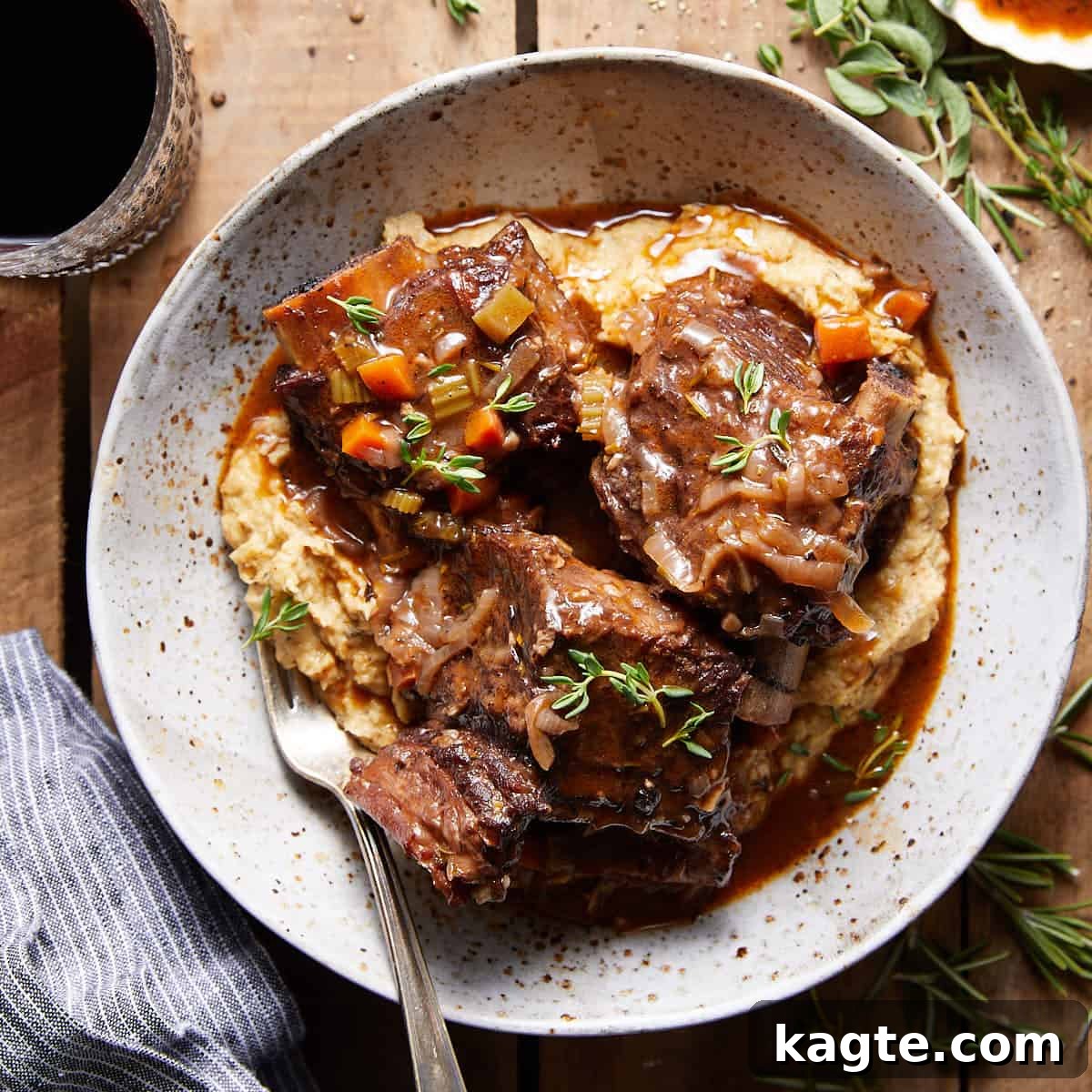
Welcome to the ultimate guide for crafting the most luxurious and tender Red Wine Short Ribs in your very own kitchen. Imagine succulent beef, braised slowly in a rich, aromatic broth until it effortlessly falls off the bone, melting in your mouth with every bite. This isn’t just a meal; it’s an experience, a culinary embrace perfect for chilly evenings or special gatherings. Our Dutch oven method ensures deep flavors and unparalleled tenderness, making these short ribs a truly unforgettable dish.
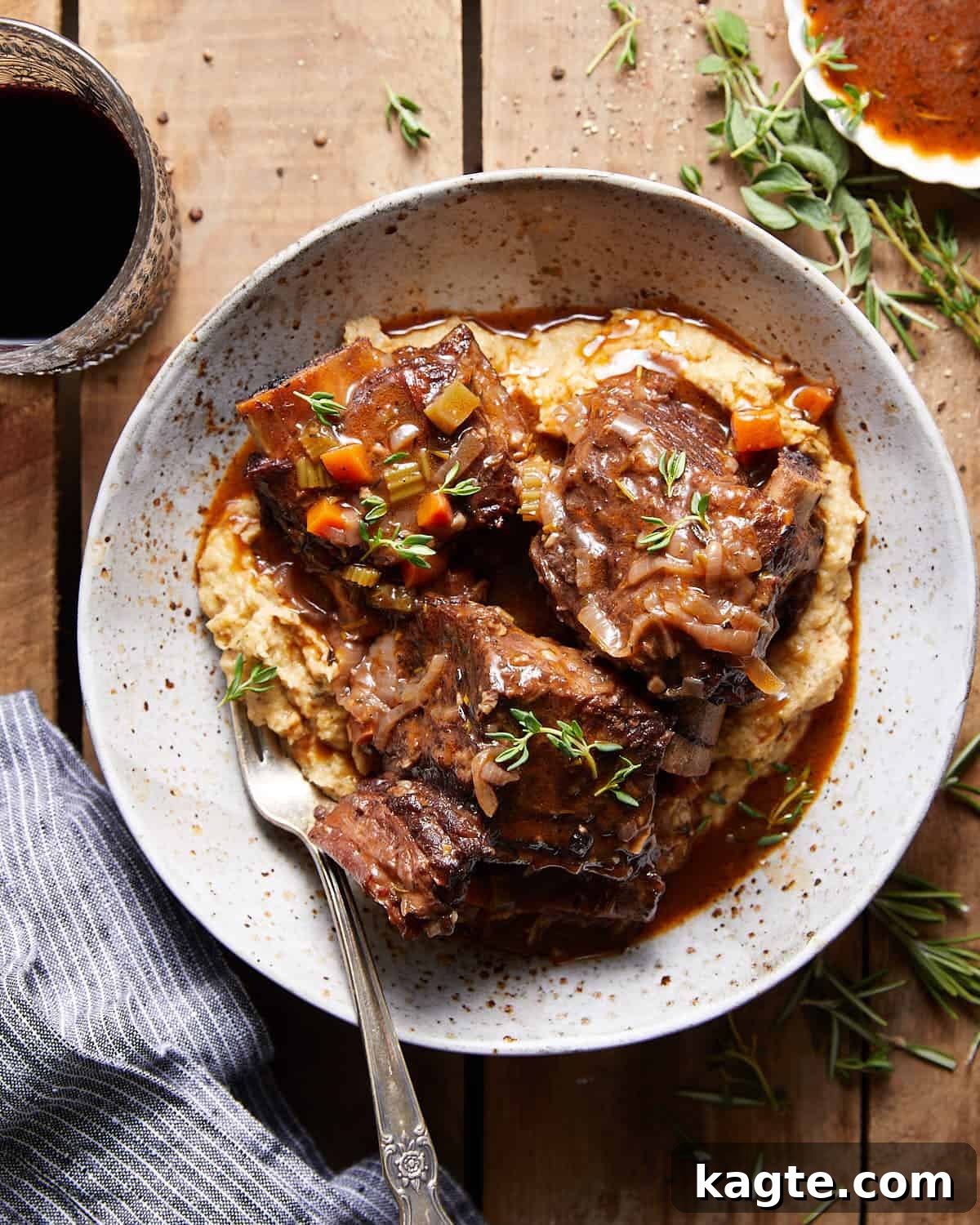
These magnificent red wine braised short ribs, enriched with carrots and celery, are a testament to the magic of low and slow cooking. The process transforms humble ingredients into a symphony of flavors, creating a robust, savory broth that rivals even our acclaimed Dutch Oven Beef Stew and our hearty Dutch Oven Southern Pot Roast. While we adore the deep notes of red wine here, if you’re exploring other beef braising options, our Baby Back Ribs in the Oven offer a fantastic barbecue alternative, and for a wine-free braise, don’t miss our Old Fashioned Pot Roast Recipe.
Table of Contents
- Choosing the Perfect Red Wine for Short Ribs
- Why These Red Wine Short Ribs Will Become a Favorite
- Key Ingredients & Clever Substitutions
- How to Master Red Wine Short Ribs
- Serving Suggestions for Braised Short Ribs
- Expert Tips & Flavor Variations
- Alternative Cooking Methods
- Frequently Asked Questions About Short Ribs
- More Comforting Main Dish Recipes
- Red Wine Short Ribs Recipe Card
Choosing the Perfect Red Wine for Short Ribs
The choice of red wine is crucial for a perfectly balanced braising liquid. To prevent the sauce from becoming overly sweet, a dry red wine is always recommended. There’s no need to reach for your most expensive bottle; an affordable, good-quality wine will do wonders for this recipe. Aim for something you would enjoy drinking, as its flavor will concentrate beautifully during the long braising process. Here are some excellent choices:
- Cabernet Sauvignon: This is often a go-to for many home cooks and professional chefs. It’s robust, dry, and imparts a deep, structured flavor to the braising liquid. If you love a bold red wine, this is an ideal choice that lends itself well to the rich beef.
- Merlot: Offering a slightly softer profile than a Cabernet, Merlot is still wonderfully dry and fruit-forward without being sweet. It provides a smooth, elegant depth to the sauce, making it a versatile and crowd-pleasing option.
- Pinot Noir: For those who prefer a lighter-bodied red, Pinot Noir is an excellent selection. It’s the fruitiest of the dry reds mentioned here and will contribute a nuanced, delicate sweetness to the braise, creating a subtly different but equally delicious flavor profile.
Why These Red Wine Short Ribs Will Become a Favorite
There are countless reasons to fall in love with this red wine short rib recipe. It’s more than just a meal; it’s a comforting classic that delivers on every front:
- Incredibly Tender: The secret lies in the braising technique. By cooking the beef low and slow for several hours, the tough connective tissues break down, transforming the ribs into an unbelievably tender, fall-off-the-bone masterpiece. This extended cooking time ensures every fiber of meat is infused with flavor.
- Decadent & Hearty: These ribs are wonderfully rich and satisfying, thanks to their marbling and the deeply flavored sauce. They are truly an indulgence, perfect for a cozy dinner. While rich, they are so flavorful that a couple of ribs per person are generally sufficient. Plus, they taste even better the next day, making leftovers a highly anticipated treat!
- Wonderfully Herbaceous: The aromatic foundation of this dish comes from a carefully selected blend of dried oregano, thyme, and rosemary. These classic herbs infuse the braising liquid with a fragrant, earthy depth that complements the richness of the beef and the boldness of the red wine beautifully.
- Versatile Cooking Methods: Whether you prefer the classic Dutch oven on the stove or in the oven, or opt for the convenience of a slow cooker or Instant Pot, this recipe is adaptable. We provide detailed instructions for each method, ensuring success no matter your preferred kitchen tool.
- The Epitome of Cozy Dinner: There’s nothing quite like the aroma of red wine short ribs simmering gently, filling your home with an inviting scent. It’s the quintessential winter comfort food, best served with a glass of the same red wine used in the braise, creating a truly heartwarming culinary experience.
Key Ingredients & Clever Substitutions
Crafting exceptional red wine short ribs starts with quality ingredients. Here’s what you’ll need and some valuable notes:
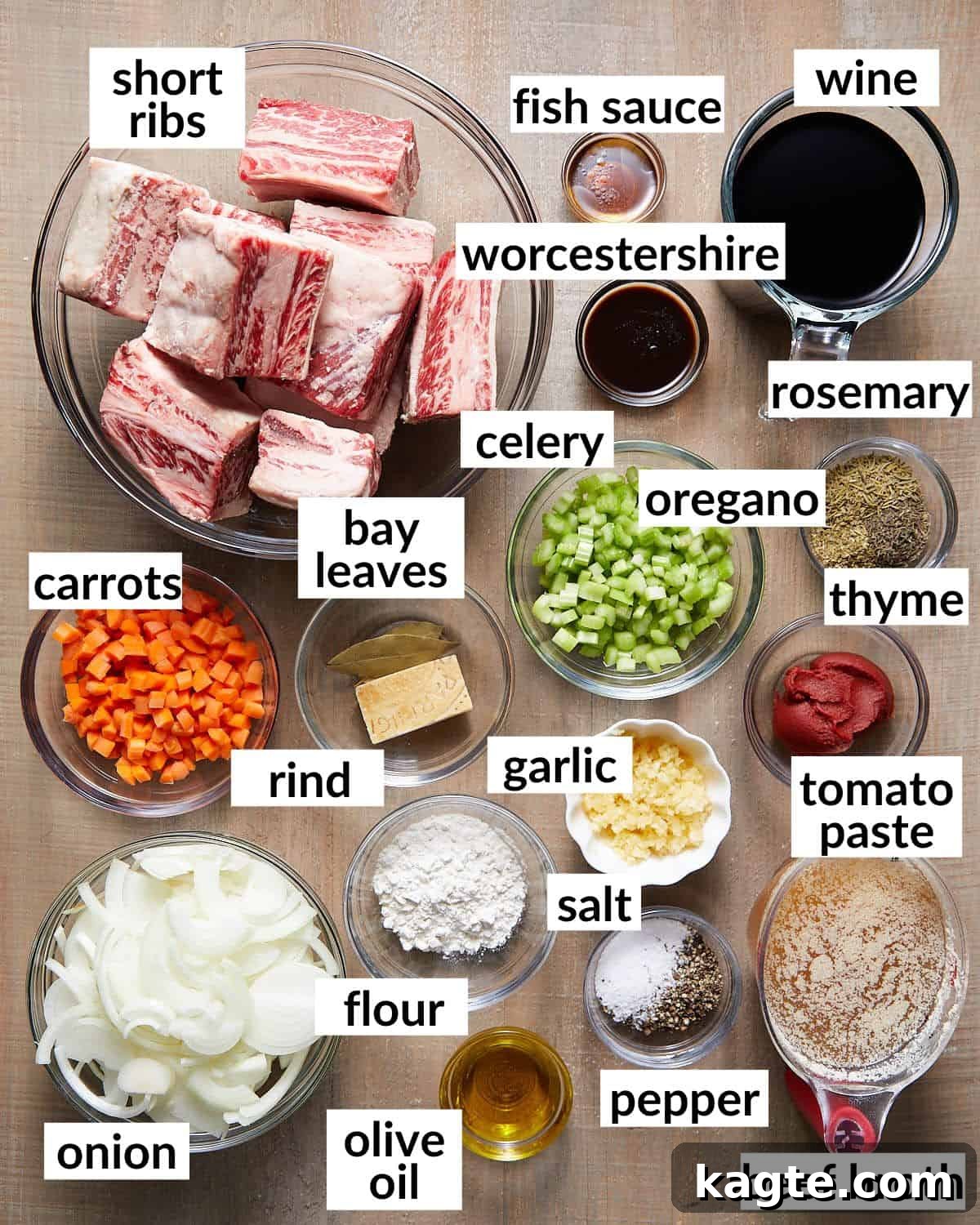
- Kosher Salt: Our recipes are consistently tested with Morton kosher salt due to its superior texture and balanced flavor for everyday cooking. If you’re using table salt, remember its finer grain means you’ll need to reduce the amount by about half to avoid over-salting. A good quality kosher salt is truly a pantry staple!
- Bone-in Beef Short Ribs: Look for well-marbled, meaty short ribs. The bones contribute significantly to the depth of flavor in the braising liquid. If bone-in aren’t available, boneless short ribs can be used, but adjust cooking time slightly as they may cook faster.
- Dry Red Wine: As discussed, choose a dry red like Pinot Noir, Merlot, or Cabernet Sauvignon. The alcohol will cook off, leaving behind a concentrated, rich wine flavor. Don’t use “cooking wine” often found in grocery stores, as these typically contain additives and excess salt.
- Fish Sauce: This might seem like an unusual addition, but a small dash of fish sauce acts as a secret weapon, adding an incredible layer of umami and complexity without making the dish taste fishy. It deepens the savory notes of the beef and broth. If you don’t have it, you can omit it and adjust seasoning with extra salt and a splash of soy sauce at the end.
- Parmigiano Reggiano Rind: Don’t discard those cheese rinds! Adding a piece of Parmigiano Reggiano rind to the braising liquid infuses it with a subtle, nutty, and savory depth that is truly remarkable. You can often find rinds sold separately at specialty grocery stores like Whole Foods or at cheese counters. If unavailable, it’s not essential but highly recommended for an extra layer of flavor.
- Fresh Herbs vs. Dried: While this recipe calls for dried herbs (oregano, thyme, rosemary) for convenience and potency, feel free to use fresh herbs. A good rule of thumb is to use three times the amount of fresh herbs compared to dried. Tie them into a sachet with kitchen twine for easy removal.
- Vegetables (Onions, Carrots, Celery, Garlic): These aromatic vegetables form the “mirepoix” base, essential for building deep flavor. Chop them relatively uniformly for even cooking. Don’t like celery? Here are The 12 Best Substitutes for Celery that could work in a braise.
- Tomato Paste: This concentrates tomato flavor, adding sweetness, acidity, and umami that helps balance the richness of the short ribs. Make sure to cook it off for a minute or two to deepen its flavor.
- All-Purpose Flour: A small amount of flour acts as a thickening agent, creating a luxurious, velvety sauce that clings beautifully to the ribs and vegetables.
A complete list of ingredients and precise amounts is provided on the recipe card below.
How to Master Red Wine Short Ribs
Making these tender red wine short ribs is a rewarding process. Here’s a quick overview of the key steps, followed by detailed instructions to guide you:
Quick Overview of the Braising Process
- Sear the Short Ribs: Brown them deeply to lock in flavor.
- Sauté the Aromatics: Build the flavor base with vegetables and herbs.
- Develop the Sauce Base: Cook tomato paste and flour to create a rich foundation.
- Deglaze and Add Liquids: Introduce wine and broth, scraping up flavorful bits.
- Simmer to Perfection: Return ribs to the liquid and braise until fall-off-the-bone tender.
Step-by-Step Instructions for Your Dutch Oven
Pro Tip: Don’t skip the searing step! Achieving a deep brown crust on all sides of the ribs is crucial for developing incredible depth of flavor (the Maillard reaction at its best).
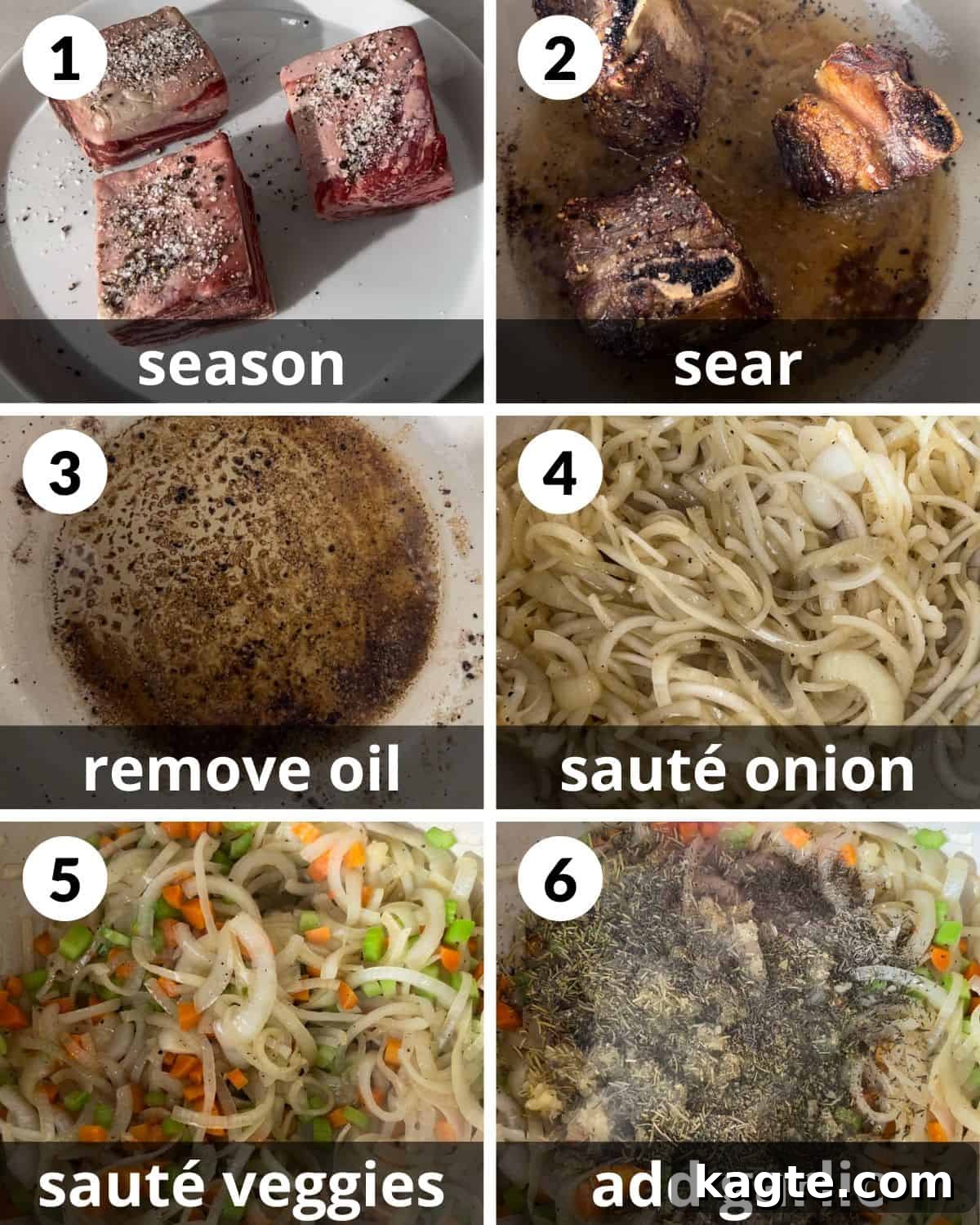
- Prepare the Ribs and Pan: Heat the olive oil in a 6-quart Dutch oven or heavy-bottomed pot over medium-high heat. While the oil heats, generously season 3-4 short ribs with kosher salt and freshly ground black pepper on all sides.
- Sear the Ribs: Carefully place the seasoned ribs in the hot oil. Sear them until a deep, crusty brown develops on all sides. This usually takes 3-5 minutes per side. Work in batches to avoid overcrowding the pot, which would steam the ribs instead of searing them.
- Remove and Reserve: Once seared, remove the browned ribs from the pot and set them aside. Reduce the heat to medium. At this point, you’ll likely have a lot of rendered fat and seasoned bits at the bottom of the pot. Carefully pour out most of the excess oil, leaving only about 2-3 tablespoons to coat the bottom of the pot for sautéing the vegetables.
- Sauté Onions: Add the sliced yellow onion to the pot. Sauté for 2-3 minutes, stirring occasionally, until they begin to soften and become translucent.
- Add Carrots and Celery: Incorporate the chopped carrots and celery into the pot. Continue to sauté for another 2-3 minutes, allowing them to soften slightly and release their aromatic flavors.
- Introduce Garlic and Herbs: Add the minced garlic, dried oregano, dried thyme, and dried rosemary. Sauté for just 1-2 minutes until the garlic is fragrant, being careful not to burn it.
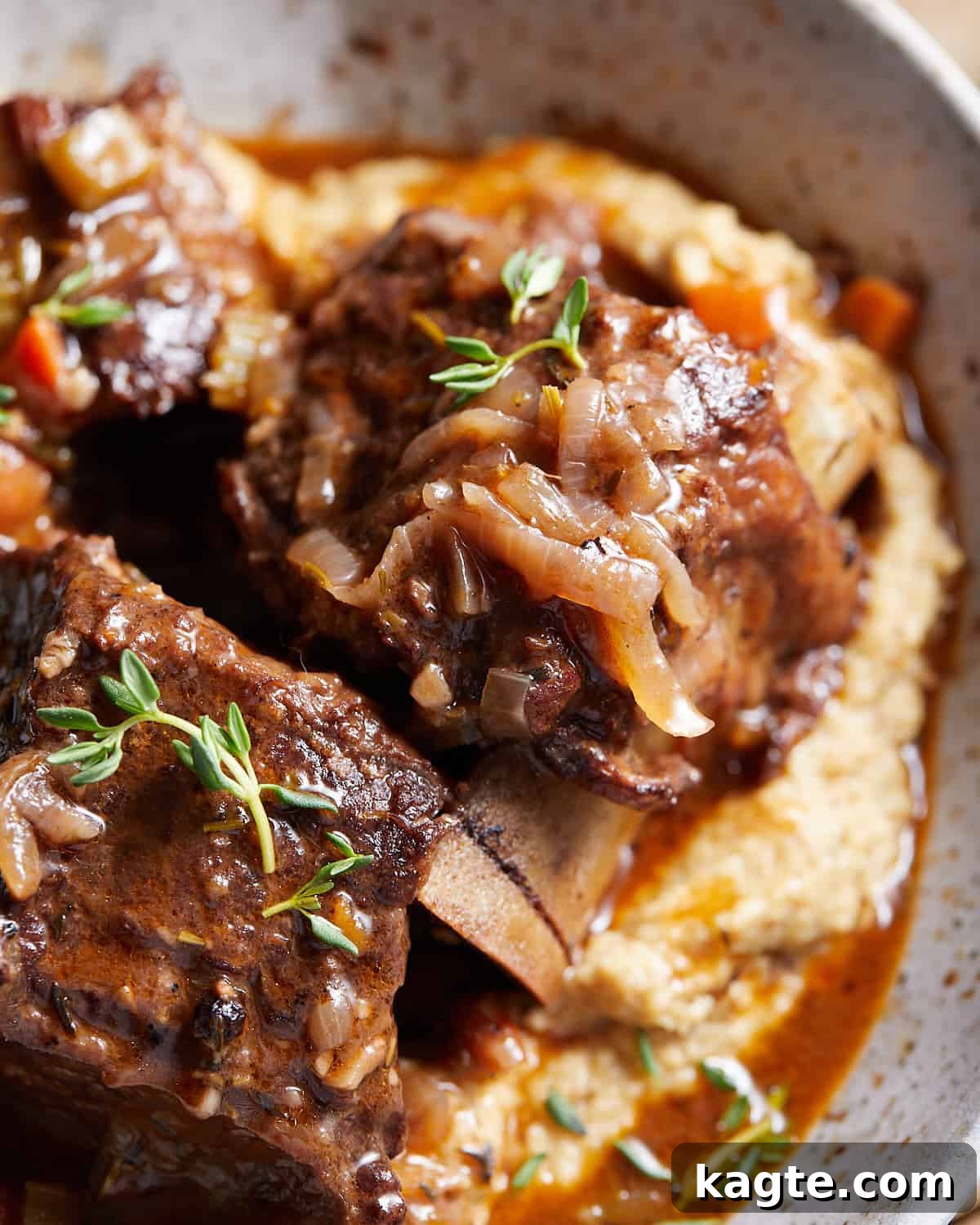
Patience is Key: The braising time is essential. After simmering, the ribs should be incredibly tender, easily pierced with a fork, and practically falling off their bones. Do not rush this step!
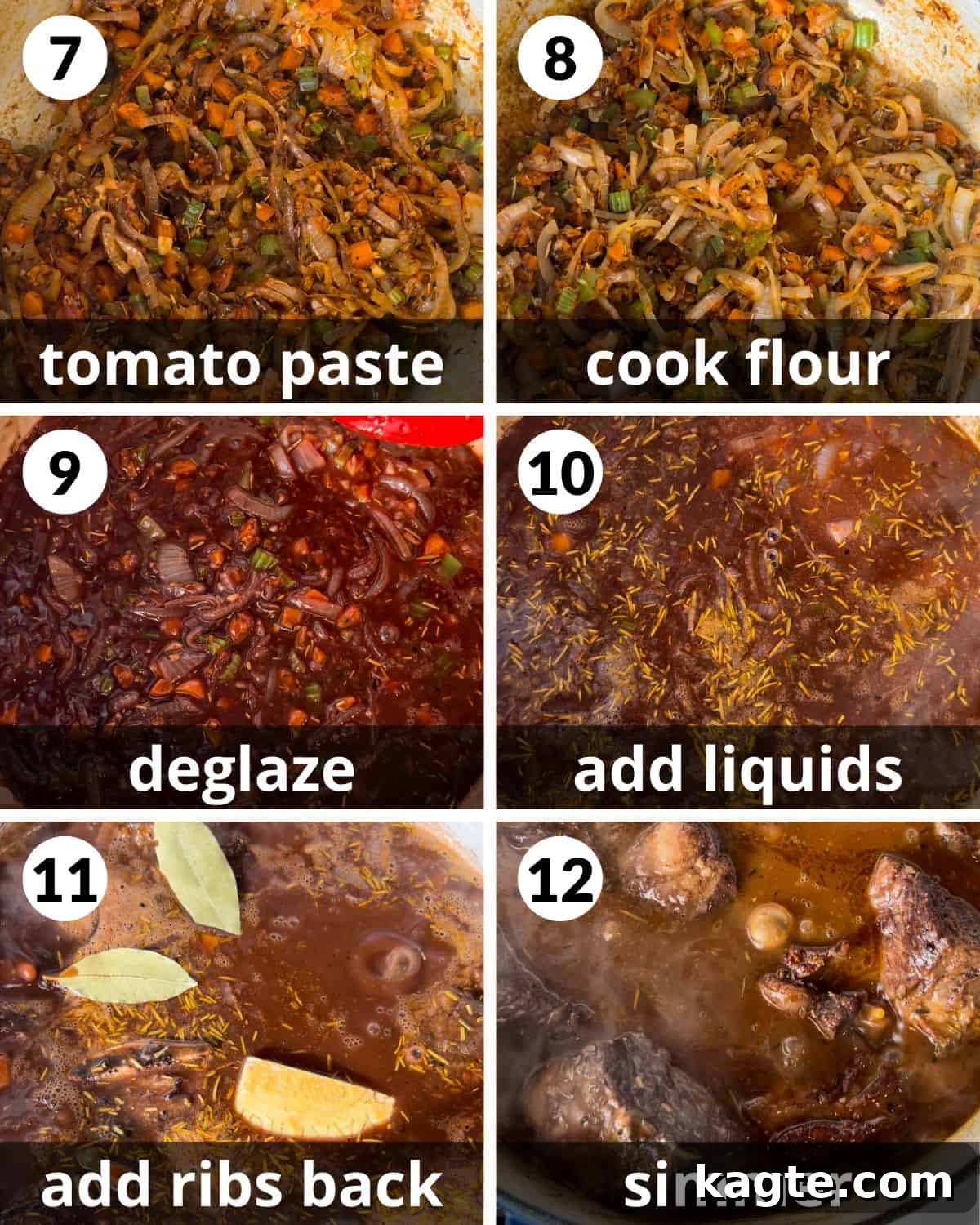
- Cook Tomato Paste: Stir in the tomato paste and cook for 1-2 minutes. This step is crucial for caramelizing the paste and deepening its flavor, removing any raw tomato taste.
- Add Flour: Sprinkle the all-purpose flour over the vegetables and tomato paste. Cook for 2-3 minutes, stirring constantly. This creates a roux that will thicken the sauce and add richness.
- Deglaze with Wine: Pour in the dry red wine. Using a wooden spoon, vigorously scrape up any browned bits (fond) from the bottom of the pot. These bits are packed with flavor and will dissolve into the sauce, enriching it beautifully. Bring the wine to a gentle simmer and let it cook for 2-3 minutes to allow some of the alcohol to evaporate.
- Add Broth and Seasonings: Stir in the beef stock or broth, Worcestershire sauce, and fish sauce (if using). Bring the liquid back to a boil, then reduce the heat.
- Return Ribs and Braise: Carefully nestle all of the seared short ribs back into the liquid, ensuring they are mostly submerged. Add the bay leaves and the Parmigiano Reggiano rind.
- Simmer Until Tender: Cover the Dutch oven tightly and reduce the heat to low. Simmer gently for 2 1/2 – 3 hours, or until the ribs are incredibly tender and easily pull away from the bone with a fork. If they aren’t tender enough, continue simmering, checking every 30 minutes, until desired tenderness is reached. Remove the ribs from the pot. If the sauce seems too thin, you can simmer it uncovered for an additional 10-15 minutes to reduce and thicken it further. Keep in mind the sauce will also thicken as it cools. Discard the bay leaves and parmesan rind before serving.
Serving Suggestions for Braised Short Ribs
These rich, succulent red wine short ribs create the most incredible, velvety pan sauce, making them ideal to serve over something that can soak up every last drop of that goodness. A crusty loaf of bread for dipping is also highly recommended! Here are some of our favorite accompaniments:
- Creamy Red Skin Mashed Potatoes: The perfect canvas for that luscious sauce, these potatoes, often made with sour cream and garlic, provide a fluffy, savory contrast to the richness of the beef.
- Roasted Mashed Cauliflower with Parmesan: For a delicious low-carb alternative, this creamy mashed cauliflower offers a lighter yet equally satisfying base, with the added tang of Parmesan cheese.
- Fluffy Instant Pot Basmati Rice with Butter: A simple yet elegant choice, buttered basmati rice provides a delicate texture and subtle aroma that perfectly complements the robust flavors of the short ribs.
- Easy & Crusty Rustic Bread: You absolutely need something to sop up every last bit of that incredible sauce. A homemade rustic bread (no kneading required!) is ideal for dipping and enjoying the full flavor experience.
- Polenta: Creamy polenta is another fantastic option that provides a smooth, corn-flavored base, perfect for soaking up the rich red wine sauce.
- Pasta: Wide, flat pasta like pappardelle or tagliatelle works wonderfully, allowing the thick sauce to cling to each noodle.
Expert Tips & Flavor Variations
Elevate your red wine short ribs with these expert tips and ideas for delicious variations:
- Season Generously: Don’t be shy with the salt and pepper on the short ribs before searing. This initial seasoning penetrates the meat, laying the foundation for incredible flavor. About 1.5-2 tablespoons of kosher salt for 5 pounds of ribs is a good starting point.
- Achieve a Deep Sear: The browning (Maillard reaction) on the exterior of the ribs is not just for looks; it creates complex, savory flavors that are impossible to replicate otherwise. Ensure your oil is hot enough and work in batches to get a beautiful, deep brown crust on all sides of each rib. This step is non-negotiable for maximum flavor.
- Utilize Flour for a Velvety Sauce: The small amount of all-purpose flour added after sautéing the aromatics acts as a vital thickening agent. It creates a rich, luscious sauce that beautifully coats the beef and vegetables, transforming into a perfect gravy to spoon over your chosen side dish.
- Deglaze with Wine Thoroughly: When you add the red wine, make sure to scrape up all the browned bits (fond) from the bottom of the pot. These flavorful morsels are concentrated deliciousness that will melt into your sauce, adding immense depth.
- Embrace Patience: Braising is a slow art. These short ribs need ample time—a few hours at a low temperature—for the tough connective tissues to break down and become fork-tender. Rushing this process will result in tough, chewy meat. Trust the process; the wait is absolutely worth it.
- Make Ahead Magic: Red wine short ribs are an ideal make-ahead meal. The flavors deepen and meld even further overnight. Prepare them a day or two in advance, cool completely, then refrigerate. When ready to serve, gently reheat on the stovetop or in the oven. You can also skim off any solidified fat from the top before reheating.
- Add a Touch of Sweetness: For an even richer, slightly sweeter sauce, consider adding a tablespoon of balsamic vinegar or a pinch of sugar (brown or granulated) along with the tomato paste. This can help balance the acidity of the wine.
- Spice It Up: If you enjoy a hint of heat, a pinch of red pepper flakes added with the garlic and herbs can provide a subtle kick.
- Fresh Herb Garnish: While dried herbs are used in the braise, a sprinkle of fresh parsley or chives before serving adds a lovely bright finish and pop of color.
Alternative Cooking Methods
While the Dutch oven provides fantastic results, you can also achieve tender red wine short ribs using other popular kitchen appliances:
- Oven Baking (Dutch Oven): After completing all the searing and sauce-building steps in your Dutch oven on the stovetop (through Step 11), cover the pot tightly and transfer it to a preheated oven. Bake at 325°F (160°C) for approximately 3 hours, or until the ribs are perfectly tender. This method offers very consistent, even heat.
- Slow Cooker (Crock Pot): This is a wonderful hands-off option. Follow the recipe through Step 10 (searing ribs, sautéing vegetables, building the sauce, deglazing, and adding liquids). Once the liquid comes to a boil, transfer the entire contents of the Dutch oven into your slow cooker. Add the ribs, Parmigiano rind, and bay leaves. Cook on HIGH for 4-5 hours or on LOW for 7-8 hours, or until the ribs are fall-apart tender. The exact time may vary depending on your slow cooker.
- Instant Pot (Pressure Cooker): For a significantly faster cooking time, the Instant Pot is your friend.
- Important Note on Thickening: When using an Instant Pot, use cornstarch INSTEAD of flour. Do NOT add the thickening agent until the very end, after pressure cooking. Adding flour before pressure cooking can cause a “burn” notice.
- Preparation: Use the “Sauté” function on your Instant Pot to sear the short ribs and complete all the steps from 1 through 7 (searing, sautéing vegetables, and cooking tomato paste).
- Skip Flour: Skip Step 8 (adding the flour).
- Liquids and Pressure Cook: Continue with Steps 9, 10, and 11, adding the red wine, broth, Worcestershire, fish sauce, ribs, bay leaves, and parmesan rind. Ensure enough liquid to cover the ribs (you may need a bit less than in the Dutch oven method due to less evaporation).
- Pressure Cooking: Secure the lid and set the Instant Pot to “Manual” or “Pressure Cook” on HIGH for 60 minutes.
- Natural Release: Allow for a natural pressure release for 10-15 minutes, then carefully do a quick release of any remaining pressure.
- Thickening the Sauce: Remove the ribs from the pot. To thicken the sauce, create a cornstarch slurry by whisking together about 2-3 tablespoons of cornstarch with 2-3 tablespoons of the hot liquid from the pot until smooth. Add this slurry back into the pot, stir well, and use the “Sauté” function again. Bring to a simmer, stirring continuously, until the sauce thickens to your desired consistency. Add more slurry if needed. Return the ribs to the thickened sauce to serve.
Frequently Asked Questions About Short Ribs
Yes, absolutely. Short ribs are inherently tough cuts of meat, rich in collagen and connective tissue. The key to their tenderness is a long, slow braising process. This extended cooking time at a low temperature allows the collagen to slowly break down into gelatin, which tenderizes the meat and adds a luxurious mouthfeel to the sauce. If your short ribs aren’t fork-tender, they simply haven’t cooked long enough. Continue cooking them until they reach the desired melt-in-your-mouth consistency.
While some recipes might suggest 350°F, we generally recommend baking short ribs at a slightly lower temperature, around 325°F (160°C), especially in a Dutch oven. At 325°F, it will typically take about 2.5-3 hours for the short ribs to become tender. A slightly lower temperature helps prevent the sauce from scorching or reducing too quickly, ensuring a more consistent and gentle braise. If you must use 350°F, check on them more frequently and be prepared for them to cook a bit faster, around 2-2.5 hours, but always prioritize tenderness over strict timing.
Yes, you can use boneless short ribs. However, be aware that the bones add significant flavor and richness to the braising liquid. If using boneless, you might consider adding a bit of beef stock or a parmesan rind for extra depth. Boneless ribs may also cook slightly faster, so start checking for tenderness a bit earlier.
Absolutely! Red wine short ribs freeze beautifully. Once completely cooled, transfer the ribs and sauce to an airtight freezer-safe container or heavy-duty freezer bags. They can be stored in the freezer for up to 3 months. Thaw overnight in the refrigerator, then gently reheat on the stovetop or in the oven until warmed through. The flavors often deepen even more after freezing and thawing!
The primary reason for tough short ribs is insufficient cooking time. Short ribs are a collagen-rich cut, which means they require long, slow cooking at a low temperature to break down that collagen into gelatin. If they are cooked too quickly, at too high a temperature, or not long enough, the collagen remains intact, resulting in a chewy, tough texture. Patience is key to achieving that melt-in-your-mouth tenderness.
Shop my Amazon Storefront for recommended kitchen tools and ingredients!
More Comforting Main Dish Recipes
If you loved these red wine short ribs, you’re sure to enjoy these other hearty and comforting main dish recipes perfect for any occasion:
Delicious Entrées for Your Table
Chicken
Garlic Butter Chicken Thighs (Baked & Crispy)
Pasta
Baked Stuffed Shells with Meat Sauce
Fall
Dutch Oven Pot Roast
Soup & Chili
Ground Chicken Chili with Beans
If you try this recipe, please leave a star rating in the recipe card below and/or a comment! I always appreciate your feedback. Follow me on Pinterest, Facebook & Instagram.
Red Wine Short Ribs
15 minutes
3 hours 5 minutes
3 hours 20 minutes
5
Equipment
- 6 Quart Dutch Oven
- 8 inch Chef’s Knife
- Large Cutting Board
- Stirring Spoon
- Tongs
Ingredients
- 2 Tablespoons olive oil
- 5 pounds bone-in beef short ribs (about 10)
- 1.5-2 Tablespoons Morton kosher salt*
- 1 Tablespoon freshly ground black pepper
- 2 yellow onions, sliced
- 1 cup carrot, chopped
- 1 cup celery, chopped
- 10-12 cloves garlic, minced
- 1 Tablespoon dried oregano
- 1 Tablespoon dried thyme
- 1 Tablespoon dried rosemary
- 1/4 cup tomato paste
- 1/4 cup all-purpose flour
- 2 1/2 cups dry red wine*
- 2 cups beef stock or broth
- 2 Tablespoons Worcestershire sauce
- 1/2 teaspoon fish sauce* (optional, for extra umami)
- 2 bay leaves
- 1 Parmigiano Reggiano rind* (optional, for extra depth of flavor)
Instructions
-
Heat the olive oil in a 6-quart Dutch oven over medium-high heat. Season 3-4 short ribs generously with salt and pepper.
-
Sear all sides of the ribs in the hot oil until a deep brown crust forms. Work in batches to avoid overcrowding.
-
Remove the seared ribs and set them aside. Turn the heat to medium. Carefully remove most of the excess oil and rendered fat from the pot, leaving only a few tablespoons to coat the bottom.
-
Add the sliced onion to the pot and sauté for 2-3 minutes until it begins to soften.
-
Add the chopped carrots and celery. Sauté for another 2-3 minutes until they begin to soften.
-
Stir in the minced garlic, dried oregano, dried thyme, and dried rosemary. Sauté for 1-2 minutes until fragrant, being careful not to burn the garlic.
-
Add the tomato paste and cook, stirring, for 1-2 minutes to caramelize it and deepen its flavor.
-
Sprinkle in the all-purpose flour and cook, stirring constantly, for 2-3 minutes to create a light roux.
-
Deglaze the pan with the red wine, scraping any browned bits from the bottom of the pot with a wooden spoon. Bring to a simmer and cook for 2-3 minutes.
-
Stir in the beef stock or broth, Worcestershire sauce, and fish sauce (if using). Bring the liquid to a boil.
-
Carefully return all of the seared short ribs to the liquid, ensuring they are mostly submerged. Add the bay leaves and parmesan rind.
-
Cover the Dutch oven tightly and reduce the heat to low. Simmer gently for 2 1/2 – 3 hours, or until the ribs are incredibly tender and fall off the bone. If not tender, continue simmering until they reach desired tenderness. Remove the ribs. If the sauce is too thin, simmer it uncovered for an additional 10-15 minutes to reduce. The sauce will also thicken as it cools. Discard bay leaves and parmesan rind before serving.
Did you make this recipe?
Leave a comment below!
Notes
- Kosher Salt: All of my recipes are tested with Morton kosher salt unless noted otherwise. It is the best salt for everyday cooking because of its size and flavor. If using table salt, the amount should be reduced. I highly recommend picking up some kosher next time you are at the store!
- Red Wine: I recommend a dry red wine like Pinot Noir, Merlot, or Cabernet Sauvignon. An inexpensive bottle will do.
- Fish Sauce: This adds depth and salt. It does not make the dish fishy. You can omit this and season to taste at the end.
- Parmigiano Reggiano Rind: These are usually sold in higher-end grocery stores, like Whole Foods. You can find them in the room temperature specialty cheese section.
- Season generously: Ensure ribs are well-seasoned with 1.5-2 tablespoons of kosher salt before searing for optimal flavor.
- Sear: Be sure to sear all sides of each rib on high heat. This will create a brown crust on the exterior, which adds tons of savory flavor to the final dish.
- Use flour: The flour helps thicken the sauce, allowing it to beautifully cling to the beef and vegetables, creating a perfect, rich gravy.
- Deglaze with wine: The red wine is essential for flavor. It helps scrape up all the flavorful browned bits from the pot, integrating them into a rich, deep broth.
- Be patient: These ribs require slow braising for a few hours to become tender. This process cannot be rushed, as it’s key to breaking down tough connective tissues.
Nutrition
Nutrition information is automatically calculated, so should only be used as an approximation.